Transvaginal Mesh Lawsuit Guide: Complications, Claims & Rights
Introduction
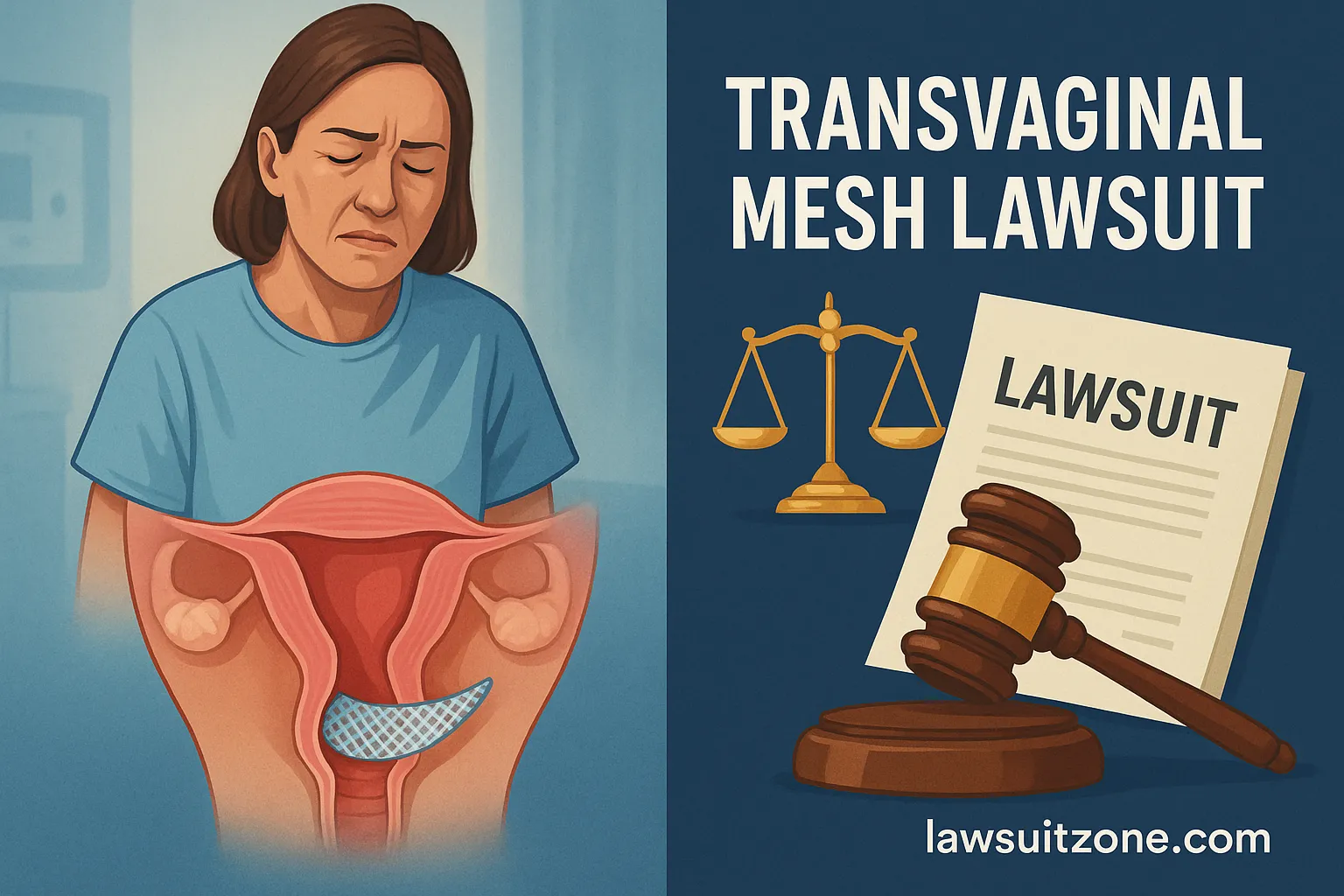
The transvaginal mesh lawsuit has grown into one of the most talked-about medical device litigations in the United States. For over a decade, women trusted transvaginal mesh implants for pelvic organ prolapse and stress urinary incontinence, believing they were safe, long-term solutions. But thousands later reported painful complications, unexpected revision surgeries, mesh erosion, and long-lasting emotional and physical trauma.
Today, women all over the country seek justice for the hurt they endured, blaming manufacturers for failing to warn them appropriately. This comprehensive guide explains what transvaginal mesh is, why lawsuits were filed, actions by the FDA, complications, eligibility, and what to expect from compensation awarded to victims. Have you checked our detailed guide on paraquat lawsuit.
What is Transvaginal Mesh?
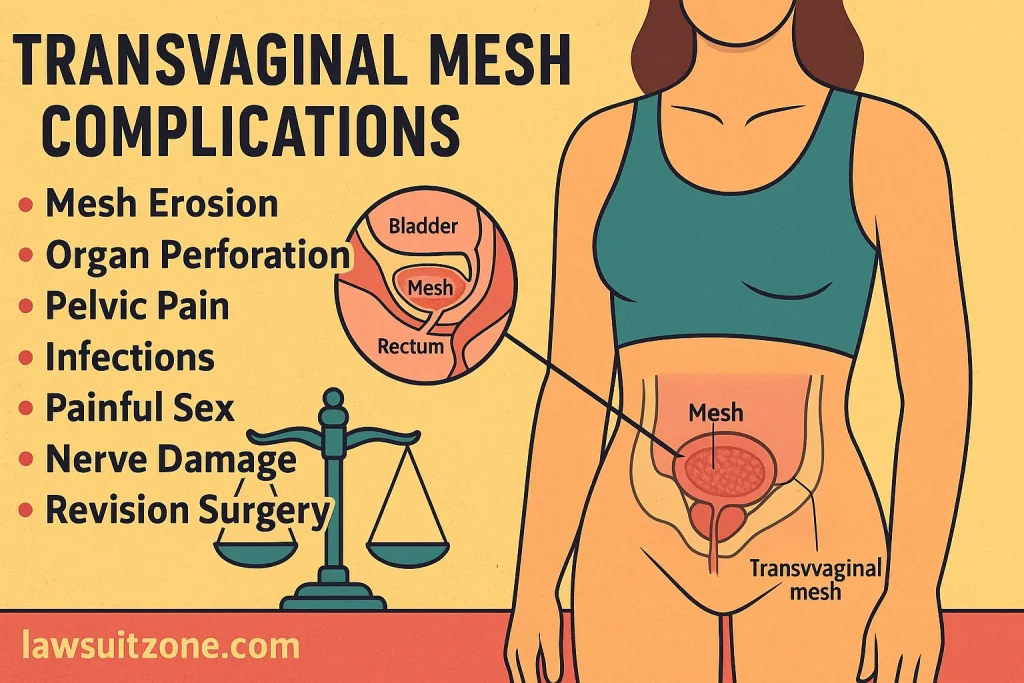
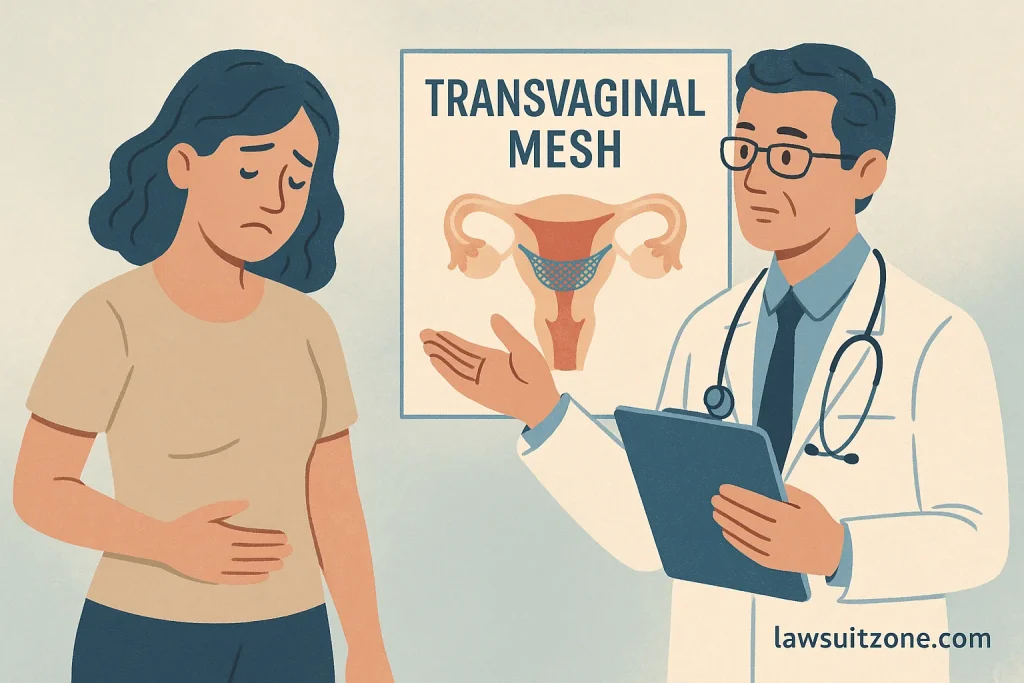
Transvaginal mesh is a medical implant utilized to treat the weakened tissues of the pelvic floor. With the aid of a surgeon, this net-like material is placed through the vagina to support the bladder, uterus, or rectum.
This device was originally marketed as:
- A minimally invasive procedure
- Faster recovery as compared to traditional surgery
- Durable and long-lasting option
But research and patient experiences soon told a different tale: Complications were far more common than manufacturers suggested.
Why Transvaginal Mesh Was Used
Doctors often recommended mesh for:
Pelvic Organ Prolapse (POP)
When organs have moved out of their usual position due to weak pelvic muscles.
Stress Urinary Incontinence (SUI)
Involuntary leakage of urine resulting from physical exertion, coughing, or laughing.
While these conditions can be life-disrupting, the mesh solution intended to fix them often resulted in severe health problems.
Why the Transvaginal Mesh Lawsuit Emerged
The central claim against transvaginal mesh in the lawsuits filed is simple:
The manufacturers did not warn the patients about the high complication rate or long-term health risks.
Women claim that the mesh was marketed as safe, durable, and effective, but internal company documents and patient outcomes showed significant risks.
Major reasons that lawsuits were filed include:
- High failure rates shortly after implantation
- Lack of appropriate testing prior to releasing products into the market.
- Inadequate warnings about life-changing complications
- Misleading Marketing Emphasizing Safety
- Minimizing long-term effects and risks
Some lawsuits also accuse manufacturers of failing to recall dangerous products quickly enough.
FDA Actions and Safety Warnings
As complaints mounted, the U.S. Food and Drug Administration began an investigation.
Check the official safety guidance from the FDA.
Key FDA actions included:
- 2008: Initial warning on complications
- 2011: Updated alert stating complications were “not rare”
- 2016: Mesh for POP reclassified as a high-risk Class III device
- 2019: The FDA banned sales of all POP mesh devices in the U.S.
While still available, mesh for SUI faces stricter oversight.
Complications Commonly Associated with Transvaginal Mesh
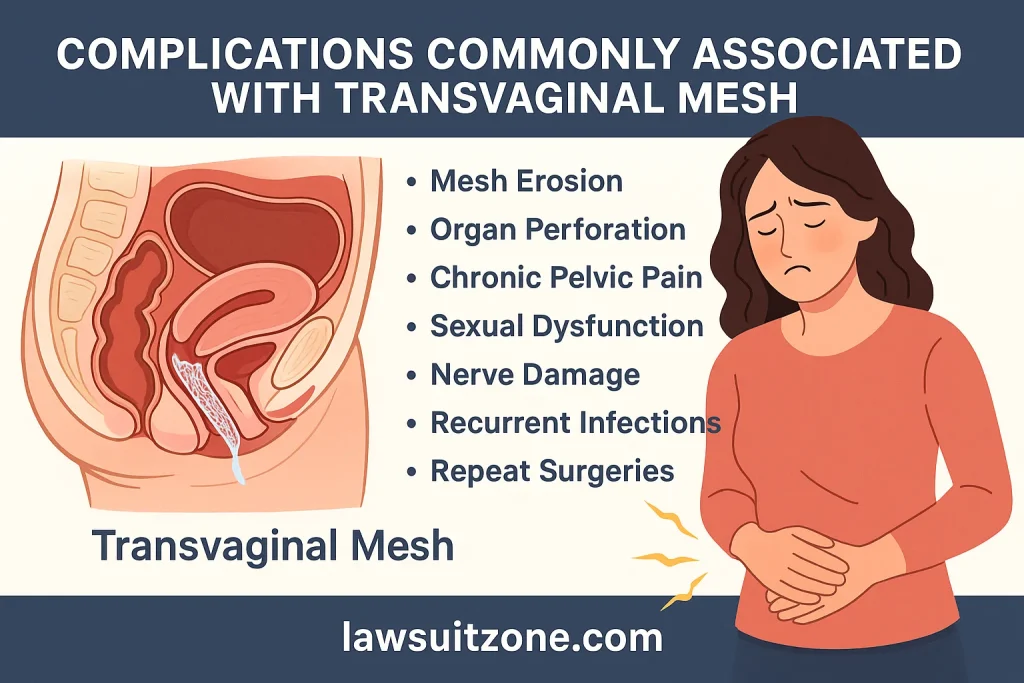
Thousands of women have reported painful and life-altering complications.
1. Mesh Erosion
Mesh can break through vaginal tissue, causing:
- Bleeding
- Discharge
- Painful sexual intercourse
- Infections
- Tissue tearing
Some women needed multiple surgeries to remove fragments of mesh.
2. Organ Perforation
The mesh may puncture nearby organs such as:
- Bladder
- Bowel
- Urethra
This could result in internal bleeding, severe infection, or even emergency surgery.
3. Chronic Pelvic Pain
Many women:
- Aching pelvic pressure
- Sharp nerve pain
- Constant discomfort
- Difficulty walking or sitting
4. Sexual Dysfunction
The pain during intercourse has wrecked marriages and relationships.
5. Nerve Damage
Nerves become entrapped or damaged, thus leading to:
- Burning sensations
- Shooting pains
- Numbness
6. Recurrent infections
Mesh exposure can lead to chronic UTIs and bacterial infections.
7. Repeat Surgeries
Multiple revision surgeries are common and may not fully correct damage.
Manufacturers Named in Lawsuits
Women have filed claims against major companies including:
- Ethicon (Johnson & Johnson)
- Boston Scientific
- American Medical Systems (AMS)
- C.R. Bard
- Coloplast
- Cook Medical
Some companies have already paid billions in settlements, yet cases continue as new victims come forward.
Key Allegations Made in the Transvaginal Mesh Lawsuit
1. Failure to Warn
According to the suit, the manufacturers knew that these ingredients were risky, but they failed to provide explicit warnings.
2. Defective Design
Lawsuits argue that mesh materials are unsuitable for long-term implantation.
3. Negligent Testing
Inadequate pre-market testing did not discover complications early.
4. Misleading Marketing
Companies marketed mesh as safe despite their internal concerns.
5. Wrongful Conduct
Some plaintiffs claim that companies put profits ahead of patient safety.
Who Qualifies to File a Transvaginal Mesh Lawsuit?
Eligibility often depends on:
1. Having a Transvaginal Mesh Implant
For POP or SUI procedures.
2. Having Complications
Such as:
- Erosion
- Pelvic pain
- Organ perforation
- Incontinence
- Painful sex
- Infection
- Revision surgeries
- Mesh failure
3. Suffering Financial or Physical Loss
Individual claims are strengthened with medical costs, long-term pain, or emotional distress.
Evidence to help build a strong case
The following documents often support lawsuit claims:
- Surgical records
- Mesh implant product ID
- Doctor statements
- Medical imaging
- Revision surgery reports
- Pain journals
- out-of-pocket medical expenses
- Test results indicating complications
Lawyers often help retrieve missing documents, even if the records are incomplete.
Types of Transvaginal Mesh Lawsuits
1. Individual Lawsuits
Victims file directly against manufacturers for personal injury.
2. Multidistrict Litigation (MDL)
Thousands of cases were consolidated in order to expedite pre-trial procedures.
Transvaginal mesh MDLs became among the largest in U.S. history.
3. Settlements
Already, many companies have paid large settlements, but women with new or ongoing complications may take action.
Transvaginal Mesh Lawsuit Process-Step by Step
Step 1: Free Legal Review
A lawyer reviews your medical history and your symptoms.
Step 2: Filing the Claim
The claim is filed against the manufacturer(s) responsible.
Step 3: Discovery Phase
Both sides review medical records, internal documents, and scientific evidence.
Step 4: Bellwether Trials
Sample cases are tried, in order to estimate the likely outcomes.
Step 5: Negotiations
Most lawsuits settle based on results from bellwether cases.
Step 6: Trial (If necessary)
Cases which do not settle may go to individual trial.
Current Status of the Transvaginal Mesh Litigation in 2025
As of 2025:
- Tens of thousands of claims have been settled.
- Several manufacturers have paid multi-billion-dollar settlements.
- New claims continue due to delayed complications
- POP mesh devices remain off the U.S. market
- SUI sling mesh is still sold but highly scrutinized.
- Some MDLs have closed, while others are still processing remaining cases.
- Women with ongoing injuries can still file.
Compensation Available in the Transvaginal Mesh Lawsuit
Compensation depends on the severity of the injury and the extent to which it may continue to have a long-term impact.
Economic Damages
- Medical bills
- Revision surgery costs
- Lost wages
- Travel to receive medical care
- Future treatment needs
Non-Economic Damages
- Pain and suffering
- Loss of companionship
- Emotional Distress
- Reduced quality of life
Punitive Damages
Given when manufacturers acted in a reckless manner or knowingly ignored safety concerns.
Statute of Limitations
Deadlines vary by state, but most states allow 1–3 years after :
- Diagnosing a complication
- Learning the mesh was the cause of the injury
- Undergoing corrective surgery
This timeline can be extended if the complications surfaced years later, but it is always safer to file early.
What You Should Do If You Believe Mesh Harmed You
1. Document Your Symptoms
Keep a written log of pain, changes in mobility, or sexual discomfort.
2. Gather Medical Records
Including surgical notes, imaging reports, and revision procedures.
3. Avoid Public Posting
Never discuss claims of medical injury on social media.
4. Request a Legal Evaluation
A professional can describe eligibility, next steps, and so on without providing medical advice.
Frequently Asked Questions
Final Thoughts
The transvaginal mesh case evokes the need for transparency in medicine and protection for the patient. Thousands of women trusted a device to make their health better, yet they had to deal with devastating complications that struck their daily life, relationships, and well-being.
This guide is meant to help women understand their symptoms, learn their rights, and make informed decisions. Although this article is not intended as medical or legal advice, it does provide the clarity necessary for taking the next steps toward gathering one’s records, seeking evaluations, or learning more about options for compensation.