Vital Proteins Lawsuit: The 2025 Complete Consumer Guide
Introduction: From Superfood Darling to Courtroom Drama
For years, Vital Proteins Lawsuit was the brand that all wellness influencers kept in their morning coffee. “Collagen peptides” were a staple household term, and the blue tub of powder promised glowing skin, healthier nails, and joint health. With the endorsement of celebrities such as Jennifer Aniston, the company started from a small startup and expanded to a billion-dollar monster.
But now, the lawsuit over Vital Proteins’ reputation risks transforming overnight. Shoppers say they were deceived, charging that not all that was on the label existed. It’s not just a corporate tale it’s a portrait of the booming, occasionally shadowy, world of dietary supplements.
Let’s dissect: what went down, why it matters, and what you can learn as a consumer. Have you checked our detailed guide on TaxAct Lawsuit
A Quick Refresher: Who Exactly Is Vital Proteins?
Vital Proteins debuted in 2013 with one giant aspiration: collagen supplements could become mainstream. Kurt Seidensticker, a former athlete turned entrepreneur, founded the brand on three pillars:
- Accessibility – affordable collagen for everyday consumers.
- Aspirational marketing – “glowing from the inside out.”
- Science-meets-lifestyle appeal – part health product, part beauty ritual.
In 2020, Nestlé Health Science acquired a majority stake, accelerating distribution. You can now buy their products at Target, Whole Foods, Costco, and online everywhere.
But with increasing sales came increasing scrutiny.
Why the Supplement Industry Breeds Lawsuits
Supplements exist in a gray area. They are not regulated as aggressively as prescription medications, so companies can bring products to market without FDA approval. That’s good for innovation—but also opens up space for outlandish claims.
Common cases in this sector include:
- False advertising (“miracle results” that do not exist)
- Under-dosing active ingredients (fewer active ingredients than the packaging claims)
- Secret fillers or allergens (not reported accurately)
- Side effects not revealed
- Price and refund issues
The vital proteins case is exactly following this playbook: consumers are claiming to pay a premium for products that did not meet their advertising.
The Origins of the Vital Proteins Lawsuit
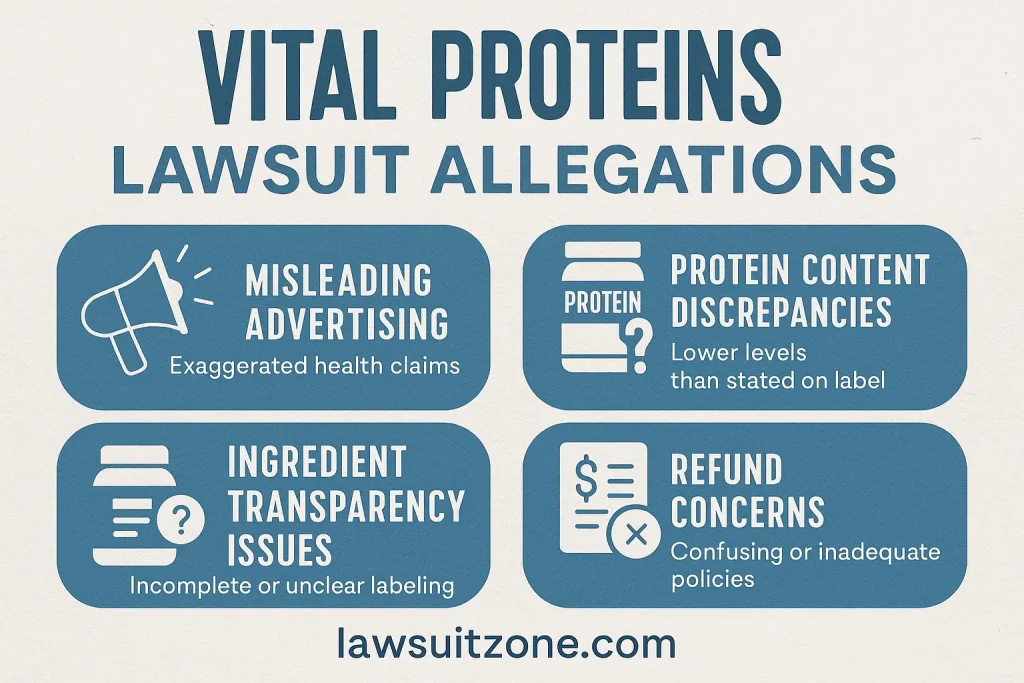
At the end of 2024, consumer groups sued Vital Proteins in a class action lawsuit.
The allegations:
- Exaggerated Claims – Ad copy claimed glowing skin, youthful vitality, and pain-free joints—imperatives not always supported by science.
- Protein Content Issues – Independent testing reportedly showed some tubs had lower protein levels than indicated.
- Label Clarity – Concerns existed about whether each ingredient and sourcing information was revealed.
- Consumer Protection Issues – Refund policies were not always clear or equitable.
The firm, meanwhile, does not admit to willful misconduct and insists their products are safe.
Unpacking the Accusations
1. Misrepresentation of Results
The case contends that customers purchased Vital Proteins hoping for life-altering benefits—only to find little or no difference after months of consumption.
2. Collagen Content Discrepancies
If lab testing is correct, the protein-per-serving didn’t always equal what was touted on the packaging. Small variations can add up when millions of tubs sell.
3. Lack of Transparency
Critics say that sourcing information (such as which animals collagen was sourced from) wasn’t always disclosed. In a time of ethical consumerism, that makes a difference.
4. Consumer Protection Concerns
Purchasers say refund or satisfaction promises weren’t always fulfilled.
How a Class Action Works
The proteins lawsuit is a class action. That is, rather than thousands of individuals bringing individual lawsuits, one large case speaks for all of them.
Steps are:
- Complaint brought to court.
- Judge determines whether it is a class action.
- Discovery stage (gathering evidence).
- Negotiations to settle (most cases are settled at this point).
- Trial, if settlement fails.
This may take months, or even years.
Consumer Impact: Why This Matters to You
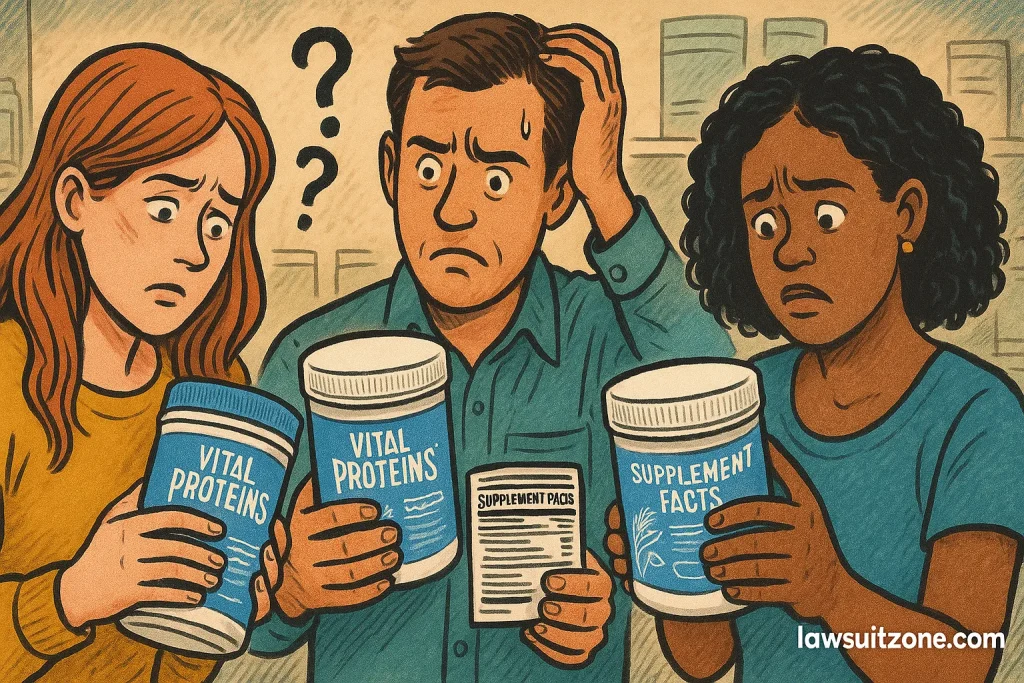
This isn’t about Vital Proteins specifically—it’s about whether we can believe the supplement industry as a whole.
Questions for consumers:
- Can marketing claims be relied upon?
- Are supplements you purchase dosed as advertised?
- What recourse do you have if you feel deceived?
Even repeat customers are second-guessing their purchases.
Real Voices: What Consumers Are Saying
“I purchased it for my skin. Three months went by and there was no difference. It’s just pricey protein powder.”
“Collagen assisted me during workouts, but if labels aren’t honest, that’s an issue.”
“Brands shouldn’t make false promises—harming trust for the entire industry.”
Industry Fallout: Why Other Brands Are Anxious
The vital proteins lawsuit may have a domino effect.
- Competitors in the spotlight – Rival collagen brands could get tested.
- Regulatory updates – The FDA may clamp down on rules.
- Consumer trust shift – Purchasers might turn toward smaller, third-party-tested brands.
When a market leader is put under the microscope, the whole industry takes a hit.
Lessons for Consumers: Protecting Yourself
- Search for third-party testing marks such as NSF or USP.
- Don’t be fooled by miracle promises—no powder will reverse time.
- Read reviews and third-party lab reports before purchasing.
- Understand your rights—refund and complaint processes are important.
- Keep in mind: supplements are not a replacement for healthy lifestyles.
Additional Supplement Lawsuits You Should Be Aware Of
The vital proteins lawsuit is not unique. Previous instances include:
- Protein powders – false advertising suits for inflated protein content.
- Herbal products – hidden allergens.
- CBD companies – making promises without scientific evidence.
- Weight-loss tablets – traditional “false promise” suits.
Settlements and refunds are typically the result in these cases.
Potential Outcomes of the Vital Proteins Lawsuit
- Settlement awards – Partial refunds or coupons for consumers.
- Label adjustments – More prominent, clearer labeling.
- Brand reputation blow – Once lost, trust is difficult to restore.
- Industry reform – This case might have to demand higher standards.
Expert Takeaways
- Nutritionists: Collagen may benefit some individuals, but outcomes differ. Don’t hope for miracles.
- Lawyers: Names need to live up to promises, even if outcomes differ.
- Consumer advocates: This suit is about maintaining honesty in advertising.
Trusted Source for Updates
Need accurate supplement information? The U.S. Food and Drug Administration (FDA) offers credible consumer guides on supplement safety and labeling.
Expanded FAQs
Final Thoughts
The important proteins lawsuit isn’t about any one brand—it’s about the whole supplement industry. When a company constructs its empire on big promises, consumers are entitled to expect integrity.
This lawsuit is a good reminder to read labels skeptically, insist on third-party certification, and evaluate supplements with a level head. Vital Proteins can bounce back—but the case will leave a lasting impact on how supplements are marketed and believed.
As consumers, our best weapon is awareness.