TaxAct Lawsuit: Full 2025 Guide for Everyday Taxpayers
If you’ve ever filed your taxes online, chances are you’ve seen ads promising “Free Filing.” But as the TaxAct lawsuit shows, sometimes “free” isn’t free at all.
TaxAct, the leading online tax preparation software, is now being implicated for hidden charges, deceptive advertising, and even data privacy issues. For the millions of taxpayers who had entrusted the site with their most private financial information, this lawsuit has raised disquieting questions: Did I pay too much? Was my data secure?
This guide dissects all you need to know regarding the TaxAct lawsuit its beginning, the impact on the consumer, industry takeaways, and what to do as a taxpayer from here on out. Have you checked our detailed guide on 3M Earplug Lawsuit Attorney Fees.
The Emergence of TaxAct: A Brief Primer
In 1998, TaxAct entered the tax preparation market as the “affordable” competitor to titans such as TurboTax and H&R Block. Its vow was straightforward: cheaper and simpler tax preparation for plain American citizens.
And it worked for years. Students, gig workers, and small business owners swarmed to TaxAct. The site had:
- Free federal filing for basic returns.
- Cheap state returns versus the competition.
- Easy online software written for ordinary taxpayers.
But with more and more users on TaxAct, so did complaints. What began as isolated annoyances quickly ballooned into lawsuits.
Why Do Tax Filing Platforms Keep Getting Sued?
To make sense of the TaxAct lawsuit, you need to see the larger picture. Tax software firms are a high-trust business—dealing with private personal and financial information. But they’re also in a very competitive marketplace, where upselling services can be the profit-maker.
That stress causes issues. Issues common to the industry include:
- “Free” offers that aren’t so free. Customers are lured with advertising but billed afterward.
- Blurred pricing levels. Customers often don’t know what they’re getting.
- Upselling at key moments. Right before submitting, platforms nudge high-priced add-ons.
- Shortcuts in data privacy. Release of user data to advertisers to maximize profit.
- Glitches in software. Mistakes resulting in IRS denial, delay, or even fine.
👉 TaxAct isn’t unique in this situation. TurboTax (Intuit) settled in 2022 for $141 million for similar free filing mishaps.
The Spark That Lit the TaxAct Lawsuit
The TaxAct lawsuit got momentum when taxpayers grumbled about the platform’s “Free Filing” assurance being deceptive. Users complained:
- Being directed to paid levels even when they were eligible for free alternatives.
- Unexpected state filing charges ($30–$50) popping up only at checkout.
- Deceptive add-ons for “audit protection” or “document storage.”
- Glitches in software resulting in rejected submissions or slow refunds.
- Fears about sharing personal financial information with marketers.
By late 2024, consumer groups and state attorneys general initiated collective legal action. What initially were stand-alone complaints escalated into a class action lawsuit.
Deconstructing the Allegations
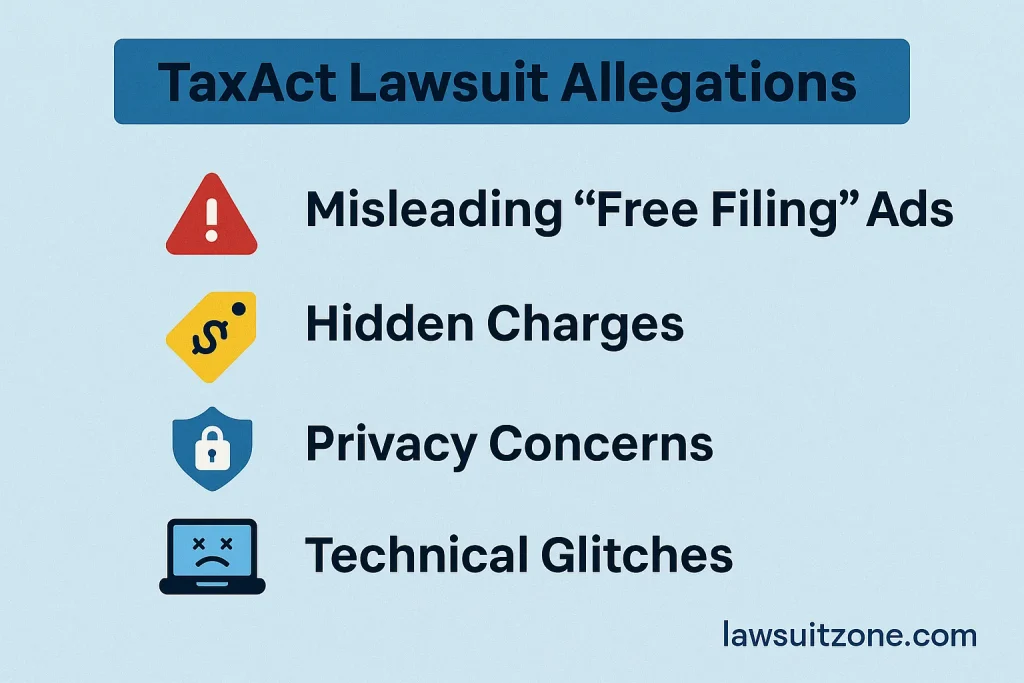
The TaxAct lawsuit revolves around a handful of key allegations:
1. Deceptive Free Filing Advertisements
Advertising campaigns offered “free federal filing,” but users frequently ended up being pushed into paid plans.
2. Sneaky & Last-Minute Charges
Shoppers report they weren’t informed initially about state return fees or other extras, so the actual cost was much greater.
3. Price Transparency Failures
Price levels weren’t explained at the outset—only disclosed at the last filing point.
4. Data Privacy Warning Signs
TaxAct reportedly sold taxpayer information to third-party marketers (Google, Meta) for advertising.
5. Technical Malfunctions
Bugs resulted in IRS rejection or delayed refunds, putting families financially strained.
Real-Life Stories from Taxpayers
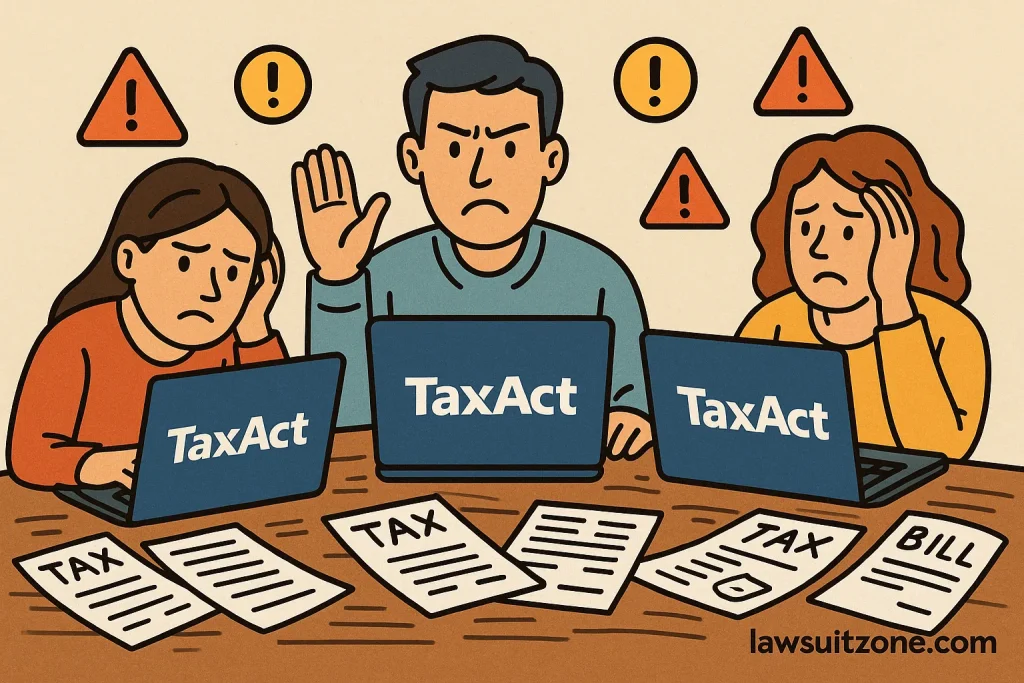
To put the case in human terms, let’s see what taxpayers themselves have had to say:
- “I’m a college student with a straightforward return. TaxAct claimed it was free. By the time I pressed submit, I owed $39.95. That’s my grocery money.”
- “The site coerced me into moving to a premium package that I didn’t require. I felt trapped.”
- “My return was denied due to a glitch. I had to resubmit manually, and my refund was held up for six weeks.”
These aren’t statistics in a courtroom—they’re genuine financial hardships for ordinary Americans.
How the Class Action Process Functions
As the TaxAct lawsuit is a class action, here’s what consumers need to know:
- Complaint filing: Lawyers compile evidence and file claims.
- Class certification: Court verifies that numerous consumers were affected similarly.
- Discovery: Evidence sharing—emails, marketing practices, price deconstruction.
- Negotiations: Preponderance of companies settle prior to trial.
- Settlement or Trial: Relief can be in the form of refunds, credits, or policy reforms.
⏳ Timeline: Class actions typically last 1–3 years.
Why This Lawsuit Matters for the Industry
The TaxAct lawsuit is not in a vacuum. It’s part of a trend where regulators are getting tougher on deceptive financial products.
Ripple Effects
- Adversaries can be compelled to redo advertising.
- Data privacy standards within the industry might become more stringent.
- There might be a powerful precedent set for price transparency.
Keep in mind: TurboTax’s $141M settlement reformed the way tax prep companies promote “free filing.” If TaxAct loses, we might witness another industry-wide overhaul.
What Taxpayers Can Do Right Now
While the lawsuit plays out, here’s what you can do to protect yourself:
- Verify IRS Free File Directly. Most filers are eligible for free services through the IRS website.
- Seek upfront pricing. If fees aren’t transparent, question them.
- Avoid unnecessary extras. Audit protection or storage plans might not be necessary.
- Protect your data. Check how your information is being shared.
- Report complaints. If you feel deceived, report it to the Federal Trade Commission (FTC).
Potential Results of the TaxAct Lawsuit
The suit may have a few different outcomes:
- Financial Settlement: A payment for impacted taxpayers.
- Refund Vouchers or Credits: Payment in the way of services.
- Policy Reforms: Coerced transparency in advertising and pricing.
- Precedent for Other Lawsuits: Might trigger copycat lawsuits against rivals.
FAQs About the TaxAct Lawsuit
Final Thoughts
The TaxAct lawsuit is more than a court fight—it’s an alarm bell for the entire tax software market. Too long, taxpayers have been promised free, easy filing but then hit with unexpected fees and dubious tactics.
As the case develops, one thing becomes certain: transparency is important. Taxpayers are entitled to truth, reasonable pricing, and robust safeguards for their most personal financial information.
Meanwhile, remain alert, familiarize yourself with your rights, and always read the fine print before submitting.