Oracle America Lawsuit: Complete Consumer & Legal Guide
Introduction
Due to the harm the company has caused, Oracle America has become a key player in the conversation about data privacy, consumer protection, and accountability in big tech. As a part of the tech giant Oracle Corp., Oracle America has had its own share of allegations on the illegal and unethical collection and negligent handling of consumer data.
As one of the enterprises in the leading company of enterprise software and cloud technologies, Oracle has had questions underneath the surface. How much data is being collected, in what manner is it being used, and consumers being informed about the use of their data is questioned. This is a comprehensive guide that not only breaks down the complex situation but also explains its origins, the claims, who is entitled to compensation, and impact on the potential future of data legislation. Have you checked our detailed guide on roundup lawsuit.
What Is the Oracle America Lawsuit?
The Oracle America lawsuit is a class action lawsuit in which Oracle America, Inc. is accused of the illegal and unethical collection, storage, and selling of consumer data without proper consent.
The claim says Oracle stored huge amounts of data based on users’ online activities, which included tracking users’ browsing histories, purchases, where they’ve been, and what interests were guessed. This data, along with additional data from other sources, were used to create profiled that targeted ads to users and for other targeted ads.
The plaintiffs claim that this practice violated various privacy laws and state and federal data consent and consumer protection laws. On the other hand, Oracle has consistently defended that the lawful means and practices on which they operate have always included protection of user data and privacy.
Background: How the Case Began
As with the Oracle America lawsuit, the late 2010s digital privacy global questions and concerns in the advertising and data tracking world, particularly regarding the large technology companies, was the starting point. Oracle, with its data driven marketing and analytics tools, was in the middle of the criticism.
This was where Oracle systems were alleged to track users across various websites, devices, and even offline transactions, thus constructing intricate behavioral profiles without consent.
These claims inspired privacy advocates and customers to take legal action. They argued that Oracle was acting unethically and illegally. Over time, these claims merged with others to form the Oracle America class action lawsuit.
Main Allegations in the Oracle America Case
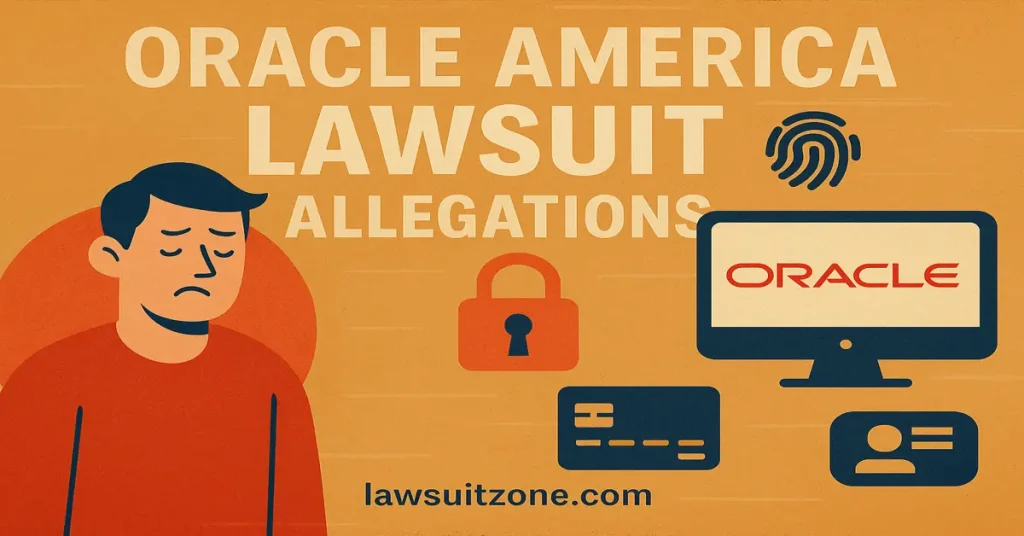
1. Illegal Collection of Personal Data
The plaintiffs argue that Oracle collected personal data on online users without adequate notice or consent. Data that was tracked included cookies, location data, and even interactions with other users.
2. Data Brokerage
Critics of Oracle claim that the company profited off personal data without the consent of users. Critics allege that Oracle created databases containing user data that advertisers and data brokers could purchase.
3. Lack of User Communication
One of the biggest concerns in this case revolves around the pattern of data collection and Oracle’s lack of communication with users regarding the collection. The lawsuit claims that consumers had no idea that their data was being tracked and monitored on a large and invasive scale.
4. Risk to User Privacy
The lawsuit claims that Oracle engaged in practices that could expose users to harmful profiling, identity exploitation, and the loss of control over personally identifiable data.
Although Oracle argues that all of their practices were legal, their filings have sparked conversation around what is considered ethical data practices in the new age.
Importance of the Oracle America Lawsuit
This lawsuit is important not solely for the company but for the future of digital privacy.
Data is considered currency, and the Oracle lawsuit is exposing the friction between innovation and privacy. Consumers have become more aware that their data is the main fuel for the online economy, from focused advertising to AI.
The outcomes of this case could also result in more regulation around how large data tech businesses use and manipulate data.
Who Can File a Claim
People who feel Oracle wrongfully collected and shared their data might have the right to file or join a claim for the Oracle America lawsuit. Each jurisdiction does have specific requirements but in the U.S most class action settlements include the following.
- You were a U.S. resident while Oracle collected the data in question.
- You accessed websites or services that had Oracle’s tracking or analytics technology.
- You may say (under penalty of perjury) that your information may have been included in Oracle’s collection systems.
- You file your claim within the time frame.
You may qualify, even if you don’t have any direct evidence, as long as your online activity is in the range of members of the group.
Step-by-Step Process to File a Claim
Confirm Eligibility
You will need to check the case details to confirm you are in the affected class.
Collect Information
Collect any evidence that can substantiate your participation, such as: receipts, website activity, or other digital records.
Submit a Claim Form
Fill in the claim form, in most cases, online, and do it before the closing date.
Wait for the Case to be Approved
After a settlement is finalized by the court, the administrator of the case will check all claims.
Receive Payment or Relief
If your claim passes, you will receive a payout that will depend on your eligibility and how many other claims were valid and submitted in total.
This is to guarantee that all the participants in the Oracle America lawsuit will receive the same treatment and are kept in the same conditions.
Estimated Compensation and Settlement Structure
Every case carries unique circumstances, but settlements in similar class action suits typically have three broad categories of compensation that provide a basis for the following case to build on:
Economic Damages – encompassing losses that can be quantified such as the costs of fraud monitoring, losses related to any violated economic interests, and any other monetary losses that may have arisen due to the case’s main premise.
Non-Economic Damages – for the violation of personal interests such as emotional pain, humiliation, and reputation loss due to the breach of one’s personal privacy.
Injunctive Relief – the company in question is compelled to take active measures on the data policies that are in contention, as well as the protection policies of consumers.
In settlements on the class and scale of the one being referenced, it is standard for the individual distributive payments to be of a significant amount, while the higher payments made to provide economic compensation directly to claimants that provide empirical proof of the claims made in the case.
Broader Legal Implications
How Oracle America is litigated may set boundaries on company policy for how technology companies attain user consent, become transparent, and how long data is retained. Harsher rulings from courts or regulators could trigger high policy change across the entire sector.
Learning the following will be key for the industry:
- Building more robust frameworks for data governance and user consent policies.
- Improving the processes for data anonymization to mitigate exposure.
- Educating consumers more thoroughly on the active and passive tracking that is done digitally.
Consumer Takeaways
For consumers on the other side of the lawsuit, this case is an active reminder that personal data is indeed a personal and valuable commodity. With that in mind, it is worth adding the following to your privacy preservation habits:
- Your cookies and browsing history, along with any history of tracking, should be completed.
- Use a more private web browser and install privacy extensions to further lock down your tracking exposure.
- Check the settings for permission on your apps and devices.
- Don’t overshare personal information on the internet.
Lessons for Businesses
There Are No Borders on Trust
Consumers expect honesty about how their data is used. Policies that are vague or concealed will burn trust and lead to lawsuits.
Trust Grows on Ethical Data Practices
When data protection is prioritised customers will show loyalty and confidence for a long time.
The Law Will Catch Up for Good
The GDPR in Europe and the CCPA in California are early legal steps and businesses should expect more privacy regulations to come from other countries.
The World and Oracle America Case
Though the case is about the U.S., it has implications everywhere else. Every tech company is paying attention to the courts in Oracle’s case. A strong ruling for consumers will prompt international legal reforms on privacy, transparency, and collaboration on data ethics.
There is renewed interest from this lawsuit on the legal frameworks governing international data and cloud operations.
The Role of Government and Regulators
More and more, government agencies are monitoring the way data is used by large technology companies. For example, the Federal Trade Commission (FTC) is very active in data privacy and has taken numerous steps to protect consumers in the digital environment.
For more information regarding consumer protection and data privacy, visit the Federal Trade Commission’s website – a reliable high authority site that provides information and resources for individuals and entities.
Frequently Asked Questions (FAQs)
Final Thoughts
The Oracle America lawsuit is now a case to keep an eye on in the context of digital privacy. It illustrates the growing disconnect between technology and consumer protection.
For people, it illustrates the importance of controlling, and protecting, your personal data, and for corporations, the message is clear: the data collection free-for-all will soon be a thing of the past.
The case illustrates that, in the digital environment, the ethics of engagement, consent, and privacy will not be optional. It is likely that the lawsuit will become a global standard for the provision of user privacy to the global digital consumer.
Note:
This article does not offer legal advice and does not form an attorney-client relationship. It is for your educational information. Legal advice for specific legal issues should come from a licensed attorney.