Roundup Lawsuit: The Ultimate Guide for Consumers and Victims
Introduction
If you’ve been following recent legal developments about weed-killers, you’ve probably heard about the Roundup lawsuit one of the most significant product liability cases in modern history. For decades, Roundup was one of the world’s most popular herbicides, used in farming, gardening, and landscaping.
However, thousands of people have come forward claiming that exposure to Roundup, specifically its main ingredient glyphosate, caused serious health problems including certain cancers.
As the lawsuits unfold, they highlight deep questions about chemical safety, corporate ethics, and consumer rights.
In this comprehensive guide, we’ll explore the Roundup lawsuit in detail what started it, who’s eligible to file a claim, how much settlements may offer, and what lessons both consumers and companies can learn from it. Have you checked our detailed guide traffic accident lawsuit.
What Is the Roundup Lawsuit?
The Roundup lawsuit is a set of lawsuits brought by individuals alleging that exposure to glyphosate, the active ingredient in Roundup weed killer, resulted in their developing non-Hodgkin’s lymphoma and other cancers.
The argument by these plaintiffs is that the manufacturer (initially Monsanto, which was later acquired by Bayer AG) did not properly warn consumers of health dangers despite indications that long-term exposure could be dangerous.
Basically, these claims allege:
- The labeling of the product was deceptive.
- The company had knowledge or was aware of health risks.
- There were insufficient consumer warnings for safety.
What began as a small group of individual claims has now developed into one of the largest mass tort litigations in American history.
How It All Began
Roundup was launched in the 1970s and proved to be a game-changer in weed killers. Its fans among farmers and residents credited it as quick, effective, and cheap. It eventually became a virtual synonym for contemporary agriculture.
As use of glyphosate accelerated, though, independent research increasingly identified heavy use with cellular and genetic harm. Health researchers began to question whether Roundup might be causing cancers such as non-Hodgkin’s lymphoma.
The initial large-scale lawsuit against Monsanto first emerged when long-term users started to exhibit patterns of illness that were consistent with those findings. When the courts started permitting expert testimony and medical evidence, it created a pathway for thousands more to come forward.
Why Are People Suing Over Roundup?
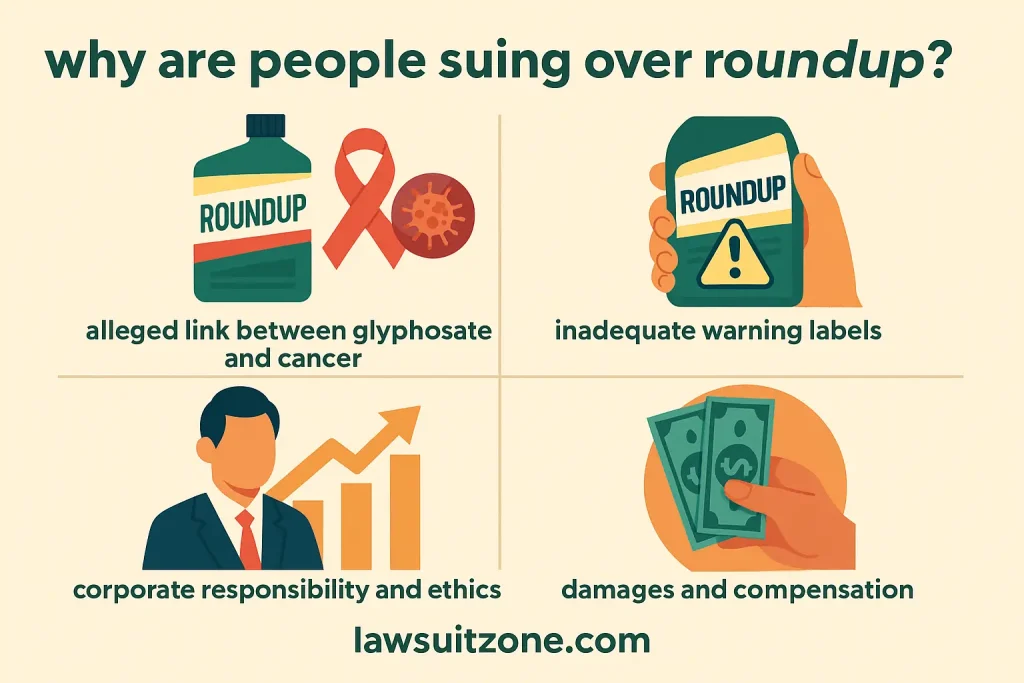
These are the essential reasons behind the Roundup lawsuit wave:
1. Alleged Link Between Glyphosate and Cancer
Many of the plaintiffs claim years of Roundup exposure caused their cancer diagnosis. Though global regulating bodies have wrestled with the degree of risk, some courts have recognized sufficient evidence to permit cases to move forward.
2. Inadequate Warning Labels
Critics contend that Roundup’s packaging and promotion minimized possible health risks. Most agree that had consumers been aware of the danger, they would have exercised more caution or stayed away from using the product in the first place.
3. Corporate Responsibility and Ethics
In addition to physical injury, these cases have touched off more general controversies regarding corporate responsibility. Should businesses profiting from chemicals sold to the masses assume the ultimate burden of disclosure, even in the face of scientific doubt?
4. Damages and Compensation
Thousands of plaintiffs allege significant financial damages — from lost wages and medical expenses to long-term pain and emotional distress. The suits seek recovery for those damages as well as to encourage safer practices in the future.
Understanding the Legal Claims
Roundup lawsuits generally center on the following legal claims:
- Product Liability: The product was dangerous when used as intended.
- Negligence: The company did not use reasonable care in testing or labeling.
- Failure to Warn: Roundup did not contain adequate consumer safety information.
- Breach of Warranty: The product did not safely perform as represented.
- Fraudulent Concealment: The corporation is accused of withholding essential risk information from consumers and regulators.
All claims center on whether Bayer/Monsanto was responsible given scientific understanding at the time.
Who Can File a Roundup Lawsuit?
Not all Roundup users are eligible for a lawsuit, but you might be if you fit these criteria:
- You used Roundup on a regular basis — either professionally (as a farmer, landscaper, or groundskeeper) or personally (for gardening at home).
- You developed an illness associated with glyphosate exposure, particularly non-Hodgkin’s lymphoma.
- You have evidence showing use — including receipts, purchase records, or work logs.
- You filed your claim within your state’s statute of limitations (typically 1–3 years from diagnosis).
Even if you took a generic glyphosate product, there are lawsuits that will let you file on parallel grounds.
The Process: How to File a Roundup Claim
Becoming a plaintiff in a Roundup lawsuit may look daunting, but it’s doable with proper instructions. What follows is a simplified process:
1. Medical and Exposure Documentation
Begin by gathering all appropriate medical records — diagnosis reports, biopsy, and treatment notes. Next, gather proof of exposure to the product (receipts, photos, or work logs).
2. Legal Consultation
Meet with an attorney who specializes in toxic-tort or mass-tort litigation. He will determine whether your case meets the criteria and walk you through filing requirements.
3. Case Filing
Your attorney will prepare a written complaint listing the facts, injuries, and damages. The claim is submitted in court or by a class-action administrator.
4. Discovery Phase
Both parties share evidence and expert witness testimonies. This phase is pivotal, as it decides how strong your case is.
5. Settlement or Trial
Most Roundup cases settle out of court instead of going to trial. Some do make it to jury verdict, which can lead to large payments for victims.
Estimated Settlement Amounts
Settlement amounts in the Roundup case are highly variable based on unique circumstances. Typically:
| Severity | Example of Damage | Estimated Payout Range |
|---|---|---|
| Mild – Moderate | Early diagnosis of cancer with full recovery | $10,000 – $100,000 |
| Severe | Aggressive non-Hodgkin’s lymphoma that will need continuous treatment | $100,000 – $500,000 |
| Fatal / Permanent Disability | Wrongful death or permanent disability | $500,000 – $2 million+ |
These are estimates. Actual payout is based on medical costs, loss of wages, pain and suffering, and quality of evidence submitted.
Current Status of the Roundup Litigation
In 2025, Bayer has settled for billions but continues to claim that glyphosate is safe when applied correctly. Thousands of individual cases are in process or on appeal.
Courts continue to weigh if exposure actually caused plaintiffs’ illness and if the company was well enough informed of the possible risks. Some have already won huge verdicts, while others continue to negotiate settlements.
The legal environment is changing quickly — but here’s what’s certain: the Roundup lawsuit has transformed how chemical firms design transparency, labeling, and safety testing practices.
Health Conditions Associated with Roundup Exposure
Although non-Hodgkin’s lymphoma is the most commonly known condition in Roundup lawsuits, others have also been explored:
- Multiple myeloma
- Leukemia
- B-cell lymphoma
- Skin irritation and respiratory symptoms following prolonged exposure
- Kidney or liver injury (rarely)
These situations need robust medical documentation to directly connect to glyphosate exposure.
Statute of Limitations: Don’t Wait Too Long
Every state in the U.S. has a statute of limitations for bringing a product liability or personal injury lawsuit. In the majority of situations, the time begins on the day you were diagnosed with the condition or learned that Roundup use is linked to your illness.
If you delay too much, your right to compensation may lapse — so act promptly at all times. Lawyers who handle chemical injury claims can verify your eligibility before the statute of limitations expires.
Roundup Lawsuit Compensation in Detail
Complainants in the Roundup lawsuit are entitled to three forms of compensation:
1. Economic Damages
These are quantifiable financial losses:
- Hospitalization and chemotherapy bills
- Care costs
- Loss of wages
- Loss of earning capacity
- Travel and caregiving expenses
2. Non-Economic Damages
These include pain, suffering, mental anguish, and diminished quality of life. Judges usually award more money for long or terminal illnesses.
3. Punitive Damages
In some verdicts, juries added money to punish the company for not warning consumers or deceiving the public.
How Long Does the Process Take?
Every case is different. Smaller individual claims may take 12–24 months to settle, but complicated cases with many plaintiffs or appeals can take years.
Patience and persistence are essential but once approved, payments are distributed according to severity and proof of loss.
Common Mistakes to Avoid When Filing
- Not consulting an attorney early enough
- Relying solely on insurance payouts
- Failing to keep medical or product evidence
- Posting about your case on social media
- Accepting low settlement offers too quickly
Avoiding these errors strengthens your case and ensures fair compensation.
Impact Beyond the Courtroom
The Roundup lawsuit has taken a worldwide impact. Governments have started reconsidering herbicide approval processes and requiring tougher safety testing. Farmers are turning to organic and glyphosate-free alternatives.
Even consumers are becoming increasingly aware of chemicals in their daily products. The change is an important reminder that transparency is no longer optional it’s mandatory.
High-Authority Reference for Readers
For an official perspective on pesticide safety and public health, you may read the U.S. Environmental Protection Agency (EPA)’s content on herbicide registration and safety requirements.
This site aids readers in comprehending how chemicals such as glyphosate are tested and tracked for safety.
Frequently Asked Questions (FAQs)
Lessons Learned from the Roundup Lawsuit
- Transparency Saves Lives: Business must value transparency over the bottom line
- Consumers Have Power: Educated consumers can make corporations act responsibly
- Documentation Matters: Complete medical and usage histories make or break a case
- Science Must Guide Policy: Regulators must have ongoing review of new evidence
- Legal Awareness Is Protection: Being aware of your rights early will save years of distress
Final Thoughts
The Roundup lawsuit is not only about compensation it’s about accountability and justice. It is a wake-up call to manufacturers, regulators, and consumers alike.
For victims, this case holds out hope: hope that truth and determination can lead to just outcomes even against big corporations. For others, it’s a reminder that transparency and safety must always be first.
If you or someone you know has been impacted, act early, prepare your paperwork, and see an experienced attorney. Justice may be slow in coming, but your health and your rights are worth the effort.
Disclaimer
This post is informational only. It is not legal advice and does not create an attorney-client relationship. Always get advice from a licensed attorney about your particular situation.