Paraquat Lawsuit Guide: Health Risks, Eligibility & Legal Claims
Introduction
The paraquat lawsuit has emerged as one of the most significant toxic exposure legal battles in the United States. Millions have lived or worked around agricultural operations where paraquat was utilized, and mounting scientific research connects the highly toxic weed killer to serious neurological and health problems. Many affected individuals are now seeking justice, claiming they were never adequately warned of the risks associated with exposure to paraquat.
The guide below covers everything, from the dangers associated with paraquat to eligibility in a lawsuit, what compensation one might expect, scientific evidence, and litigation status as of 2025. Have you checked our detailed guide on Paragard Lawsuit.
What Is Paraquat?
Paraquat is a highly toxic, fast-acting herbicide in wide use for weed and vegetation control in farming, orchards, and commercial agriculture. It was introduced during the early 1960s and very quickly became popular because of its efficiency and low price. However, this comes with one very dangerous trade-off: paraquat is one of the most toxic herbicides still legally used today.
Brand Names for Paraquat
It is sold under several different names, including:
- Gramoxone
- Firestorm
- Parazone
- Cyclone
- Devour
- Helmquat
Because it is extremely toxic by ingestion, inhalation, and skin exposure, paraquat is a restricted-use pesticide; that is, it can be handled only by certified applicators who are trained under strict federal guidelines.
To understand various regulatory details and safety rules, the EPA provides official paraquat safety information.
Why Paraquat Is Considered Dangerous
The toxicity of paraquat is well documented. Even in small amounts, it can cause organ damage, scarring of the lungs, burns to the digestive system, and long-term neurological damage. Many studies indicate that paraquat may travel through the bloodstream, cross the blood-brain barrier, and damage dopamine-producing neurons— a signature of Parkinson’s disease.
How Paraquat Affects the Body
- Inhaled: results in inflammation and scarring of lungs; may lead to respiratory failure.
- Swallowed: burns mouth, throat, and stomach; may cause vomiting and toxicity to organs.
- Skin contact: causes blisters and absorbs into the blood.
- Long-term exposure: connected with Parkinson’s disease.
- Environmental drift: can contaminate water and soil.
Because it does not break down easily, paraquat can remain in the environment for extended periods after spraying, increasing the risk of exposure among farmworkers and people who live nearby.
How Paraquat Exposure Occurs
You don’t have to handle paraquat to be affected. Most people who are filing paraquat lawsuits were exposed to it indirectly.
Common Exposure Routes
1. Occupational Exposure
Those most at risk include:
- Farmers
- Pesticide applicators
- Crop workers
- Orchard staff
- Landscapers
- Groundskeepers
Mixing, loading, and spraying of paraquat commonly result in direct skin or inhalation exposure.
2. Exposure to the Environment
People living around the farmlands can inhale paraquat through:
- Pesticide drift
- Contaminated dust
- Soil particles
- Groundwater runoff
Sometimes, the families affected have lived miles from application sites.
3. Transfer of Clothing or Equipment
Residue on:
- Shoes
- Clothing
- Tools
- Tractor equipment
can expose workers’ families either through laundry or close contact.
Paraquat and Parkinson’s Disease: What Science Says
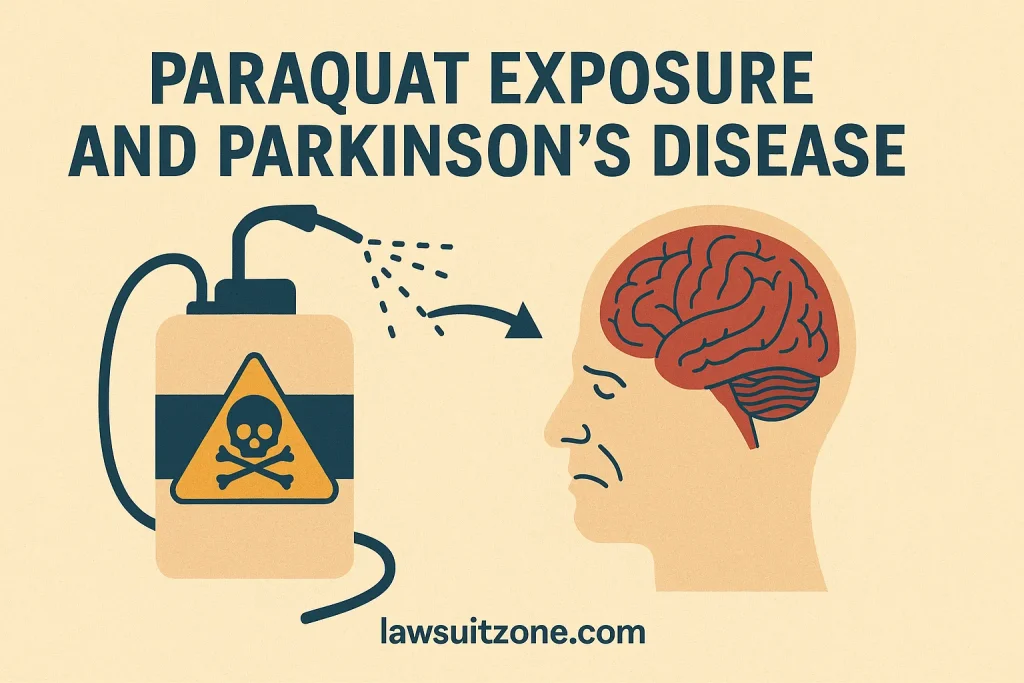
The strongest focus of the paraquat lawsuit is on the linkage of exposure to Parkinson’s disease—a progressive, incurable neurological disorder characterized by the death of dopamine-producing neurons.
Why Paraquat Is Linked to Parkinson’s
Paraquat produces oxidative stress, a harmful biological process that seriously damages the nervous system. Many studies have pointed out that exposure to paraquat greatly increases the risk of acquiring Parkinson’s disease.
Symptoms of Parkinson’s Disease
- Tremors
- Rigid muscles
- Difficulty walking
- Balance problems
- Slower movements
- Speech changes
- Cognitive decline
Due to gradual symptom development, many individuals who were exposed many decades ago are just being diagnosed now.
Other Health Problems Associated With Paraquat
In addition to Parkinson’s disease, paraquat has been linked to the following serious conditions:
1. Lung Damage
Chronic inhalation may cause:
- Scarring of the lungs
- Respiratory failure
- Impaired lung function
2. Injuries to the Digestive System
Ingestion or prolonged exposure may cause:
- Severe abdominal pain
- Vomiting
- Burns of the esophagus
- Difficulty swallowing
3. Kidney & Liver Damage
Paraquat quickly reaches vital organs, causing:
- Kidney failure
- Liver damage
- Long-term organ dysfunction
4. Reproductive Problems
Some studies have suggested a possible link between paraquat exposure and fertility issues.
5. Fatal Poisoning
Even in extremely small amounts, paraquat poisoning can be lethal.
Why the Paraquat Lawsuit Exists
The lawsuit regarding paraquat is based on claims that the manufacturers failed to warn the users of the neurological risks of the herbicide despite knowing those facts for decades.
Key Allegations Against Manufacturers
Victims claim that companies:
- Ignored emerging research linking paraquat to Parkinson’s
- Failed to update warning labels
- Marketed paraquat as safe when used “properly”
- Did not disclose risks to workers or nearby communities
- Failed to develop safer product formulations
Major companies involved include:
- Syngenta
- Growmark
- Chevron Phillips Chemical Co.
Who Qualifies to File a Paraquat Lawsuit?
Eligibility is based on two key elements:
1. Exposure to Paraquat
You may qualify if you:
used paraquat
mixed or sprayed paraquat
worked near fields where paraquat was used
lived near farms or orchards
handled contaminated soil, water, or dust
2. Medical Diagnosis
The strongest qualifying factor is a diagnosis of Parkinson’s disease.
Additional Signs You May Qualify
- Chronic tremors
- Loss of balance
- Slow movement
- Difficulty speaking
- Stiff muscles
- Neurological decline
Useful Evidence to Back a Claim
The following documentation will help in presenting a strong case:
- Occupational records
- Farm exposure details
- Witness statements
- Medical records
- Neurologist evaluations
- Residential history
- Agricultural maps
- Photos or receipts of herbicide use
Even if you aren’t sure about exposure dates, attorneys can often track paraquat usage through agricultural databases.
Types of Claims in the Paraquat Lawsuit
1. Failure to Warn
Manufacturers did not properly warn workers or consumers about the known health risks.
2. Design Defect
Even used according to instructions, the formulation of paraquat is dangerous.
3. Negligence
Companies did not perform long-term safety testing.
4. Misrepresentation
Marketing downplayed known neurological risks.
5. Public Nuisance
Paraquat use can contaminate entire communities.
Paraquat Lawsuit Process: Step-by-Step
Step 1: Case Evaluation
A lawyer evaluates:
- Work history
- Diagnosis
- Exposure timeline
Step 2: Filing the Claim
Your claim is submitted against the responsible manufacturers.
Step 3: MDL Consolidation
Most paraquat claims are part of Multidistrict Litigation; this speeds up discovery and helps establish common facts.
Step 4: Discovery Phase
Parties exchange:
- Scientific studies
- Corporate documents
- Safety records
- Expert testimony
Step 5: Bellwether Trials
A small set of sample cases go to trial to estimate settlement values.
Step 6: Negotiations
Most cases settle out of court once patterns emerge.
Step 7: Trial (If Necessary)
If a settlement is not possible, cases go to trial individually.
Current Status of the Paraquat Lawsuit (2025 Update)
As of 2025:
- Thousands of lawsuits are active nationwide
- No global settlement has been concluded
- Courts continue reviewing scientific evidence
- Bellwether trials may heavily influence settlement negotiations
- New plaintiffs are filing monthly
- Litigation is expected to grow as awareness increases
Possible Compensation for Paraquat Victims
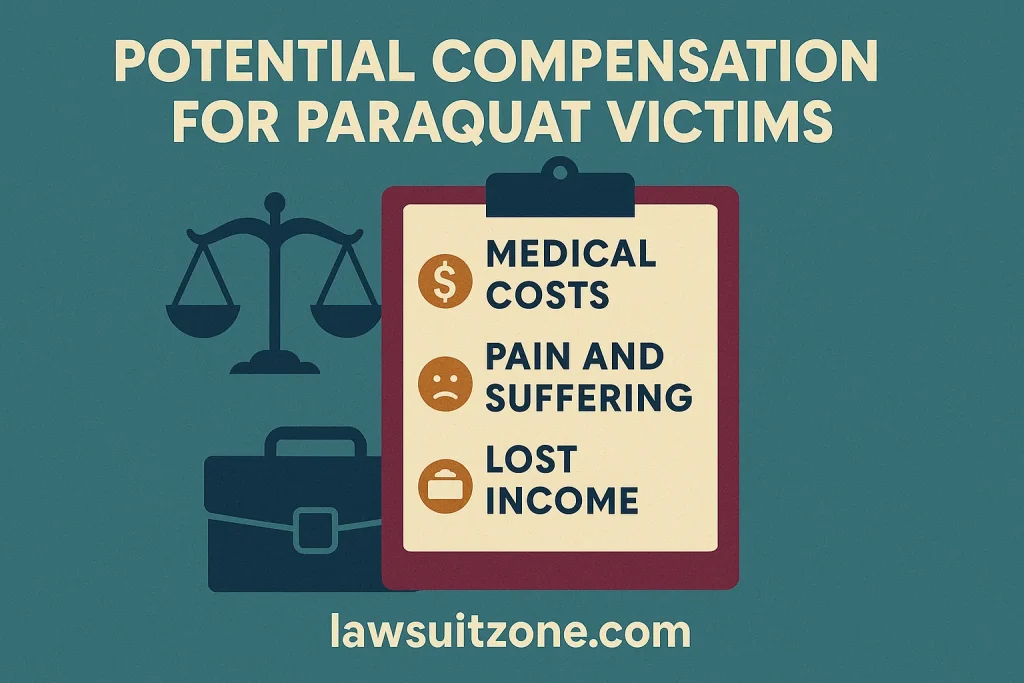
Economic Damages
- Medical expenses
- Future care costs
- Lost income
- Reduced earning capacity
- Medication and therapy
Non-Economic Damages
- Psychological anguish
- Loss of enjoyment of life
- Pain and suffering
- Disability-related limitations
Punitive Damages
Awarded in cases where companies acted recklessly or intentionally concealed risks.
Statute of Limitations (Time Limit to File)
Most states allow 1 to 3 years after:
- Diagnosis of Parkinson’s disease
- Discovery of exposure
- Learning of paraquat-related risks
Delay may result in the loss of your right to file.
What to Do If You Believe Paraquat Harmed You
1. Document Symptoms
Note changes in health, especially tremors or stiffness.
2. Request Medical Records
Collect diagnostic reports and neurologist’s assessments.
3. Exposure History Review
Think of work, homes, or farms that you lived close to.
4. Avoid Public Discussions
Social media can negatively affect claims.
5. Consult Professional Assessment
Legal professionals can explain eligibility without giving medical advice.
Frequently Asked Questions
Final Thoughts
The lawsuit against paraquat is more than a legal issue; it’s a public health concern affecting thousands of workers, families, and rural residents throughout the country. People trusted for generations that agricultural herbicides were safe if used properly. However, research now reveals long-term neurological damage associated with paraquat exposure.
This guide provides clear and understandable information to help individuals learn about risks, exposure pathways, health effects, compensation, and the ongoing legal process. While this is not legal or medical advice, understanding your rights and gathering records will help you make informed decisions about your next steps.