American Hartford Gold Lawsuit: 2025 Investor Insights

Introduction
The American Hartford Gold lawsuit is not just another court saga it’s a lesson for anyone going into gold IRAs. Investors think of gold as the “havens” asset, something tangible during uncertain times. But cases like this teach us that even well-established financial brands are at risk of severe legal examination.
This guide examines the lawsuit from several facets: who American Hartford Gold is, why the lawsuit is important, how it impacts investors, and most importantly, what we can all learn. When you’re done, you’ll have context and actionable advice not just headlines. Have you checked our detailed guide on DAZN Lawsuit
The Rise of American Hartford Gold
American Hartford Gold came into the market promising security and confidence. Based in Los Angeles, the firm sold retirement diversification in the form of precious metals IRAs. Gold and silver coins, storage alliances, and glitzy sponsorships became staples of its identity.
What attracted so many investors was the script: gold shields you as the dollar declines. Add celebrity endorsement and blanket advertising, and American Hartford Gold rapidly established credibility in the saturated financial-services sector.
But triumph brings attention. The lawsuit illustrates how reputation can change so swiftly when lack of transparency is in question.
Why Precious Metals Firms Face Lawsuits
The world of financial services—particularly alternate assets such as gold IRAs—is rich terrain for lawsuits. Why? Because money and trust meet.
Common triggers include:
- Fee Transparency – Surprise storage or transaction fees.
- Marketing Promises – Marketing that implies gold is risk-free or guaranteed to appreciate.
- Account Mismanagement – Bungled rollovers or paperwork.
- High-Pressure Sales – Aggressive representatives pressuring customers into higher-margin products.
The American Hartford Gold lawsuit appeals to these very concerns, pushing the issue of balance between aggressive marketing and fair disclosure.
Behind the American Hartford Gold Lawsuit
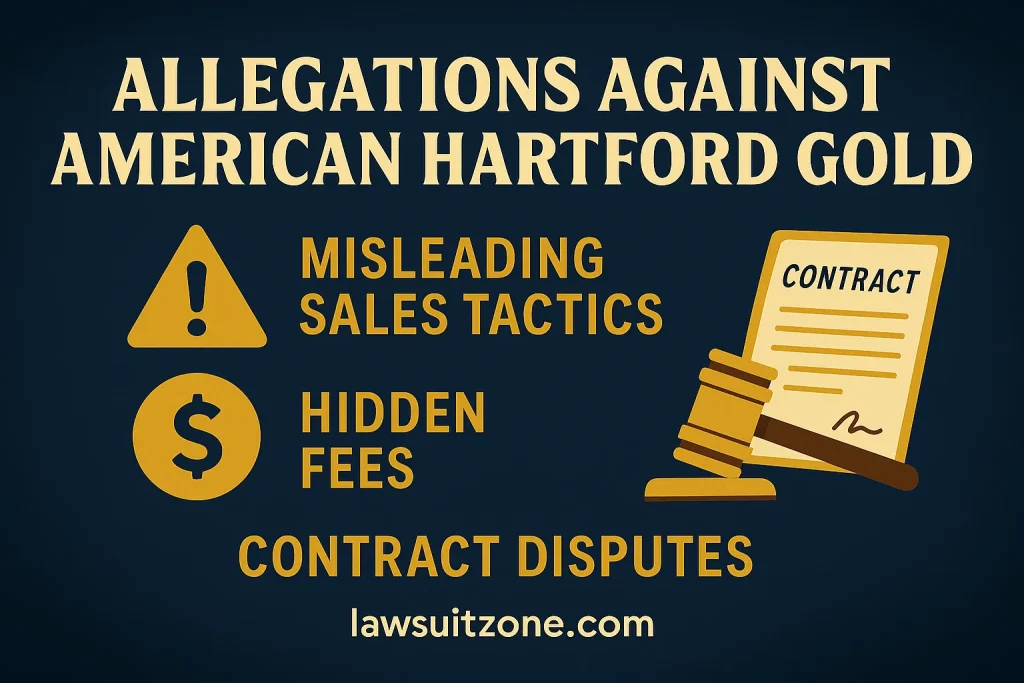
So, what’s really on the line? Based on the allegations:
- Exaggerated return promises – Implying gold would do better than it actually could.
- Downplayed downside risk – Minimizing metal market volatility.
- Unclear fee arrangements – Investors reportedly finding secret fees once they’ve signed on.
- Aggressive sales practices – Pressure to buy quickly, often with incomplete comprehension.
Remember: charges are not convictions. The case is before the courts, and judges will decide if these practices went too far.
Taking the Legal Course
Financial cases usually go step-by-step, and this one does too:
- Complaint Filed – Early charges filed by investors.
- Discovery – Document gathering, including contracts, call scripts, and internal messages.
- Pre-Trial Maneuvering – Dismissal or narrowing motions.
- Settlement Talks – Where the vast majority of financial cases settle.
- Trial (if necessary) – Evidence and witnesses are heard.
- Verdict or Settlement – Decide on restitution, fines, or dismissal.
Investors need not worry—but they should listen. The outcomes may affect the structuring of future gold IRA contracts.
Why This Matters for Investors
If you already have an account with American Hartford Gold, the lawsuit can be disconcerting. Here’s what it means in reality:
- Trust erosion – Even if accounts are left untouched, brand reputation suffers.
- Financial impact – Secret fees, if they turn out to be so, mean lower net returns.
- Decision-making pause – Existing investors may hesitate before enrolling.
- Future oversight – Regulators might strengthen regulations, making it more difficult for companies to play loose and fast.
The case is in effect a reminder that due diligence isn’t optional—it’s required.
Lessons of Previous Precious Metals Lawsuits
This isn’t the first lawsuit against a precious metals firm.
- Goldline International in the 2010s was accused of deceptive sales tactics, eventually tightening its standards.
- Morgan Gold was sued for exaggerating risks and overcharging.
- Other IRA companies have been reported for hidden fees or unauthorized rollovers.
Every case made an impact on the industry. They also showed investors that contracts and disclosures need to be read under a microscope.
The Bigger Picture: Industry Implications
The American Hartford Gold lawsuit doesn’t impact a single company—it has a ripple effect:
- Marketing strategies will come under scrutiny. “Wealth protection” advertisements could require disclaimers.
- Competitors will adjust. Competitors will point to transparency as a selling point to attract clients.
- Regulators may intervene. Agencies could set stricter rules on how gold IRAs are sold.
In other words, this lawsuit may help define the next chapter of precious metals investing.
Investor Toolkit: Protecting Yourself
If you’re considering—or already have—a gold IRA, here’s your action checklist:
- Demand written fee disclosures. Don’t rely on verbal promises.
- Compare providers. Don’t assume the biggest advertiser is the best fit.
- Look for third-party reviews. Not just testimonials on company websites.
- Diversify investments. Gold is precious, but not your sole ace in the hole.
- Get outside advice. Don’t make decisions based on salespeople.
These actions aren’t paranoia—they’re safeguards.
Potential Outcomes of the Case
Depending on legal proceedings, a few consequences are possible:
- Settlement with restitution – Victims get money back.
- Court decision against the firm – Fines in addition to increased regulation.
- Dismissal of claims – When allegations have no evidence.
- Industry reform – In any event, competitors may voluntarily make better disclosures.
For investors, the real impact will differ—but the discussion around transparency will become louder.
Trusted Resource for Consumers
One of the best sources for learning how to steer clear of deceptive financial invitations is the Federal Trade Commission (FTC). Their consumer protection guides, investment scam alerts, and retirement planning resources are free and updated regularly.
Connecting this lawsuit to consumer awareness, the FTC’s recommendations give investors stronger decision-making power.
FAQs About the American Hartford Gold Lawsuit
Conclusion
The American Hartford Gold lawsuit is more than courtroom news—it’s a mirror for the entire precious metals industry. It shows how easily marketing, trust, and investor expectations can clash.
Whether you’re an investor today or planning for tomorrow, the lessons are clear: read carefully, diversify, and never assume safety without proof.
Gold will always attract attention as a hedge against uncertainty. But the way it’s sold and regulated is changing—and lawsuits like this are shaping that future.