Rivian Class Action Lawsuit: 2025 Full Story and Guide
Introduction: A Promising EV Dream Under Scrutiny
When Rivian rolled out its much-hyped R1T electric pickup and R1S SUV, it was touted as the “next Tesla challenger.” With Amazon and Ford backing it, and with one of the largest IPOs of the decade, Rivian was Wall Street’s darling and a shining light for eco-conscious drivers.
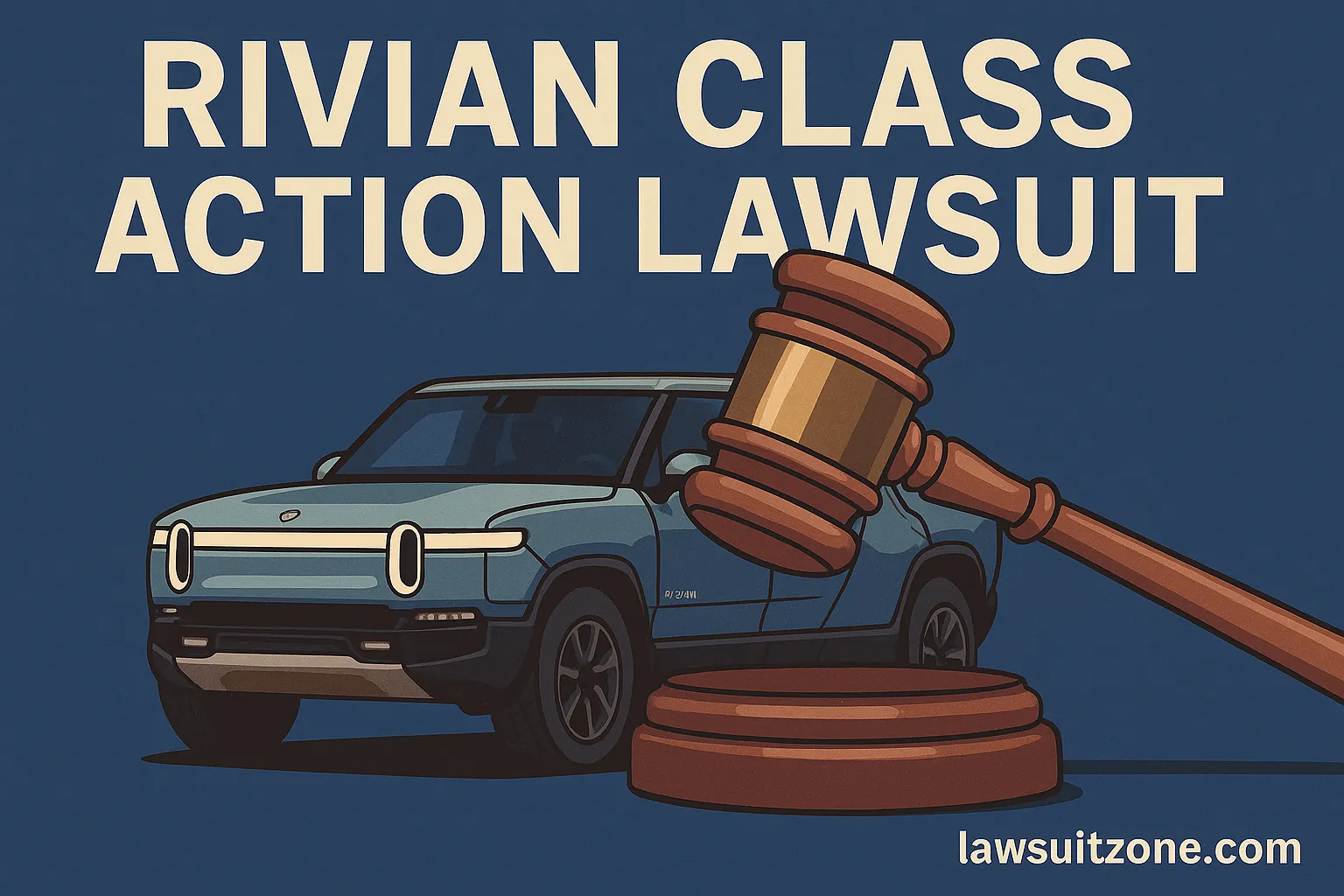
But the sheen of early success soon faded. Today, the Rivian class action lawsuit is a hot topic of debate in the EV and investment communities. Investors claim Rivian misled them in its initial public offering, consumers gripe about unexpected price increases, and the industry is paying close attention.
This guide dissects what the lawsuit is about, how it started, what it will mean for Rivian’s future, and why it’s important for anyone thinking of investing in or shopping from an EV startup. Have you checked our detailed guide on Cadets Drum Corps Lawsuit.
Rivian’s Meteoric Rise: Why the Hype Was So Big
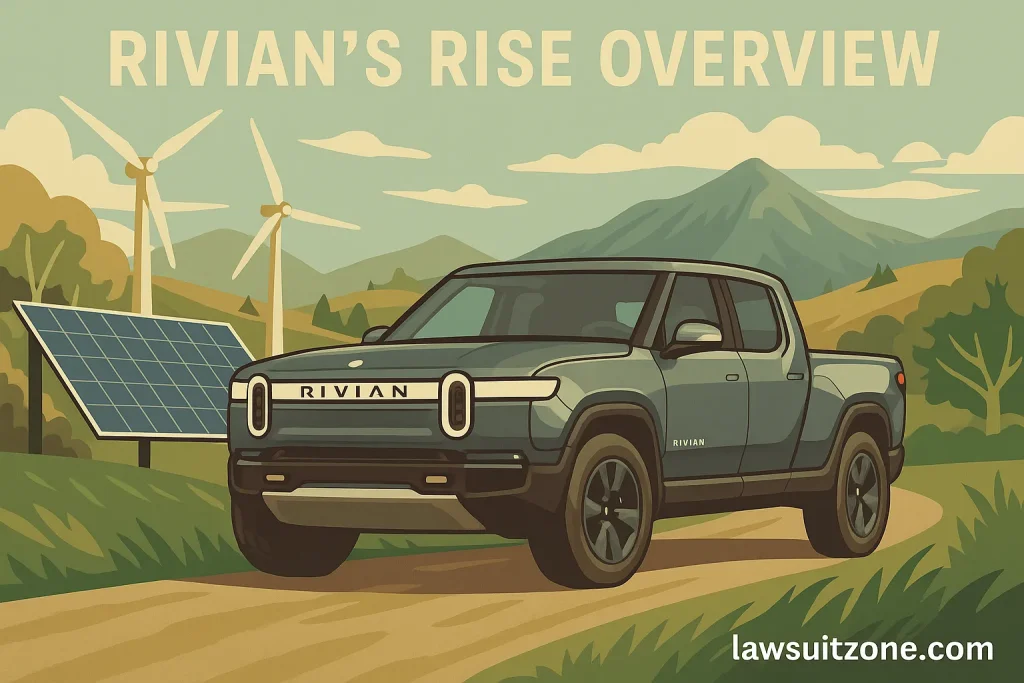
Rivian was founded in 2009 and spent years working on its technology in secret. The firm shunned the bombastic overtures of some competitors, instead setting about building tough, adventure-spec EVs.
- Amazon’s $700M investment provided Rivian with credibility.
- Ford’s support demonstrated legacy carmakers believed there was genuine potential.
- The IPO in November 2021 raised almost $12 billion, one of the biggest in decades.
Rivian was worth more than $100 billion at the time, more than legacy carmakers who had been manufacturing cars for more than a century. To many, Rivian was not only a company but a cultural transition to sustainable mobility.
Why EV Startups Invite Lawsuits
High-growth sectors come with high hopes, and electric vehicles are no different. EV startups attract massive scrutiny because they:
- Make aggressive production timelines commitments.
- Leverage a lot of investor capital and pre-orders.
- Work in the conditions of uncertain supply chains.
- Work in an industry where trust and delivery are most crucial.
The Rivian class action lawsuit is not novel in theory Tesla, Nikola, and Lordstown Motors have all had investor or customer suits against them but it’s significant because Rivian was the most credible player on the list.
Timeline of the Rivian Class Action Lawsuit
- Nov 2021: Rivian’s IPO brings in almost $12 billion. Stock prices skyrocket.
- Dec 2021 – Feb 2022: Production issues are first reported.
- March 2022: Rivian slashes prices by thousands (up to $12,000), leading to uproar.
- 2022: Shareholders sue Rivian, accusing it of lying about its finances and readiness to produce.
- 2023-2024: Claims are consolidated into the Rivian class action lawsuit.
- 2025: The case remains ongoing, and analysts argue over its implications for Rivian’s future.
What Are the Allegations?
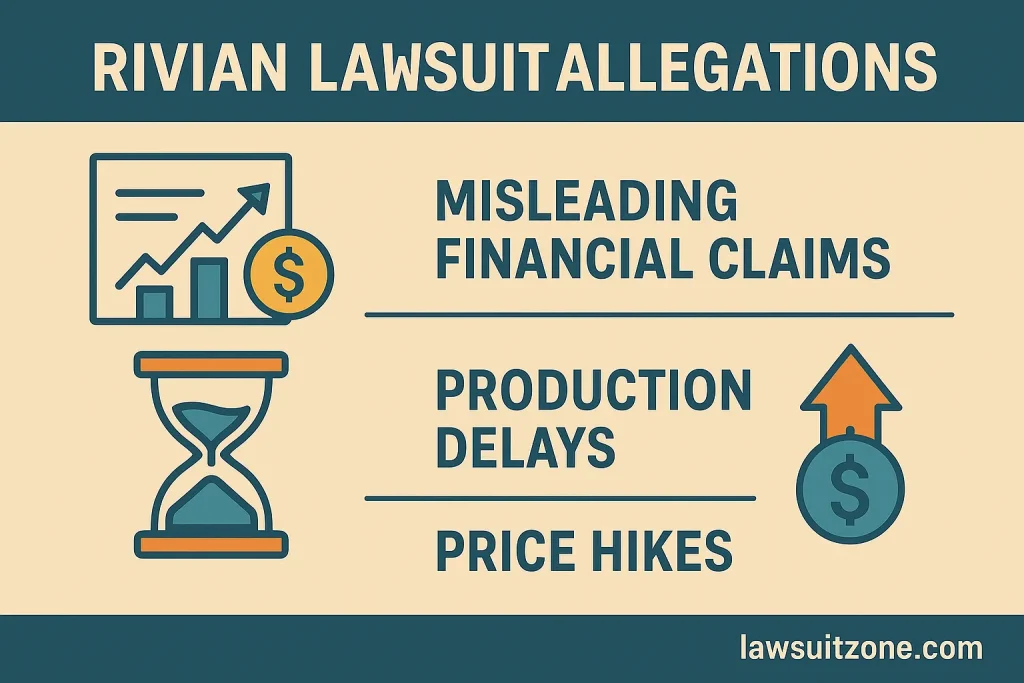
The lawsuit has three key claims:
1. Misleading Investors
Rivian is charged with giving too rosy an overview of its readiness to produce and financial health at its IPO, prompting investors to purchase stocks at inflated prices.
2. Promises Broken to Customers
When Rivian issued abrupt price increases, even for users who had pre-ordered, people felt deceived. The outcry compelled Rivian to rescind the decision partially.
3. Production Issues
Shareholders contend Rivian knew that it could not achieve its lofty production goals but refused to reveal such constraints openly.
Rivian’s Defense
Rivian denies any wrongdoing. Executives claim global supply chain disasters, rampant material price increases, and pandemic backlash caused problems that were impossible to fully foresee.
CEO RJ Scaringe has positioned Rivian as a firm in the midst of an extended journey: constructing new factories, growing delivery networks, and slowly increasing production. In recent years, the firm has prioritized transparency, but critics say the distrust was established before that.
What Makes Class Action Lawsuits Special
A class action lawsuit is when multiple individuals who have similar claims consolidate into a single legal action. For Rivian:
- Plaintiffs = investors who purchased Rivian shares at artificially inflated prices.
- Claims = consumer damage and financial misrepresentation.
- Role of the Court = determine whether Rivian misrepresented to investors and customers.
Outcomes can significantly differ:
- Settlement (most probable)
- Case dismissal
- Trial with damages recovered
For more context on class action investor rights, refer to the U.S. Securities and Exchange Commission (SEC), a reliable authority.
The Human Side: Impact on Customers
While most of the lawsuit concerns investors, customers have their own grievances:
- Delayed deliveries: Some waited months, even years, for promised cars.
- Price hikes: Rivian originally jacked up prices on pre-orders, prompting outrage.
- Communication gaps: Customers felt blindsided by unexpected announcements.
For many early adopters, Rivian was more than a car company it was a lifestyle. That makes the emotional damage even more critical.
Impact on Investors
Volatility in stock prices has been a big thorn in the side. Stocks that traded for more than $100 fell to less than half that amount. A lot of retail investors who entered in early lost a lot of value.
Institutional investors, though, have been more patient. Amazon, for instance, is still a staunch supporter, and Rivian still provides electric delivery vans for its huge logistics operation.
Industry-Wide Implications
The Rivian class action lawsuit highlights issues that ripple across the EV industry:
- Transparency matters: Overpromising can backfire.
- Production is hard: Scaling EVs is vastly more complex than building prototypes.
- Investor caution: Future EV IPOs will face tougher scrutiny.
Other automakers startups and legacy players alike are watching closely.
Lessons for Consumers and Investors
- Do your homework: Don’t rely solely on hype during IPOs.
- Understand risks: EV startups face unpredictable challenges.
- Secure deals: For pre-orders, make sure that pricing and timelines are defined.
- Invest diversification: Never put all your bets on a single emerging company.
Parallel EV Lawsuits
- Tesla has been hit with several shareholder lawsuits about production schedules and Autopilot claims.
- Nikola was accused of deceiving investors with staged prototype demonstrations.
- Lordstown Motors was sued for production readiness before it entered bankruptcy.
These cases demonstrate that investor lawsuits are the rite of passage for the EV sector.
Potential Outcomes for Rivian
- Settlement: Most probably, with Rivian paying compensation.
- Dismissal: If courts decide the claims are unsupported.
- Trial: Unlikely, but possible.
- Reputation cost: Even without huge pay-outs, damage to trust can remain.
FAQs
Conclusion: A Defining Moment for Rivian
The Rivian class action suit is more than courthouse drama it’s a challenge to Rivian’s credibility and mettle. For investors, it’s a reminder about IPO hype. For consumers, it’s a reminder that even great companies can fall.
Rivian still boasts great products, heavy hitters behind it, and ardent fans. But how it weathers this lawsuit and re-establishes trust will decide if it’s a legitimate Tesla rival or disappears like other EV aspirants.