Rowdy Oxford Lawsuit: Complete 2025 Guide to Allegations, Facts & Legal Insights
Introduction
The Rowdy Oxford lawsuit has captured nationwide attention because of the complex mix of business ethics, alleged financial misconduct, and controversy that it entails. From its origins in a dispute over a hospitality and lifestyle brand, the situation ballooned into a full-on legal battle that questioned transparency, brand responsibility, and personal accountability in contemporary entrepreneurship.
Below is a 2025 comprehensive guide that breaks down every major aspect of the case from its origins and legal filings to the lessons both business owners and consumers can take from it. Have you checked our detailed guide on listeria ice cream lawsuit.
Who Is Rowdy Oxford?
But before diving deep into this legal drama, let’s get to know who Rowdy Oxford is. Commonly associated with creative ventures in the hospitality, events, and nightlife industries, Oxford built a reputation as an audacious entrepreneur known for taking risks and pulling off some seriously unorthodox marketing.
While his ventures initially drew praise for innovation and community engagement, business expansion brought on internal disputes that eventually led to allegations of breaches of contract, misuse of funds, and general workplace misconduct.
How the Rowdy Oxford Lawsuit Began
The Rowdy Oxford lawsuit began with several former business partners and employees filing civil complaints in early 2024, alleging various instances of financial mismanagement and breach of fiduciary duty. In court filings, Oxford and his associates were accused of using business funds for personal gain, failing to honor partnership agreements, and misrepresenting financial data to investors.
Oxford, through his attorneys, has denied any wrongdoing; he said misunderstandings and disputes in business led to the litigation, not any intent to commit fraud.
The case quickly made regional headlines and morphed from a small business dispute into a public debate over corporate accountability, personal branding, and influencer entrepreneurship.
Timeline of Key Events
| Date | Event Summary |
|---|---|
| Jan 2024 | Initial complaints filed by former partners and employees. |
| Feb 2024 | Media expose of possible financial anomalies. |
| Apr 2024 | Oxford publishes a public statement denying allegations. |
| July 2024 | Court Orders Preliminary Financial Disclosures and Audits. |
| Oct 2024 | Settlement talks start between parties. |
| Feb 2025 | Updated filings reflect continuing mediation. |
While the case remains partly under review, several sub-claims have reportedly been privately settled, which would indicate that both sides are considering out-of-court settlements.
The Core Allegations
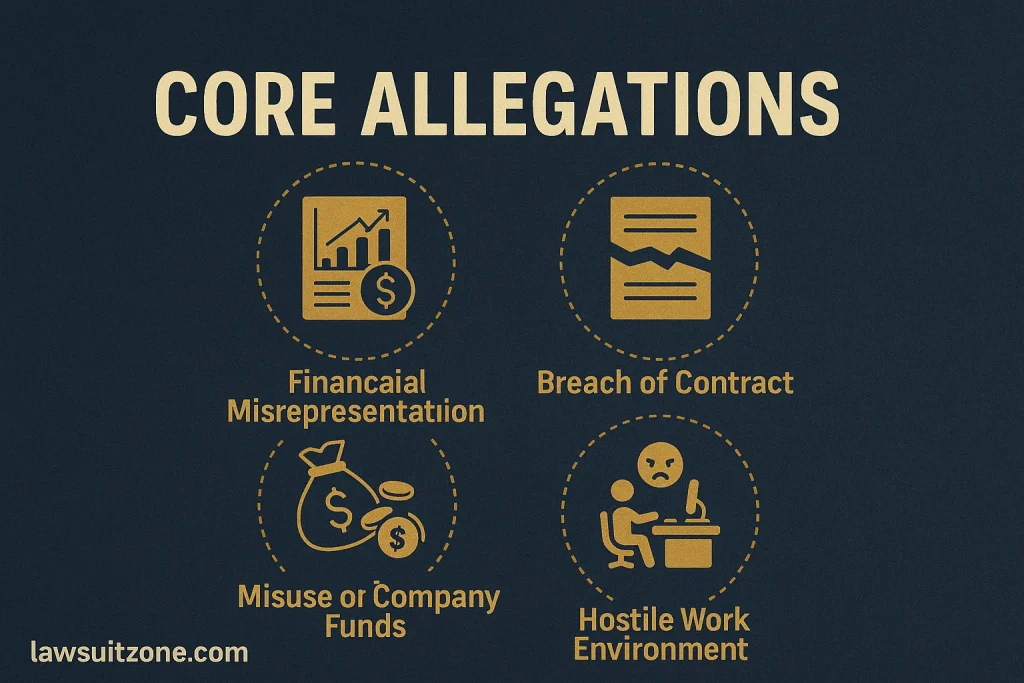
The lawsuit outlines a multitude of allegations, categorized under civil and commercial law, each centered on how funds were managed, employees treated, and certain public claims made of the brand’s operations.
1. Financial Misrepresentation
The plaintiffs contend that Oxford’s business entities submitted false statements of profit and loss to investors. They complain that the important figures were intentionally changed so as to gain financing or loans that would have not otherwise been available.
2. Breach of Contract
Included are several accusations of breach of contract — including with vendors, creative collaborators, and sponsors of the event. The plaintiffs contend that this caused considerable financial loss.
3. Misuse of Company Funds
Documents show company accounts were used to pay personal expenses not related to business operations, a common focus in this type of corporate litigation.
4. Hostile Work Environment
Some have cited erratic management behavior and unpaid compensation as grounds for unfair treatment and emotional distress.
The Defence’s Response
The accusations were strongly contested by Oxford’s legal team as “mischaracterizations of normal business operations.”
The defense argues:
- All financial decisions were properly documented and approved.
- Partnership disputes are contractual and not criminal in nature.
- The plaintiffs had equal access to financial data and were complicit in management decisions.
Moreover, the defense said that media amplification of the Rowdy Oxford lawsuit creates an unfair perception, which may be harmful to ongoing projects and future brand collaborations.
Legal Context: What the Law Says
The instant litigation concerns civil business litigation matters that include breach of contract, breach of fiduciary relationship, and damage to reputation.
Fiduciary Duty
Under United States business law, it is required that partners and executives act in the best interests of their organization. To act otherwise — either intentionally or with negligence — is considered breach of fiduciary duty.
Contractual Obligations
When one party fails to fulfill the contractual promises without legal justification, it is termed as a breach of contract. Courts usually grant more credence to written agreements; therefore, the documentation here will play a major role.
Reputational Damage
The defense for Oxford could argue for damages due to defamation or reputational loss, if plaintiffs’ claims are exaggerated or unsubstantiated — a counter-strategy often used in modern business litigation.
Court Proceedings and Current Status, 2025
As of early 2025, the Rowdy Oxford lawsuit is still ongoing in discovery and mediation, meaning both parties exchange evidence and negotiate settlement options.
Recent filings have suggested that both sides may be willing to reach a confidential agreement that can avoid protracted litigation and media scrutiny.
Yet legal experts say that even with a settlement, the case is sure to impact partnership agreements within both the hospitality and influencer industries in years to come.
Public Reaction and Media Coverage
The Rowdy Oxford lawsuit has sparked serious online debate. Fans of Oxford’s brand argue that he’s being unfairly targeted, while critics believe the case highlights deeper issues with accountability among self-branded entrepreneurs.
Reactions on social media reveal a divide:
- Supporters praise Oxford’s creative vision and say the lawsuit is overblown.
- The critics underline the necessity of transparency and ethical leadership.
This polarization ironically increased the brand’s visibility a phenomenon not so uncommon in high-profile legal disputes.
Ethical Implications for Business
1. Transparency Builds Trust
One of the most important lessons of this case is that open and honest communication with partners, investors, and employees is imperative. Even minor misunderstandings can develop into legal battles.
2. Financial Oversight Matters
Every expense and revenue stream should be verifiable; this way, independent audits and transparent accounting can preclude such accusations, as with the case against Rowdy Oxford.
3. Personal Brand versus Legal Entity
Entrepreneurs with companies that surround their personal identity have to separate personal spending from corporate accounts to avoid conflicts of interest.
Broader Lessons for Entrepreneurs
The lawsuit is a real-world cautionary tale for business owners and influencers alike.
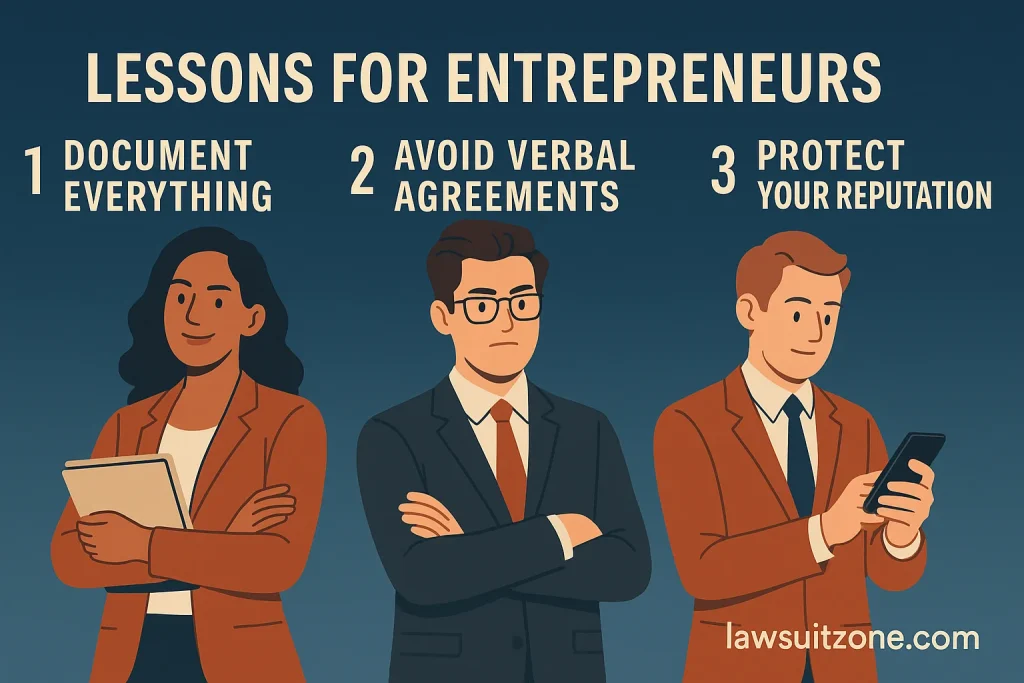
- Document everything. From contracts to invoices, documentation protects both parties.
- Avoid verbal agreements. As much as possible, courts will not honor conversations and assumptions.
- Consult experts. In large partnerships, accountants and attorneys are indispensable.
- Protect your digital reputation. Once legal issues go public, the court of opinion can be harsher than the court of law.
Detailed guidance regarding ethical entrepreneurship and compliance with the law can be found at the U.S. Small Business Administration (SBA) a trustworthy government resource that offers both legal and operational support for small businesses.
Expert Opinions
Legal experts say the Rowdy Oxford lawsuit reflects a growing trend in 2025 where personal branding collides with corporate governance. In a digital age where influencers double as CEOs, transparency isn’t optional — it’s expected.
Financial analysts further warn that companies in the gray zone between creative entrepreneurship and formal corporate structure stand to experience heightened regulatory scrutiny.
Possible Outcomes
Out-of-Court Settlement
Most likely scenario: private agreement between both parties with nondisclosure clauses to protect reputations.
Partial Dismissal or Refiling
Certain claims may be dropped or merged into a broader arbitration case.
Trial and Verdict
Should negotiations fail, the case would likely go to trial, attracting national media attention, as well as setting key precedents for partnership disputes.
Reputational Fallout
Resolution alone might not restore investor confidence. Rebranding or total restructuring could be required of Oxford’s next projects.
How It Affects Future Partnerships
The Rowdy Oxford lawsuit supports the reason why modern partnerships must change with the times of digital business models. Transparency, detailed contracts, and third-party audits are becoming the gold standard.
Some legal experts predict that in 2025, many creators and small business owners will use AI bookkeeping and blockchain-based contracts to avoid disputes thanks to reduced ambiguity.
Social Media and Reputation Management
Lawsuits nowadays don’t remain within courtroom walls. Online narratives define modern perceptions of guilt or innocence.
The team from Oxford has invested a lot in the management of reputation, including PR firms and transparency statements, to regain lost credibility. It remains to be seen whether this will restore trust. It does, however, mark a new era where reputation recovery is part of litigation strategy.
Lessons Learned
- Success cannot be separated from ethics and accountability.
- A lawsuit can destroy years of goodwill overnight.
- Transparency and compliance should start on day one, not after a problem occurs.
- Even negative publicity can impart indelible lessons pertaining to integrity.
The Bigger Picture: Business Ethics in 2025
The case of Rowdy Oxford is part of a wave of decisions defining modern-day entrepreneurship, from courts taking a harder line on disclosure and employment rights to consumer trust across industries.
As technology closes the gap between personal brands and businesses, the integrity of messages becomes a moral and legal requirement.
Frequently Asked Questions (FAQs)
Final Thoughts
The lawsuit involving Rowdy Oxford is not about an individual or a company; it’s about how reputation can be fragile in the digital economy. This is a reminder that every brand is made up of people whose actions — ethical or otherwise — build public trust.
By studying this case, entrepreneurs will learn how to balance ambition with accountability and creativity with compliance. In 2025, that balance defines not just success, but survival.
⚖️ Disclaimer:
The information provided in this article is to be used for informational purposes only and shall not be used as or relied upon as legal or professional advice. It is always advisable to consult with a qualified attorney or business law professional to resolve any such issues.