Listeria Ice Cream Lawsuit: Complete Guide and Legal Insights in 2025
Introduction
Among the most alarming cases of food contamination in recent years, the Listeria ice cream lawsuit has captured headlines and public attention. The once-cold dessert turned into a serious health and legal crisis after batches of ice cream were allegedly linked to the bacterium Listeria monocytogenes, which can cause severe illness and even death.
The following comprehensive guide breaks down the details of the lawsuit, what it means for consumers, how such incidents happen, and what lessons both companies and customers can take from it. Have you checked our detailed guide on OtterSec Lawsuit.
What is the Listeria Ice Cream Lawsuit?
The Listeria ice cream lawsuit refers to a series of class actions filed by consumers and families affected by contaminated ice cream products. In these lawsuits, plaintiffs claimed that specific ice cream manufacturers failed to accord proper sanitation practices that allowed Listeria bacteria to grow and contaminate the food supply chain.
Listeria is a bacterium that grows well under cold, moist conditions—like frozen dessert manufacturing plants. If ingested, it can cause listeriosis, a sometimes fatal infection, particularly dangerous to pregnant women, the elderly, and people with compromised immune systems.
Background: How the Outbreak Began
The story behind the Listeria ice cream lawsuit began with health authorities noticing a growing trend in the number of listeriosis cases within several states. The CDC and FDA investigated and traced the infection to contaminated batches of ice cream prepared in specific production facilities.
Recalls were issued throughout the nation after tests confirmed that both unopened and distributed products were found to carry Listeria monocytogenes. The recalls halted production, while consumer lawsuits sought compensation for medical costs, pain, and suffering.
Some victims suffered from severe illnesses, others long-term health effects, and in some cases, there were even deaths—leading families to launch wrongful death cases.
What the Lawsuit Alleges
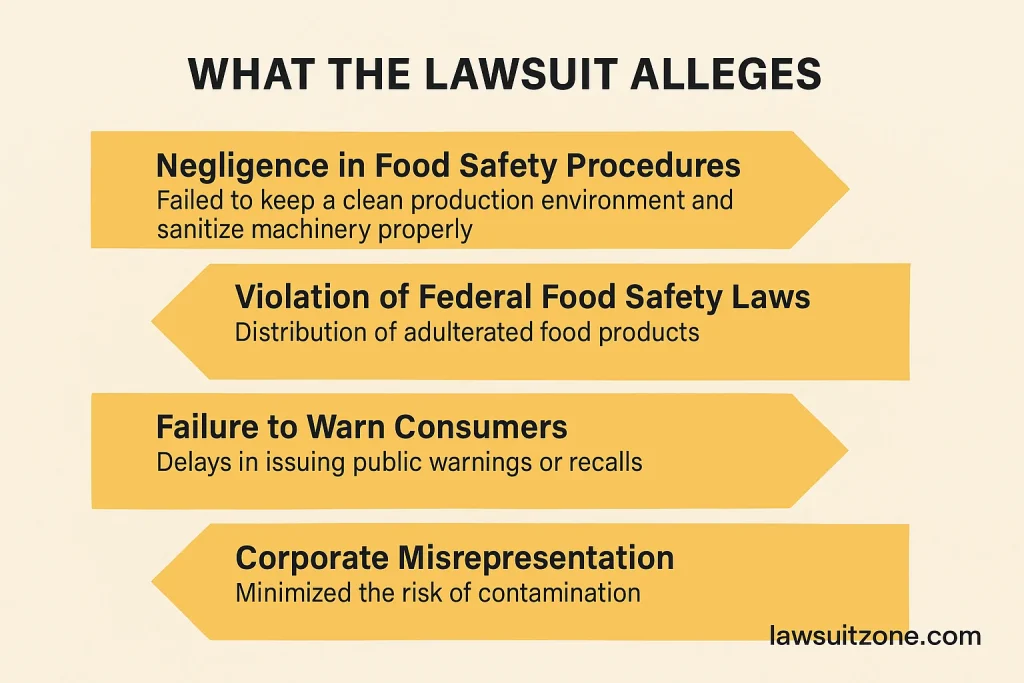
The Listeria ice cream lawsuit is based on several allegations of negligence and failure to maintain public safety standards. Major claims include:
Negligence in Food Safety Procedures
The plaintiffs contend that the defendant failed to keep a clean production environment and sanitize machinery properly.
Violation of Federal Food Safety Laws
Complaints cite violations of the Federal Food, Drug, and Cosmetic Act, which prohibits the distribution of adulterated food products.
Failure to Warn Consumers
Allegations include delays in issuing public warnings or recalls after internal tests showed contamination.
Corporate Misrepresentation
The company allegedly minimized the risk of contamination or sold products when safety problems were already known.
Emotional Distress and Wrongful Death
Families of those who became seriously ill or died from listeriosis have filed for damages covering emotional pain, funeral expenses, and loss of companionship.
Timeline of Events
- Early Reports (Year 1): Health officials identify clusters of listeriosis cases across multiple states.
- Investigation (Year 1–2): Infections traced back to a particular brand and manufacturing location by the CDC and FDA.
- Recall Announcement (Year 2): The company initiates a voluntary recall of several ice cream products nationwide.
- Lawsuits Filed (Year 2–3): Consumers and families begin filing legal claims citing negligence.
- Settlements and Ongoing Litigation (Year 3–4): Some cases settle confidentially, others remain in court.
This timeline shows how long detection can take—and how quickly public trust can evaporate once contamination is revealed.
Health Impact of Listeria Contamination
Listeriosis can range from flu-like symptoms to life-threatening complications. Victims reported:
- Severe gastrointestinal distress
- Fever and muscle aches
- Pregnancy complications, including miscarriage and premature birth
- Sepsis or meningitis, in extreme cases
The CDC estimates that about 1,600 people in the U.S. get listeriosis each year, with about 260 deaths. When linked to a beloved product like ice cream, the implications are both medical and moral.
Legal Basis of the Action
The lawsuit is primarily based on product liability law, allowing consumers to hold manufacturers responsible for harm caused by contaminated products.
Three major types of product liability claims include:
- Manufacturing Defect: Contamination during production.
- Design Defect: Inherently unsafe manufacturing system.
- Failure to Warn: Inadequate consumer or regulator notification.
Depending on the jurisdiction, plaintiffs can also claim breach of warranty or gross negligence.
The Company’s Response
After the outbreak and lawsuits, the company issued public statements of regret and pledged to improve safety standards, including:
- Shutting down contaminated facilities for deep cleaning
- Implementing better quality control systems
- Conducting independent audits
- Enhancing employee hygiene training
While these steps may rebuild consumer confidence, they often come too late to restore reputation and trust.
Government Involvement and Investigations
Federal agencies like the CDC, FDA, and DOJ investigated and ensured contaminated batches were recalled. The DOJ also evaluated possible criminal charges for violations of food safety laws, with some companies facing fines or prosecution.
Do-follow Link: To learn more about how the Department of Justice enforces food safety regulations, visit the official U.S. Department of Justice – Consumer Protection Branch.
The division handles cases related to public health and consumer fraud, pursuing accountability for safety lapses.
Compensation and Settlements
Victims sought damages for:
- Medical Expenses: Hospitalization, treatment, and rehab
- Lost Wages: Due to illness-related work absences
- Pain and Suffering: Physical and emotional distress
- Wrongful Death: Emotional and financial harm to families
Some settlements remain confidential; others resulted in multi-million-dollar payouts acknowledging corporate negligence.
How Listeria Contaminates Food

Listeria monocytogenes can survive even in cold environments, meaning freezing isn’t enough to kill it. Common contamination causes include:
- Poor sanitation
- Cross-contamination
- Water leakage or drainage problems
- Temperature control failures
Lessons for the Food Industry
This lawsuit highlights that food safety is a legal and moral duty. Key lessons include:
- Regular bacterial testing
- Ingredient traceability
- Continuous hygiene training
- Transparency in communication
- Accountability at leadership levels
Consumer Takeaways: How to Stay Safe
Consumers can protect themselves by:
- Checking FDA recall lists regularly
- Discarding recalled products
- Avoiding cross-contamination at home
- Observing expiration dates and storage guidance
- Reporting suspicious symptoms to authorities
Public awareness remains a vital defense against foodborne illness.
Broader Impact on Public Health Policy
The lawsuit has influenced U.S. food policy, leading to:
- Greater scrutiny of dairy production
- Higher fines for safety violations
- Expanded consumer education programs
- Adoption of AI and blockchain in food traceability
Frequently Asked Questions (FAQs)
Final Thoughts
The Listeria ice cream lawsuit is a wake-up call for both companies and consumers — a reminder that one lapse in safety can spiral into tragedy, lawsuits, and lasting reputational damage.
Ethics and accountability are the foundation of public trust.
Disclaimer: The article is for information purposes only and not legal advice. Always seek the advice of a qualified attorney for specific legal guidance.