Blingle Lawsuit: Full 2025 Consumer & Legal Guide
Introduction: Why the Blingle Lawsuit Caught Our Eye
The Blingle lawsuit is one of the most widely discussed service industry cases of 2025. What began as a few customer complaints regarding delayed deadlines and warranty claims has now escalated into a high-profile lawsuit that has rocked both the decorative lighting sector and customer confidence in service-based firms.
For others, the situation is personal. Consider hiring Blingle to illuminate your wedding grounds or holiday festivities, only to find delays, extra expenses, or promises made that did not hold water. To businesses depending on Blingle’s lights to draw traffic, the letdown hit all the more harshly.
This guide gives an exhaustive analysis of the lawsuit: what caused it, its impact on consumers, the legal process, industry-wide implications, and most critically, what customers and companies can learn from it. Toxic Work Environment Lawsuit.
What Is Blingle? From Startup Spark to Industry Player
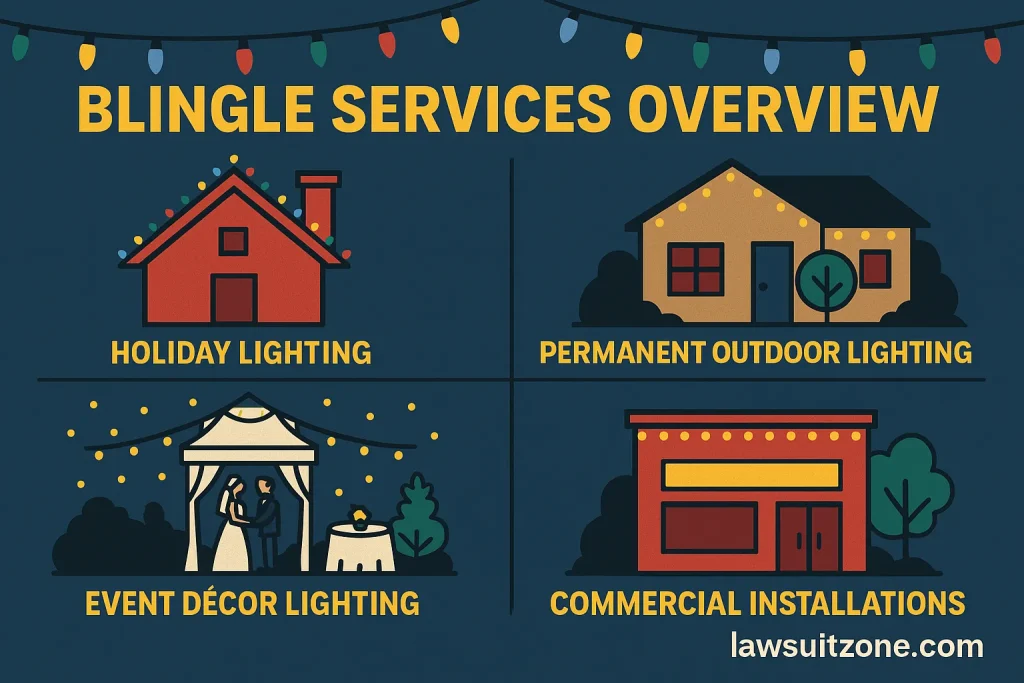
Blingle burst onto the home services market with big promises: revolutionizing properties with top-notch outdoor lighting. Its offerings included:
- Holiday Lighting: Seasonal installations meant to compete with city squares.
- Permanent Outdoor Lighting: Permanent solutions for driveways, residences, and business locations.
- Event Décor Lighting: Marriage ceremonies, birthdays, corporate events, and neighborhood festivals.
- Commercial Installations: Attracting displays designed to increase business visibility.
Blingle reached its height of reputation based on creativity and professionalism. Its promotion rested on high-value products, hard-wearing fixtures, and convenient customer experiences.
But behind the scenes, the cracks were starting to show. Growth brought tension—overdue deadlines, uneven quality of service, and contract disagreements. These issues escalated to what we refer to today as the Blingle lawsuit.
Why Was the Blingle Lawsuit Filed?
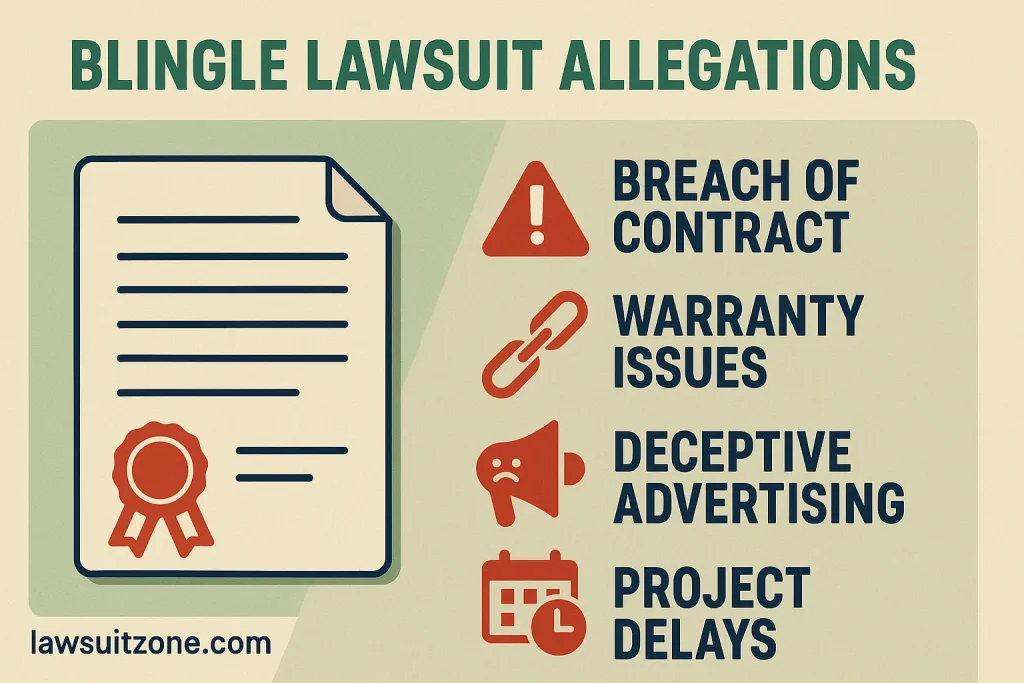
The lawsuit cropped up when customer dissatisfaction hit a boiling point. The main claims are:
Breach of Contract
Clients accused their contracts of guaranteeing services or timelines that were not fulfilled. Some examples include failed installations and modifications from approved designs.
Warranty Ambiguity
Clients accused Blingle of charging for repairs or replacements, which they thought were under warranty.
Deceptive Advertising Representations
Blingle’s marketing highlighted durability, safety, and premium quality. Some clients accuse these representations not being in line with the delivered products.
Project Delays
Seasonal services such as holiday lighting are timing dependent. Delayed appointments were alleged to have cost customers their special occasions or holidays.
Unexpected Expenses
Some customers complained of unexpected fees not included in the initial contracts.
These complaints collectively provided the basis for the Blingle lawsuit, illustrating how dissatisfaction can spiral when communication and trust fail.
The Allegations at a Glance
Contracts Gone Wrong
A contract is designed to shield both parties. But in the Blingle suit, customers complained that contracts were too ambiguous or disregarded. For instance, a homeowner complained that the finalized design was altered at the last minute without his approval.
Warranty Woes
Warranty is usually the clincher for shoppers when making large purchases. Conflicts arose when customers complained lights did not last and were informed replacements were not warranted.
Advertising vs. Reality
Advertising materials featured long-lasting, weather-resistant lamps that would endure years. Yet some customers experienced failure after months.
Timing Is Everything
Holiday lights that arrive weeks after the holiday have lost their value. To a family, a missing Christmas light is a letdown; to a business, a missed seasonal sale can translate into lost business.
The Legal Process Explained
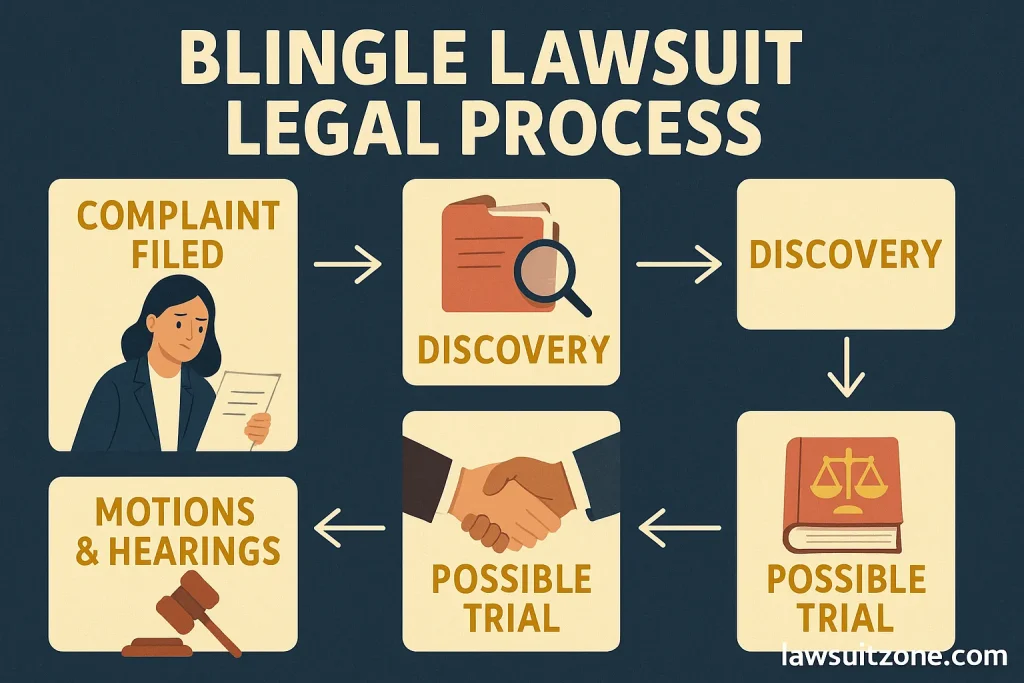
The Blingle litigation is taking a typical but complicated legal course.
Complaint Filing
Consumers officially complained, setting forth claimed violations and harm.
Discovery Phase
Both sides produce contracts, emails, and correspondence. This is frequently where the merit of a case is exposed.
Motions & Hearings
Attorneys argue about what evidence is admissible and if certain allegations are able to proceed.
Settlement Talks
The majority of lawsuits settle so they don’t have to go through the expense and time of trial. Settlement might include refunds, compensation awards, or altered company practices.
Possible Trial
If an agreement is not made, the case goes to trial, where a judge or jury determines outcomes.
Legal analysts say this case may take months—years—depending on negotiations.
Consumer Impact: What Shoppers Are Worrying About
The largest impact of the lawsuit is on Blingle’s customers.
- Financial Burden: Some are out thousands of dollars.
- Emotional Disappointment: Picture planning a wedding setup that will happen once in a lifetime and being disappointed.
- Uncertainty: Shoppers don’t know if they’ll be reimbursed.
- Trust Issues: Even satisfied clients may hesitate to hire Blingle again.
For consumers, the case highlights the need to protect yourself when signing service contracts.
Lessons for Consumers
The Blingle lawsuit offers a valuable playbook for anyone hiring service providers:
- Read every line of your contract. Look for vague terms or hidden fees.
- Ask questions about warranties. Get details in writing.
- Document everything. Keep receipts, emails, and even photos of work.
- Research well. Don’t just use company sites; look at independent reviews.
For consumer protection advice, the Federal Trade Commission provides reliable guidance on contracts, warranties, and rights.
Lessons for Businesses
For businesses, the Blingle lawsuit is a warning that growth without candor is dangerous.
- Don’t make false promises. Hyperbole invites lawsuits.
- Put customer service first. Many lawsuits can be averted by taking complaints seriously early.
- Be transparent about warranties. Customers need to know exactly what’s included.
- Reputation is everything. One lawsuit can weaken brand trust for decades.
How the Blingle Lawsuit Impacts the Industry
The case sends a powerful message to the decorative lighting and service industry:
- Franchise Scrutiny: Blingle franchise owners might experience increased pressure to get communication right.
- Consumer Awareness: Consumers are now more vigilant with contracts in the home improvement and lighting sectors.
- Competitor Advantage: Other companies may use Blingle’s missteps as a marketing opportunity to highlight their own transparency.
Comparisons With Similar Cases
The Blingle lawsuit echoes past disputes in service-based industries:
- Home Renovation Lawsuits: Contractors promising remodels that fell short.
- Landscaping Disputes: Seasonal projects delayed, costing businesses revenue.
- Retail Misrepresentation Cases: Products marketed as durable but failing early.
These comparisons underline a simple truth: trust is the backbone of every service agreement.
Possible Outcomes
Several outcomes are possible:
- Settlement Agreements: Blingle can offer compensation and tighten practices.
- Court Rulings: A court could order damages and more stringent practices.
- Brand Rehabilitation: Blingle can rebrand or implement trust-establishing campaigns.
Unless and until, repairing customer trust will be essential regardless of results.
Extended FAQs
Conclusion: Why the Blingle Lawsuit Is a Wake-Up Call
The Blingle case is not just a matter of law—it’s a cautionary story about the vulnerability of business trust. It serves to remind consumers of the need for due diligence. For companies, it demonstrates that honesty, transparency, and communication are not electives—they’re necessities.
Throughout the case, the moral remains steadfast: guard your rights, insist on clarity, and know that in the services sector, promises are everything.