Toxic Work Environment Lawsuit: 2025 Complete Employee Guide
Introduction: Why These Lawsuits Are No Longer Rare
For decades, many workers silently tolerated unfair treatment, worried they’d lose their jobs if they complained. Those days are over now. More employees are informed today, and many are using a toxic work environment lawsuit to make companies take notice.
Consider this: a workplace is where you’re supposed to develop, make friends, and get paid reasonably not where you’re dreading Sunday nights. That’s why these cases have been such a hot topic in offices across sectors in 2025. Have you checked our detailed guide on Pacific Office Automation Lawsuit.
What Really Qualifies as a “Toxic” Work Environment?
Every frustrating boss or tight deadline isn’t “toxic.” In the law, the term refers to persistent, intense situations that damage worker wellness.
Characteristics of a Toxic Workplace
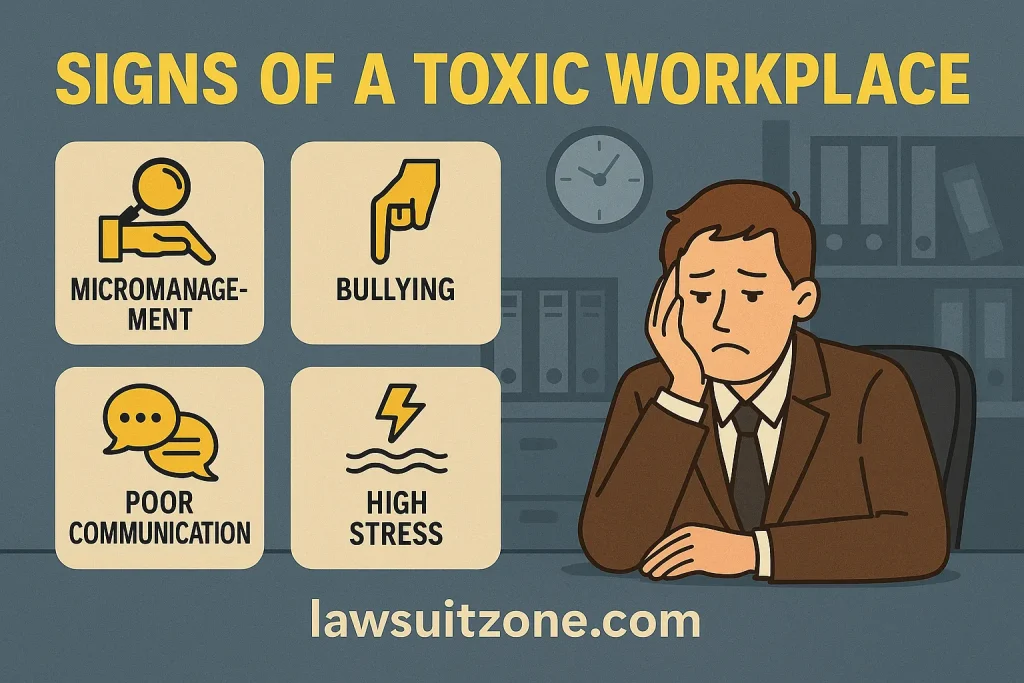
- Ongoing Harassment – Joking, slurs, or threats that never cease.
- Discrimination – Not getting promotion due to race, sex, religion, or age.
- Retaliation – Being demoted or terminated for reporting incidents.
- Excessive Pressure – Ongoing overtime without praise or assistance.
- Hostility from the Top – Managers brushing off complaints, or even instigating abuse.
If such behavior is continued and it’s associated with a protected classification under law, it could be the foundation of a toxic work environment lawsuit.
The Legal Foundation: Legislation That Shields Labor
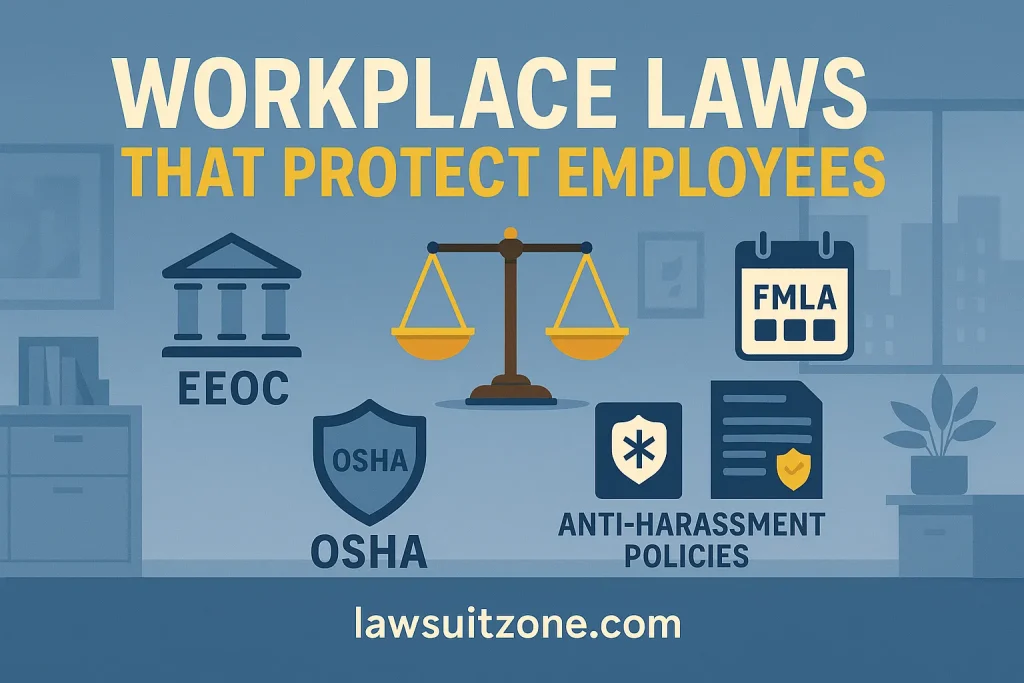
Workplace protections don’t exist only in theory—they are upheld by law.
- Title VII of the Civil Rights Act (1964): Protects workers from discrimination.
- ADA (Americans with Disabilities Act): Mandates reasonable accommodations.
- OSHA (Occupational Safety and Health Act): Ensures safe working conditions.
- FMLA (Family and Medical Leave Act): Shields employees who require leave due to health reasons.
These laws enable employees to insist on justice when their work environment becomes detrimental.
How Do You Know Whether You Have a Case?
The distinction between a stressful career and a legally toxic one may appear hazy.
Indications You May Have a Valid Reason to Sue
- HR repeatedly brushes off your grievances.
- You’re retaliated against for raising your voice.
- The atmosphere is linked with discrimination or harassment.
- You suffer quantifiable damage (anxiety, depression, health deterioration).
- Several co-workers complain of the same issues.
Should these scenarios sound familiar to you, you might be able to file a toxic work environment lawsuit.
True Stories That Headlined
1. The Retail Chain Harassment Case
Women at a national retail conglomerate sued after years of sexist jokes and groping. Their toxic work environment lawsuit settled for millions.
2. The Tech Company Discrimination Case
Black engineers at a prominent technology company sued for racial epithets and being shut out of promotions. The lawsuit compelled the company to overhaul its diversity program.
3. The Whistleblower Retaliation Case
One worker complained of hazardous warehouse conditions and got terminated within weeks. The case of retaliation reinstated them in their job and granted damages.
These instances confirm one reality: it is difficult to speak up, but change can be brought about.
Step by Step: How to File a Toxic Work Environment Lawsuit
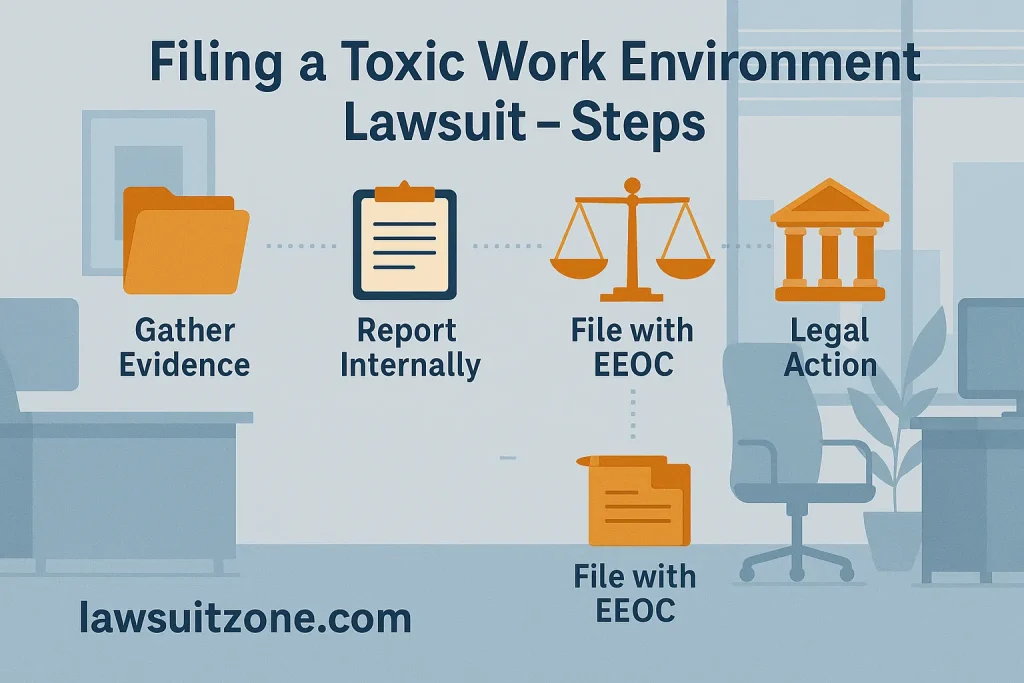
- Gather Evidence – Preserve emails, screens, performance reviews, and witness statements.
- Report Internally – Courts tend to expect you to attempt internal mechanisms first.
- File with the EEOC – Most cases need a formal complaint to the Equal Employment Opportunity Commission before proceeding to court.
- Get a Lawyer – Employment lawyers know the legalities.
- Proceed to Court (If Necessary) – If mediation or settlement is unsuccessful, your case goes to trial.
What Can You Expect as an Outcome?
Each case varies, but the results typically are:
- Financial Relief: Back pay, lost benefits, or emotional distress damages.
- Policy Changes: Courts can compel employers to overhaul workplace policies.
- Training Programs: Judges often order mandatory anti-harassment training.
- Reinstatement: Employees wrongly fired can get their jobs back.
Employers’ Playbook: How Companies Defend Themselves
Most employers don’t take a roll over when sued. Typical defenses include:
- Claiming the employee never made an internal complaint.
- Slandering poor performance rather than retaliation.
- Underplaying incidents as “isolated misunderstandings.”
- Settlements in exchange for nondisclosure agreements to avoid publicity.
This is why legal counsel is important—employers will have an entire legal department.
Why It Matters: The Human and Financial Cost
For Employees
- Validation that their agony was not imagined.
- Emotional closure and financial security.
- Courage for other workplace employees to speak up.
For Employers
- Risk of public scandal.
- Financial penalties.
- Mandatory changes that transform workplace culture.
Toxic vs. Hostile: A Key Distinction
While “toxic” is a broad cultural description, “hostile work environment” is a specific legal term tied to harassment or discrimination under federal law. A toxic atmosphere may feel unbearable, but to qualify legally, it must involve harassment or discrimination linked to a protected status.
Protecting Yourself if You’re in a Toxic Job
- Know the Law: Educate yourself on workplace rights.
- Document Everything: Maintain a minute-by-minute journal of events.
- Identify Allies: Reliable co-workers can provide support to your claims.
- Prioritize Your Mental Health: Counseling helps deal with stress.
- Act Promptly: Most claims have very short deadlines.
What Employers Should Do to Prevent Lawsuits
- Enforce zero-tolerance policies against harassment.
- Offer confidential complaint mechanisms.
- Deliver diversity and ethics training.
- Reward openness rather than reprimanding it.
- Periodically audit workplace culture.
How Cases Like Works Shaped Industries
- Uber (2017): Scandal over harassment caused leadership shakeup.
- Wells Fargo (2016): Toxic sales culture created massive backlash.
- McDonald’s (2020): Faced lawsuits tied to sexual harassment.
Each lawsuit not only impacted the company but also sparked industry-wide conversations.
Where Employees Can Turn for Help
If you’re considering a claim, the EEOC provides resources to understand your rights and start the complaint process. Explore official guidance at the EEOC website.
Frequently Asked Questions
Conclusion: Turning Pain Into Progress
A toxic work environment lawsuit is as much about money as it is about restoring dignity and forcing change. Though it takes bravery to speak up, it can change both individual lives and entire workplace cultures.
If you’re in an abusive job, here is the good news: you are not alone, and the law is on your side. By acting, you protect yourself—and help create a healthier workplace for all of us.