Pacific Office Automation Lawsuit: Complete 2025 Consumer Guide
Introduction
When the Pacific Office Automation lawsuit first broke, it drew notice from businesses, employees, and customers alike. After all, POA is more than a small local dealer it’s one of the largest independent office equipment and technology providers in the United States. The company spent decades establishing a reputation as a provider of copiers, printers, IT support, and workflow solutions.
So why is this brand so widely trusted in hot water in the law courts now? This definitive guide explains the lawsuit in simple English, examining what led to it, how it will affect clients and staff, and what lessons others can learn beyond the bigger picture. Have you checked our detailed guide on Dr. Pompa Lawsuit.
The Bigger Picture: Why Lawsuits Shape Trust
Corporate lawsuits are more than theater of the courtroom — they’re tests of trust. Whether it’s a billing complaint or employee suit, lawsuits reveal the tension between customer expectations, business expansion, and adherence to the law.
Consider them stress tests. Engineers test a bridge to determine whether it can handle heavy traffic. Lawsuits test a company’s foundation, policies, and commitments.
The Pacific Office Automation lawsuit is just that: a stress test for one of the most well-known names in office technology.
Who Is Pacific Office Automation?
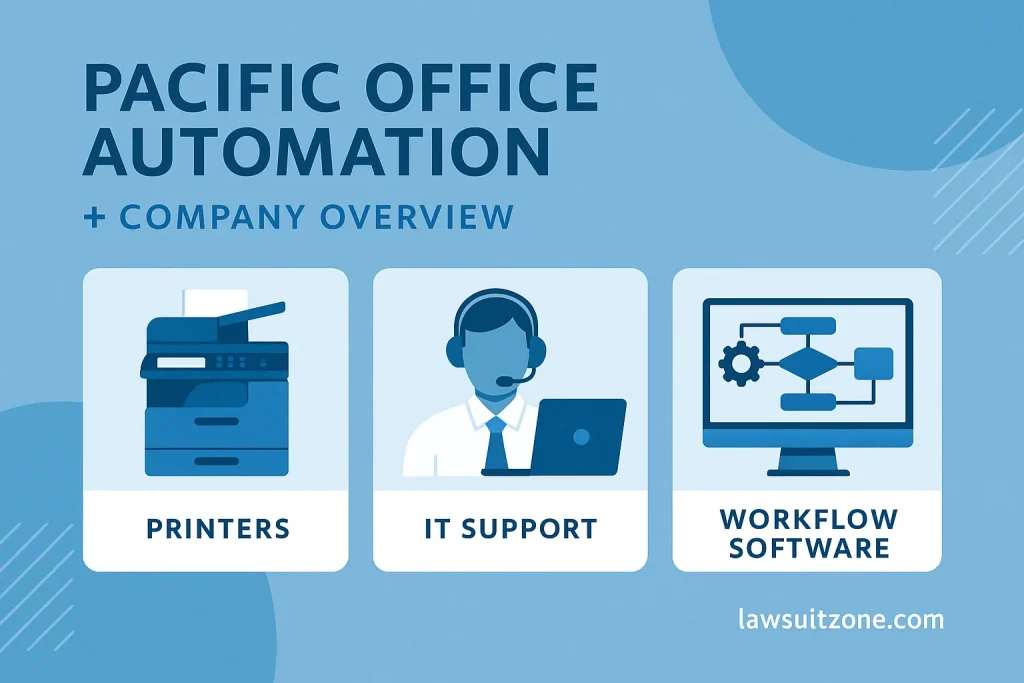
Pacific Office Automation (POA) began in 1976 as a tiny typewriter shop in Portland, Oregon. It grew to become a behemoth, serving customers in multiple states with thousands of workers.
What They Provide
- Managed IT and cloud services
- Copiers, printers, and workflow software
- Document automation solutions
- Unified communications and telecom
POA is not only a middleman, but with its partners Canon, Ricoh, HP, and Sharp, it’s a technology advisor transforming offices for businesses.
That makes the lawsuit more interesting. When a company this large has legal questions, eyes open.
The Pacific Office Automation Lawsuit: Origins
So, how did it begin? While specifics differ in legal filings, the lawsuit emerged from a combination of client complaints and worker issues.
Some of the most frequent triggers are:
- Contract disputes: Were service contracts clear?
- Billing disputes: Did customers encounter surprise charges or obscure fees?
- Employment claims: Were workers accorded decent treatment and pay?
- Marketing tactics: Did promotional claims equal actual fulfillment?
As with many lawsuits, it didn’t boil over overnight — it simmered gradually, fueled by both customer and insider accounts.
Breaking Down the Allegations
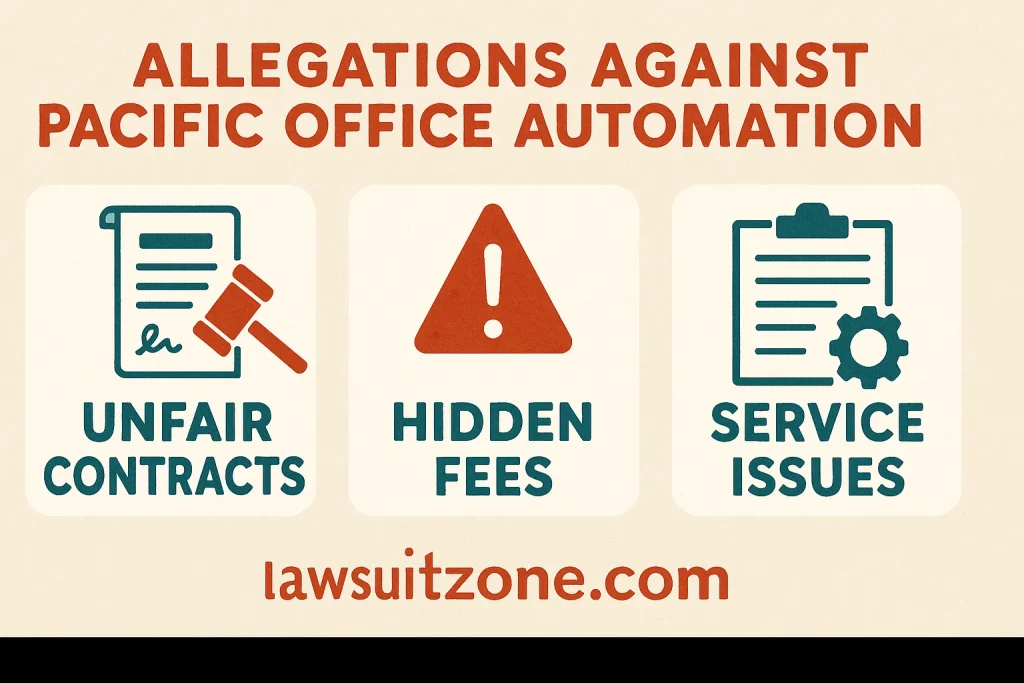
To make this more relatable to everyday readers, let’s divide this into scenarios that readers can identify with.
1. Service Agreement Misunderstandings
Enrolling in a cell phone package with the promotion of “$50 monthly,” only to have surprise charges on the first bill. That’s the anger that some POA customers complained of.
2. Billing Conflicts
For businesses that are dependent on POA’s equipment, surprise line items caused friction. For busy businesses, billing surprises damage trust.
3. Complaints by Employees
Staff complained about work requirements, hours, and pay. In a time when office culture is more important than ever, these charges took hold.
4. Questions of Transparency
A few charges suggest packages and pricing weren’t defined well enough so customers were caught off guard later.
Whether these charges will stand up in court is unknown — but they underscore disconnects between business practices and client expectations.
How Lawsuits Like This Work
For non-lawyers, here is the simplified explanation of how the Pacific Office Automation lawsuit should play out:
- Complaint Filed – Plaintiffs set out complaints.
- Company Responds – POA responds and defends or negotiates.
- Discovery – Evidence (emails, contracts, depositions) is shared.
- Hearings – Judges determine which aspects of the case move forward.
- Settlement Talks – Most corporate cases are resolved here.
- Trial – If unresolved, it goes to a judge or jury.
It’s not a sprint — it’s a marathon. Cases like this can stretch for years, especially when multiple parties are involved.
Client Impact: Should Customers Worry?

If you’re a POA client, the natural question is: “What about my services?”
Here’s what matters:
- No widespread reports suggest client services have been cut off.
- Existing contracts are still binding until courts decide otherwise.
- The key risk is the impact that the lawsuit can have on future contract prices or terms.
For customers, this is more about having equitable and open service agreements in the future rather than losing access now.
Employee Impact: The Human Side
Employees tend to feel the most acute shockwaves from lawsuits. Aside from reputation damage, the concerns are:
- Job security – Will reductions occur to balance out the costs of legal action?
- Reputation – What is the impact on resumes or long-term careers?
- Morale – Inner confidence flags when the firm comes under public fire.
For employees of POA, the suit is professional and personal. While executives fight battles in courtrooms, workers ask themselves how it changes their day-to-day.
Ripple Effects throughout the Industry
The Pacific Office Automation lawsuit is not an isolated incident. It has ripple effects throughout the whole business automation industry. Competitors, partners, and regulators are taking close note.
Potential ripple effects are:
- Tighter contract requirements throughout the industry.
- Increased calls for more transparent billing practices.
- Firms investing in employee compliance training.
- Pressure on automation companies to prioritize transparency.
When a market leader is put to the test, the entire industry feels it.
Consumer Rights: Lessons from the Case
If you’re a customer of any type, the lawsuit reminds us of an old adage: read before you sign.
Quick Checklist for Protection
- Read every line in service contracts.
- Request vendors to clarify ambiguous fees.
- Verify service-level guarantees.
- Save copies of contracts digitally.
For a trusted source on consumer protections, visit the Federal Trade Commission (FTC) a reputable government website that explains your rights in simple language.
What Businesses Can Learn
For entrepreneurs, the lawsuit serves as a cautionary tale. Expansion without transparency can ultimately fail. Three lessons shine through:
- Transparency is not optional – Concealed terms undermine trust more quickly than rivals.
- Contracts are brand ambassadors – A well-drafted contract can cement or destroy relationships.
- Employee well-being matters – Disregarding issues in the workplace too often leads to legal issues.
Similar Cases: Not the First, Won’t Be the Last
It’s not the first lawsuit of its type. Comparable cases tell us how frequent such issues are:
- Xerox dealt with controversies regarding copier leases and service conditions.
- AT&T has fought allegations of unexpected fees.
- Tech consulting companies often go through employee lawsuits.
The trend is evident: fast-growing service businesses are prime candidates when communication breaks down.
Possible Outcomes: What’s Next?
It’s difficult to predict outcomes, but here are the probabilities:
- Settlement – Most frequent outcome; POA might pay damages or change policies.
- Trial Verdict – Less probable but conceivable, resulting in fines or injunctions.
- Reputation Reset – Apart from court outcomes, POA could rebuild trust by restructuring client contracts.
- Employee Policy Redo – To prevent further conflicts, HR procedures may undergo modifications.
FAQs Regarding the Pacific Office Automation Lawsuit
Final Thoughts
The Pacific Office Automation lawsuit is not only a court case — it’s an eye-opener for businesses, employees, and customers.
For POA, the challenge is reconciling growth with transparency. For customers, it’s a call to action to insist on clarity before they sign. And for the entire industry, it’s evidence that accountability and innovation are equally valued.
Ultimately, the outcome of the lawsuit will determine not only Pacific Office Automation’s future but also set standards for the entire automation and office technology industry.