Meaningful Beauty Lawsuit: The Ultimate 2025 Consumer Guide
Introduction: Where Beauty Meets the Courtroom
For decades, the beauty market has been driven by brash claims: less wrinkles, perfect skin, and eternal youth. Customers pay billions of dollars annually, believing that for their money, they are not only purchasing products but also confidence and self-security.
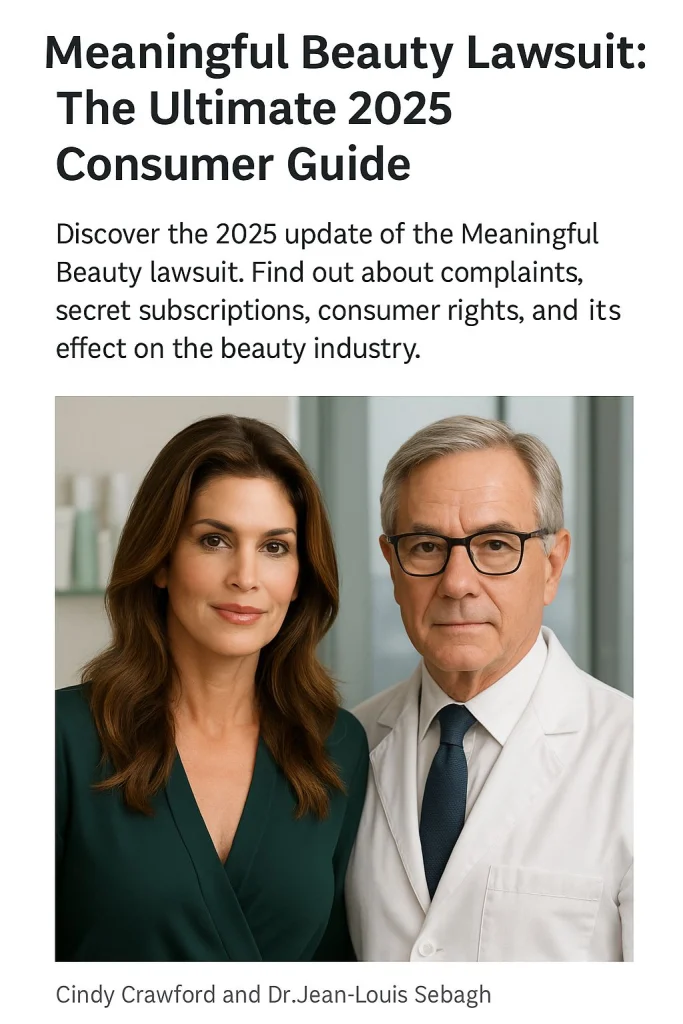
Few companies captured this vision more than Meaningful Beauty Lawsuit, a line of skincare products endorsed by Cindy Crawford, possibly the most familiar face in the business. Branded as “the secret to Cindy’s timeless beauty,” the line guaranteed out-of-this-world results due to its collaboration with celebrity dermatologist Dr. Jean-Louis Sebagh.
But over the years, frustration simmered. While some customers pledged allegiance to the products, others complained of disappointment, annoyance, and monetary woes from surprise fees. In the late 2010s, these grievances mushroomed into court battles.
Today, in 2025, the Meaningful Beauty case continues to inform discussions not only about a single brand, but about truth in advertising, subscription disclosure, and consumer protection in the beauty realm.
This article covers it all: from the history of the lawsuit to the present day, the effect on consumers, the response of the beauty industry, and the takeaways for all of us. Have you checked our detailed guide on 72 sold lawsuit.
What Is Meaningful Beauty?
Before we can talk about the lawsuit, let’s examine the empire that Cindy Crawford constructed.
The Brand Story
- Launch: Early 2000s partnership between Cindy Crawford and Dr. Jean-Louis Sebagh.
- Promise: “Seize the model’s secret” to eternal beauty.
- Marketing Channels: Infomercials, glossy print ads, celebrity endorsements, and online campaigns.
The Product Line
Meaningful Beauty grew into a multi-step skincare system, featuring:
- Wrinkle smoothing creams
- Anti-aging serums with “rare melon extract”
- Eye creams and sunscreens
- Cleansers and toners
The multi-step kit strategy generated a feeling of exclusivity—customers thought they were getting a dermatologist’s routine at home.
The Business Model
- Largely subscription-based, with auto-shipment kits mailed every 30–90 days
- Frequent use of “free trials” that turned into paid memberships
- Sold worldwide, with focus on the U.S. market
On the surface, it appeared to be a success story. But lurking beneath this model were the seeds of consumer frustration.
Why Did the Meaningful Beauty Lawsuit Begin?
The Meaningful Beauty lawsuit was the result of years of escalating consumer complaints.
1. Misleading Advertising
Crawford’s ageless beauty was emphasized in marketing as “proof” of the product’s efficacy. Plaintiffs claim:
- Ads suggested quick, guaranteed results with no scientific evidence
- Celebrity endorsements fused personal testimony and marketing rhetoric
- Terms such as “clinically proven” and “revolutionary formula” had ambiguous evidence
2. Concealed Subscription Charges

The most notorious problem:
- Customers believed they were making a single purchase
- Instead, they were enrolled in automatic monthly shipments
- Credit cards were charged repeatedly, sometimes hundreds of dollars
- Cancellation was found to be difficult, lengthy, and expensive
3. Product Safety Issues
Some customers complained of:
- Rashes, redness, and burning on the skin
- Allergic reactions from hidden fragrances or parabens
- Failure to provide transparent labeling regarding possible irritants
4. Misleading Free Trial Offers
One of the strongest points of the lawsuit is tied to “free trials”:
- Ads promised “risk-free kits” for shipping only
- After ordering, users were auto-enrolled into full-priced kits
- Many only noticed charges after reviewing bank statements
This combination of marketing pressure, billing confusion, and unmet expectations stoked the legal firestorm.
Timeline of the Meaningful Beauty Lawsuit
- 2004–2010: Brand grows fast, powered by Cindy’s image and infomercials
- 2011–2015: Consumer complaints about billing begin surfacing
- 2017: Advocacy groups call Meaningful Beauty’s model “subscription entrapment”
- 2019: Initial class-action lawsuits filed in U.S. courts
- 2021: Multiple suits consolidated; accusations of deceptive advertising and auto-renewal practices
- 2023: Partial settlements reached; refunds and credits provided to some consumers
- 2024: FTC investigates subscription billing compliance
- 2025: Lawsuits continue, focusing on transparency in auto-renewals and refunds
How Did Meaningful Beauty Respond?
Denial of Wrongdoing
The brand asserts:
- Results differ for every individual
- Subscriptions were always stated in the terms and conditions
Rebranding Efforts
- Labels revised to emphasize potential allergens
- Checkout pages updated with clearer auto-renewal disclosures
- Infomercials now use “results may vary” instead of promising dramatic results
Settlements
- Some lawsuits ended with refunds and credits
- No major admission of guilt, but business practices were quietly adjusted
Despite lawsuits, Meaningful Beauty continues to sell internationally in 2025.
The Legal Side: Examining the Case
False Advertising & FTC Guidelines
The Federal Trade Commission (FTC) mandates that beauty marketing must be:
- Truthful
- Evidence-based
- Clearly stated
Violating these rules can lead to fines and regulatory action.
Auto-Renewal Laws
States like California require:
- Clear notice of recurring charges before sign-up
- Simple cancellation processes
- Refund policies for unauthorized charges
Breaking these rules is central to the Meaningful Beauty lawsuit.
Class-Action Mechanism
Class-actions allow:
- Consumers to pool claims for stronger leverage
- Shared legal costs
- Increased pressure on brands to settle
Impact of the Meaningful Beauty Lawsuit
On Consumers
- Awareness of subscription traps increased
- Importance of reading fine print reinforced
- More willingness to file official complaints
On the Beauty Industry
- FTC is stricter with subscription models
- Brands are cautious with terms like “guaranteed” or “risk-free”
- Ingredient transparency has become more common
On Cindy Crawford’s Brand
- Cindy remains respected, but lawsuits cast doubt on her skincare empire
- Consumers question whether endorsements were about science or simply celebrity marketing
Case Comparisons: Other Beauty Industry Lawsuits
- Proactiv: Faced auto-renewal billing complaints
- Rodan + Fields Lash Boost: Sued for eye irritation linked to prostaglandin ingredients
- WEN Haircare: Lawsuits after consumers reported hair loss
- Kylie Cosmetics: Criticized for quality issues despite heavy celebrity hype
Actual Consumer Experiences
Dissatisfied Customers
- “I thought I purchased a one-time kit. The following month, I saw $90 charged.”
- “The cream irritated my skin. When I called, they tried to upsell me instead of canceling.”
Positive Feedback
- “I enjoyed the moisturizer, but the billing was frustrating.”
- “Customer service refunded me after multiple calls it wasn’t easy, but I got it sorted.”
Lessons for Consumers
- Be cautious of free trials. They often convert into subscriptions.
- Check your bank statements. Catch recurring charges quickly.
- Read independent reviews. Don’t rely only on celebrity endorsements.
- Know your rights. FTC protects against deceptive practices.
- Document everything. Keep receipts and emails for disputes.
Expert Opinions
- Dermatologists: No cream can halt aging results vary widely
- Consumer Advocates: Subscription traps are the biggest hidden expense
- Legal Experts: The lawsuit may reshape how skincare subscriptions are marketed
FAQs: Meaningful Beauty Lawsuit Update 2025
Final Thoughts: A Wake-Up Call for Beauty Consumers
The Meaningful Beauty lawsuit update 2025 is more than just one case it’s a warning for the entire beauty industry.
For consumers, it’s a reminder to:
- Question bold promises
- Track billing carefully
- Know your rights before subscribing
For brands, it’s a lesson: glossy ads and celebrity endorsements aren’t enough. Transparency and honesty are non-negotiable.
As lawsuits continue, the industry faces tighter rules and wiser consumers. And while Meaningful Beauty still has fans, its legacy will always include this cautionary tale—one that reshaped how modern beauty products are marketed.