Bar Rescue Lawsuit: 2025 Ultimate Guide for Fans and Bar Owners
Introduction: The Drama That Spilled Off-Screen
When viewers watch Bar Rescue, they anticipate shouting fits, all-night cleaning binges, and Jon Taffer’s trademark “shut it down!” directive. What they do not anticipate is listening about the bar rescue lawsuit that shone the light on whether this popular reality show keeps its promises.
For bar owners, the show was a last chance at staying alive. For TV watchers, it was business advice with a splash of chaos and fun. But lawsuits filed by former contestants indicate that there is more to the tale contracts, editing, and realities that did not always meet. This guide explores the controversy, distinguishing between reality and entertainment. Have you checked our detailed guide on Vital Proteins Lawsuit.
A Quick Refresher: What Is Bar Rescue?
Premiering in 2011 on Paramount Network, Bar Rescue became a cult hit. The formula was straightforward but compulsive:
- Host: Jon Taffer, a larger-than-life nightlife consultant
- Premise: Taffer drops into a struggling bar every week, diagnosing, redesigning, and retraining workers—within a week
- Appeal: The blend of drama, tough love, and dramatic “after shots” of bars apparently redesigned overnight
The program made Taffer a familiar face, but for some tavern proprietors, the adventure left scars—and in court.
Why Reality Shows Such As Bar Rescue Are Sued
Reality television succeeds on conflict. The more combative the altercations, the greater the ratings. However, when producers pursue drama, participants can feel cheated. Reasons reality TV is sued include:
- Editing that fudges fact (owners complain they appeared worse than they actually were)
- Broken promises (renovations weren’t as sustainable as they looked)
- Financial disagreements (hidden costs or responsibilities not revealed on camera)
- Defamation (contestants allege the show damaged their local reputation)
The bar rescue lawsuit touches on almost all of these points.
Inside the Bar Rescue Lawsuit: What Owners Alleged
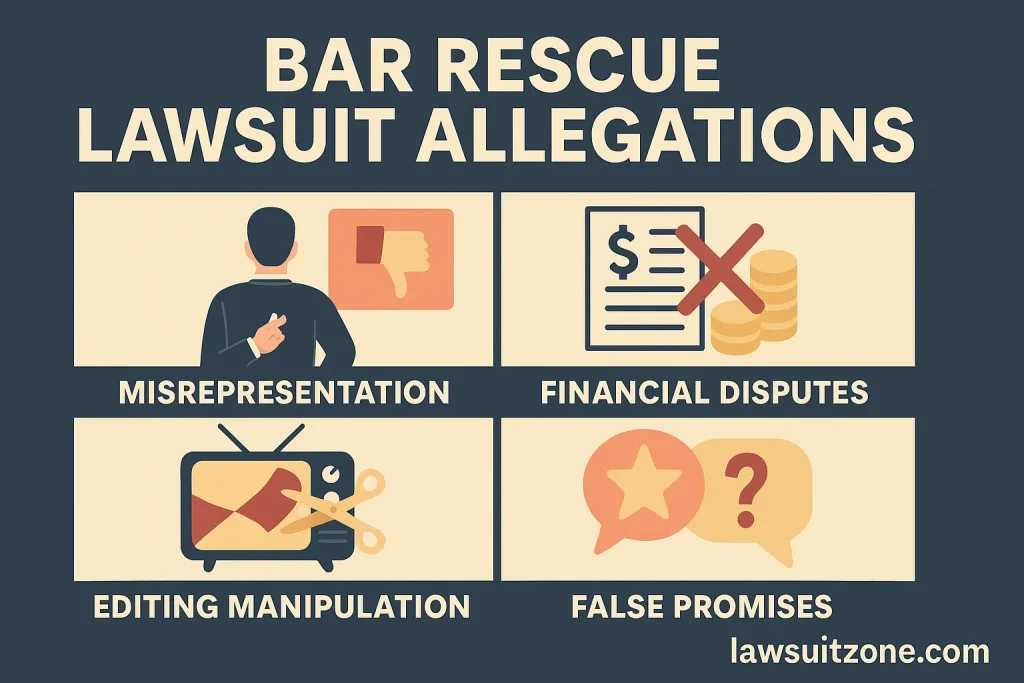
1. The “Makeover Magic” Didn’t Last
Though episodes reveal jaw-dropping makeovers, some owners complained the changes were cosmetic—fresh paint, lighting, or menus that didn’t address more serious financial or personnel problems.
2. Editing Made Them Villains
Some lawsuits accused producers of using selective footage to make owners look lazy, irresponsible, or deceitful. For a small-town pub, that reputation hurts long after the credits are rolled.
3. Hidden Costs Lingered After Filming
While the show presents remodels as “free,” plaintiffs contended they were stuck with contracts or financial responsibilities attached to the improvements. Picture enrolling in a rescue and having more debt.
4. Business Results Varied Widely
More than a dozen Bar Rescue alumni ultimately closed permanently, even with the TV makeover. Lawsuits claimed this disconnect between on-camera success and off-screen woes was misrepresented.
How This Rocked Fans and the Industry
The bar rescue lawsuit shook not just a handful of bar owners—it resonated through fans and the hospitality industry.
- Fans felt fooled: Was the drama scripted? Were the rescues legitimate?
- Future contestants became wary: Owners started wondering if TV exposure was a risk worth taking.
- Hospitality experts argued: Was Jon Taffer’s “tough love” really a tried-and-tested strategy, or largely theatrics?
The Legal Journey: From Complaint to Courtroom
Seeing how this kind of lawsuit works makes it easier to see why it hits the headlines.
- Complaint filed: Club owners outline complaints such as misrepresentation and injury.
- Discovery: Attorneys sift through video, contracts, and correspondence.
- Negotiation: Entertainment lawsuits usually resolve without publicity.
- Trial: If not resolved, each side presents their case to a judge or jury—a less common but sensationalized result.
In most instances, settlement prevents details from going public, leaving fans to wonder.
Real People, Real Consequences
Behind the glitzy headlines were bar owners who invested everything in their establishments. For them, the suit wasn’t about TV—it was about living.
- Emotional cost: Owners reported humiliation, neighbors judging them after unflattering cuts went on the air.
- Financial consequence: Despite the make-over, bars continued to struggle under debt or mismanagement.
- Community responses: Locals sometimes rallied to their owners’ defense—or deserted the bar entirely.
The lawsuit reminds us that each episode showed more than a bar—it showed real people playing for real stakes.
Lessons Bar Owners Can Learn
1. Don’t Sign Blindly
Television contracts typically benefit the network. Any entrepreneur entertaining reality exposure should have an attorney review it first.
2. A Remodel Isn’t a Rescue
Success over time is based on leadership, staff culture, and financial planning—not fresh decor.
3. Guard Your Reputation
A single negative experience can damage local opinion. Owners must consider the value of publicity against the potential for misrepresentation.
4. Spend Money on People
Trained, enthusiastic employees will last longer than fancy new signs or martinis.
Lessons for the Viewer: View with Suspicion
For viewers, the bar rescue lawsuit serves as a reminder: reality television is not 100% real.
- Conflict tends to be hyperbolic.
- The success story is short-lived.
- What appears to be “free” is seldom so.
It doesn’t diminish the show’s entertainment value—it just means that audiences need to watch it as drama initially, business lesson secondarily.
Other Reality Show Suits for Context
Bar Rescue isn’t the first show sucked into court.
- Kitchen Nightmares: A few owners claimed Gordon Ramsay’s editing unfairly portrayed them.
- Storage Wars: A contestant claimed producers planted items of value in lockers.
- Love Is Blind: Contestants sued for extreme conditions.
Those cases bear a pattern: TV adores conflict, yet actual individuals sometimes bear the cost.
What Could Happen Next
Similar to most entertainment lawsuits, potential outcomes are:
- Confidential settlements (most likely the most prevalent)
- Revisions to contracts to steer clear of future conflicts
- Policy changes in how renovations or representations are phrased
- Continuous controversy that makes fans guess
Regardless of the ruling, the case already transformed how Bar Rescue is viewed.
Why Small Business Owners Should Care
Even if you’re not signing up for TV, the lessons apply:
- Do your homework on consultants—credentials matter more than charisma.
- Think long-term—short bursts of publicity don’t guarantee survival.
- Use resources wisely—owners can tap free tools from the U.S. Small Business Administration.
- Balance exposure with authenticity—customers trust transparency more than theatrics.
FAQs About the Bar Rescue Lawsuit
Conclusion: More than the TV Drama
The bar rescue lawsuit is more than tabloid gossip—it’s a reminder of how dangerous “reality” TV can be to small businesses. The show continues to entertain millions, but its lawsuits unveil the dangers lurking behind dramatic makeovers and booming catchphrases.
For the viewers, it’s an interesting glimpse into the blurred distinction between reality and reality-TV. For entrepreneurs, it’s a warning: don’t bank on TV magic. Bank on strategy, perseverance, and honesty.