Hernia Mesh Lawsuit: Complete Guide for Patients, Families, and Survivors
Introduction
The hernia mesh lawsuit has become one of the largest medical device litigations in the United States. Thousands of patients who expected a simple hernia repair instead found themselves dealing with severe complications, unexpected revision surgeries, and chronic pain that disrupted their lives. For years, hernia mesh products were promoted as a reliable, low-risk, and long-term solution for hernia recurrence. Many patients trusted their doctors and believed the mesh implants were safe.
However, there has been growing evidence that some kinds of hernia mesh are susceptible to breakdown, shrinkage, migration, and other forms of internal injury. As complications mounted, lawsuits emerged, claiming that manufacturers had failed to warn the public and medical professionals about the true extent of the dangers involved. This guide breaks down every aspect of the hernia mesh lawsuit so that patients and their families can understand what happened, why these claims exist, and what options may be available moving forward. Have you checked our detailed guide on Depo Provera Lawsuit.
What is hernia mesh?
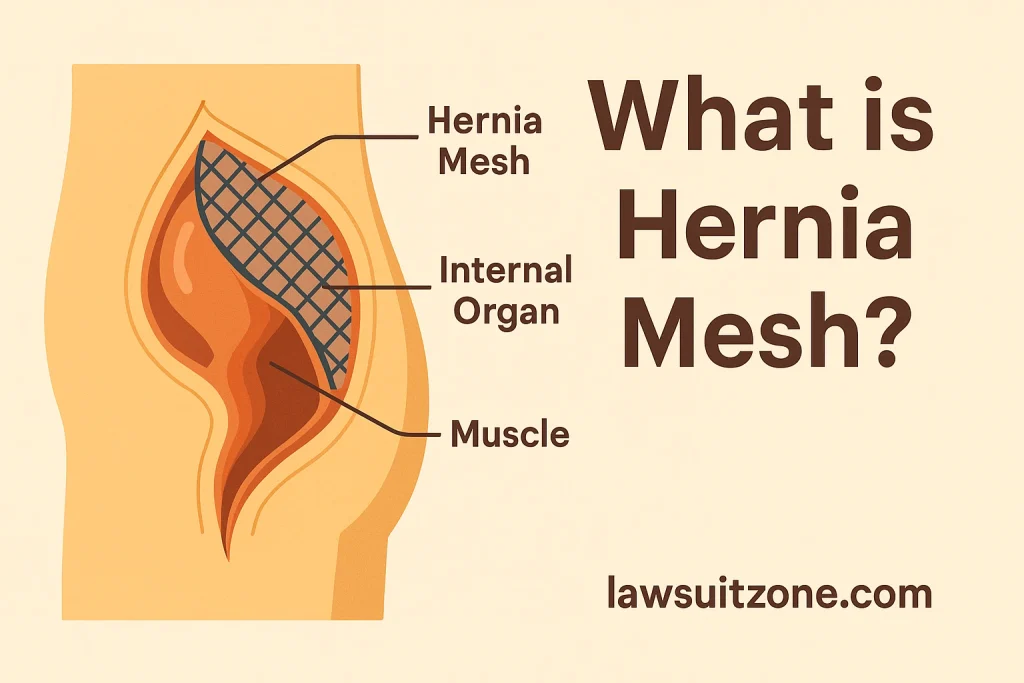
Hernia mesh refers to a medical device implanted to support weakened or damaged tissue during hernia repair surgery. It is utilized in several types of hernia procedures, such as:
Inguinal hernia
Umbilical hernia
Incisional hernia
Ventral hernia
Hiatal hernia
Common Types of Hernia Mesh
Hernia meshes can be manufactured from a variety of materials:
Polypropylene (a kind of plastic)
Composite materials
Absorbable mesh
Biologic mesh made from animal tissue
Of these, the most frequently used is polypropylene mesh, though it is also one of the most controversial: it degrades within the body and can cause inflammation, stiffness, or attachment of tissue to organs.
Why Surgeons Use Mesh
Mesh came into popularity because many studies suggested it reduced hernia recurrence compared to sutures alone. It was marketed to doctors as:
Strong
Durable
Easy to implant
Effective for large or complex hernias
But when mesh products fail, they can cause far worse complications than the hernia itself. This failure is at the center of the hernia mesh lawsuit.
Why the Hernia Mesh Lawsuit Started
The hernia mesh lawsuit began after patients reported severe and, sometimes, permanent injuries following mesh implantation. Many plaintiffs allege that manufacturers have:
Released products that were defectively designed
Did not properly test how the mesh performs long-term.
Undisclosed known hazards
Failed to update warnings when they discovered safety issues.
Some mesh products were even cleared through the FDA’s 510(k) fast-track process-meaning they were approved because they were similar to previous devices, not because they had undergone new safety testing. As time passed, more patients began to experience mesh failures, and attorneys investigating the products uncovered internal corporate documents. Those findings have helped fuel claims that the companies knew more than they publicly disclosed about risks.
For further scientific studies on complications related to meshes, detailed peer-review information is available from the National Library of Medicine.
Complications Commonly Associated with Hernia Mesh
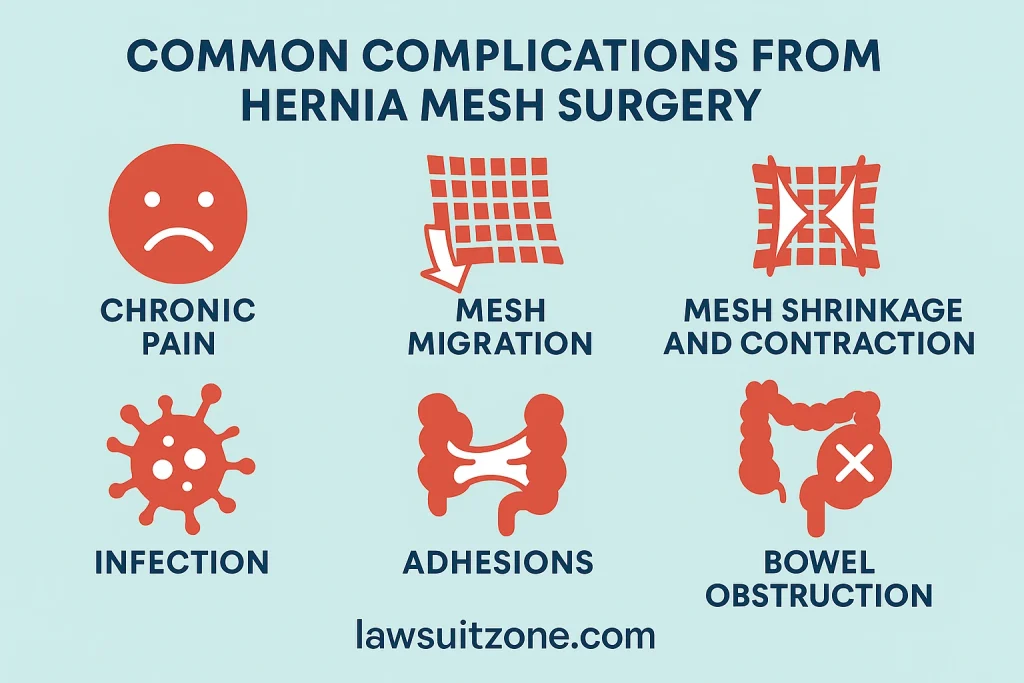
The hernia mesh lawsuit injuries involve some specific complications many people experienced after surgery. These issues often develop months, or even years, after implantation.
1. Chronic, Persistent Pain
One of the most common complaints is chronic abdominal or groin pain. Pain may be caused by:
Nerve entrapment
Mesh shrinkage
Hardening mesh
Scar tissue formation
This type of pain significantly impacts daily life, and it may not ever fully settle, even after revision surgery.
2. Mesh Migration
Mesh can migrate from its initial position and damage surrounding organs. Migration can result in:
Bowel obstruction
Organ perforation
Nerve damage
Internal bleeding
This usually requires emergency corrective surgery.
3. Mesh Shrinkage and Contraction
The polypropylene mesh may shrink as much as 30–50% over time. As the mesh shrinks, it pulls on surrounding tissues and nerves, causing extreme discomfort.
4. Infection
Some meshes encourage bacterial growth or allow bacteria to become deeply embedded into the material pores. Infections can cause:
Abscesses
Fever
Fatigue
Intense swelling near the surgical site
This often is the case in many instances due to the inability of antibiotics to treat mesh-related infections.
5. Adhesions
Mesh can adhere to internal organs and result in adhesions—bands of fibrous tissue that connect tissues. Adhesions can lead to pain, intestinal obstruction, or infertility in women.
6. Bowel Obstruction
Mesh that attaches to the intestines can block normal digestion. This usually means urgent surgery to prevent serious, life-threatening complications.
7. Hernia Recurrence
Ironically, the product designed to prevent recurrence sometimes fails and results in the hernia returning worse than before.
These complications have significantly disrupted the lives of many patients and form the basis of the litigation.
Hernia mesh brands most often subject to litigation
Although multiple manufacturers are faced with litigation, there are some more frequently named products due to higher complication rates or product recalls.
Commonly recognized brands are:
Ethicon Physiomesh
Ethicon Proceed
Bard Davol Ventralex
Bard PerFix Plug
Atrium C-QUR Mesh
Covidien Parietex Mesh
Some of these devices have been voluntarily removed from the market, while others are still available despite continuing claims.
Who May Qualify to File a Hernia Mesh Lawsuit?
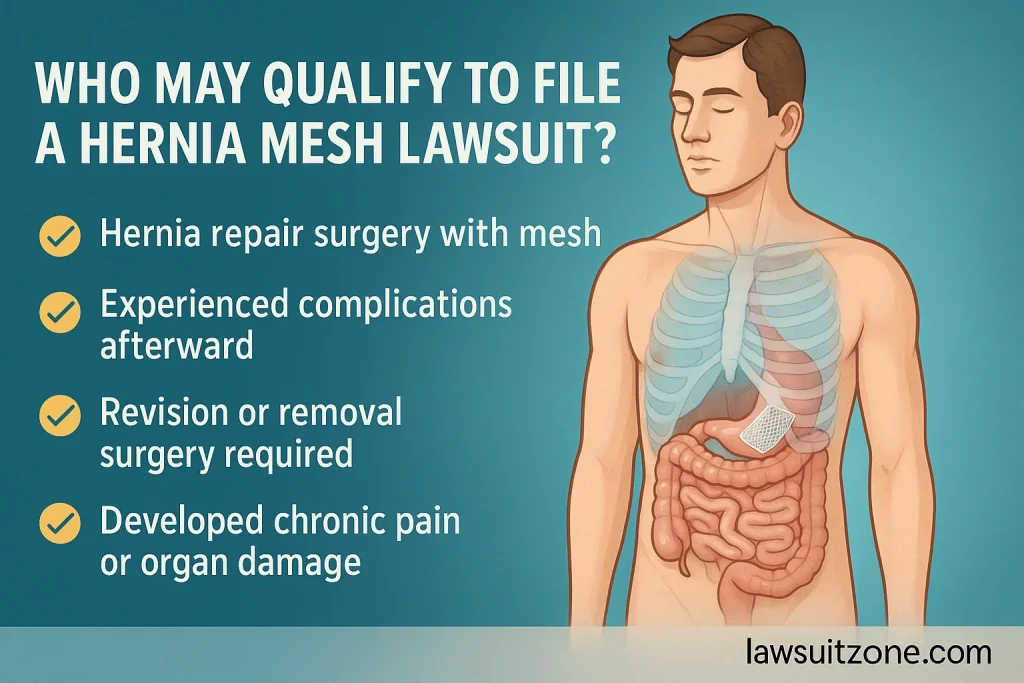
You may be eligible to file a hernia mesh lawsuit if you:
Had hernia repair surgery with mesh
Experienced complications afterward
Revision or removal surgery required
Developed chronic pain or organ damage
Suffered hernia recurrence
Experienced bowel obstruction or infections
Have imaging showing mesh failure
Most law firms need the following documents:
Surgical records
Proof of the mesh type
Diagnostic scans: MRI, CT, ultrasound
Notes from revision surgeries
A timeline of symptoms
Lawyers can sometimes figure out what kind of mesh was used, even if you can’t, based on your medical records.
Types of Claims Filed in the Hernia Mesh Lawsuit
Defective Design Claims
Patients have alleged that the mesh was inherently dangerous because of its materials or design.
Manufacturing Defect Claims
There is a chance that the mesh was badly made and hence failed.
Failure to Warn Claims
The manufacturers allegedly downplayed known risks, or even kept silent on them altogether.
Negligence Claims
Companies may have rushed the products to market without proper testing.
This typically means that manufacturers, not surgeons, are sued, as the complaint lies with the product itself.
How the Hernia Mesh Lawsuit Process Works
Step 1: Free Case Evaluation
The attorney will then consider your symptoms, medical records, and surgical details.
Step 2: Filing the Lawsuit
Your attorney files a civil action against the manufacturer of the mesh.
Step 3: Discovery Phase
Both sides gather evidence that may include corporate documents and medical reports.
Step 4: Bellwether Trials
A few representative cases are tried initially. Their results inform settlement negotiations.
Step 5: Settlement Discussions
Many of the cases settled out of court because of their volume and severity.
Step 6: Trial (if necessary)
If a settlement is not reached, your case may go before a jury.
Though time-consuming, these steps do often result in considerable compensation for the patients.
Current Status of Hernia Mesh Litigation – 2025 Update
As of the year 2025, the hernia mesh lawsuit is still active in various state and federal courts. The major updates include:
Tens of thousands of claims are pending nationwide.
Bellwether trials continue, with mixed results
Some manufacturers face pressure to negotiate large settlements
More patients are filing claims with each passing year.
Courts are consolidating similar cases into MDL structures.
The momentum is still strong, and legal experts foresee more settlements as litigation unfolds.
Potential Compensation for a Hernia Mesh Lawsuit
Compensation varies depending on the severity of injuries, along with long-term implications on your health and finances.
Possible damages include:
Medical Expenses
Covers revision surgeries, hospital stays, testing, and future care.
Lost Income
For lost time from work, or reduced future earning capacity.
Pain and Suffering
Damages for physical and emotional distress.
Loss of Quality of Life
For long-term physical disability, or chronic pain.
Permanent Disability
If injuries prevent you from living or working normally.
Wrongful Death
Family members may file if mesh complications contributed to death.
Punitive Damages
On rare occasions, courts will sanction companies for egregious negligence.
Because complications do vary widely, settlement amounts range considerably from case to case.
How to Protect Yourself After Hernia Mesh Surgery
If you suspect your mesh implant is causing problems, the following steps can help protect your health and your legal rights:
Request your surgical records immediately
Keep a journal of symptoms and pain levels
Save all medical bills and receipts
Avoid making your medical information public.
Seek a second medical opinion if necessary
Speak with an attorney who has experience handling hernia mesh cases.
Early action bolsters your potential claim and preserves important evidence.
Frequently Asked Questions (FAQs)
Final Thoughts
The hernia mesh lawsuit is a milestone in the direction of patient advocacy and accountability regarding medical devices. Thousands had placed their faith in the belief that the repair of the hernia would be easy, only to be confronted with complications that were disabling and unexpected. Filing a lawsuit is not only an act of pursuing financial recovery but also a step in holding manufacturers liable for the safety of their products.
If you believe your hernia mesh implant caused serious harm, now is the time to take action. Gather your medical records, consult with your healthcare provider, and connect with a lawyer who handles mesh litigation. The more you know about your rights today, the more you can protect your health, financial stability, and overall future.