Chiropractor Lawsuit: Patient Rights After Chiropractic Injuries

Introduction
Lawsuit Against a Chiropractor: This kind of lawsuit may occur when a patient suffers serious harm as a result of chiropractic care that has been administered improperly, in the absence of necessary medical supervision. Even though millions of patients worldwide resort to chiropractors for relief from suffering, there are probably risks to spinal manipulation, especially when patients are not screened, red flags are ignored, or improper methods are used.
In cases involving patients with injuries, a chiropractor lawsuit is what is typically left for patients to pursue in order to recoup compensation. This is especially true because a chiropractor lawsuit is essentially what this article is going to define, in a way that is easy to understand, with regard to how the lawsuits work. Have you checked our detailed guide on Silicosis Lawsuit.
The Role of Chiropractic Care in a Duty of Care Analysis
Chiropractors are healthcare providers who carry out spinal manipulative therapy for musculoskeletal disorders. The role, therefore, is also characterized by a legal obligation to practice within professional standards.
A lawsuit against a chiropractor may state that the professional obligation has been violated when the following happened:
- Did not assess medical history
- Ignored neurological symptoms
- Employed excessive force
- Performed high-risk neck adjustments
- Continued treatment with worsening conditions
This is because patients confide in chiropractors with regard to spinal care.
Even When Chiropractic Care Turns Dangerous
Not all negative results in a patient’s life mean that a lawsuit is filed against a chiropractor. Lawsuits are filed when preventable injuries are attributed to professional negligence.
High-risk conditions are:
- Cervical manipulation in patients with vascular risk factors
- Non-imaging adjustments
- Treatment of patients with osteoporosis or spinal instability
- Failure to refer patients to medical doctors
In such cases, the harm is foreseeable.
What Is a Chiropractor Lawsuit?
Legally, a chiropractor lawsuit is a civil suit brought by a plaintiff who has been injured because of chiropractor negligence. It is a suit that is seeking compensation for all the expenses, suffering, and loss of earnings.
In contrast to claims involving unsuccessful treatment, a lawsuit involving a chiropractor is a result of poor treatment that has led to injury.
Injuries Pervasively Mentioned in Chiropractor Lawsuits
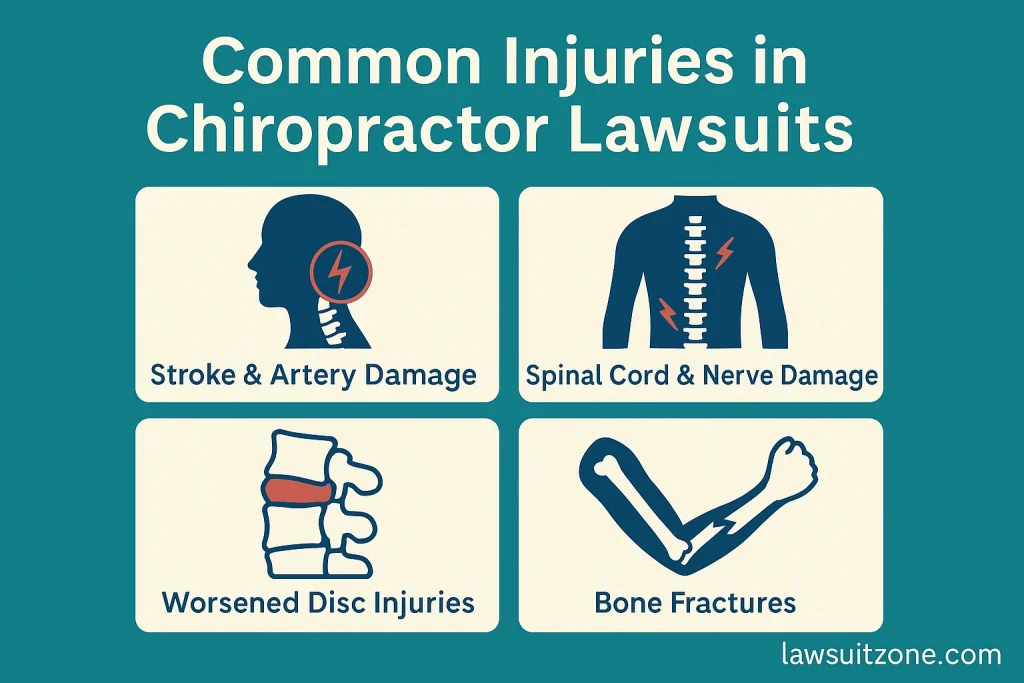
Stroke & Artery Damage
In some cases, claims are brought against chiropractors for vertebral dissection, carotid artery dissection, and resultant strokes following manipulation.
Spinal Cord & Nerve Damage
Inappropriate adjustments can result in the compression or damage of nerves, which leads to conditions such as paralysis and numbness.
Worsened Disc Injuries
Aggressive manipulation may worsen herniated or bulging disks.
Bone Fractures
Osteoporotic patients can break bones during adjustments.
Chronic Neurological Symptoms
Headaches, dizziness, along with chronic pain, are common.
The Increasing Prevalence of Lawsuits Against Chiropractors
There are a number of reasons that have contributed to the increase in lawsuits against chiropractors:
- Greater use of chiropractic treatment
- Fewer healthier patients with fewer surgeries
- Improved diagnostic imaging
- Increased awareness concerning patient rights
- More reporting of serious injuries
Patients are gradually realizing that the harm is no longer necessarily “part of the risk.”
Negligence vs Known Treatment Risks
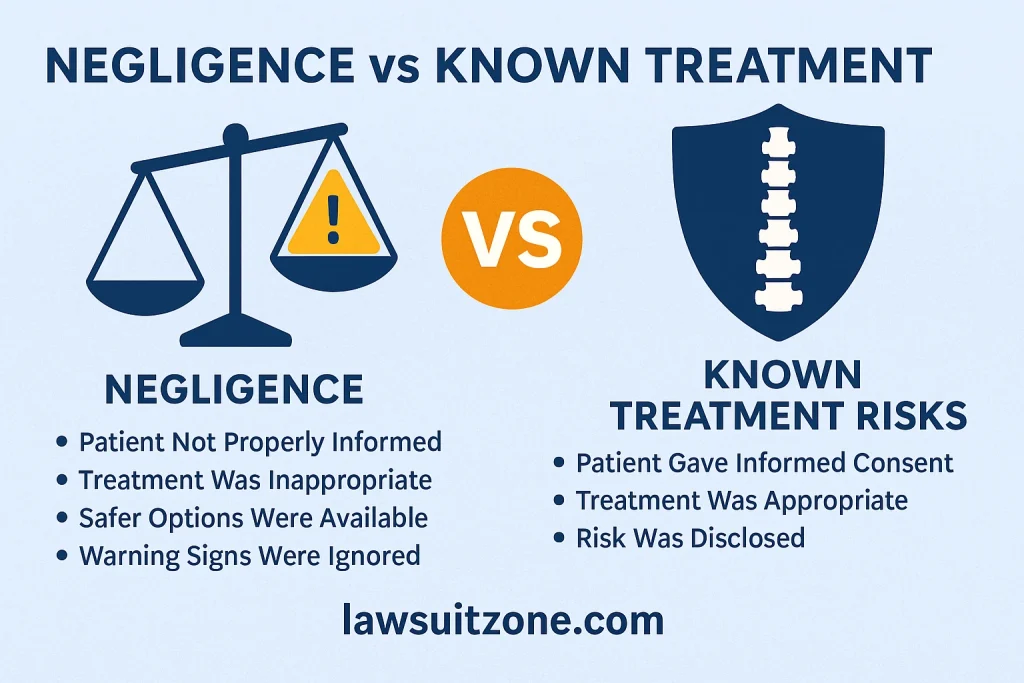
On one side, chiropractors might assert that there are dangers inherent to spinal manipulation. The judiciary, on the other hand, focuses on whether:
- The patient was properly informed
- The treatment was appropriate
- Safer alternatives existed
- Warning signals were ignored
In a chiropractor lawsuit, success is achieved when harm occurs because of avoidable errors, not unavoidable risks.
Claims in Lawsuits Against a Chiropractor
Professional Malpractice
Allegations that the chiropractor failed to follow accepted standards of care.
Failure to Obtain Informed Consent
Patients need to be warned against serious risks.
Inappropriate Diagnosis
Failure to recognize conditions that preclude spinal manipulation.
Negligent Treatment
Unsafe practices, use of force, ongoing harmful care.
Wrongful Death
Filed when negligent chiropractic care leads to death.
Who Can Be Held Responsible?
In a chiropractor lawsuit, parties who might be responsible include:
- The treating chiropractor
- Chiropractic clinics or practices
- Supervising professionals
- Corporate healthcare chains
Liability depends on employment ties and supervisory duties.
The Role of Medical Science and Evidence
Imaging, neurological assessment, and expert testimony are critical components of litigation involving a chiropractor. Public health literature is also considered.
For instance, information from the Centers for Disease Control and Prevention (CDC) is regularly cited regarding alleged cases of stroke caused by chiropractic care.
Who May Be Eligible to Pursue a Lawsuit Against a Chiropractor?
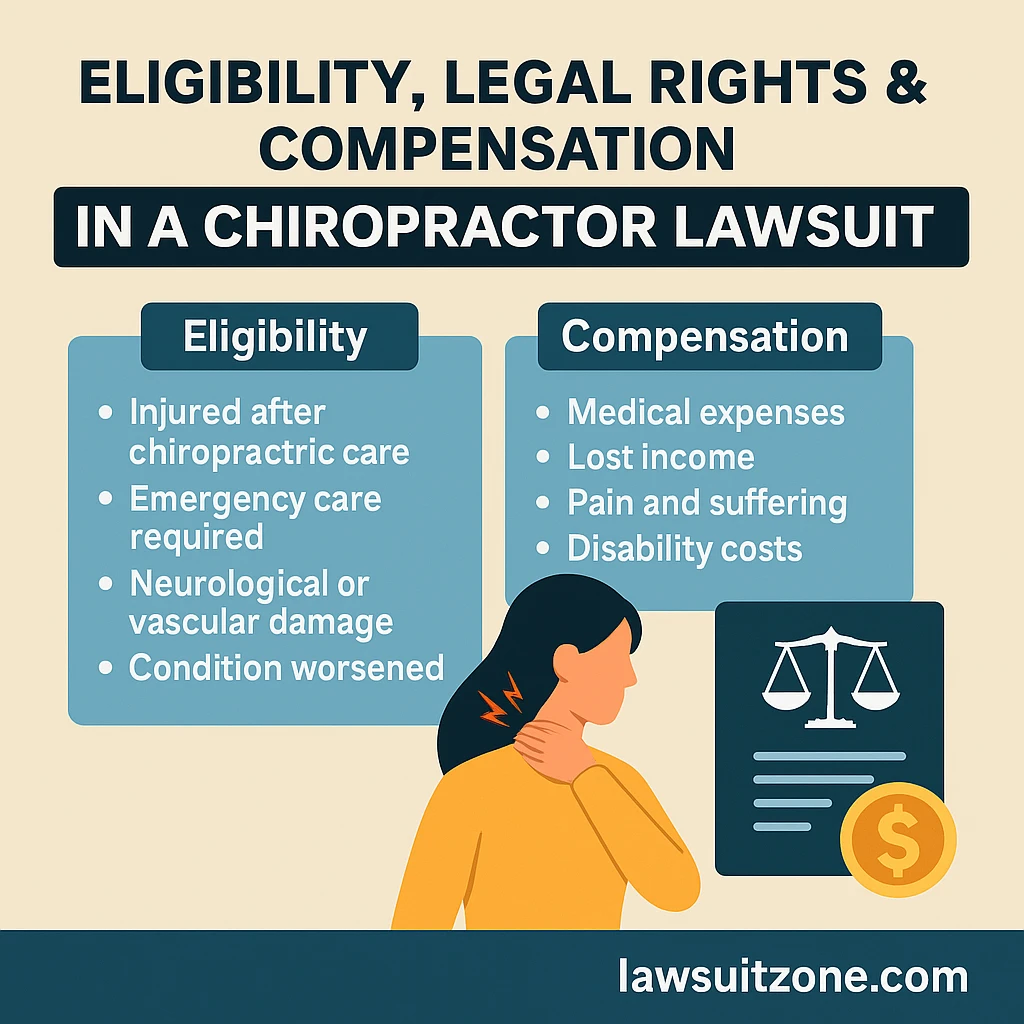
You might have a chiropractor malpractice lawsuit case if:
- You were injured following chiropractic care
- You needed emergency care and/or surgery
- You suffered neurological or vascular damage
- Your condition has worsened because of treatment
- You incurred heavy medical costs
Late-developing symptoms do not necessarily preclude a valid claim.
Long-Term Effects on Injured Patients
Patients injured by negligent chiropractic practice may suffer from:
- Permanent disability
- Persistent pain
- Loss of mobility
- Emotional trauma
- Inability to work
- Reduced quality of life
In a chiropractor lawsuit, compensation is sought for these long-term effects.
Compensation Argued for in Chiropractor Lawsuits
Compensation may include:
- Past, present, and future care costs
- Rehabilitation and therapy expenses
- Lost wages and earning capacity
- Pain and suffering
- Emotional distress
- Disability accommodations
- Wrongful death damages
Severe cases often result in higher settlements.
Individual Claims vs Group Claims
Individual Chiropractor Lawsuits
- Case-specific evidence
- Greater compensation potential
- Focus on the patient’s distinct injury
Group or Coordinated Cases
- Victims treated by the same provider
- Shared evidence
- Streamlined litigation
Most chiropractor lawsuits remain individual due to varying injuries.
Filing Deadlines and Statute of Limitations
Medical malpractice deadlines vary by state and may depend on:
- Date of injury
- Date of discovery
- Type of harm
- Age of the patient
Missing a deadline can permanently bar recovery.
Action Plan Following a Chiropractic Injury
If you believe a chiropractor lawsuit may apply:
- Seek immediate medical evaluation
- Document symptoms and timelines
- Request medical and chiropractic records
- Avoid statements to insurers
- Consult a malpractice attorney
Timely action protects both health and legal rights.
Expert Testimony in Chiropractor Lawsuits
Expert witnesses help establish:
- Proper chiropractic standards
- How care deviated from those standards
- Whether the injury was preventable
Expert opinions are often decisive.
Why Chiropractor Lawsuits Matter
Chiropractor lawsuits help:
- Improve patient screening
- Enforce informed consent
- Prevent unsafe practices
- Hold negligent providers accountable
- Protect future patients
They enhance accountability in healthcare.
Frequently Asked Questions
Conclusion
A chiropractor lawsuit gives injured patients a path to justice when harm is preventable. These cases are not attacks on chiropractic care but efforts to ensure safety, accountability, and informed treatment. If you or someone you know has been harmed by chiropractic adjustment, legal remedies may still be available. Understanding your rights is the first step forward.