Silicosis Lawsuit: Legal Options for Workers Harmed by Silica
Introduction
The case involving silicosis has provided an essential legal alternative for laborers who suffered irreversible lung damage from many years of exposure to silica dust in the workplace. It has been far from a hidden disease because it is a recognized occupational disease that has been affecting construction workers, stone fabricators, miners, and other laborers for many decades.
In spite of known dangers of exposure to silica, many businesses have failed to exercise the proper safety standards. Thousands of workers are now forced to live with life-long breathing conditions because of this. This is a complete guide on how the lawsuit for silicosis works, from a human perspective, to assist affected workers. Have you checked our detailed guide on MacLaren Hall Lawsuit.
What Silicosis Does to the Human Body
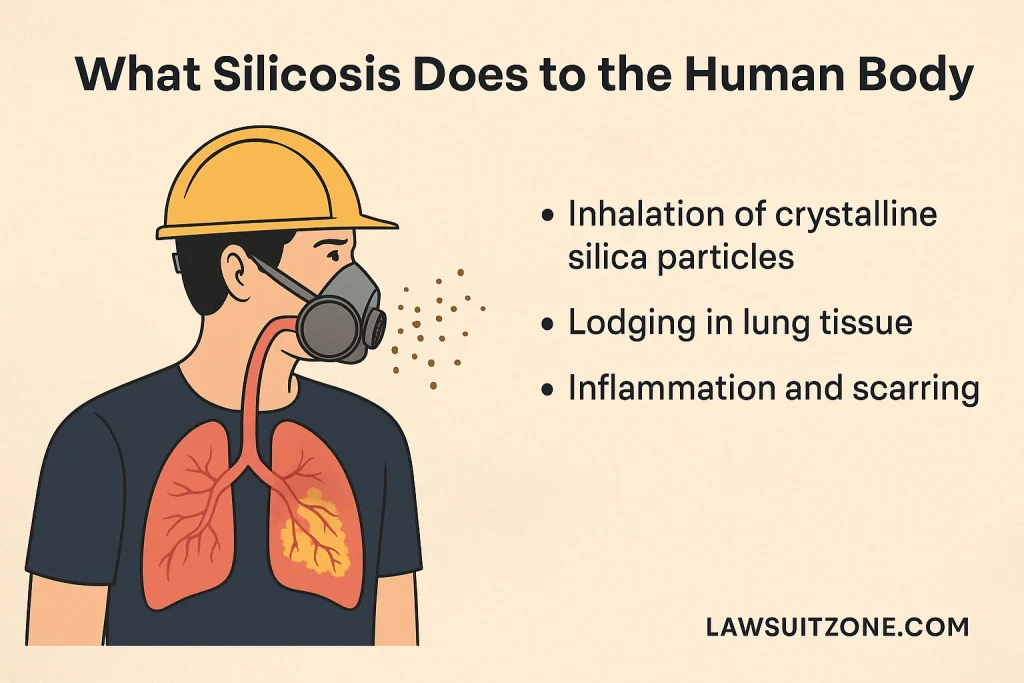
Silicosis is caused by the inhalation of small particles of crystalline silica, which lodge in the lung tissue. Over the course of time, the particles result in inflammation and scarring, an impairment that inhibits the lungs’ oxygen absorption capacity. In contrast to most occupational injuries, silicosis is a condition that progresses even when an employee is no longer exposed to a hazardous environment.
Types of Silicosis
Doctors categorize silicosis into three types:
- Chronic silicosis, following long-term exposure
- Accelerated silicosis, following moderate exposure over a short period
- Acute silicosis, a rapidly progressive and sometimes fatal disease resulting from high exposure
The problem with silicosis is that once a diagnosis is made, the condition is permanent. This is why a silicosis lawsuit is commonly filed.
Jobs That Are Most Frequently Associated with Silicosis
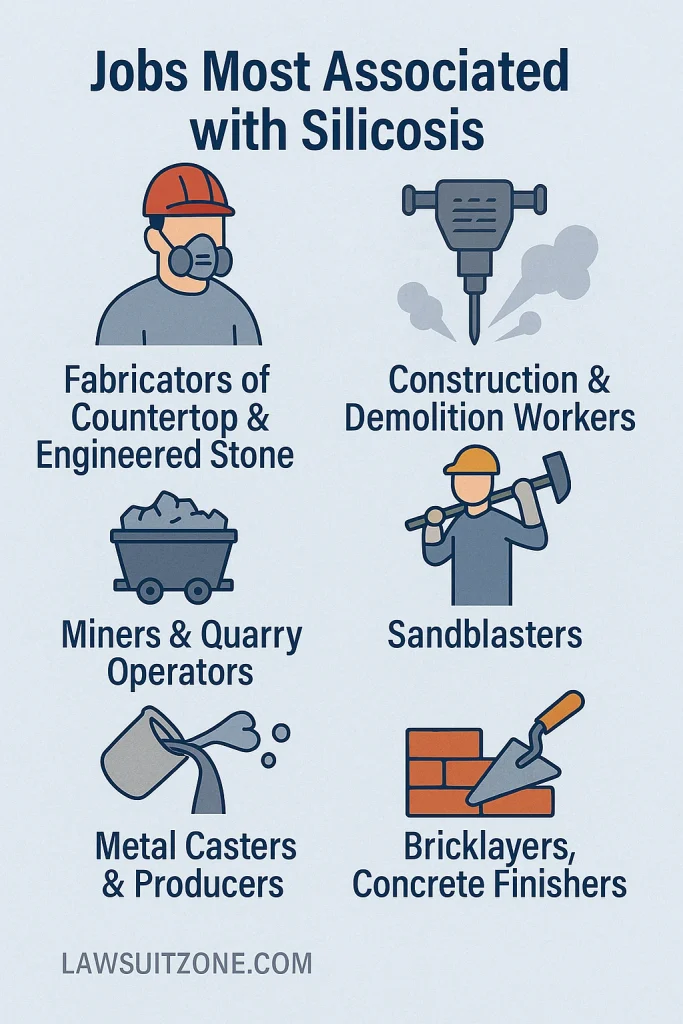
Silica dust is released when cutting, drilling, or grinding materials such as stone, sand, or concrete. The following personnel are most vulnerable to exposure:
- Fabricators of countertop and engineered stones
- Construction and demolition workers
- Miners and quarry operators
- Sandblasters
- Metal casters and producers
- Bricklayers and concrete finishers
Very frequently, silicosis lawsuit claims are brought by individuals who have never been warned that certain job duties might harm their lungs permanently.
What Is a Silicosis Lawsuit Claiming?
A lawsuit for silicosis is a civil suit that accuses avoidable exposure of individuals to silica dust. The suit blames lack of consideration on the part of some individuals who, in pursuit of productivity, subjected the population to health dangers due to silica.
Unlike workers’ compensation claims, which are limited in compensation, a silicosis lawsuit can bring complete accountability for future suffering, such as healthcare expenses, wage loss, and diminished quality of life.
Why Silicosis Cases Are Rising Now
Silicosis has been a problem for centuries, but litigation has increased significantly within the past decade because of several factors:
- The growing use of engineered stones and quartz
- Higher silica content in modern materials
- Diagnostic imaging and screening
- Effective workplace safety regulations
- Increasing awareness on the part of the workforce
Often, cases are brought when the exposure has occurred several years prior, but a diagnosis has only been made recently.
Common Failures Cited in Silicosis Lawsuits
Most cases involving a silicosis lawsuit include one or more of the following claims:
- Failure to control airborne dust
- Insufficient ventilation systems
- Inability to provide respirators or protective equipment
- Lack of proper training
- Overlooking safety complaints
- Handling materials without proper warnings
Such incidents violated industry norms that had been in existence for several decades.
Who Can Be Sued in a Silicosis Lawsuit?
Responsibility for silica exposure is never exclusive to a single party. In most cases, a silicosis lawsuit may include the following defendants:
- Employers who failed to provide a safe working environment
- Contractors and subcontractors
- Manufacturers of silica-bearing materials
- Equipment manufacturers
- Distributors of engineered stone or quartz slabs
In occupational disease cases, multiple parties are sometimes held accountable.
Responsibilities of Employers and Federal Safety Regulations
Inhaling silica is a known workplace occupational hazard, and employers are compelled to minimize such exposure. The Occupational Safety and Health Administration (OSHA) has set strict guidelines concerning permissible exposure levels of respirable crystalline silica.
OSHA’s silica safety regulations describe exposure limits, air monitoring, and worker protection requirements. These guidelines are commonly referenced in silicosis litigation.
Legal Bases of a Silicosis Lawsuit
Negligence
Allegations that responsible parties failed to exercise reasonable care despite known silica risks.
Product Liability
Claims that materials containing silica were defectively designed or sold without adequate warnings.
Failure to Warn
Claims that employees were never informed of long-term health risks.
Wrongful Death
Filed on behalf of surviving relatives when silicosis causes fatal complications.
Who Is Eligible to File a Silicosis Lawsuit?
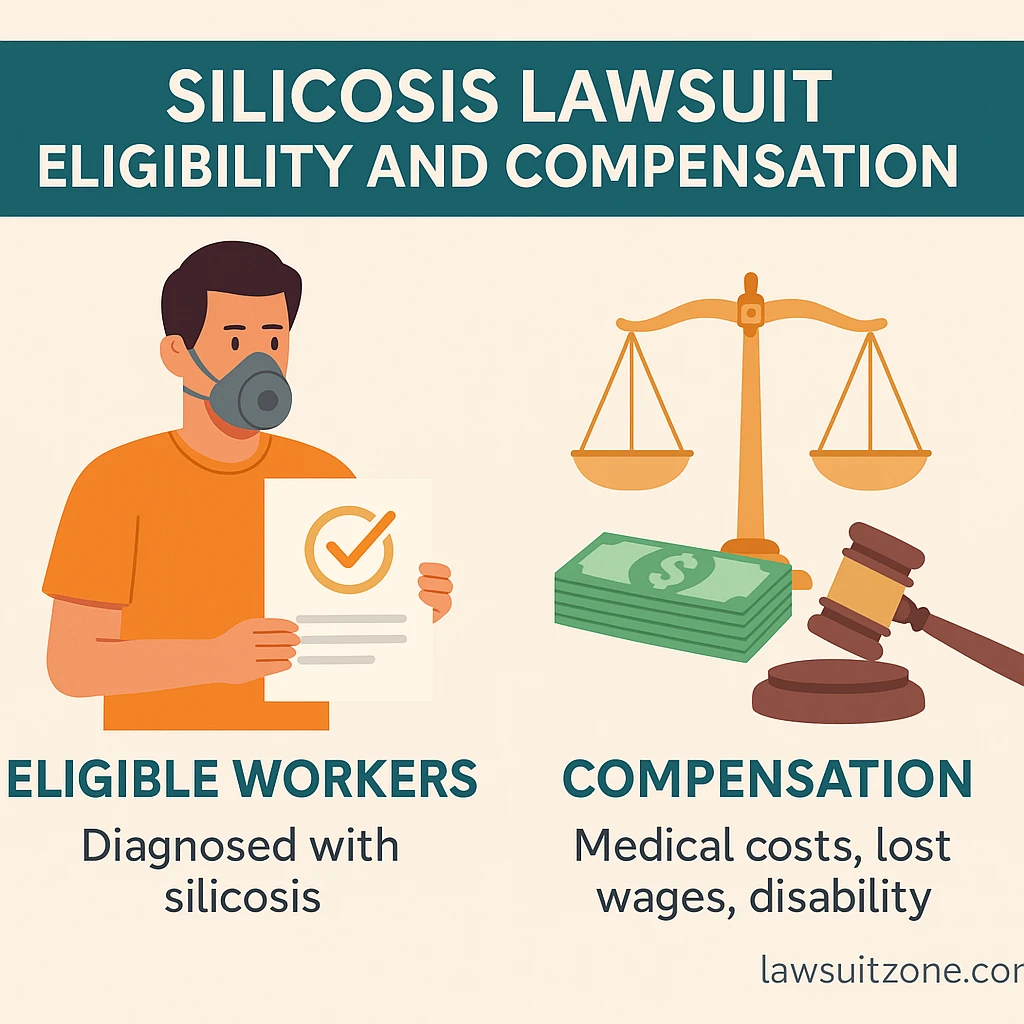
You may file a silicosis lawsuit if:
- You worked in a silica-exposed environment
- You were diagnosed with silicosis or a silica-related lung disease
- Your exposure occurred due to unsafe practices
- You now suffer respiratory harm
- A family member died as a result of silicosis
Eligibility applies regardless of current employment status.
Living With Silicosis: Beyond the Diagnosis
Workers with silicosis commonly experience:
- Shortness of breath
- Difficulty breathing
- Reduced physical endurance
- Dependence on oxygen therapy
- Recurrent lung infections
- Emotional distress and anxiety
These challenges are key factors in damage calculations.
Economic Impact on Workers and Families
Silicosis places heavy financial strain on individuals due to:
- Ongoing medical treatment
- Prescription medications
- Pulmonary rehabilitation
- Loss of employment or early retirement
- Reduced earning capacity
A silicosis lawsuit aims to restore financial stability.
Compensation Available in Silicosis Cases
Depending on the case, compensation may include:
- Future medical costs
- Lost wages and benefits
- Loss of earning capacity
- Pain and suffering
- Emotional distress
- Disability-related costs
- Wrongful death damages
Severe cases involving reckless conduct often result in higher settlements.
Workers’ Compensation vs Civil Lawsuits
Workers’ Compensation
- Limited benefits
- No pain and suffering damages
- Often insufficient for chronic disease
Silicosis Lawsuits
- Broader compensation
- Full accountability
- Focus on long-term effects
Many workers pursue both options where permitted.
Time Limits for Filing a Silicosis Lawsuit
Because silicosis develops over time, many states apply a discovery rule, meaning deadlines begin at diagnosis rather than exposure.
Timeliness is one of the most critical aspects of a silicosis lawsuit.
What to Do After a Silicosis Diagnosis
If you suspect you have a silicosis case:
- Obtain a confirmed medical diagnosis
- Document work history and job duties
- Preserve employment and exposure records
- Track healthcare expenses
- Consult an occupational disease attorney
Early action helps protect your legal rights.
Importance of Silicosis Lawsuits Beyond Compensation
Silicosis lawsuits help:
- Enforce workplace safety laws
- Encourage improved protective measures
- Prevent future occupational illness
- Raise public awareness
- Give injured workers a voice
These cases protect both current and future workers.
Frequently Asked Questions
Conclusion
A silicosis lawsuit provides workers and families with a path to justice after preventable exposure to toxic silica dust. These cases focus on accountability, dignity, and long-term security—not merely compensation. If you or a loved one has been affected by silicosis, legal remedies may still be available. Understanding your rights is the first step toward protecting your future.