Streamate Lawsuit: Performer Rights & Legal Insights 2025
Streamate Lawsuit: Performer Rights & Legal Insights 2025
The Streamate case is rocking the debate about online work, performer rights, and how streaming companies can be held accountable. Unlike most tech controversies, this controversy cuts deep to the core of an industry that has long operated in secret: adult content. For performers, it’s not about cash—it’s about pride, justice, and being treated as professionals.
This full guide brings you behind the headlines. We’ll look at what Streamate is, why the lawsuit is important, what performers are claiming, and how the case might transform online platforms well beyond the adult sector. Have you checked our detailed guide on dr kevin sadati lawsuit.
A Quick Look: Why the Streamate Lawsuit Made Headlines
Streamate has operated for over two decades as one of the largest camming sites, connecting independent performers with viewers worldwide. For many, it was marketed as a flexible way to work from home, earn money directly, and bypass traditional studios.
But the more successful it became, the more the complaints mounted. Complaints of secretive contracts, unequal revenue splits, and dubious privacy protections fueled the Streamate lawsuit. What makes this case particularly significant is that it reflects the issues unfolding throughout the gig economy—from the Uber drivers to the YouTube content creators.
Streamate: The Platform in the Eye of the Storm
Streamate started as a nascent live camming scene in the early 2000s. By 2020, it was a brand name in the adult streaming industry. Performers lauded its reach but were frustrated by strict rules and confusing payouts.
The most important features of the platform:
- Performers are independent contractors
- Revenue is shared between platform fees and model payments
- Agreements outline terms but tend to incorporate difficult-to-read, overly complicated legal jargon
- Data protection and user safety are increasingly under the microscope
This arrangement provided Streamate with an edge in competition but also set the stage for the legal issues of the present time.
Allegations at the Center of the Streamate Lawsuit
The lawsuit refers to several areas of concern that performers claim require the intervention of law:
- Revenue Sharing Issues – Performers complain they did not receive an equitable percentage in relation to platform revenues.
- Unclear or Deceptive Contracts – Fine print purported to confuse many regarding their rights and responsibilities.
- Independent Contractor Status – Some feel that they should be classified as employees, with benefits and protections.
- Privacy & Data Concerns – Issues regarding how personal data was managed add an additional layer of concern.
All of these issues are part of larger discussions going on about fairness in the digital economy.
Performer Stories: Voices Behind the Case
What makes the Streamate lawsuit interesting is the very real human factor. Performers aren’t anonymous plaintiffs—those are people attempting to juggle careers, security, and stability.
- “I felt I was in charge of my work, but the guidelines kept shifting without reason.”
- “Payments were not always as promised. It seemed like I was constantly trying to get things straight.”
- “When your personal info leaks, it’s not just a workplace issue—it’s your life at risk.”
These narratives highlight that the case isn’t merely about dollars. It’s about safeguarding individuals within an industry in which stigma frequently deters workers from finding assistance.
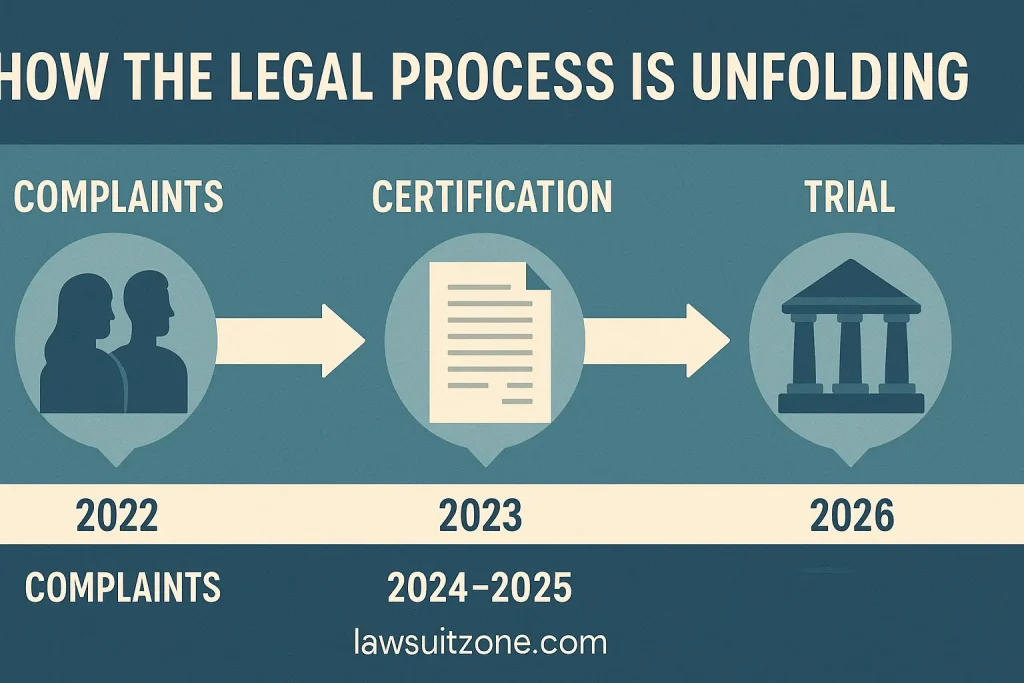
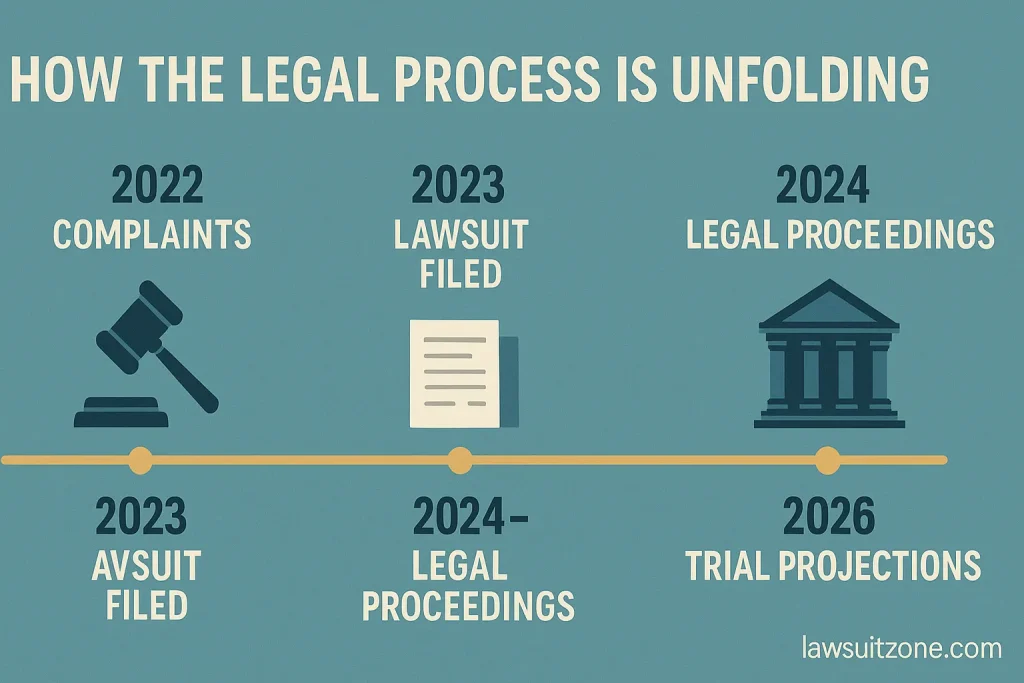
How the Legal Process Is Unfolding
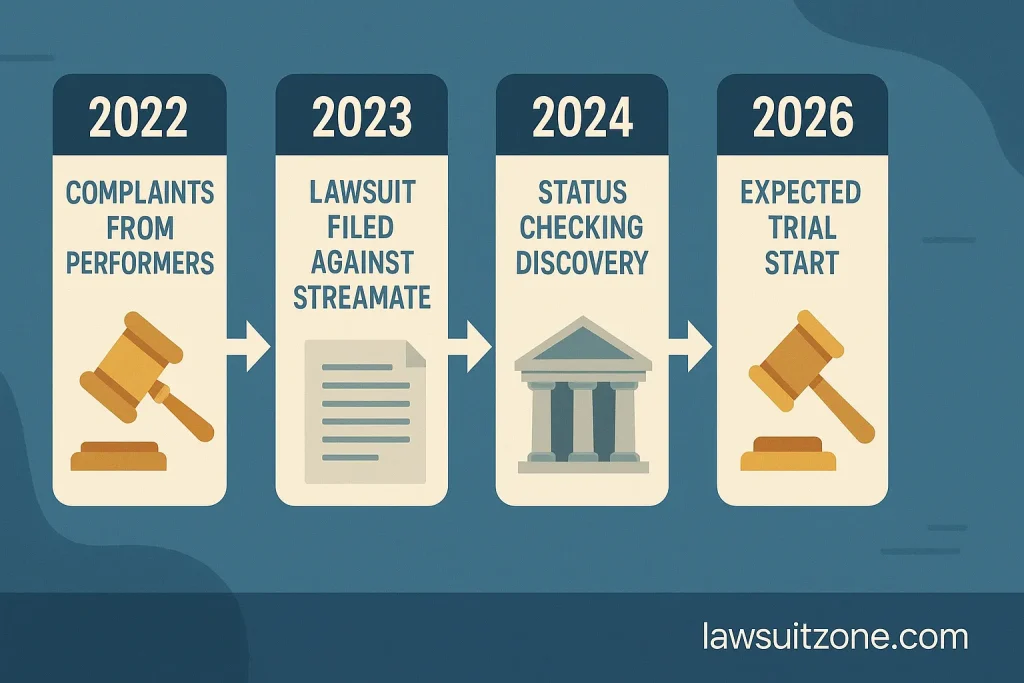
Suits of this magnitude take several years. The Streamate suit is likely to follow the typical pattern:
- Initial Filings (2023–2024) – Performers and attorneys filed suit in court.
- Discovery Phase (2024–2025) – Both parties share contracts, financial records, and internal memos.
- Settlement Talks (2025) – Most tech and gig economy cases settle before trial.
- Possible Trial (2025–2026) – If a settlement is not reached, the case may be heard before a judge or jury.
Legal professionals point out that other similar lawsuits—such as those against food delivery and rideshare companies—proved to consist of policy shifts and settlements instead of sensational trials.
Industry Impacts: Why This Suit is Important
The adult entertainment sector has always functioned with special difficulties: stigma, privacy issues, and a lack of typical worker protections. But the Streamate lawsuit can create broader precedents:
- For Adult Sites: Contracts might have to be simplified and clarified.
- For Performers: Unionizing or collective bargaining may become more prevalent.
- For Tech Platforms: Regulators may demand clearer labor protections, just like what gig workers have been fighting for.
The Consumer Angle: Why Viewers Should Care
If you’re a frequent viewer, the lawsuit may seem far away. But it’s relevant to you too.
Unfair treatment of performers harms platform quality—fewer performers, reduced variety, and problems with trust. Additionally, when platforms improperly handle privacy, both performers and customers are at risk.
A platform based on fairness doesn’t only safeguard performers—it allows for safer, improved experiences for users.
Comparing Streamate to Similar Lawsuits
To have a better understanding of this lawsuit, it is helpful to explore parallels:
- OnlyFans Allegations: Payment delays and vague policies.
- Uber & Lyft Lawsuits: Fights over contractor vs. employee status.
- YouTube & Twitch Grievances: Creators suing due to demonetization and ambiguous guidelines.
These lawsuits demonstrate one thing: the digital economy is being redefined in real time. Streamate is just part of that larger wave.
Potential Consequences of the Streamate Lawsuit
Though nothing is official yet, experts forecast several possible outcomes:
- Settlement: The most probable outcome. Streamate might settle with damages and revise policies.
- Policy Overhaul: Payments and contracts may become more transparent.
- Court Ruling: A precedent may be set for the adult industry.
- Dismissal: If evidence is weak, the case may collapse.
How Performers Can Protect Themselves
For performers already working on cam sites, here are proactive steps:
- Carefully read contracts with legal help if available.
- Keep financial records to track payments.
- Join advocacy groups or performer unions.
- Prioritize privacy by limiting personal info online.
- Use trusted resources like the Federal Trade Commission for guidance on worker rights.
Timeline: The Road So Far
- 2022: Complaints about unclear payments grow.
- 2023: Lawsuit filings begin.
- 2024: Case moves into discovery.
- 2025: Settlement discussions ongoing.
- 2026 (Projected): Possible trial if no agreement reached.
FAQs on the Streamate Lawsuit
Final Thoughts
The Streamate lawsuit isn’t just another legal story—it’s part of a broader cultural shift. Performers want recognition, consumers want trust, and regulators want fairness.
What happens next could influence not only adult cam platforms but every gig economy model where workers are told they’re “independent” but feel controlled.
The case is ongoing, but one thing is certain: the future of virtual work will be determined by battles such as this one.