Prednisone Lawsuit: The Complete 2025 Guide for Patients
Introduction: Why Patients Are Turning to the Prednisone Lawsuit
Consider this: you’ve been fighting asthma attacks for decades. Your doctor finally prescribes prednisone, and soon you’re breathing more easily. It’s like a miracle pill—until months down the line, your joints ache, your blood sugar rises, and you’re told you have diabetes. No one advised you this might occur.
This is not an unusual story. It’s the basis of the prednisone lawsuit, in which patients claim that drug manufacturers did not adequately warn of life-altering side effects. These are not cases of slight discomfort; they’re cases of broken hips, blindness, and the psychological strain of a body that seems to be turning against you.
This handbook takes you through all you need to know—everything from the physiology of prednisone to the lawsuits that will define patient rights in 2025. Have you checked our detailed guide on How to Join GM Transmission Class Action Lawsuit.
What Exactly Is Prednisone?
Prednisone is an artificial corticosteroid, a medication that acts like hormones your adrenal glands make. Its superpower is soothing an overactive immune system and lowering inflammation. That’s why physicians prescribe it for:
- Rheumatoid arthritis
- Asthma and COPD
- Lupus
- Crohn’s disease and ulcerative colitis
- Severe allergic reactions
- Certain cancers
- Organ transplant recovery
It acts fast, hence its popularity in emergency situations. But as most patients have learned, that quick action is expensive.
Why Are Patients Suing Prednisone?
The main allegation behind most prednisone lawsuits is failure to warn. Manufacturers have been accused of prioritizing profits over patients by minimizing or concealing information regarding long-term side effects.
Think of it this way: buying a car that goes 200 mph but has failing brakes—you’d want full disclosure, right? Patients argue they weren’t given that chance with prednisone.
Side Effects That Drive the Prednisone Lawsuit

Physical Side Effects
- Osteoporosis and fractures – brittle bones after years of use.
- Cataracts and glaucoma – vision problems that can lead to blindness.
- Diabetes – new onset or worsening existing conditions.
- Rapid weight increase – resulting in high blood pressure and cholesterol.
- Immune suppression – recurrent infections.
Mental Health Consequences
- Bipolar mood changes (“prednisone rage”).
- Anxiety and depression.
- Sleep disturbance.
- Steroid-induced psychosis in rare instances.
The Hidden Burden
A patient summed it up best: “Prednisone gave me back my breath but stole my bones.” That contradiction is what drives these lawsuits.
The Legal Foundation of Prednisone Lawsuits
Attorneys base their arguments on three principal points:
- Failure to warn – patients weren’t informed of the complete risks.
- Negligence – companies failed to conduct adequate safety testing.
- Product liability – introducing a drug that was harmful without protection.
Together, these allegations form the foundation of every prednisone lawsuit.
Who Can Sue Prednisone?
You might qualify if:
- You used prednisone as directed.
- You have serious conditions such as diabetes, fractures, or loss of vision.
- You can prove a connection between prednisone and your medical problems.
The clincher? Medical proof. Pharmacy records, lab tests, and physician’s reports are crucial.
Step-by-Step: How a Prednisone Lawsuit Processes
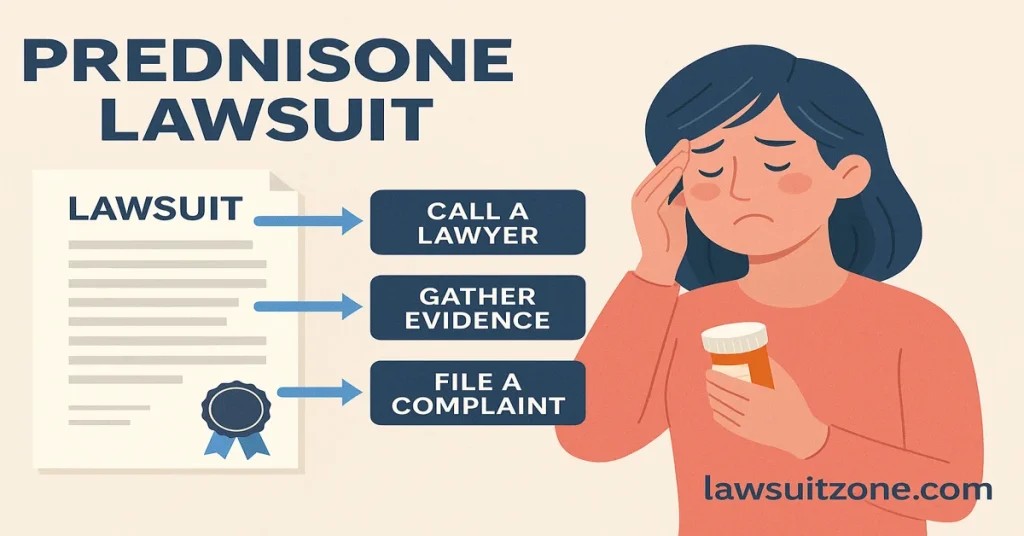
- Call a Lawyer – most provide free consultations.
- Document Evidence – medications, medical reports, insurance claims.
- Complaint Filed – listing manufacturers as defendants.
- Discovery Phase – attorneys share evidence, expert reports.
- Negotiations – the majority settle out of court.
- Trial – if not settled, a jury decides.
Average duration: 2–5 years. Consider it more of a marathon than a sprint.
What Compensation Entails in Prednisone Lawsuits
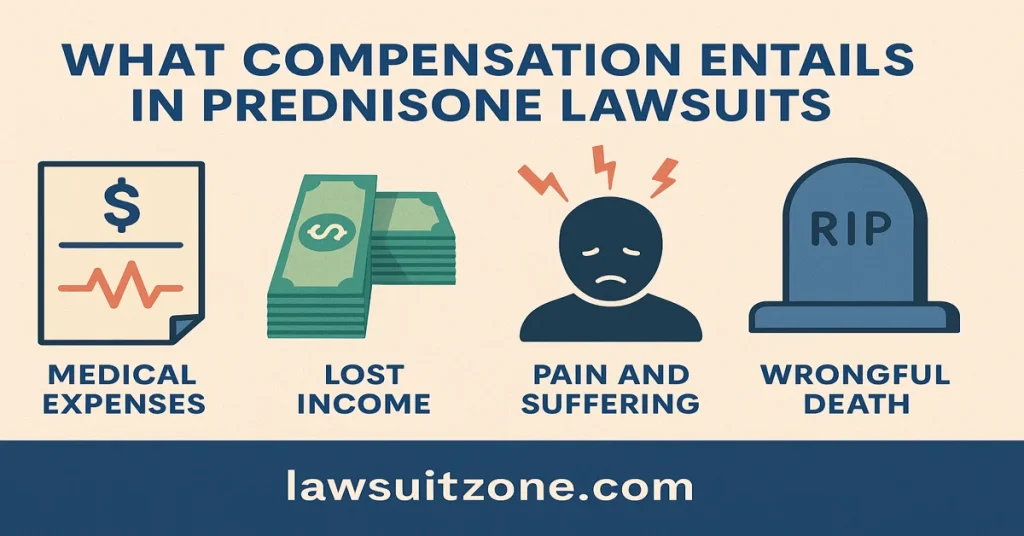
Compensation can entail:
- Medical expenses – operations, continued care, therapy.
- Lost income – for patients who cannot return to work.
- Pain and suffering – for the physical and emotional hardship.
- Wrongful death damages – for families who lost their loved ones.
The settlements have totaled as many as six or seven figures, depending on the level of injuries.
Status of Prednisone Lawsuits in 2025
Prednisone lawsuits are not as large as opioid or talc litigation yet, but they are gaining momentum. Success in every case creates precedent for subsequent plaintiffs.
For accurate safety information, patients tend to visit the U.S. Food & Drug Administration (FDA), which monitors drug safety communications and updates.
Class Action vs. Individual Lawsuits
- Individual lawsuits: More specific, possibly greater compensation.
- Class actions: Quicker, group, but settlement is split.
Lawyers typically recommend which is optimal based on your case specifics.
True Patient Tales That Drive the Prednisone Lawsuit
- Angela, 41: Used prednisone for Crohn’s disease, now has cataracts. “I thought cloudy vision was just getting older—guess it was the medication.”
- David, 55: Developed brittle bone disease after years of use. “My doctor said prednisone would help me move. Now I move with a cane.”
- Lisa, 30: Had such extreme mood swings, she lost her job. “It wasn’t me yelling—it was the drug.”
These kinds of stories put a face to the lawsuit.
Challenges Filing a Prednisone Lawsuit
- Causation: Side effects of prednisone may resemble problems due to aging.
- Big Pharma’s line of defense: Companies say benefits exceed risk.
- Time: Cases take years to determine.
The Role of Attorneys in Prednisone Lawsuits
Specialized lawyers:
- Work with medical specialists to establish connections.
- Create stories that capture juries’ hearts.
- Aggressively negotiate settlements.
- Bring cases to trial if necessary.
Patients never win against billion-dollar drug companies without attorneys.
Looking at Prednisone Lawsuits Compared to Other Drug Cases
Prednisone lawsuits mirror previous lawsuits, such as:
- Opioids – risks of addiction concealed.
- Talcum powder – cancer links concealed.
- Zantac – carcinogen contamination.
All point to a recurring theme: lack of transparency from manufacturers.
The Emotional & Financial Weight of Prednisone Side Effects
Patients often describe the burden as twofold:
- Physical – daily pain, fatigue, or vision problems.
- Emotional – anxiety over mounting medical bills, depression from lost independence.
Families also carry the weight, often stepping in as caregivers.
How to Prepare if You’re Considering a Lawsuit
- Save all prescription bottles.
- Maintain a health diary recording symptoms.
- Keep copies of X-rays, laboratory tests, and surgical notes.
- Request doctors in writing to attribute prednisone to your illness.
- Call a law firm that handles pharmaceutical cases.
Sample Timeline of a Prednisone Lawsuit
- Month 1: First lawyer consultation.
- Months 2–6: Filing, initial responses.
- Year 1: Discovery (fact finding).
- Years 2–3: Negotiation for settlement.
- Years 3–5: Trial if no settlement.
Patience is the key—it’s a marathon, not a sprint.
Tips for Selecting the Ideal Lawyer
- Seek a record of pharmaceutical litigation.
- Select contingency-based law firms (no win, no fee).
- Inquire about their handling of corticosteroid cases.
- Assess the extent to which they define the process.
Alternatives If You Don’t Sue
Even if you avoid litigation, you can:
- Report a complaint using the FDA’s MedWatch system.
- Become involved with patient advocacy groups.
- Make your story known to raise awareness.
Extended FAQs Regarding Prednisone Lawsuits
Conclusion: Why Prednisone Lawsuits Matter in the Future
The prednisone lawsuit is not merely about payments. It’s about fairness, safety, and responsibility. Prednisone is still a crucial drug, but patients need to know the risks beforehand.
If you or a loved one has been harmed after use of prednisone, don’t keep quiet. Get your records, talk to an attorney, and think about your rights. Every case puts pressure on drug manufacturers to prioritize patient safety.
Prednisone will always be a double-edged sword—yet lawsuits can ensure the blade is used responsibly.