Truvada Lawsuit: Complete Guide to Claims & Next Steps (2025)
If you’re searching for a truvada lawsuit, there’s usually a reason that feels bigger than curiosity. Many people start digging after a tough diagnosis kidney decline, abnormal lab trends, bone density loss, or fractures especially when they used Truvada for a long time for HIV treatment or PrEP and now wonder whether risks were explained clearly enough.
This guide covers what Truvada lawsuits often involve, which injuries are commonly alleged, how eligibility is evaluated, what evidence makes the biggest difference, what deadlines can apply, and what the legal process typically looks like written in a straightforward, respectful way. Have you checked our detailed guide on Gerber Lawsuit.
What Truvada Is-and Why It Was So Widely Used
Truvada is a prescription medication that combines emtricitabine (FTC) and tenofovir disoproxil fumarate (TDF). It’s been used for:
- HIV infection-treatment (in combination with other medications)
- Prevention of HIV for people at risk of exposure (PrEP)
For many patients, Truvada was empowering and effective. The lawsuit conversation typically isn’t about denying its role in prevention and treatment. It’s about whether the balance between benefits and long-term risks was communicated clearly—and whether some users should have been monitored differently or switched sooner depending on their health profile.
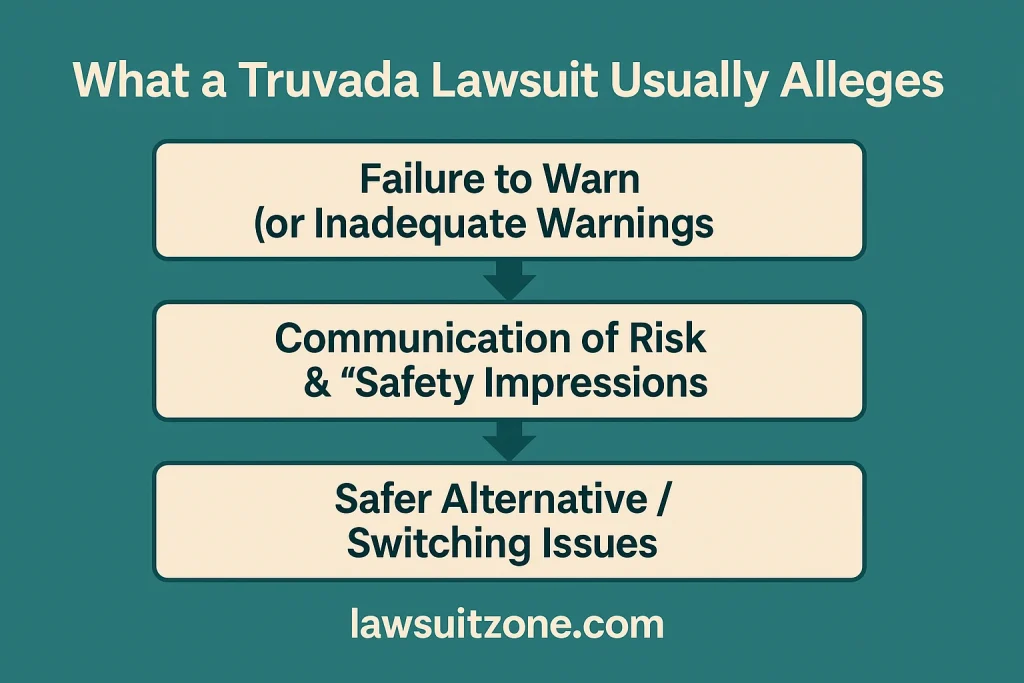
What a Truvada Lawsuit Usually Alleges
A truvada lawsuit generally argues that a person experienced a serious, measurable injury after taking Truvada and that the manufacturer did not do enough to reduce or communicate certain risks—particularly for longer-term use.
Common themes in claims include:
1) Failure to Warn (or Inadequate Warnings)
The argument is that patients and/or prescribers were not adequately warned about the seriousness of certain potential harms, especially kidney and bone-related risks over time.
2) Communication of Risk & “Safety Impressions”
Some claims focus on whether messaging made prolonged use feel routine without emphasizing that monitoring and individual risk factors matter.
3) Safer Alternative / Switching Issues – Often Discussed in Litigation
Some claims argue that certain users could have faced lower risk with different medication options, and that clearer guidance or earlier transition could have reduced harm.
Reality check: A bad outcome doesn’t automatically equal a strong legal claim. Lawsuits typically depend on documentation, timing, and damages—not just suspicion.
Injuries commonly cited in Truvada lawsuit claims
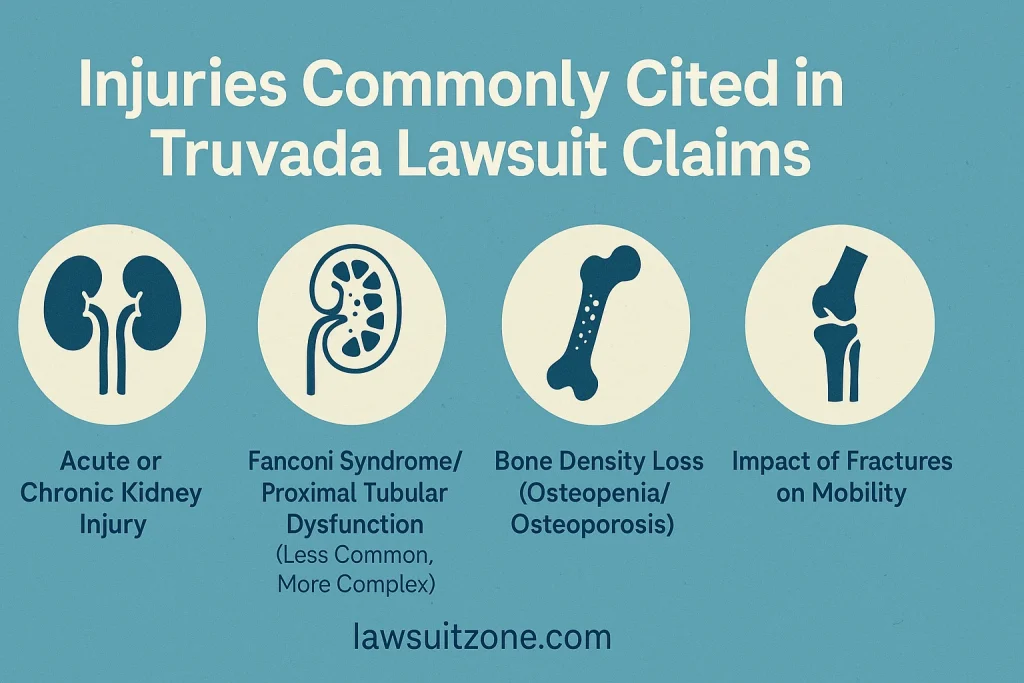
Not everyone experiences severe side effects. But when lawsuits are discussed, a few injuries appear repeatedly because they can be serious, costly, and objectively documented.
1) Acute or Chronic Kidney Injury
Kidney issues are some of the most frequent complaints.
What this may look like in the real world:
- Abnormal kidney labs over time: rising creatinine, declining eGFR
- Diagnosis of chronic kidney disease (CKD)
- Nephrology visits and long-term follow-up
- Medication plan changes and lifestyle restrictions
Why it matters legally:
Kidney decline often leaves a clear “paper trail” in lab history and specialist notes, which helps establish a timeline.
2) Fanconi Syndrome / Proximal Tubular Dysfunction (Less Common, More Complex)
Some claims involve specific kidney tubular conditions. These cases are usually evidence-heavy and require strong medical documentation, specialist confirmation, and expert review.
3) Bone Density Loss (Osteopenia/Osteoporosis)
Some users also experience some bone weakening during or after continued use.
How it’s commonly documented:
- Results of DEXA scans showing lowered bone density
- New osteoporosis/osteopenia diagnosis
- Recommendations on supplements, medicine changes, or further monitoring
4. Impact of Fractures on Mobility
In some cases, bone loss concerns are paired with fractures—often because fractures create measurable damages and long recovery periods.
Examples:
- Hip, wrist, or spine fractures
- Stress fractures
- Rehab, physical therapy, or limitation to mobility
5) Long-Term Monitoring Burden
Even if a person stabilizes after stopping or switching, they may face:
- Ongoing laboratory tests and specialist consultations
- Added medications or supplements
- Anxiety and limitations around physical activity
- Higher insurance and healthcare costs
Who May Be Eligible for a Truvada Lawsuit?
Many attorneys evaluate potential truvada lawsuit cases using three core pillars.
1) Proof You Took Truvada (Exposure Evidence)
Useful things to include are:
- Pharmacy refill history (best evidence)
- Prescription records
- Medical chart medication lists
- PrEP clinic documentation (if applicable)
- Insurance medication statements
2) An Injury Diagnosed That Matches Common Allegations
Examples:
- Documented kidney decline with lab trends and nephrology notes.
- CKD diagnosis
- DEXA scans of bone density loss
- Fracture records, imaging, orthopedic notes
- Records of hospitalization, in cases where the complications were not mild.
3. Damages (Actual Injury)
The courts usually focus on measurable impact such as:
- Medical expenses: labs, visits, treatment.
- Lost income/time off work
- Long-term care needs
- Pain, suffering, and a reduced quality of life
Evidence to Collect: This is the difference maker.
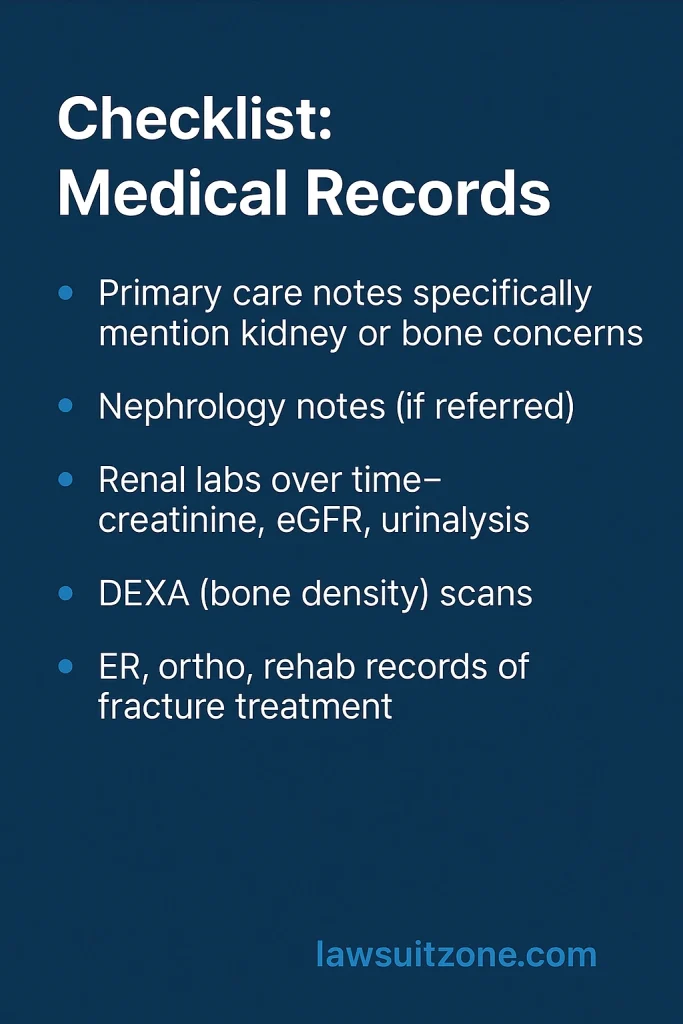
If you’re exploring a Truvada claim, documentation is often what “makes or breaks” viability.
Checklist: Medical Records
- Primary Care notes specifically mention kidney or bone concerns.
- Nephrology notes (if referred)
- Renal labs over time-creatinine, eGFR, urinalysis
- Imaging and diagnosis record
- DEXA (bone density) scans
- ER, ortho, rehab records of fracture treatment
- Notes regarding medication change to include when/why Truvada was discontinued/switched
Medication Administration Checklist
Pharmacy printout showing:
- start date
- replenishment pattern
- how long used
Dose changes (if recorded)
Documentation of adherence discussions if relevant
Personal Record-Keeping Checklist
- A chronological timeline of symptoms and appointments
- Work absence and wage loss records
- Others-expenses out-of-pocket travel, copays, supplements
- Notes on daily limitations (fatigue, mobility, pain)
Tip: Keep it simple and factual. “April 12—lab showed eGFR drop; May 3—nephrology consult; June 10—Truvada stopped” is stronger than vague descriptions.
Deadlines: Statute of Limitations Don’t Guess on Timing
Deadlines vary depending on the jurisdiction. The filing “clock” may begin:
- when the injury occurred, or
- when you learned-or could have learned-of the potential link
Because deadlines differ widely, many people speak with a lawyer early just to understand whether time is still available—even if they haven’t decided to file.
What the Legal Process Usually Looks Like-in Plain Terms
Here’s what usually happens:
Step 1: Intake and Case Screening
You’ll normally be asked:
- Were you on Truvada for PrEP or for treatment of HIV?
- How long did you take it?
- Kidney/bone problems were first reported about
- What monitoring was performed?
- What records do you have?
Exercise 2: Album Collection
The legal team can request the records from:
- drugstores
- clinics
- hospitals
Specialists: nephrology, orthopedics
Step 3: Filing the Claim
If valid, a claim can be submitted:
- individually, or
- in coordinated proceedings depending on the litigation landscape
Step 4: Expert Review
Medication cases often employ medical experts to evaluate:
- causation: is a link plausible and supported?
- alternative causes/risk factors
- sufficiency of warnings and instructions
Step 5: Resolution
Possible outcomes include the following:
- Settlements negotiations
- Dismissal, if evidence isn’t strong enough.
- trial (less common but not impossible)
What Compensation Might Comprise
If a Truvada lawsuit is successful, compensation may include:
Economic Damages
- lab work and follow-up care
- specialist visits and treatments
- hospitalisation costs (if any)
- medications and follow-up care
- lost wages and reduced future earning capacity
Non-economic Damages
- pain and suffering
- emotional distress
- poor quality of life
Case-Dependent Damages
- punitive damages-rare and fact-specific depending on law
What to Do If You’re Concerned Right Now
Your health is paramount.
Practical steps:
- Do not stop HIV treatment medications without medical advice.
- If using PrEP, talk to your clinician about your risk profile and monitoring plan.
- Ask about renal follow-up (creatinine/eGFR + urinalyses), if relevant.
- Ask about bone health evaluation (DEXA) if risk factors or symptoms exist.
- Request your pharmacy refill history and key labs.
- Write a simple timeline (start Truvada → labs → symptoms → diagnosis → switch/stop).
For a high-authority, patient-friendly overview of PrEP, you can review the CDC’s guidance here: CDC — Prevent HIV with PrEP.
:
Common Myths People Believe
“If I used Truvada, I automatically have a case.”
Not necessarily. Most cases depend upon documented injury and damages, not exposure alone.
“If it was prescribed by my doctor, the manufacturer can’t be responsible.
Not necessarily, some cases emphasize warnings, labels, and risk communication.
“If I had other risk factors, I’m disqualified.”
Not always. The question is whether Truvada could be a meaningful contributing factor and whether risks were adequately communicated.
FAQs About Truvada Lawsuits
Final Thoughts
A truvada lawsuit is usually explored when someone believes long-term Truvada use contributed to kidney injury, bone density loss, fractures, or related long-term burdens along with real financial and life impact. Strong cases typically combine clear proof of use, objective medical documentation (labs/scans), and measurable damages. If you’re unsure, start by protecting your health, gathering records, and learning your legal options.
Disclaimer: This article is informational only and does not replace medical or legal advice.