The Complete Guide to the Candace Owens Lawsuit in 2025
Introduction
The Candace Owens lawsuit has garnered widespread public attention, not only for its legal merit but also for what it says about accountability among celebrities, free speech, and digital responsibility. Being among the most outspoken and contentious figures in modern political commentary, Candace Owens has long been recognized for staunch opinions and an unapologetic online presence.
But when public opinion crosses into legal territory, lines between expression and liability blur and that’s precisely where this lawsuit finds its footing. This complete guide breaks down every key element of the case: how it started, what the claims involve, who’s participating, and what it may signal for free speech, social media ethics, and public life. Have you checked our detailed guide on Facebook Lawsuit Settlement.
Who is Candace Owens?
Candace Owens is a political commentator, author, and media personality recognized for her sharp conservative views and influence on cultural and political debates. Rising to prominence in the late 2010s, Owens became one of the most discussed figures in American media — admired by some for “speaking truth” and criticized by others for being provocative.
She has hosted talk shows, appeared at major events, launched podcasts, and even founded media platforms. Her reach on social media is in the millions, giving her incredible ability to shape public opinion quickly, but also putting her statements under a legal microscope.
For public figures like Owens, every word, tweet, or interview may carry both social influence and legal weight. That’s why the Candace Owens lawsuit became a lightning rod for debate about responsibility and reputation.
What Sparked the Candace Owens Lawsuit?
While details vary about the Candace Owens lawsuit, depending on the filings and updates, the very base of it goes to disputes over statements made publicly, oftentimes on social media, interviews, or commentary shows.
The lawsuit, filed by individuals or organizations who claim Owens’ comments caused quantifiable damage, largely revolves around defamation, damage to reputation, and false statements. In turn, Owens’ legal team has maintained that her remarks fall under the protection of free speech and opinion, key defenses under U.S. law.
Key Legal Questions
- Can opinions shared online give rise to defamation?
- To what extent are influencers and commentators legally liable?
- Where does the right to express political or personal opinions end?
The Broader Context: When Fame Meets Legal Boundaries
Public figures live under a magnifying glass. Their words can spark massive movements—or massive lawsuits. For Owens, who’s made a name for herself via her confident, direct speaking style, the same qualities that made her famous placed her in the center of legal scrutiny.
This isn’t just a lawsuit about one person or one case; it is about how the law catches up to the digital era. Every viral video, every statement of controversy, and every tweet can be used as evidence in court. The stakes are sky-high, not for Owens alone, but for every creator, commentator, and influencer who navigates today’s social-media-driven world.
Timeline of the Lawsuit
Initial Trigger (Early Stages)
Owens made a statement or posting that became the point of controversy. The affected party alleges harm or misrepresentation.
Filing of the Case
The Plaintiffs then file a formal complaint in court, detailing the exact complaints of defamation, damages, or false claims.
Response from Owens’ Legal Team
The Owens camp then files a legal response, which can involve denying the charges, disputing the facts, or invoking constitutional free speech protections.
Discovery Phase
Evidence is gathered from both sides: screenshots, transcripts, interviews, or financial documentation that may prove their argument.
Negotiation or Settlement Talks
As is often the case with celebrity lawsuits, both sides may attempt to reach a confidential settlement to avoid further media coverage.
Court Hearings or Public Updates
If unresolved, hearings go forward and filings become public record. Updates attract news coverage and online discussion.
Resolution or Ongoing Litigation
Some lawsuits settle, while others go to trial or through arbitration. Public figures usually seek confidentiality to protect the brand value.
Legal Foundations Behind the Case
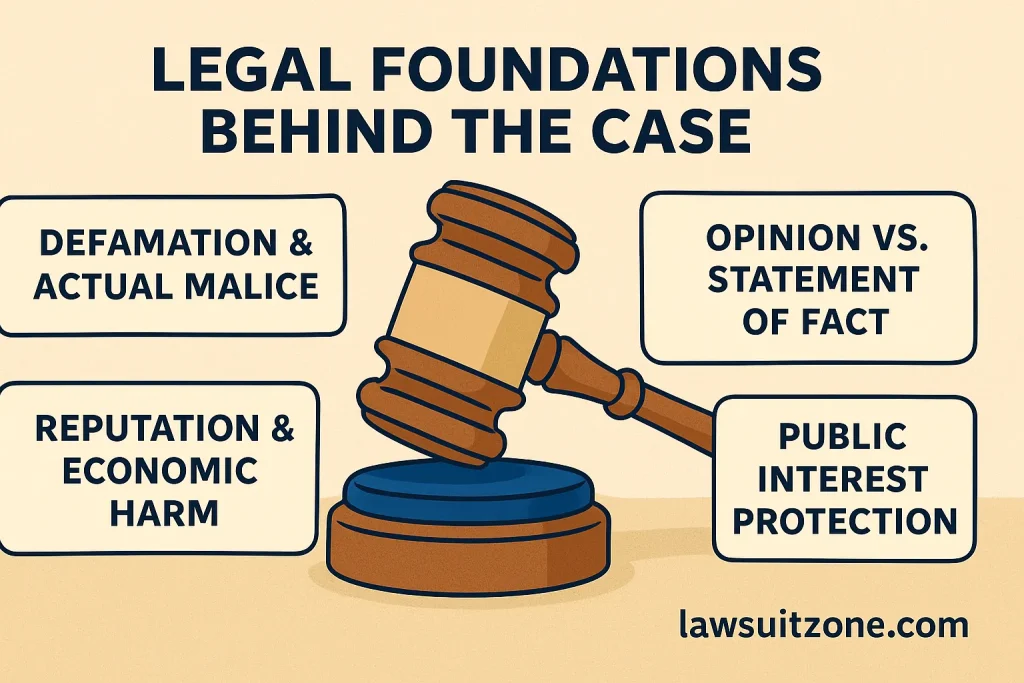
1. Defamation and Actual Malice
In the case of defamation of a public figure, such as Owens, the plaintiff is required to prove that:
- The statement was false.
- It was made with “actual malice” — meaning Owens knew it was false or acted with reckless disregard for truth.
This bar is intentionally high to protect public discourse and prevent silencing critics or journalists.
2. Opinion vs. Statement of Fact
The major gray area in such lawsuits is whether comments constitute opinions, thus protected by free speech, or statements of fact, which can be actionable. Courts consider tone, context, and evidence. Owens’ defense often hinges on the latter distinction.
3. Protection of Public Interest
Speech on political, social, or cultural matters is given wider constitutional protection. Therefore, her comments could be considered a matter of “public concern,” providing an added layer of protection.
4. Reputation and Economic Harm
Damages are available under this tort if the plaintiffs can prove that the remarks caused financial loss, reputational damage, or emotional distress.
What Makes the Case So Controversial
The Candace Owens lawsuit has stirred debate for more than legal reasons; it’s a reflection of the changing landscape of free expression.
Some view it as a test of First Amendment boundaries: Should opinionated commentary enjoy immunity from suits, or should influencers be held accountable for perpetuating false or injurious narratives?
Others believe that such lawsuits might chill free speech, deterring open discussion. This tension between accountability and expression makes the Owens case emblematic of our times, in which every public utterance carries legal and social risk.
Public Reaction and Media Coverage
Public opinion is sharply divided.
Supporters say Owens is a victim of political bias, targeted for her views rather than any legal wrongdoing.
Critics believe the lawsuit spotlights a pattern of reckless commentary that blurs the line between free speech and misinformation.
Major media outlets, talk shows, and various legal analysts have discussed this case at length, pointing out how it might shape the future of influencer liability and accountability in the days to come.
Possible Outcomes of the Lawsuit
1. Dismissal
If the court finds the claims insufficient or the speech protected, the suit may be dismissed before trial.
2. Private Settlement
The most common outcome in celebrity cases — both sides may agree privately to resolve the issue, possibly involving compensation or retraction.
3. Public Trial and Judgment
If the case goes to court, the ruling could set legal parameters around digital commentary, establishing precedent for influencer cases in the future.
4. Reputation Impact
Regardless, lawsuits can impact how brands, sponsors, and the public perceive Owens, no matter the verdict or settlement. For polarizing figures, perception can be just as important as any verdict.
Lessons for the Digital Age
1. Think Before You Post
Every tweet or video can reach millions, and they live online forever. Intent matters, but accuracy matters more.
2. Verify Facts
Misstatements about individuals or businesses can lead to serious legal exposure. Always cross-check information before publishing.
3. Keep Opinions Clearly Labeled
If it’s opinion, state it as such. Legally, it protects you by differentiating between commentary and factual claims.
4. Legal Counsel Is a Shield
High-profile individuals should have lawyers vet contracts, partnerships, and sensitive posts before they go out. It’s a small step that can help avoid huge problems.
Cultural and Political Impact
The Candace Owens lawsuit represents a collision between modern media, law, and politics. It is not about just who wins or loses in court; it is about how society balances accountability with expression.
Living in a world where every voice is magnified through digital platforms, one sentence can get reactions from all parts of the world. The Owens case may shape how social-media companies, influencers, and commentators operate moving forward — enforcing stricter guidelines or encouraging more caution in public discourse.
This also raises questions of platform liability: Should a company like YouTube or X bear responsibility for what high-reach personalities post on their platforms, or should individuals bear the full legal consequences of their words?
Expert View: Understanding Legal Risk in Media
The U.S. Federal Trade Commission has resources on advertising, public claims, and media liability for creators. Their Advertising and Endorsement Guidelines provide insight into transparent communication, avoiding false statements, and protecting creators and audiences alike.
Such information helps both influencers and journalists avoid legal missteps — as has allegedly occurred in the Candace Owens lawsuit.
Frequently Asked Questions (FAQs)
Final Thoughts
The Candace Owens lawsuit is not just another celebrity headline; it’s a mirror to the growing pains of digital democracy. It questions how far opinion can go before it becomes legally risky, how much protection free speech deserves in online spaces, and how society should treat the influence of public figures.
Like many outspoken commentators, Candace Owens made a brand out of fearless dialogue. Now, that same fearlessness is on trial. Whether she wins or settles, this case will leave an indelible mark on how the internet defines truth, responsibility, and freedom.
As audiences, creators, and corporations learn to navigate this changing terrain, one lesson comes through loud and clear: in a world driven by words, accountability travels just as fast as influence.
⚖️ Disclaimer:
This article is purely for informational purposes and does not create an attorney-client relationship. In the event of seeking specific advice, consult with a qualified lawyer.