
Cadets Drum Corps Lawsuit: A 2025 Complete Guide

Introduction
The Cadets Drum Corps lawsuit has sent shockwaves through the world of marching arts. For decades, The Cadets symbolized excellence, discipline, and creativity on the drum corps stage. Now, headlines about lawsuits and legal disputes threaten to overshadow that proud history.
This guide dives deep into the story: what sparked the lawsuit, the allegations at its core, and the ripple effects on performers, alumni, and the entire drum corps community. By the end, you’ll understand why this case matters not only to The Cadets but to every organization that values accountability and trust. Have you checked our detailed guide on Lisinopril Lawsuit.
The Cadets: A Legacy Worth Remembering

Before we dissect the lawsuit, let’s pause to appreciate who The Cadets are.
Founded in 1934, The Cadets (formerly the Holy Name Cadets) became one of the most decorated corps in Drum Corps International (DCI) history. Their performances from “Appalachian Spring” to “West Side Story” set standards that other corps aspired to match.
Fans remember them for:
- Innovative drill design.
- Complex musical arrangements.
- A culture of precision and pride.
So when whispers of legal trouble began surfacing, they felt almost unthinkable. How could an institution so respected suddenly face public scrutiny? That tension between tradition and controversy is what makes the Cadets Drum Corps lawsuit such a pivotal moment.
Why Drum Corps Face Legal Trouble
This isn’t the first time a performing arts group has faced lawsuits. Understanding the bigger picture helps make sense of what’s happening.
- Financial disputes – Nonprofits depend on donations, member dues, and sponsorships. Misuse or mismanagement of funds often sparks legal challenges.
- Workplace misconduct – Allegations of harassment or abuse have become increasingly visible across arts organizations.
- Contract disagreements – Staff, vendors, or even performers may take action if contracts aren’t honored.
- Safety obligations – When young people tour the country, corps carry legal responsibilities to ensure safe housing, transportation, and rehearsal conditions.
The Cadets’ current legal battle touches more than one of these categories, which is why it’s attracted so much attention.
Tracing the Lawsuit’s Roots
The Cadets Drum Corps lawsuit didn’t appear out of nowhere. Alumni, parents, and even former staff had been raising concerns for years. Reports circulated about questionable financial practices and leadership that failed to address misconduct complaints quickly enough.
Eventually, allegations became serious enough that legal action followed. Key themes include:
- Financial mismanagement – Accusations that funds meant for programming or member services were mishandled.
- Leadership misconduct – Claims that individuals in positions of authority created unsafe or inappropriate environments.
- Organizational negligence – A broader claim that The Cadets failed to protect their members and staff adequately.
While details vary depending on who you ask, these are the threads weaving together the current lawsuit.
Breaking Down the Allegations
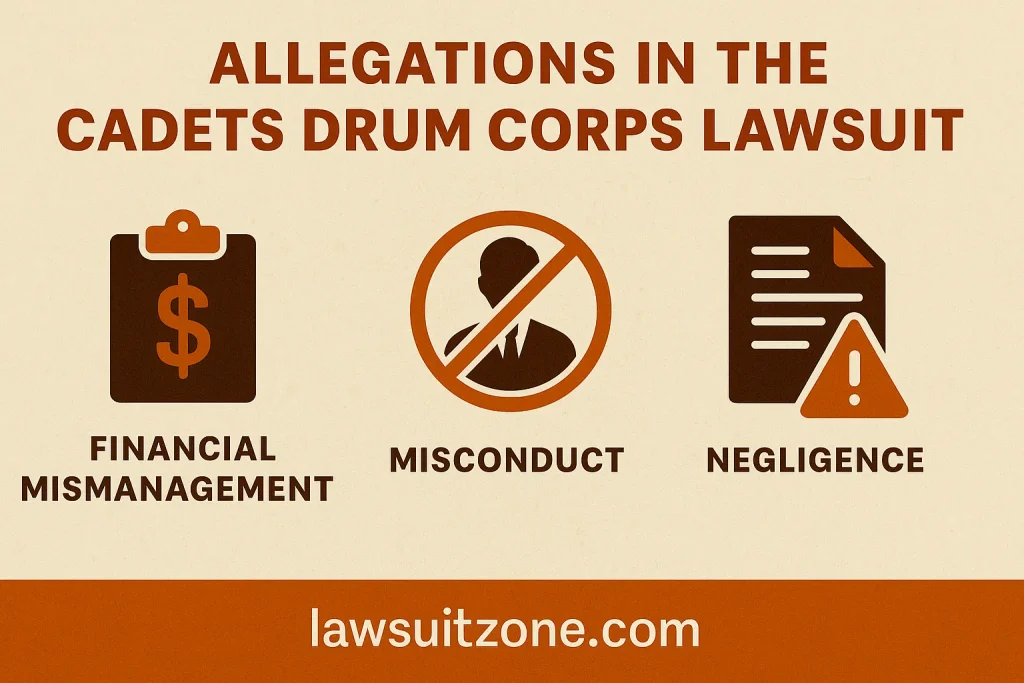
To understand the case, it’s useful to examine the allegations point by point.
1. Mishandling of Money
At the heart of many nonprofit lawsuits is the question: where did the money go? Plaintiffs argue that financial transparency was lacking, raising concerns about donor trust.
2. Misconduct Allegations
Some lawsuits reference inappropriate behavior by past leaders. Even if individuals have since left, the organization can still be held accountable for failing to act sooner.
3. Negligence Toward Members
Beyond money or misconduct, the lawsuit paints a picture of young performers being put at risk — whether through unsafe conditions, ignored complaints, or lack of oversight.
These claims, if proven, could have lasting consequences not only for The Cadets but for how drum corps across the country operate.
How Lawsuits Like This Unfold
The lawsuit process can feel complicated, but here’s the simplified version of what The Cadets are facing:
- Complaint filed – Plaintiffs outline allegations in a formal legal filing.
- Response filed – The Cadets’ attorneys reply, possibly denying charges or filing motions to dismiss.
- Discovery – Both sides gather documents, emails, and testimony.
- Motions & hearings – Judges may rule on what evidence is admissible or whether certain claims move forward.
- Settlement talks – Many cases resolve here, with agreements reached outside court.
- Trial – If no settlement, a trial decides liability and possible damages.
Right now, the Cadets Drum Corps lawsuit is in the thick of this process, and the community is watching closely.
The Human Side: Members and Alumni
Behind the legal jargon are real people whose lives are directly affected.
- Current members feel anxious about the future of their season and whether they’ll get to perform without disruption.
- Alumni struggle with mixed emotions: loyalty to the corps they love, but frustration at leadership failures.
- Parents wonder if drum corps remains a safe space for their kids.
The lawsuit isn’t just paperwork; it’s reshaping the emotional landscape of an entire community.
Wider Implications for the Drum Corps World
When one of the most iconic corps faces a lawsuit, the entire marching arts world takes note.
- Other corps are paying attention – Expect stricter policies, improved financial checks, and new training for staff.
- Donors may grow cautious – If trust erodes, fundraising becomes harder not just for The Cadets but for similar nonprofits.
- Cultural conversations are shifting – More performers are speaking out about safety and accountability.
In short: the Cadets case could change drum corps culture for good.
Lessons Learned
The lawsuit serves as a wake-up call. Here are some takeaways:
- Transparency builds trust. Nonprofits must show where money goes.
- Zero tolerance for misconduct. Allegations must be addressed immediately, not swept aside.
- Parents should investigate. Ask about safety policies before your child joins.
- Alumni voices matter. Speaking up can spark reform.
Similar Cases for Context
The Cadets aren’t alone. Other organizations in DCI and beyond have faced lawsuits in recent years, often over similar issues. Outside the marching arts, ballet companies, choirs, and youth theaters have all been rocked by misconduct or financial scandals.
The pattern is clear: without accountability, problems repeat themselves.
Possible Outcomes
So what might happen next?
- Settlement – The most likely outcome, with damages paid and reforms required.
- Leadership shakeup – Lawsuits often force organizations to install new boards or directors.
- Policy changes – Stronger safety, financial, and HR policies may emerge.
- Reputation damage – Even if they survive, The Cadets’ image may be permanently scarred.
- Closure (worst case) – While unlikely, some arts groups have folded under legal and financial pressure.
Staying Informed
Reliable updates come from official filings and trusted news sources. For those tracking nonprofit accountability in general, the U.S. Department of Justice offers valuable resources on legal compliance.
FAQs
Conclusion
The Cadets Drum Corps lawsuit represents more than just a legal battle. It’s a turning point for one of the most celebrated organizations in marching arts history — and perhaps for the activity as a whole.
Whether the outcome is settlement, reform, or something more drastic, one thing is clear: the days of silent compliance are over. Members, parents, and alumni now demand transparency, accountability, and a culture where young performers are safe and supported.
The legacy of The Cadets may forever be tied to this lawsuit, but it could also become the spark that pushes drum corps toward a safer, stronger future.