Paul Mackoul Lawsuit: A Deeper Look into Medicine, Law, and Trust in 2025
Introduction
When individuals go see a doctor, particularly a surgeon, they have in their minds a combination of hope and terror. Hope that the treatment will make them healthier, and terror that it will not work. This delicate dance of trust becomes even more complex when there are lawsuits involved, such as the Paul Mackoul Lawsuit, which highlights how fragile the relationship between patients and medical professionals can become under legal scrutiny.
The case of Paul Mackoul is one of them that sent shock waves into confidence in the healthcare system. It meshed cutting-edge medicine, patient complaint, and courtroom drama into a narrative that still goes on being discussed by patients, physicians, and attorneys.
But this isn’t only about one doctor it’s about how society as a whole approaches accountability in medicine, how patients can protect themselves, and how doctors need to respond in an environment where legal danger is always looming. Have you checked our detailed guide on Optimum Energy Partners Lawsuit.
Who is Dr. Paul Mackoul?
Dr. Paul Mackoul was a board-certified gynecologic surgeon specializing in minimally invasive gynecologic surgery (MIGS). Located in Maryland, he was prominent for employing newer laparoscopic and robotic technologies.
His clinical practice concentrated on:
- Uterine fibroids – benign tumors commonly associated with heavy bleeding.
- Endometriosis – painful condition that impacts millions of women.
- Ovarian cysts – fluid-filled sacs that in some cases need to be surgically removed.
- Pelvic pain disorders – typically tricky and hard to diagnose.
By providing alternatives to conventional open surgery, Dr. Mackoul established himself as an innovator. His approach guaranteed shorter recovery periods, fewer scars, and faster returns to regular life. For a great many women, that was a game-changer.
However, with every innovation there are critics. Some other doctors wondered if new methods were being pushed too quickly into practice. Some patients complained they weren’t fully informed of the risks. These issues over time grew into legal actions — and the now infamous Paul Mackoul lawsuit.
Why Did the Lawsuit Arise?
The Dr. Mackoul lawsuit was not a one-time isolated incident but the culmination of years of patient grievances, regulatory issues, and malpractice suits.
The primary precipitants were:
Complications Following Surgery
Patients suffered injuries, infections, or unforeseen health effects following procedures.
Concerns with Informed Consent
A number of plaintiffs complained that although they signed consent forms, they weren’t provided with clear information regarding the risks of minimally invasive surgery.
Allegations of Negligence
Attorneys for patients argued that Dr. Mackoul didn’t come up to the “standard of care” in his specialty, a foundation in malpractice law.
Ethical and Professional Issues
A few lawsuits extended beyond medical outcomes, questioning professional conduct and whether all medical procedures were duly executed.
The Defense: Dr. Mackoul’s Position
Dr. Paul Mackoul asserted from the outset that he had not done anything wrong. His defense rested on a number of key points:
- Surgery is Inherently Risky: Despite the finest technology and training, there may be complications. That does not necessarily mean malpractice.
- Patients Were Informed: Pre-surgery visits and consent forms were included in the protocol, which means risks were explained.
- Following Medical Standards: His methods, while cutting-edge, were within established medical parameters.
- Innovation Misunderstood: New surgical procedures tend to be challenged, not because they are dangerous, but because they go against established norms.
Briefly, his argument was that he did what any reasonable surgeon in his specialty would have done.
Courtroom Outcomes
The Paul Mackoul lawsuit yielded a varied array of outcomes in various cases:
- A few lawsuits were dismissed due to insufficient evidence.
- Some were settled out of court, typically with money, but no confession of guilt.
- Other cases lingered longer, with expert opinion determining how judges perceived “standard of care.”
Similar to most malpractice suits, results relied to a large extent on documentation, expert testifiers, and which side’s attorneys were more convincing.
Effect on Patients
For patients, suits are not merely about dollars. They are about health, trust, and trauma.
- Loss of Confidence: Plaintiffs felt betrayed in their trust. Even those with no direct involvement started questioning whether or not to have similar procedures done.
- Emotional Distress: Surgery is stressful enough. Throw in a lawsuit, and it’s emotionally taxing.
- Financial Burden: Medical expenses, lost income, and legal fees were a heavy burden on some patients and families.
Effects on Dr. Paul Mackoul
For Dr. Mackoul, the lawsuit had professional and personal effects:
- Damage to Reputation: Even if guilt isn’t established, public lawsuits reflect poorly on reputations.
- Regulatory Oversight: State medical boards regularly initiate investigations when lawsuits ensue.
- Career Uncertainty: Surgical centers and hospitals occasionally re-evaluate partnerships with physicians who are the subject of legal action.
Bigger Picture: Malpractice in Healthcare
The Paul Mackoul case is one of a broader trend in US medicine:
- Malpractice cases are prevalent. The American Bar Association estimates that malpractice cases often are about disagreements over negligence, informed consent, and medical ethics.
- Physicians increasingly risk lawsuits even when they adhere to guidelines. Results can initiate lawsuits.
- Patients trust in lawsuits for responsibility. For some, it’s the sole means of getting justice following a poor medical outcome.
Lessons Learned
For Patients
- Ask Questions: Don’t sign forms blindly insist on answers.
- Research Doctors: Review licensing boards and patient feedback.
- Plan for Risks: All surgery has some risk, even with great doctors.
For Doctors
- Put Transparency First: Open communication cuts down on lawsuits.
- Document Everything: Complete documentation can be a surgeon’s best protection.
- Balance Innovation and Safety: New techniques should be paired with full disclosure.
The Human Side of the Lawsuit

Strip away the legal language, and what remains is a deeply human story.
- Patients who wanted relief from pain but instead faced new struggles.
- Families who worried about medical bills and long-term recovery.
- A doctor who, despite his expertise, found himself in the crosshairs of controversy.
This isn’t merely a lawsuit it’s a reminder of the tenuous bond between doctors and patients.
Future of Dr. Paul Mackoul
Despite lawsuits, Dr. Mackoul remains in practice and an advocate for minimally invasive gynecologic surgery. His future will most likely include:
- Reestablishing patient trust.
- Surviving stricter regulation by regulators.
- Further developing his techniques as well as responding to patient safety issues more openly.
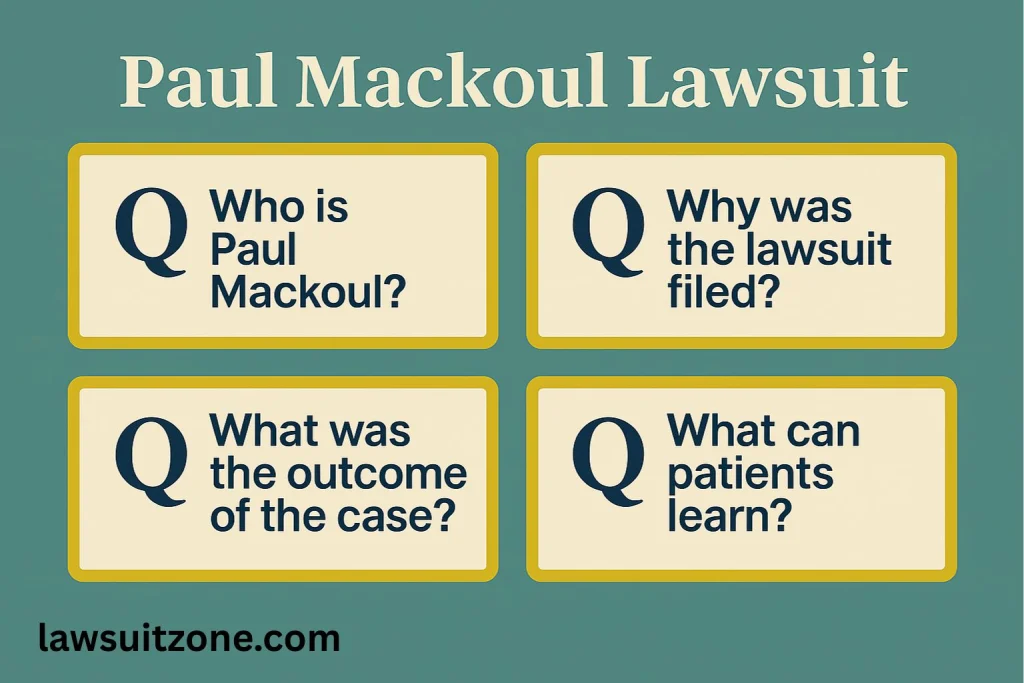
FAQs on the Paul Mackoul Lawsuit
Conclusion
The Paul Mackoul case is not just a drama in the courtroom. It’s a tale of medicine, law, and the very thin thread of trust they are wound together upon.
To patients, it is a call to insist on clarity and transparency.
To physicians, it is a reminder that innovation should be accompanied by responsibility.
To the health care profession, it is a lesson that reputation and trustworthiness are as important as competence.
Ultimately, the lawsuit reminds us all of an eternal truth: medicine isn’t a series of procedures — it’s about people.