Law Enforcement Alphabet Guide to Clear Radio Communication
The law enforcement alphabet helps police officers share letters clearly during calls and radio messages. Officers often work in noisy places so normal letters may sound alike.
For example, the letters B, D, P, and T can sound confusing over a weak radio signal. Therefore, officers use clear code words to spell names, streets, and vehicle numbers.
What Is the Law Enforcement Alphabet?
The law enforcement alphabet is a group of code words used to represent each letter from A to Z. Each word starts with the letter that it represents.
For example, an officer may say “Adam” for A and “Boy” for B. This method makes spoken letters easier to understand during fast or stressful situations.
Although many agencies use similar words, some police departments follow different versions. However, the main goal always stays the same: clear and accurate communication.
Why Police Officers Use Phonetic Words
Police officers often communicate through radios while driving, walking, or handling emergencies. Background noise can make normal speech difficult to hear.
As a result, phonetic words reduce mistakes and help officers understand important details. Clear speech can also save time when officers report a license plate or suspect’s name.
Moreover, dispatchers must record information without guessing. The alphabet provides them with a simple system that enables fast, accurate reporting.
How the Alphabet Improves Radio Communication
The law enforcement alphabet separates letters that sound similar during radio calls. For instance, M and N may sound almost the same through a poor connection.
An officer can say “Mary” for M and “Nora” for N to remove confusion. In addition, these words remain clear even when the radio signal becomes weak.
This system also helps emergency teams repeat information correctly. Therefore, it improves teamwork between patrol officers, dispatchers, and other responders.
Common Police Phonetic Alphabet
The table below shows one common American police phonetic system. Some departments may change a few words based on local rules.
| Letter | Code Word | Letter | Code Word |
|---|---|---|---|
| A | Adam | N | Nora |
| B | Boy | O | Ocean |
| C | Charles | P | Paul |
| D | David | Q | Queen |
| E | Edward | R | Robert |
| F | Frank | S | Sam |
| G | George | T | Tom |
| H | Henry | U | Union |
| I | Ida | V | Victor |
| J | John | W | William |
| K | King | X | X-ray |
| L | Lincoln | Y | Young |
| M | Mary | Z | Zebra |
Police departments may use different code words, so officers must learn the system used by their own agency. Still, most versions use short and familiar words.
Police Alphabet and NATO Alphabet Differences
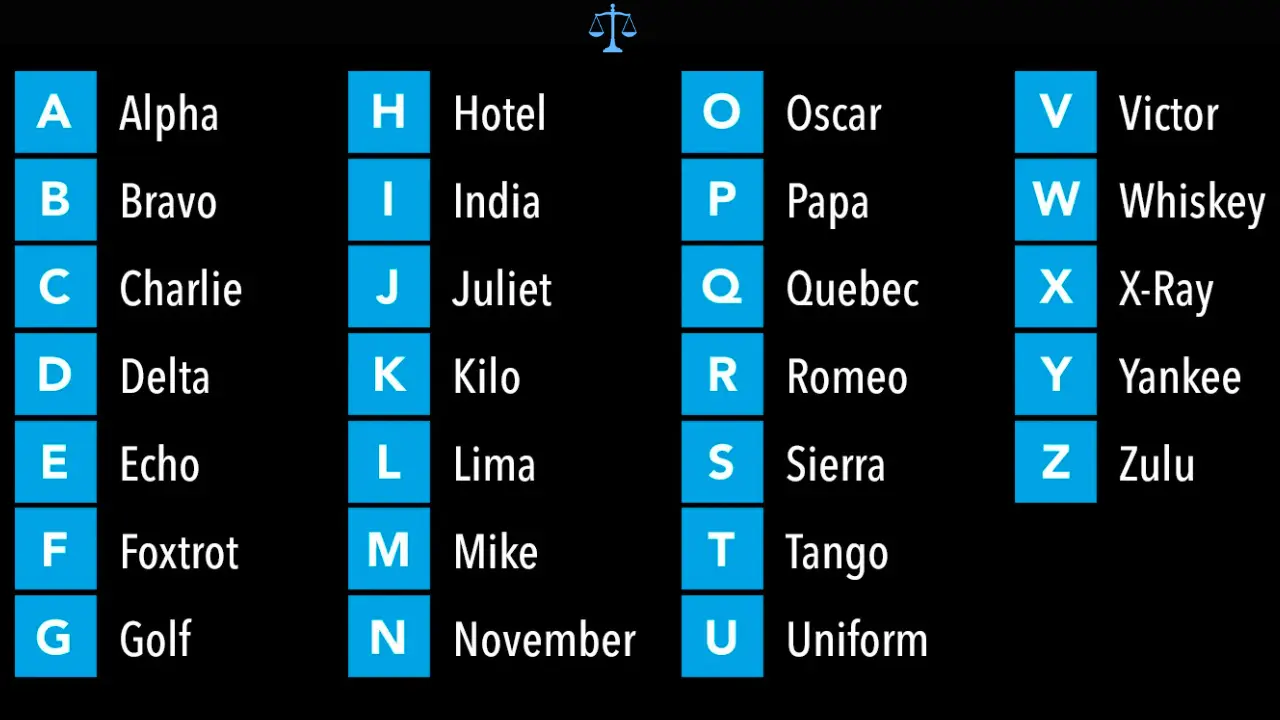
The law enforcement alphabet is not always the same as the NATO phonetic alphabet. NATO uses words such as Alpha, Bravo, Charlie, Delta, and Echo.
Police systems may use Adam, Boy, Charles, David, and Edward instead. Even so, both systems help people spell letters in a clear way.
NATO words are common in aviation, military work, and international communication. Meanwhile, many local police agencies prefer traditional American police code words.
How Officers Spell License Plates
Officers often use Law Enforcement Alphabet when they report vehicle registration numbers. This step helps dispatchers enter the correct letters into a computer system.
For example, an officer may report the plate “BKT 214” as “Boy, King, Tom, two-one-four.” The dispatcher can then search the number without mixing up the letters.
Furthermore, accurate plate details help officers identify stolen or wanted vehicles. A small spelling mistake could lead to the wrong search result.
Using the Alphabet for Names and Addresses
The law enforcement alphabet also helps officers spell difficult names and street addresses. Some names may have unusual spelling, so officers must share every letter correctly.
For example, an officer could spell “Miller” as “Mary, Ida, Lincoln, Lincoln, Edward, Robert.” This method allows the dispatcher to record the name without asking many questions.
Likewise, officers can spell street names when several roads have similar sounds. Therefore, the system improves accuracy during calls for service.
Benefits During Emergency Situations
Emergencies require fast action, but speed can also cause communication mistakes. Officers must speak clearly while they manage danger, traffic, crowds, or medical problems.
The law enforcement alphabet gives officers a reliable way to share key information. It helps them communicate suspect descriptions, locations, and vehicle details.
In addition, clear radio messages reduce the need for repeated questions. This benefit allows emergency teams to focus more attention on public safety.
How New Officers Learn the System
Police recruits often study the alphabet during academy training. Instructors may ask them to spell names, cities, and license plates aloud.
Recruits also practice radio calls so they can speak calmly and clearly. Regular practice helps the code words become easy to remember.
Afterward, officers continue using the system during field training. Over time, they can spell long words quickly without checking a list.
Tips for Remembering
The law enforcement alphabet becomes easier to learn when students practice a few letters each day. Writing the code words several times can improve memory.
Learners can also spell family names, road signs, and car plates for practice. However, they should always check which version their department uses.
A simple study routine may include:
- Reading the full alphabet aloud each day
- Practicing letters in random order
- Spelling short names without looking
- Listening to training radio examples
These exercises build speed and confidence. As a result, officers can use the system correctly during real calls.
Importance of Standard Communication
Standard communication helps law enforcement teams work together. Officers, dispatchers, firefighters, and medical workers often share information during the same event.
The law enforcement alphabet supports this teamwork by reducing unclear letters and repeated messages. It also creates a professional method for sharing sensitive information.
However, officers should speak at a steady speed and pronounce every word clearly. The alphabet works best when the speaker remains calm and follows agency rules.
Final Thoughts
Clear communication plays a major role in safe and effective police work. Phonetic code words help officers report names, addresses, and vehicle details without confusion.
The law enforcement alphabet offers a simple system that works well during noisy, stressful, or urgent situations. Although different agencies may use different words, each version supports accuracy, speed, and teamwork.