AFFF Lawsuit: Complete Guide for Firefighters and Affected Families
Introduction
The AFFF lawsuit has rapidly emerged as one of the largest chemical-exposure litigations in U.S. history. Firefighters, military personnel, airport crews, and industrial workers had depended on aqueous film-forming foam, or AFFF, for decades to fight high-intensity fuel fires. The foam was considered essential to safety — yet very few knew it contained toxic chemicals capable of lingering in the body for years.
Today, thousands of people diagnosed with kidney cancer, testicular cancer, thyroid disease, ulcerative colitis, and other PFAS-related illnesses have filed lawsuits against manufacturers. These claims argue that chemical companies knowingly sold dangerous firefighting foam without warning the public about its severe health risks.
This guide breaks down what the lawsuits involve, who qualifies, how compensation works, and what evidence supports the claims. Have you checked our detailed guide on Hair Relaxer Lawsuit.
What is AFFF?
AFFF is the abbreviation for the fire-fighting agent Aqueous Film Forming Foam used to extinguish flammable liquid fires, particularly jet fuel and petroleum-based fires. It works fast, prevents re-ignition, and forms a film while cooling and smothering.
AFFF has been used for more than 50 years by:
Fire departments
Military bases
Airports
Chemical plants
Oil and gas facilities
Coast Guard operations
The foam was revolutionary in firefighting effectiveness but extremely harmful in long-term biological impact.
Why AFFF is dangerous: Understanding PFAS
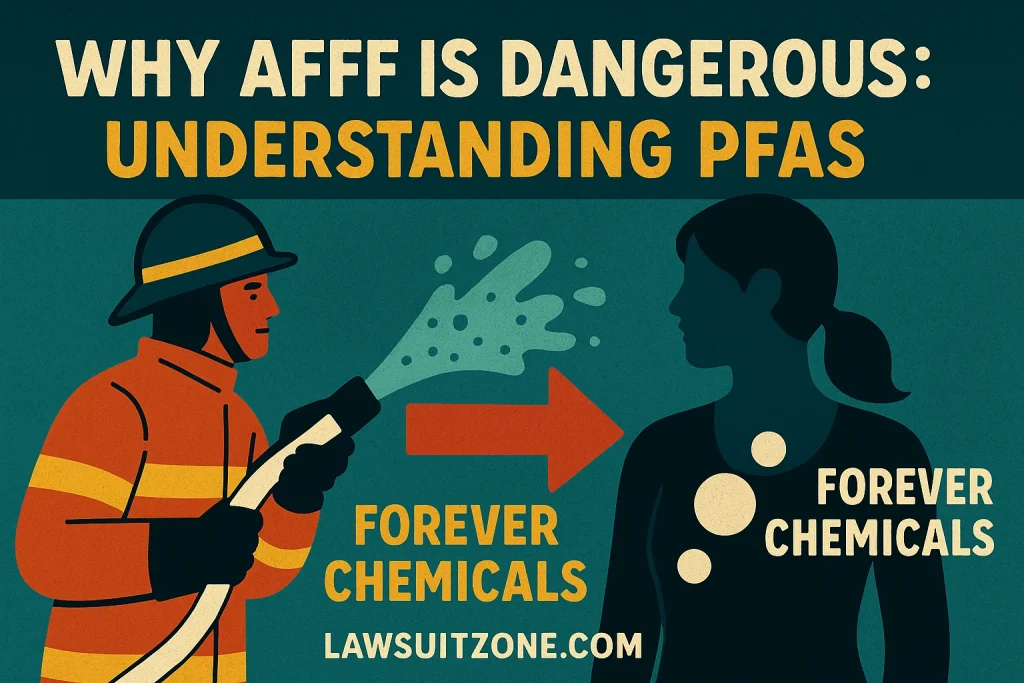
The danger in AFFF comes from PFAS: per- and polyfluoroalkyl substances, better known as “forever chemicals.” These compounds do not break down naturally; they accumulate inside the human body, and can contaminate groundwater for decades.
Exposure to PFAS has been associated with:
Kidney cancer
Testicular cancer
Pancreatic cancer
Thyroid cancer
Liver injury
Hormonal dysfunction
Immune suppression
Ulcerative colitis
Extensive PFAS health research, published by the Environmental Protection Agency, has demonstrated that long-term exposure poses serious risks to human health and the environment.
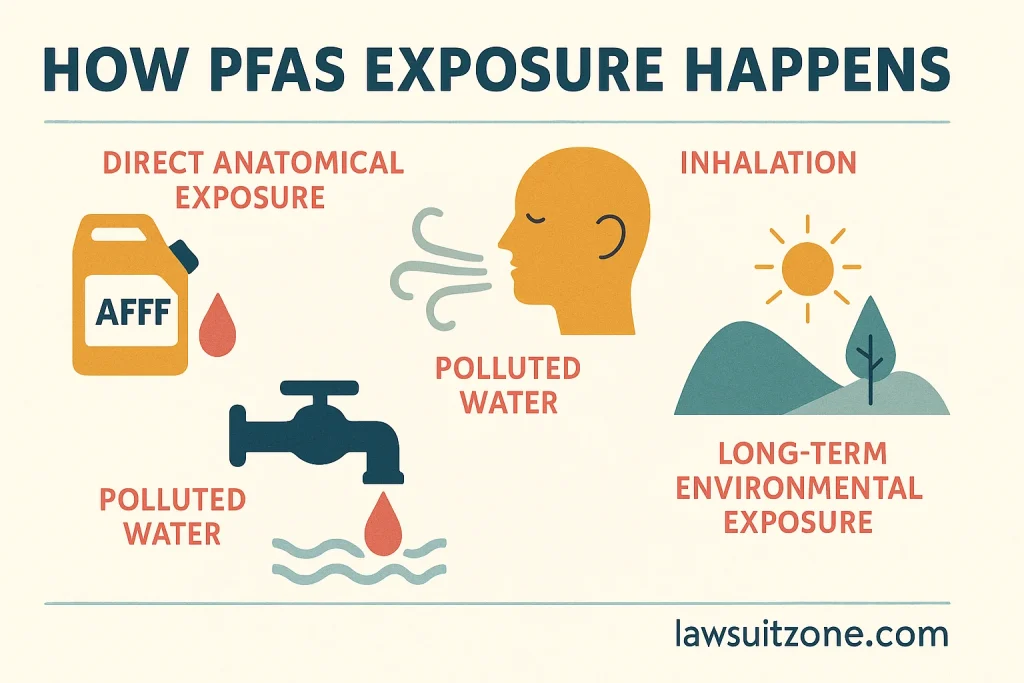
How PFAS Exposure Happens
People are exposed to AFFF chemicals through the following ways:
1. Direct Anatomical Exposure
Firefighters using the foam during training or emergency responses.
2. Inhalation
The smoke and vapor may contain PFAS.
3. Polluted Water
PFAS seeping into groundwater near military bases, airports, and fire stations.
4. Long-Term Environmental Exposure
PFAS can persist in soil and water for many years, increasing the risk of exposure to nearby communities.
Why the AFFF Lawsuit Was Filed
Litigation arising from AFFF is based on allegations that chemical manufacturers—3M, DuPont, Chemours, and others—knew PFAS were toxic but did not warn the public.
Plaintiffs contend that these companies:
Withholding safety information
Ignored internal research showing PFAS bioaccumulation
Marketed foam as “safe”
Did not update labels or warnings
Allowed dangerous chemicals to contaminate public water systems
Internal company documents disclosed during litigation indicate that executives were cognizant of the hazards from PFAS as early as the 1970s.
Health Conditions Reported in the AFFF Lawsuit
The majority of the lawsuits have involved individuals diagnosed after long-term PFAS exposure. Common conditions include:
1. Kidney Cancer
One of the most strongly linked cancers in scientific studies.
2. Testicular Cancer
Commonly found in professional firefighters and military personnel.
3. Thyroid disease
PFAS interfere with thyroid hormones and may cause either cancer or long-term dysfunction.
4. Pancreatic Cancer
Rare but increasingly associated with PFAS exposure.
5. Ulcerative Colitis
An inflammatory condition with documented PFAS associations.
6. Liver Damage
Elevated enzymes, fatty liver disease, and cirrhosis.
7. Infertility & Reproductive Harm
PFAS disrupt hormones and can affect pregnancy outcomes.
Which Firefighters and Workers Are Most At Risk?
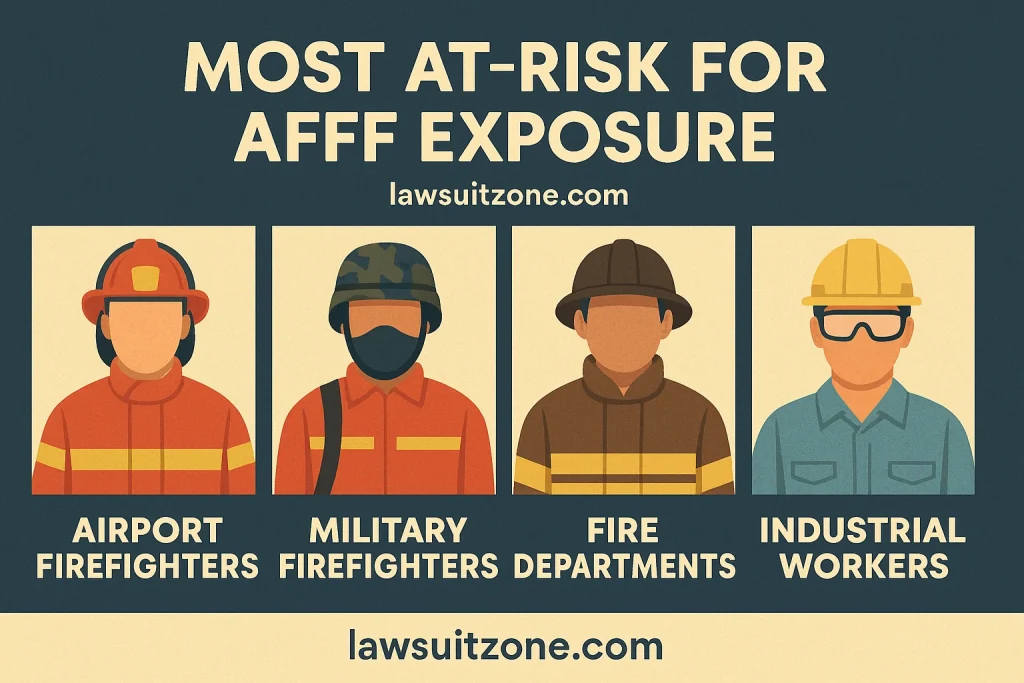
The lawsuit heavily involves:
Airport firefighters (ARFF units)
Military firefighters
Civilian fire departments
Refinery and chemical plant workers
Fire training instructors
People living around contaminated bases or airports
Military members are among the most exposed due to mandatory foam-based training that lasted for decades.
AFFF Manufacturers Named in Lawsuits
Many major corporations are involved, including:
3M
DuPont
Chemours
Corteva
Tyco Fire Products
Kidde-Fenwal
BASF
Buckeye Fire Equipment
All of these corporations either manufactured PFAS chemicals or provided firefighting foam that contained them.
Evidence utilized in the AFFF lawsuit includes
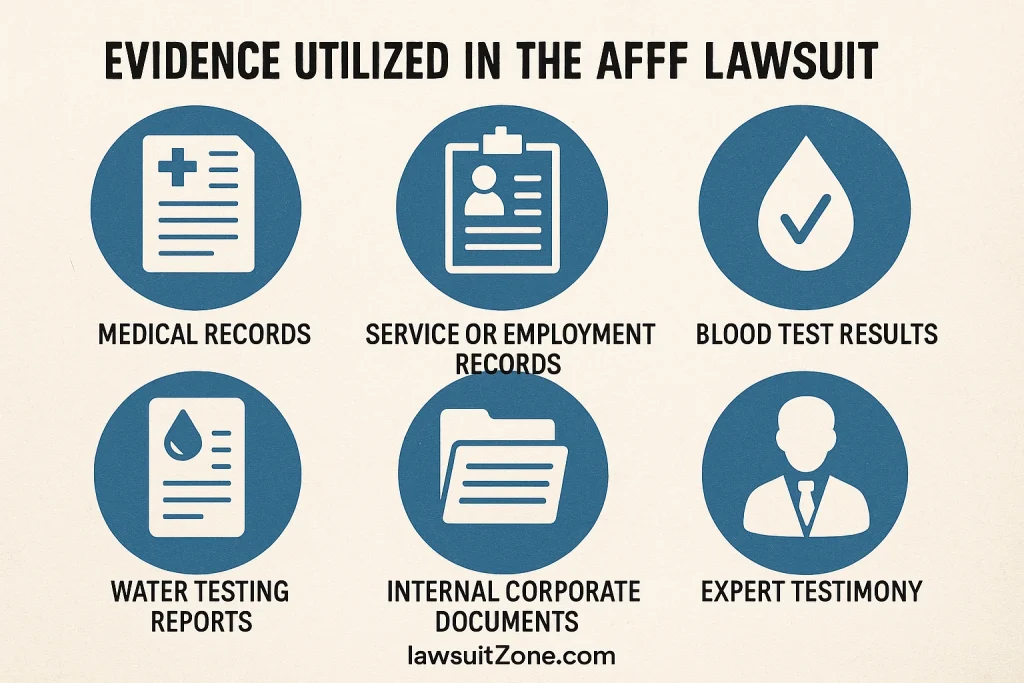
Law firms typically use:
Medical Records
Cancer diagnoses, blood tests, imaging, and specialist evaluations.
Service or Employment Records
To prove years of exposure.
Blood Test Results
Showing increased PFAS levels.
Water Testing Reports
For persons exposed through contaminated drinking water.
Internal Corporate Documents
Revealing what manufacturers knew.
Expert Testimony
Medical and scientific experts have linked PFAS exposures to particular illnesses.
Who qualifies for the AFFF lawsuit?
You may qualify if:
You were a firefighter OR lived near a contaminated water source
You used AFFF regularly — either in training or during emergencies
You were diagnosed with a PFAS-related condition
Qualifying cancers include:
Kidney
Testicular
Thyroid
Pancreatic
Prostate
Liver
Ovarian
Non-Hodgkin’s lymphoma
People exposed through contaminated water supplies also qualify.
How the AFFF Lawsuit Process Works
1. Free Case Review
An attorney reviews your diagnosis and your exposure history.
2. Filing Your Claim
Lawyers submit your case in federal or state court.
3. MDL Consolidation
Most AFFF cases are filed within MDL No. 2873 in South Carolina.
4. Discovery Phase
Exchange of documents, expert analysis, and corporate files.
5. Bellwether Trials
Sample cases used to estimate settlement values.
6. Settlement Negotiations
Most plaintiffs receive their compensation through negotiated settlement.
7. Trial (If Necessary)
If negotiations fail, individual cases may go before a jury.
Status of the AFFF Lawsuit: Update 2025
As of 2025:
More than 16,000 lawsuits are pending
The MDL continues to grow
Major water-contamination settlements have been reached
Personal injury cases are moving faster nowadays
Analysts predict significant settlements when bellwether cases are decided
Many lawyers predict one of the largest mass tort settlements in U.S. history.
Anticipated Compensation in the AFFF Lawsuit
Settlement amounts vary based on:
Type of cancer or disease
Duration of exposure
Medical expenses
Lost income
Pain and suffering
Long-term disability
Damages for wrongful death
Estimated Settlement Ranges
These estimates are based on similar toxic-exposure cases:
Cancer diagnoses: $150,000 – $1,000,000+
Non-cancer illnesses: $50,000 – $250,000
Wrongful death: $500,000 – several million
Actual amounts depend on trial outcomes.
How Victims Can Protect Their Rights
If you believe exposure to AFFF harmed your health:
Request your medical records
Document firefighting or military history
Avoid discussing your case publicly
Contact an experienced PFAS attorney
Keep a record of all medical bills and symptoms
Check whether your water supply was contaminated
Early action preserves more options.
FAQs
Final Thoughts
The AFFF lawsuit is more than just a lawsuit; it’s a fight for accountability, transparency, and justice for those who put their lives at risk to save others. Firefighters trusted this foam to be a lifesaving device, when in fact it could have been bringing silent chemical dangers. As litigation proceeds, thousands are looking to gain compensation for the damages caused and to ensure that manufacturers are held accountable for decades of concealment.
By learning your rights today, you can take action to protect your health, your family, and your future if you believe your PFAS exposure may have caused your illness.