The ADA Lawsuit Risk Hiding in Your Parking Lot
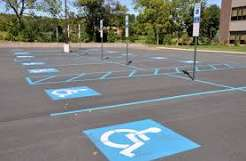
For commercial property owners, accessibility litigation has become one of the most common and most avoidable legal exposures. A large share of ADA claims never start inside the building. They start in the parking lot, at the very first point where a customer, a tenant or a visitor interacts with the property.
Why Parking Lots Draw Claims
The Americans with Disabilities Act sets specific, measurable standards for accessible parking: the number of accessible spaces, the width of access aisles, the slope of the surface, the placement of signage and the path of travel to the entrance. These are not suggestions. They are enforceable requirements, and they are unusually easy for a plaintiff or an inspector to document. A tape measure and a level are often all it takes to build a case, and many filings rely on exactly that kind of simple, repeatable evidence.
Faded striping, a missing van-accessible space, a ramp that is a few degrees too steep or an access aisle blocked by a curb can each become the basis of a demand letter. Because the violations are visible and quantifiable, these cases are frequently settled rather than fought, which is exactly why they are filed in such volume.
The Cost of Waiting for a Letter
Owners often treat accessibility as a problem to address only once a complaint arrives. By then the math has changed. Legal fees, settlement amounts and rushed corrective work almost always exceed the cost of bringing a lot into compliance on a planned schedule. There is also the reputational cost of being named in an accessibility suit, which lands very differently than a routine maintenance expense. Property owners and managers already contend with litigation on several fronts, from tenant disputes to real estate disputes, which makes an avoidable category like accessibility worth closing off early.
What Compliance Actually Involves
Most parking lots can be brought into line with focused work: restriping to current dimensions, correcting slopes and access aisles, installing compliant signage and truncated domes, and ensuring an unobstructed accessible route to the entrance. The scope is well defined, but the tolerances are strict, which is where many do-it-yourself attempts fail inspection a second time.
Why Specialist Work Matters
Slope in particular is unforgiving. A surface that looks flat to the eye can still exceed the maximum allowable gradient, and a correction done by guesswork rarely holds up to measurement. Owners who invest in professional ADA compliance upgrades get the tolerances right the first time, with documentation that demonstrates good-faith compliance. Working with experienced commercial paving specialists rather than a general crew is often the difference between a lot that passes and one that invites a second claim.
The Practical Takeaway
Accessibility compliance is not only a legal obligation, it is a risk-management decision. The owners least likely to face a parking-lot ADA claim are the ones who treat the lot as part of their compliance posture, not an afterthought discovered through a demand letter. Addressing it on your own timeline, before someone else sets the timeline for you, is almost always the cheaper and calmer path, and it removes one of the few legal exposures a property owner can eliminate outright.