Traffic Accident Lawsuit: The Ultimate Guide to Seeking Justice
Introduction
Each year, millions of motorists get involved in accidents that alter their lives forever. Whether it is a fender-bender or a serious highway accident, the implications can be physical, emotional, and financial. When insurance firms do not offer equitable compensation, numerous victims resort to a traffic accident lawsuit to pursue justice.
This handbook demystifies it all from learning about fault and evidence gathering to court procedures, compensation, and things you can do to safeguard your rights. Clear, plain English is used in this handbook, which is the guide every victim of an accident must read before acting. Have you checked our detailed guide on wixom lake update.
What Exactly Is a Traffic Accident Lawsuit?
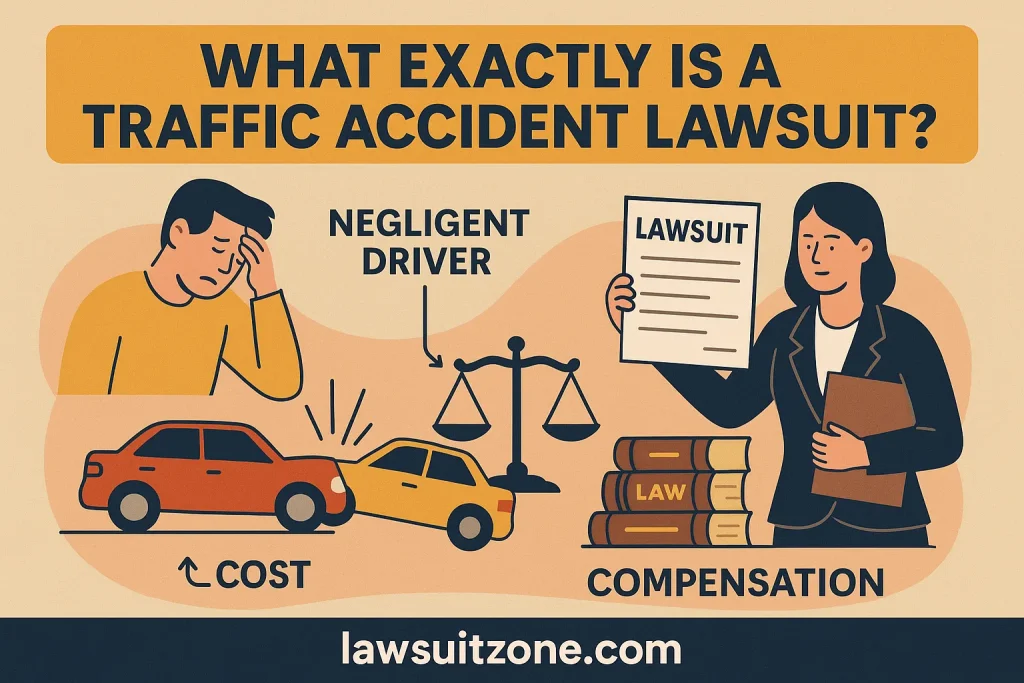
A car accident lawsuit is a court claim brought by an injured individual against a negligent driver, business, or government agency that caused an accident. The goal isn’t retribution it’s restitution. The lawsuits are brought by victims to recover for medical bills, car repairs, lost income, and emotional distress inflicted as a result of another party’s carelessness.
Most cases start out as routine insurance claims, but they can develop into lawsuits if:
The insurance provider pays inadequate compensation.
There is a dispute over liability.
The damages are more than what the insurance policy covers.
Basically, this legal process provides victims with a structured avenue for seeking redress when day-to-day mechanisms fail them.
Typical Reasons Victims Pursue a Traffic Accident Lawsuit
Not all accidents result in a lawsuit, but some circumstances usually force litigation into action.
1. Insurance Settlements That Don’t Pay Actual Losses
Insurance adjusters tend to make the initial, smallest offer to settle claims quickly. The victims realize soon enough that their continuing treatments, therapy visits, and lost days at work are far greater than the amount paid out.
2. Disputed Fault
Both drivers sometimes try to place the blame on each other. Only a judge can then sort out the evidence and rule on legal fault.
3. Severe or Permanent Injuries
When the victim will endure life-altering outcomes — including paralysis, head trauma, or pain litigation is the sole means of complete compensation.
4. Wrongful Death
Families that lose loved ones in accidents that resulted in death can sue for funeral costs, emotional suffering, and loss of companionship or earnings.
Understanding Liability and Negligence
The basis of all traffic accident lawsuits rests in negligence. Negligence is when someone does not exercise reasonable care and causes injury to others.
In order to prevail in a case, your lawyer will have to establish four main elements:
Duty of Care – All drivers owe a duty to obey traffic rules and drive safely.
Breach of Duty – The defendant breached that duty (e.g., by texting or speeding).
Causation – The violation actually caused the accident.
Damages – You actually suffered harm — physical, emotional, or financial.
If they are established, the court can charge the defendant with liability legally and monetarily.
Principal Causes of Traffic Crashes
Although most collisions result from human failure, there are other causes of a crash:
Distracted driving — cell phone use, eating, or fiddling with GPS.
Speeding or reckless driving — driving faster than road conditions warrant or close tailgating.
Driving while intoxicated — alcohol, drugs, or drowsy.
Mechanical breakdowns — faulty brakes, tires, or airbags.
Road conditions — poorly maintained roads or no signs.
Adverse weather conditions — rain, ice, fog, or snow limiting visibility.
All causes impact how liability is determined — and which players are responsible.
Who May Bring a Traffic Accident Lawsuit?
You don’t have to be in the driver’s seat to have rights. The following people can usually sue:
Injured drivers or passengers
Pedestrians or bicyclists struck by a car
Families of victims who perished in an accident
Property owners who were damaged by automobile crashes
Also, if the crash occurs in a company car or with a commercial truck driver, the business owner can also be sued under a theory of vicarious responsibility.
Step-by-Step Guide to Filing a Traffic Accident Lawsuit
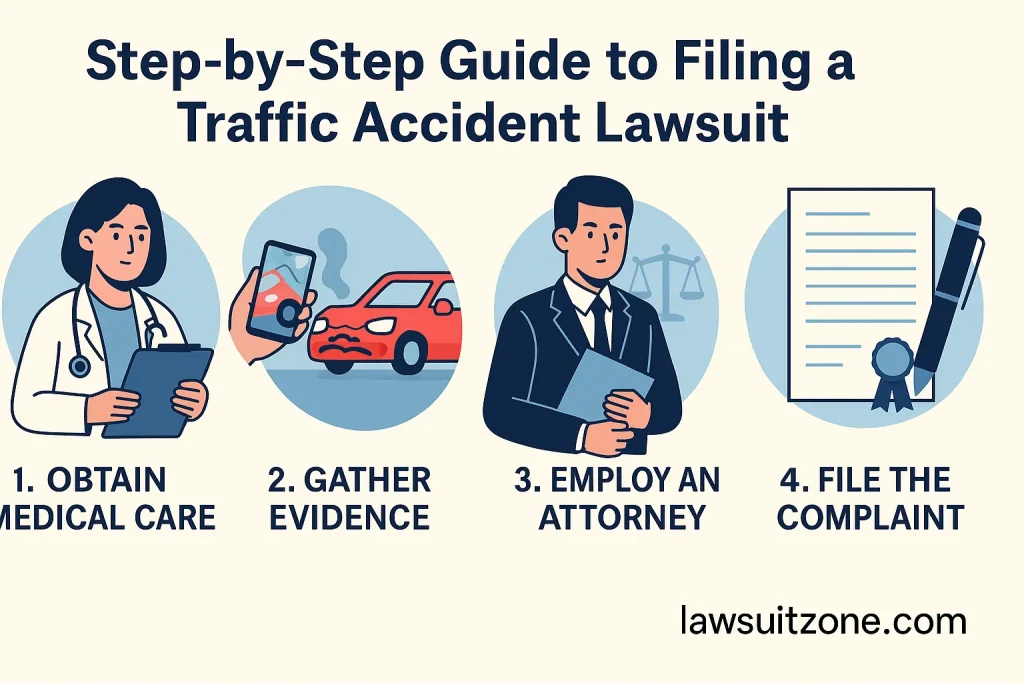
Handling the legal process may appear daunting, but knowing the processes for each step prepares you for what’s ahead.
Step 1: Obtain Immediate Medical Care
Always undergo a complete medical examination — even if you think you’re hurt. Symptoms such as whiplash or internal bleeding can take time to manifest, and having your injuries documented by a doctor is important evidence.
Step 2: Gather Evidence at the Scene
Collect accident pictures, car damage information, witness phone numbers, and the police report. Dashcam video can also be a powerful addition to your case.
Step 3: Employ an Experienced Personal Injury Attorney
Having a trained attorney provides you with confidence that your case complies with all applicable laws. They conduct the investigation, negotiation, and court paperwork while you concentrate on recovery.
Step 4: File the Official Complaint
Your attorney writes and files a complaint that describes how the defendant injured you and what damages you are entitled to.
Step 5: Discovery Phase
Both sides share documents, evidence, and witness statements. Experts such as accident reconstructionists may be hired to help substantiate your claims.
Step 6: Negotiation and Settlement
Most cases settle outside of trial via negotiation. Settlements are efficient and cost-effective and still result in adequate compensation.
Step 7: Trial (If Necessary)
If an agreement can’t be made, your case goes to trial, where a judge or jury determines the verdict and amount of award.
What Kind of Compensation Do You Receive?
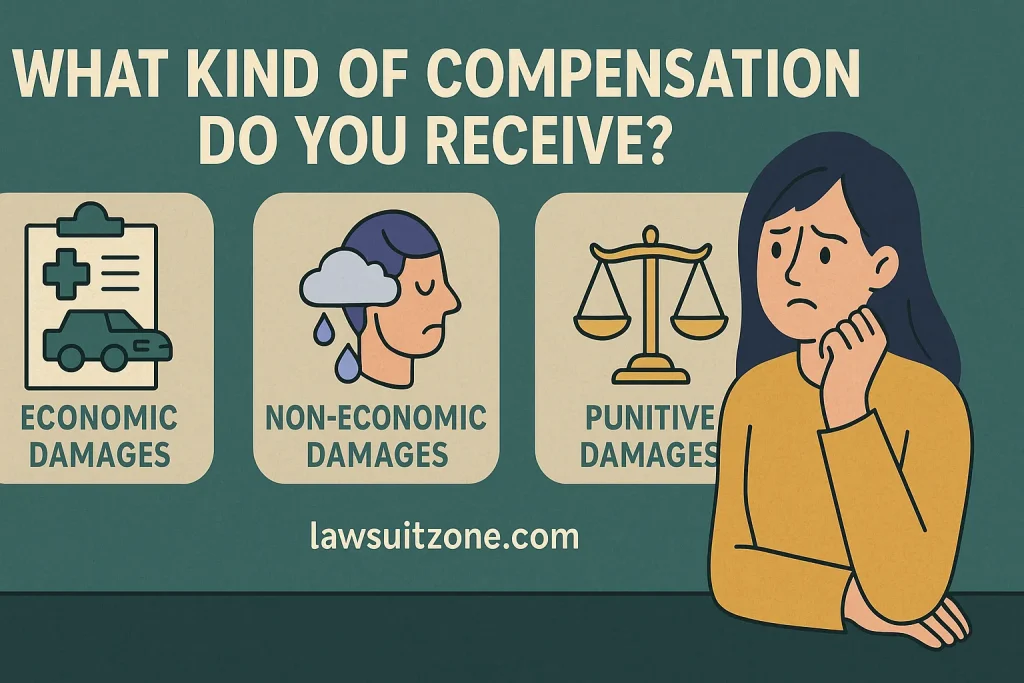
Compensation in a car accident lawsuit includes both physical and emotional damages.
1. Economic Damages
Medical expenses and rehabilitation
Lost wages and diminished earning capacity
Car repair or replacement
Future medical costs
2. Non-Economic Damages
Emotional distress
Pain and suffering
Permanent disfigurement or disability
Loss of enjoyment of life
3. Punitive Damages
In worst-case scenarios (such as drunk driving or hit-and-runs), judges can award additional funds to sanction careless conduct.
How Long Do You Have to Sue?
The statute of limitations governs how much time you have to sue. In most US states, the clock is two to three years from the date of the accident.
But there are exceptions — e.g., if the injured party was under age or if the injury wasn’t discovered until later. Failing to meet the deadline can forever invalidate your right to compensation, so don’t delay consulting a lawyer.
Factors That Influence Your Settlement Value
Each lawsuit is unique. Settlement values differ due to:
Severity of injuries and duration of treatment
Total medical and repair expenses
Lost wages or earning capacity
The extent of fault (shared fault decreases compensation)
Emotional and psychological trauma
Insurance policy limits
Your lawyer will estimate a reasonable claim value based on them and negotiate accordingly.
How Long Does a Traffic Accident Lawsuit Take?
While some settle in months, others can take years. On average:
Simple cases (obvious fault and minor injuries): 6–12 months
Moderate cases (fault in dispute or multi-party cases): 1–2 years
Complex cases (serious injuries or corporate defendants): 2–4 years
Variables like trial backlogs, discovery delays, and expert testimony can prolong timelines.
Handling Insurance Companies
Insurance adjusters are professional negotiators who will do their best to ensure their company’s profits. They might:
Ask for recorded statements to search for inconsistencies
Bull you to take low offers in a rush
Postpone communication or claims processing
Never sign papers or give recorded statements without talking to your lawyer. If you settle, you usually cannot reopen the case down the line.
Mistakes Victims Should Avoid
Admitting guilt at the scene of the accident.
Tardy treatment, which undermines your case.
Sharing accident information on social media.
Disregarding doctor’s orders, which results in lower compensation.
Settling early without the advice of lawyers.
Steering clear of these blunders can significantly enhance the outcome of your lawsuit.
Mediation vs. Trial: What’s Best?
Over the past few years, numerous courts promote alternative dispute resolution (ADR) to alleviate case backlogs.
Mediation permits both parties to cooperate with a neutral third-party mediator to arrive at a middle ground.
Arbitration is a formal evaluation by an arbitrator whose ruling can be binding.
ADR is typically quicker, less costly, and less nerve-wracking than a complete trial — but your attorney will decide which avenue best suits your case.
Example of a Realistic Settlement
Although each case is unique, here’s a broad breakdown of common ranges of compensation:
Type of Injury\tAverage Settlement (USD)
Minor soft-tissue injury\t$5,000 – $25,000
Moderate fractures\t$25,000 – $100,000
Severe trauma or surgery\t$100,000 – $500,000
Permanent disability or death$500,000+
Reckless driving or drunken driver cases can lead to punitive damages in excess of these amounts.
Do You Need an Attorney?
You have a right to represent yourself, but litigating a traffic accident case without an attorney is risky. An experienced lawyer can:
Deal with complicated paperwork and filings in court
Estimate the real value of your case
Negotiate more favorable settlements
Shield you from insurance company tactics
Most personal injury attorneys practice on a contingency basis, so they only get paid if you win.
Expert Reference: Learn from the Department of Transportation
For official information on highway safety, crash statistics, and prevention efforts, go to the U.S. Department of Transportation’s official website.
It provides in-depth information and learning materials on driver safety, accident reporting, and road improvement programs that can aid your knowledge of liability and prevention.
Frequently Asked Questions (FAQs)
Final Thoughts
Bringinging a lawsuit for a car crash isn’t about vengeance it’s about justice, equality, and restoration of what you lost. The process may seem daunting, but with the appropriate facts and legal counsel, you can make negligent motorists pay.
Remember, your recovery isn’t only physical it’s financial and emotional as well. The law is there to shield you, not overwhelm you.
Take each step cautiously, heed your attorney’s counsel, and concentrate on what’s really important — your welfare and your future.
Disclaimer
This article is informational only and is not legal advice. Always consult professional advice from an attorney licensed to practice law in your state concerning your case.