Juul Class Action Lawsuit: A Full Consumer Guide
Introduction
The Juul class action suit is now one of the most widely discussed legal cases in recent history. The lawsuit is based on allegations that JUUL Labs deceived consumers regarding the safety and addictiveness of its e-vapor products. To many, this suit is not only about a battle for damages, but also a greater battle for accountability within the vaping industry.
This comprehensive guide outlines what the lawsuit is, who is eligible to join, how the settlement will work, and what you can do if you believe you’re eligible. It’s presented in a straightforward, human-readable format so that anyone can comprehend their rights and what comes next. Have you checked our detailed guide on Class Action Lawsuit California.
What the Juul Class Action Lawsuit Is About
A class action suit enables numerous individuals with a common grievance to unite and take legal recourse as a collective group. Consumers in the United States in this situation complained that JUUL promoted its e-cigarettes misleadingly — particularly among youth.
The lawsuit alleges JUUL marketed its products as safer than smoking while minimizing the nicotine levels and the potential for addiction. Numerous users, especially young adults and teenagers, became addicted to JUUL pods after thinking they were less addictive than regular cigarettes.
The Juul class action complaint also contends that the company utilized social media and flavored pods to entice minors, fueling an explosion of youth vaping.
Why This Lawsuit Matters
The Juul lawsuit is not just about financial compensation — it’s about accountability. It shows how marketing tendencies can determine public health conduct, particularly when the intended audience consists of young and impressionable consumers.
By bringing the lawsuit, the plaintiffs want to make vaping companies more accountable and establish a precedent for future legislation. Already, the case has had an impact on tougher legislation, clearer labeling on products, and improved warnings regarding nicotine addiction.
Who Can Sue
If you bought or used JUUL products and were convinced you were being deceived regarding their safety or addictiveness, you can join the case. Those eligible typically are:
- Individuals who utilized JUUL devices or pods and became addicted to nicotine.
- Parents or custodians of children who started vaping because of JUUL advertisements.
- Purchasers who purchased JUUL products expecting them to be safer than cigarettes.
You will be required to submit documentation like receipts, proof of purchase, or product use. Statements or witness affidavits may also be used in certain situations to support your case.
How the Juul Class Action Lawsuit Works
Class actions are a sequential process. A complaint is first filed on behalf of all the affected consumers. The court then considers whether or not the case is eligible to be considered as a class action — i.e., all members have common claims that can be represented in a fair manner.
Once certified, class members are notified through email, mail, or public announcements. You’ll be informed of your right to join, opt out, or file a separate lawsuit. After that, the case proceeds through negotiations, discovery, and potentially a trial.
Most class action lawsuits, including the Juul case, often end in settlement. When a settlement is reached, funds are distributed to eligible members according to predetermined criteria.
Settlement Details and Expected Payouts
JUUL Labs has committed to paying hundreds of millions of dollars to settle the claims filed against them. The settlement includes consumers, government agencies, and school districts impacted by vaping-related situations.
The compensation consists of payment for the purchase of products, health expenses, and precautionary measures to minimize youth vaping. The individual compensation varies on a basis of:
- Length of product use
- Documented proof of purchase or use
- Severity of addiction or associated harm
- Whether you are a direct consumer or a guardian on behalf of a minor
Amounts differ in payouts, but the settlement is a huge win for consumers and public health advocates alike.
How to File a Claim
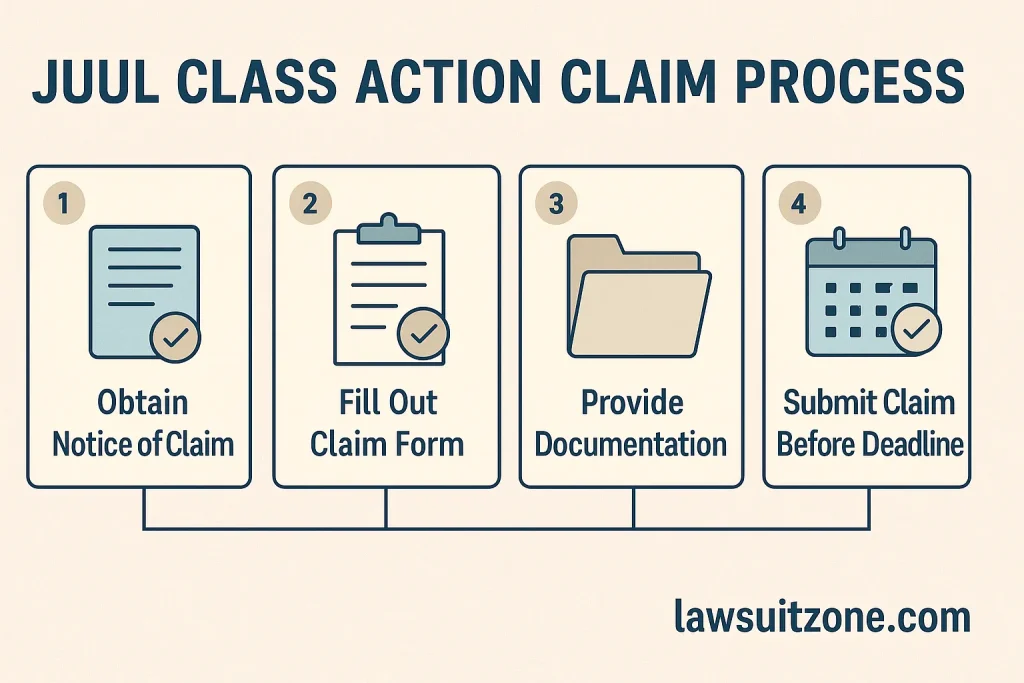
If you think you’re eligible, it’s easy to file a claim. After the formal claim period has opened, you’ll receive or find notice describing your choices.
To finalize your claim:
- Fill out your claim form accurately and thoroughly.
- Attach any supporting documents, such as receipts or purchase confirmations.
- Submit the claim before the deadline listed in the notice.
After your claim is reviewed and approved, you’ll be notified about your compensation method — usually via direct deposit or mailed check.
Benefits of Joining the Class Action
Participating in the Juul class action lawsuit enables you to recover compensation without finding your own attorney or paying legal expenses in advance. It also guarantees that even minor claims are heard because they are aggregated with others in a big consolidated case.
Additional advantages are:
- Shared legal expertise and professional representation.
- Increased bargaining leverage against a big corporation.
- Quicker resolution than fighting an individual lawsuit.
But after you settle into the class action, you typically give up your right to bring your own individual case for the same problem.
Misconceptions About Class Actions
Most people have misconceptions about what a class action lawsuit is and what it can accomplish. Let’s dispel a few of the common myths:
Myth: All class members receive a big check.
Fact: Compensation is based on proven damage and claim value.
Myth: Membership equals payment.
Fact: You have to present a valid claim within the stipulated time frame.
Myth: The firm confesses fault while making settlements.
Fact: Majority of settlements don’t involve a concession of fault — they are an efficient way of settling disputes.
Being aware of these facts keeps expectations in check and makes you approach the process realistically.
Impact on the Vaping Industry
The Juul class action suit has forever altered the vaping market. Businesses now find themselves under more pressure to demonstrate that their products are being sold responsibly and aren’t being marketed to kids.
It also compelled more open nicotine packaging and better age-verification mechanisms. Other e-cigarette companies are tracking this case very closely, as the result can determine next-generation regulations for decades to come.
Lessons for Consumers and Businesses
For consumers, the suit is a reminder to always do their research before believing product promises — particularly in health-based markets. For companies, it’s a wake-up call regarding ethical marketing and corporate responsibility.
Transparency creates trust. Deceiving consumers can annihilate years of brand equity in one lawsuit. The Juul case illustrates that business success must correlate with social responsibility.
Claim Deadlines and Future Updates
If you wish to be included, monitor the official claim website or news notifications concerning the Juul class action suit. Deadlines are firm failure to meet them may render you ineligible for compensation.
Claim evaluation and disbursement may take months once the filing period ends. Payments are dispersed once all is settled and done as per the court-approved timeline. Staying updated helps you not miss your chance.
Wider Legal and Social Implication
This case is a model for how collective legal action can drive change in large industries. In addition to monetary damages, the Juul lawsuit highlights the need to safeguard consumers against misleading advertising and to have companies conduct business with integrity.
It also demonstrates a cultural shift individuals are no longer hesitant to hold powerful companies accountable. The result underscores the notion that public health will always need to take priority over profit.
What Comes Next
The Juul settlement will probably continue to roll out in the months and years ahead as claims are resolved. The company has already settled on restricting some of its marketing practices and making product disclosures clearer.
In the meantime, other vaping and youth marketing cases are in the works across the country. Those combined efforts could create even more sweeping changes throughout the industry.
The Future of Legal Action in Public Health
The victory of the Juul class action case demonstrates consumers can and do make a difference when united. With increasing public awareness, we may continue to see lawsuits aimed at businesses that value profits over consumer safety.
This tide of litigation has the potential to spread into other industries — from food and cosmetics to pharmaceuticals and tech — wherever false claims risk people’s lives.
Frequently Asked Questions (FAQs)
Conclusion
The Juul class action case is a turning point in consumer protection history. It reminds us that all consumers are entitled to rights, and all companies have an obligation to sell truthfully and responsibly.
If you have consumed JUUL products and feel deceived, remain vigilant for updates on official claims. Collect your papers, go through the terms of eligibility carefully, and file your claim within time.
Justice has its time, but collective action empowers common people to seek fairness from even the largest corporations.
To those looking for wider insight into consumer rights and collective lawsuits, the American Bar Association offers great educational material on legal procedures and class actions.
Disclaimer: This article is for informational purposes only and does not make any legal claims or provide legal advice. The details discussed are based on publicly available information about the Juul class action lawsuit.