Attorney for Lawsuit: Your 2025 Guide to Savvy Legal Decisions

Introduction: Why the Right Attorney Selection Is Important
Picture this: You’re the target of a lawsuit, or perhaps you’ve been harmed and have to take a stand. The anxiety is overwhelming. There are bills mounting, your phone will not quit ringing, and your friends are at a loss for words. During these times, the most critical companion you can have is the proper Attorney for Lawsuit cases.
But here’s the challenge: most people don’t know where to start. They Google, see hundreds of names, and feel lost. This guide was written to change that.
We’ll unpack everything you need to know—what attorneys really do, how fees work, what to expect during the lawsuit, and how to avoid common mistakes. By the end, you’ll feel informed, empowered, and ready to make the best choice for your situation. Have you checked our detailed guide on Blingle Lawsuit.
The Human Aspect of Lawsuits
When individuals speak of lawsuits, they tend to speak of money or television drama. What they do not discuss as much is the human aspect:
- The uncertainty of not knowing what comes next.
- The aggravation of mountains of paperwork and obtuse legal jargon.
- The intimidation of losing your savings, reputation, or liberty.
A quality lawyer for lawsuit does not merely file motions—they carry the weight so you can catch your breath.
What Does an Attorney for Lawsuit Actually Do?

An attorney is one-third problem-solver, one-third negotiator, and one-third fighter. Their daily job may involve:
- Listening to your history thoroughly, rather than just skimming the surface.
- Explaining law in plain English so that you know what’s happening at every step.
- Protecting you from pressure by dealing with aggressive opposing attorneys or debt collectors.
- Battling for settlements when it makes sense, but preparing for trial when it’s needed.
Consider them your legal GPS: they are familiar with the system, the shortcuts, and the dead ends to steer around.
Types of Lawsuits That Require Lawyers
Personal Injury Cases
A broken bone from a car accident will heal—but outstanding hospital charges can chase you for years. Lawyers make sure insurance companies don’t shortchange you.
Consumer Rights Disputes
Ever been overcharged by a bank? Or misled by false advertising? Lawyers intervene when corporations overstep the mark.
Employment Lawsuits
From termination with cause to discrimination, workers’ lawyers stand up for employees too often kept quiet.
Business and Contract Disputes
When a promise is broken by a partner, a business can founder. A good lawyer guarantees fairness.
Criminal Defense
When your freedom is at stake, you require someone skilled in taking apart the prosecution’s case.
The Best Lawyer for Your Case: How to Select Him
Seek Experience Related to Your Case
Choosing an attorney is similar to hiring a doctor—you would not request a heart surgeon to conduct brain surgery. Match your case with their area of expertise.
Search for Reputation
- What do previous clients say about them?
- Have they received awards in the legal circle?
- Do they win cases similar to yours?
Measure Their Communication Style
A few lawyers speak over clients with legalese. The great ones listen first, explain second.
Learn the Money Side
Ask early:
- Do you work on a contingency, hourly, or flat rate?
- What if we lose?
- Will there be additional fees for experts or documents?
Ask About Their Game Plan
Great lawyers lay out a roadmap. Great lawyers also get you ready for obstacles.
Knowing Attorney Fee Structures
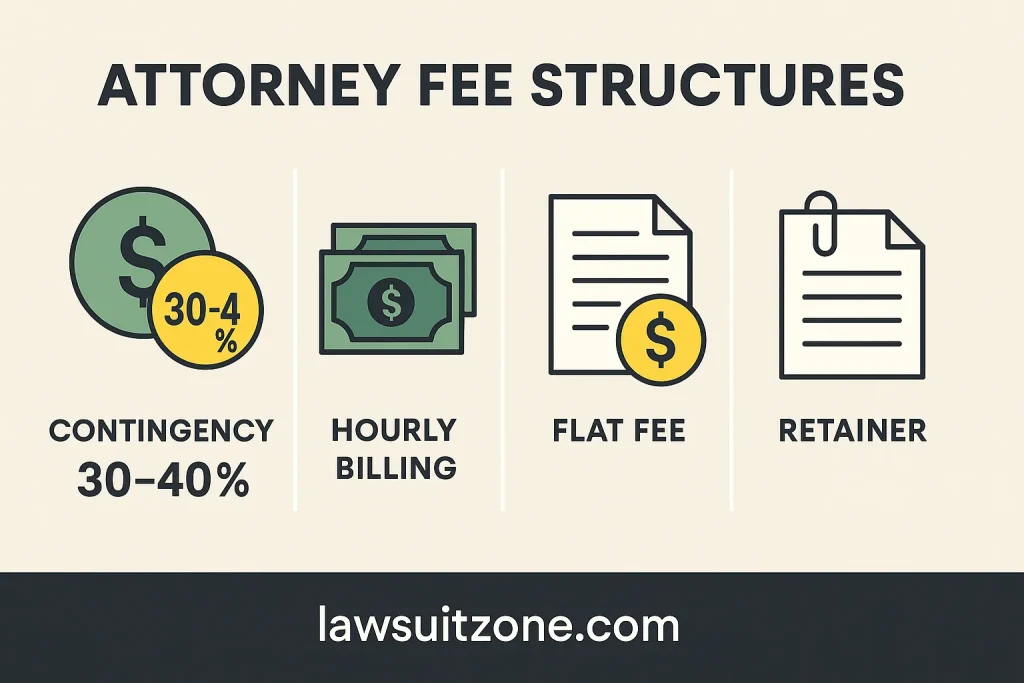
Money is usually the elephant in the room. Here’s what typically happens:
- Contingency Fee (30–40%): You only pay if you win. Typical of injury or consumer type cases.
- Hourly Fees ($150–$500+): You pay per hour of work. More typical of defense or business type cases.
- Flat Fees: One flat fee for simple things like wills or uncontested divorces.
- Retainers: A deposit, often for continuing or unpredictable cases.
Example: Let’s say you’re awarded $120,000 on a personal injury claim. On a 33% contingency, your lawyer gets $40,000. After $5,000 in case costs, you’d have $75,000.
The Lawsuit Process: What to Expect
Step 1: Initial Consultation
It’s similar to a job interview—but it’s about your life. Tell your story, inquire about experience, and test their integrity.
Step 2: Filing the Case
Your lawyer submits a complaint (if you’re a plaintiff) or a response (if you’re a defendant). Timing is everything here.
Step 3: Discovery
This is the “homework stage.” Both parties trade evidence, records, and witness lists. It can be lengthy and exhausting.
Step 4: Negotiation
The majority of lawsuits resolve with a settlement. Lawyers work out terms that save time, energy, and money.
Step 5: Trial
In the event of no settlement, your lawyer presents your case in court to a judge or jury.
Step 6: Appeals
Not happy with the results? Lawyers can appeal to appellate courts.
Why Lawyers Are Worth the Expense
Some are held back due to expenses. But here’s the reality:
- Clients with lawyers tend to get better settlements.
- Lawyers are familiar with loopholes and tactics you’d never discover with Google.
- They alleviate tension so you can concentrate on recovery or getting your life back on track.
In short: the correct lawyer is an expense, not a sacrifice.
Real-Life Case Studies
Case 1: Consumer Rights Victory
One telecom provider secretly added extra fees to customers’ bills. With lawyers heading a class action, the victims were able to recover millions. Individually, not one consumer could have come back at them.
Case 2: Winning with Personal Injury
An injured factory employee originally received a denial of workers’ comp. By bringing in an expert attorney, he recovered not only medical benefits but lifetime wage benefits.
Case 3: Business Dispute
A small company nearly collapsed when a supplier reneged on a contract. They recovered damages with legal assistance and saved their business.
Authority Resource for Consumers
If you need objective, government-supported information regarding consumer protection, go to the Federal Trade Commission (FTC). It’s among the most reliable sources regarding consumer law.
Myths People Have About Lawyers
- “I can’t afford one.” – Many operate on a contingency basis; no win, no fee.
- “All lawyers are sharks.” – In reality, many dedicate careers to protecting the vulnerable.
- “I’ll look guilty if I hire an attorney.” – On the contrary, it shows you’re serious about protecting your rights.
Tips for Working Successfully With Your Attorney

- Be completely honest. Surprises hurt cases.
- Stay organized. Keep all documents in one place.
- Ask questions. There’s no such thing as a silly question in legal matters.
- Be respectful of boundaries. Lawyers are advocates, not wizards. There are some things beyond one’s control.
The Future of Lawyers and Lawsuits
- AI research tools accelerate case preparation.
- Virtual courtrooms become the norm.
- Remote consultations bring legal assistance within reach of more people.
Still, technology can’t substitute for empathy, persuasion, and the human struggle for justice—services only an experienced lawyer for lawsuit can provide.
FAQs About Lawyers for Lawsuits
Final Thoughts
A lawsuit is one of the toughest things you’ll ever go through. But with the right lawyer for lawsuit cases on your side, you’re not only fighting back—you’re taking back control.
Remember:
- Pair your case with the proper expertise.
- Demand fee transparency.
- Lean on your lawyer for advice, but keep yourself informed.
Ultimately, hiring a lawyer is not so much about legalese—it’s about trust, alliance, and defending your future.