
No Demo Reno Lawsuit: The Ultimate 2025 Viewer’s Guide
Setting the Stage
When you hear the words “no demo reno lawsuit,” it raises an eyebrow immediately. Viewers of HGTV’s popular show No Demo Reno have grown to enjoy Jenn Todryk’s high energy, sharp tongue, and unorthodox methods for home overhauls without the dust and drama that comes with demo. But beneath the slick episodes and grand reveals, legal issues have been looming in the background.
This is your one-stop guide from the lawsuit’s beginnings to its effects on homeowners, watchers, and the renovation TV world. Have you checked our detailed guide on Gorilla Glue Lawsuit.
A Quick Refresher: What is No Demo Reno?

For first-time fans of the show, No Demo Reno turns that traditional “sledgehammer first, then design” approach on its head. Jenn Todryk and her crew reimagine spaces through intelligent design instead of pulling everything out. It’s less expensive, neater, and more for families who desire outcomes over mess.
That charm helped the show become popular. But as with any high-profile endeavor, the more attention it receives, the more criticism it gets.
Why Home Reno TV Lawsuits Happen So Often
Home renovation television shows exist in a delicate balance between entertainment and reality. Lawsuits occur due to:
- Overstretched TV timelines don’t always follow construction norms.
- Budget deficits occur when condensing months of labor into a 30-minute episode.
- Agreements can guarantee something but not deliver on it.
- Passions run high when homeowners’ ideal spaces fall short of expectations.
The no demo reno lawsuit isn’t new, but it’s making headlines due to the popularity of the show.
The No Demo Reno Lawsuit Backstory
Complaints from homeowners who appeared on the show have been made about renovation quality, budget disclosure, and follow-up on projects, according to reports. Some experienced the glitzy TV unveiling not standing up after cameras disappeared.
Pivotal points driving the lawsuit:
- Imputed workmanship problems that necessitated pricey corrections.
- Complaints of inflation of the budget from what was agreed upon.
- Miscommunication between producers and homeowners.
- Issues regarding who pays for repairs once filming is done.
What Are the Main Allegations?
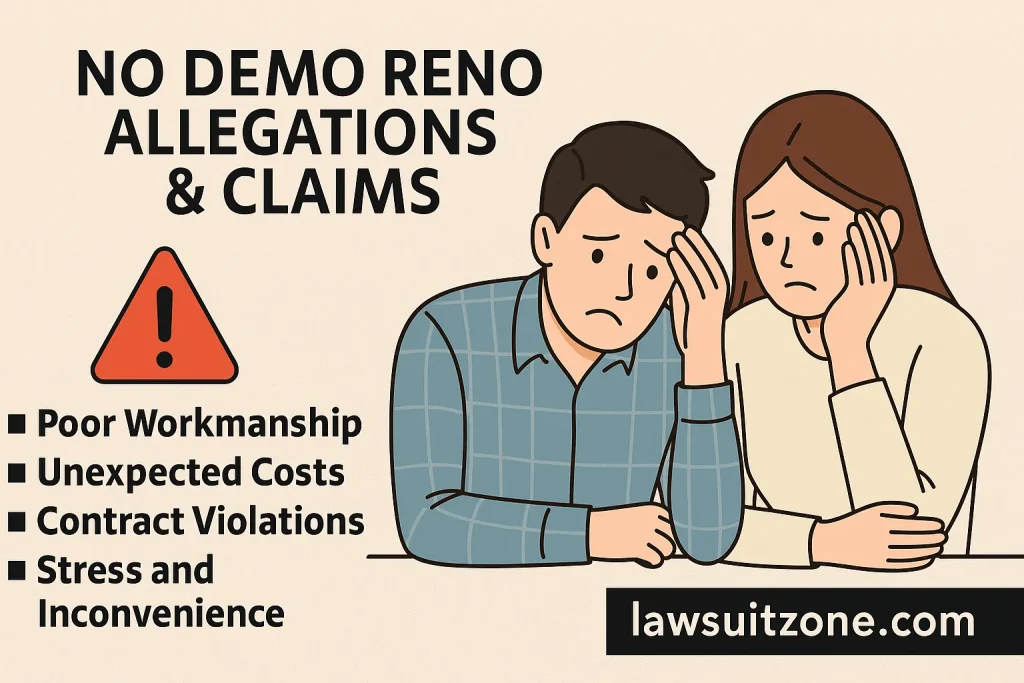
The lawsuit is not regarding one complaint—it encapsulates some homeowner complaints:
- Poor Workmanship – Cabinets that did not match, paint peeling prematurely, or fixtures incorrectly installed.
- Unexpected Costs – Budgets on TV supposedly did not represent the end bills.
- Contract Violations – Warranties and coverage promises weren’t kept.
- Stress and Inconvenience – Aside from money, families say the ordeal brought disruption and frustration.
These allegations resonate with similar lawsuits filed against other home renovation programs, demonstrating the problem is not isolated to one show.
How the Legal Process Works
The no demo reno lawsuit takes the usual legal steps:
- Complaint Filed – Homeowners bring their grievances to court.
- Defendants Push Back – The network and production company defend their work.
- Discovery – Both parties search through contracts, receipts, and even raw footage.
- Settlement Talks – Most TV-related suits resolve here, quietly.
- Court Trial – In the event no compromise is reached, the case can go in front of a judge.
Networks tend to favor settlements to safeguard brand and talent.
The Human Side: Impact on Families
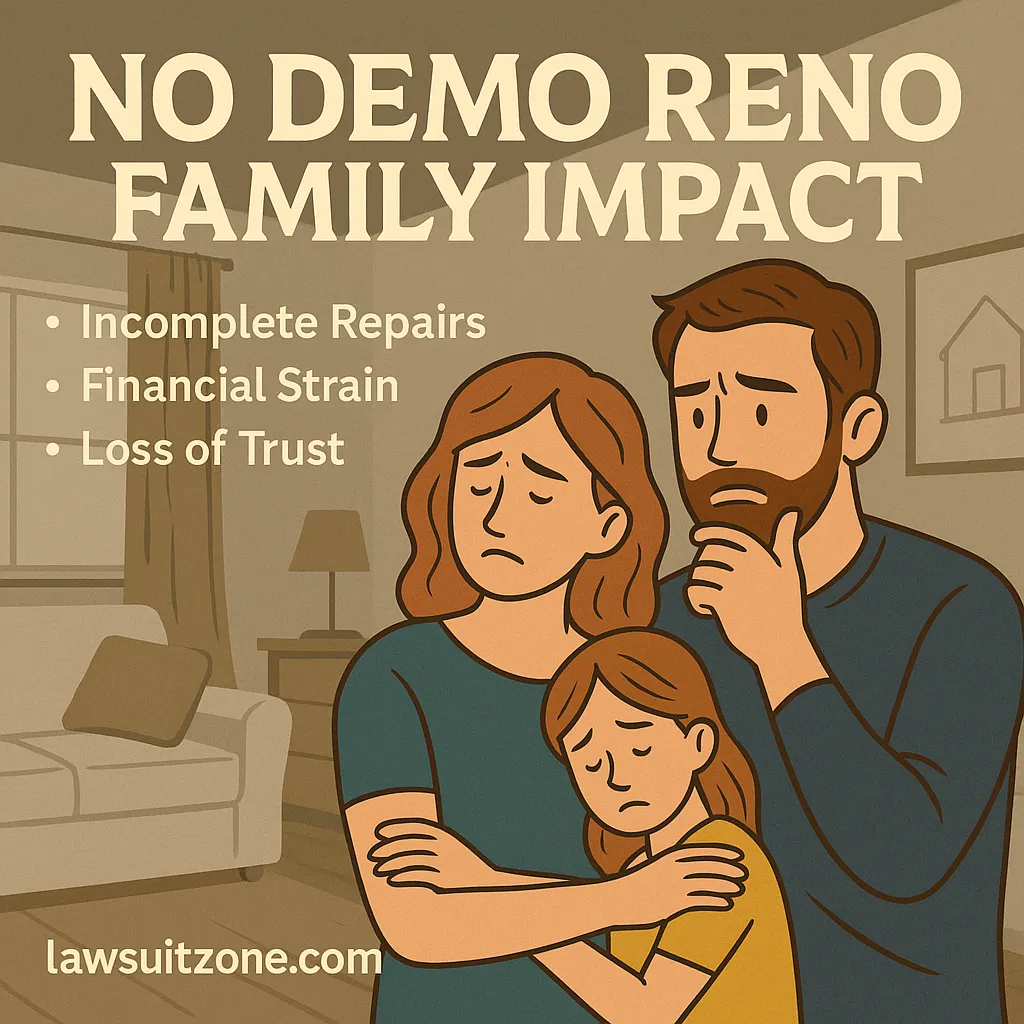
Behind every news headline are a family who opened their doors hoping for happiness, not headaches. Some volunteers insist they were left managing:
- Incomplete fixes after production ended.
- Budget pressure from unexpected expenses.
- Erosion of faith in the process.
Viewers experience the knock-on effects too. Many begin wondering whether what they are witnessing on television is possible.
Homeowner Lessons for the Rest of Us
Even if you’ll never appear on a TV show, the no demo reno lawsuit carries lessons:
- Always read contracts line by line.
- Get third-party inspections after major work.
- Don’t rely on “TV timelines” for real-world projects.
- Budget for hidden costs—repairs, delays, or upgrades.
- Document everything in writing.
These simple steps can save thousands in future disputes.
Bigger Picture: The TV Renovation Industry
This case could push networks and production teams to:
- Be more transparent about actual costs.
- Provide improved warranties to homeowners.
- Refine filming to focus on quality rather than speed.
- Add disclaimers regarding what occurs when the cameras no longer roll.
For viewers, it’s a reminder: renovation television is edited television, not a how-to guide.
Not the First, Not the Last
Other hit shows have endured similar flak:
- Love It or List It – Sued for shoddy workmanship and surprise costs.
- Fixer Upper – Was subject to contract disputes and licensing issues.
- Property Brothers – Several lawsuits for failed remodels.
The no demo reno lawsuit is part of a larger phenomenon revealing the disconnect between television magic and the reality of construction.
Possible Outcomes
The case can go in a number of ways:
- Private Settlement – The likeliest, keeping the details out of the newspapers.
- Dismissal – Where claims are unsupported.
- Compensation – Homeowners may be awarded damages for distress and repairs.
- Policy Alterations – Networks can introduce tougher regulations for upcoming shows.
A Reliable Source
As a homeowner with renovation disputes, the Federal Trade Commission (FTC) provides consumer advice regarding contracts, warranties, and your rights under the law.
FAQs
Final Thoughts
The no demo reno lawsuit serves as a wake-up call for homeowners and fans alike. It serves as a reminder that TV can get your imagination running, but reality is much more nuanced. You may admire Jenn Todryk’s creativity or just enjoy watching reno shows on the couch, but here is the thing: what you see is edited television, not a promise.
For homeowners, the message is simple—befriend yourself with good contracts, realistic expectations, and consumer education.