What to Do in the First 24 Hours After a Serious Injury
The first 24 hours after a serious injury are the most consequential for both your health and your legal rights. Evidence disappears, witnesses move on, and insurers begin building their case before you have a chance to recover. The Alvarez Law Firm handles personal injury and workers’ compensation matters for injured people across Alexandria and Northern Virginia. What you do in those first hours can determine whether you recover full compensation under Virginia law.
The First 24 Hours Can Define Your Entire Case
The steps taken in the first day directly affect how strong a claim will be. Acting quickly protects health, preserves critical evidence, and positions an injured person to recover full compensation under Virginia law.
A Quick Timeline: What to Do When
- Within the first hour: Call 911, accept emergency medical evaluation, and ask the responding officer for the report number. Photograph the scene, vehicle positions, road conditions, and visible injuries.
- Within the first 6 hours: Get a full medical evaluation at an emergency facility, even if you feel fine. Collect witness names and phone numbers and note nearby businesses that may have surveillance cameras.
- Within the first 24 hours: Notify your own insurer, avoid giving a recorded statement to the other party’s insurer, keep every receipt and record, and consult a personal injury attorney before signing anything.
Virginia’s Two-Year Deadline Starts at the Moment of Injury
Under Va. Code Ann. Section 8.01-243, an injured person has two years from the date of injury to file a personal injury claim in Virginia. That clock starts on the day of the accident, not the date of a later diagnosis. Missing the deadline typically bars recovery entirely, regardless of how strong the underlying case may be.
Why Early Action Matters in Alexandria
Accidents on corridors like Duke Street, Richmond Highway, King Street, and the Eisenhower Avenue interchange generate police reports, surveillance footage, and witness accounts that disappear quickly. The Alexandria Police Department handles reports within city limits, while Virginia State Police cover the I-395 and I-495 corridors. Securing evidence early is one of the most important steps to protect legal rights.
Step 1: Call 911 and Get Emergency Medical Attention
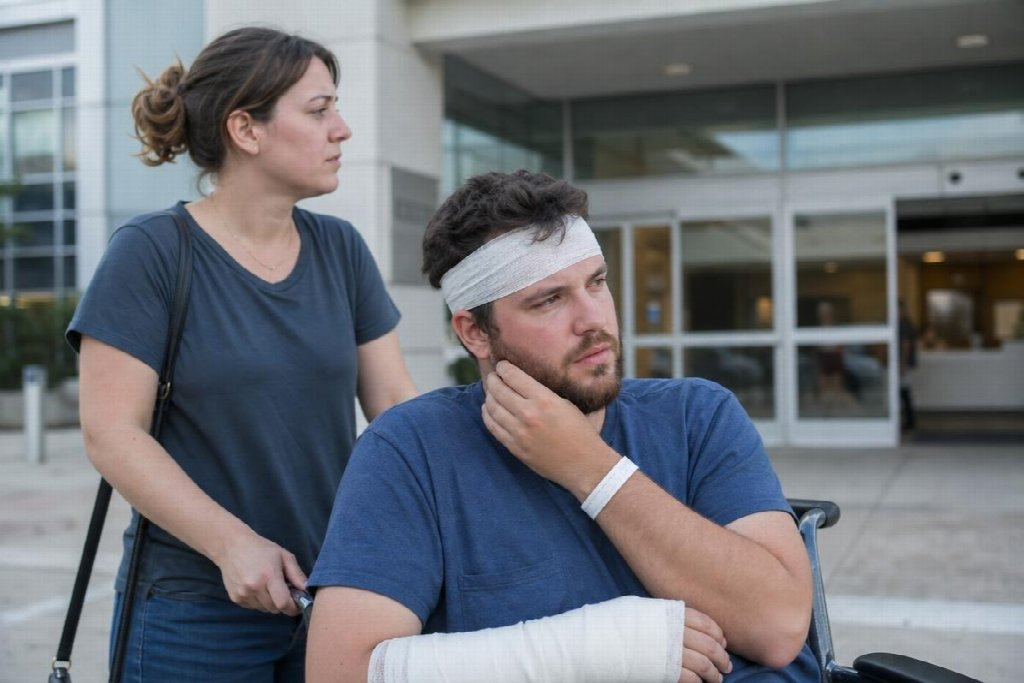
The first action after any serious injury is to call 911, whether the incident happened on Richmond Highway, near Potomac Yard, or on a residential block in Old Town. Emergency responders create the first official record of what happened, and that record matters enormously to any case that follows.
Why a Police Report Matters in Alexandria
A Virginia police report documents the incident, identifies all parties, and records citations issued at the scene. Without that contemporaneous record, an insurer can dispute the basic facts of what happened. The Alexandria Police Department handles accidents within city limits; Virginia State Police cover I-395 and I-495. Ask the responding officer for the report number before leaving, then obtain the full report from the city records division.
Several Alexandria corridors have surveillance coverage from traffic systems and nearby businesses, but that footage can be overwritten within days. Identifying cameras early is critical, as the footage can corroborate an injured party’s account.
Do Not Refuse Medical Treatment at the Scene
Declining an ambulance is one of the most damaging decisions an injured person can make. Virginia courts and insurers treat a gap in medical treatment as evidence that injuries were not serious. Adrenaline commonly masks soft-tissue injuries, traumatic brain injuries, and internal bleeding, so a person can feel fine immediately after a collision and still have a significant injury.
Inova Alexandria Hospital on Seminary Road is the primary acute care facility for seriously injured Alexandria residents. Accepting evaluation there creates a dated medical record tied directly to the incident, one of the strongest foundations for a personal injury claim. Without it, an insurer can argue that injuries developed later from an unrelated cause.
Step 2: Document the Scene and Collect Evidence
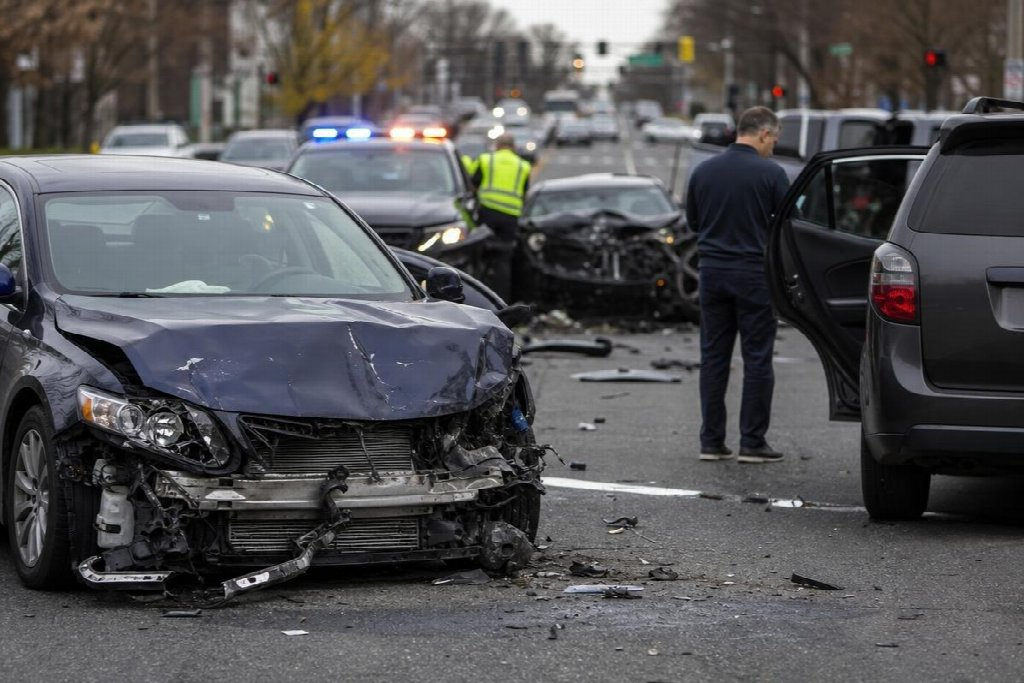
Within the first few hours after an accident, physical evidence begins to disappear. Skid marks fade, debris gets cleared, and surveillance footage gets overwritten. Documenting the scene before those changes occur is the second critical action after receiving emergency medical care.
Photograph Everything Available at the Scene
If injuries allow, photograph the scene from multiple angles before vehicles are moved. Capture road markings, traffic signals, lane configurations, and any visible hazards. Photograph all vehicles from front, rear, and both sides, as well as any property damage. Close-up photographs of visible injuries on the same day provide a baseline record that directly supports a damages claim.
On corridors like Duke Street, Richmond Highway, and the Eisenhower Avenue interchange, nearby businesses and city-operated traffic systems often have exterior cameras that capture the moments before and after a collision. Noting those business names and addresses allows an attorney to send a timely preservation request before footage is overwritten, typically within 48 to 72 hours.
Collect Witness Contact Information
Bystanders who witnessed the incident may leave before police arrive. Obtaining names and phone numbers from anyone who saw what happened preserves testimony that can corroborate an injured party’s account. Even a partial description of a witness, such as a vehicle plate or a business where they were standing, gives an investigator a starting point for follow-up.
Step 3: Notify Your Insurer and Consult a Personal Injury Attorney
The final window of the first 24 hours involves decisions that directly affect legal rights. Two actions in this window carry the most weight: notifying the right parties and protecting against statements that could be used to reduce or eliminate a claim.
Notify Your Own Insurer, Not the Other Party’s
Virginia law generally requires prompt notice to a personal insurer after an accident. That notification is distinct from giving a recorded statement to the opposing party’s insurer. The other driver’s insurer has no legal right to a recorded statement from an injured party, and providing one before consulting an attorney is one of the most common ways a valid claim gets undermined. Adjusters are trained to ask questions that elicit admissions of partial fault.
Document Every Expense and Keep a Daily Record
Beginning on the day of the accident, document every expense connected to the injury: ambulance fees, emergency room copays, prescription costs, and transportation to medical appointments. A contemporaneous journal recording pain levels, physical limitations, and the impact on daily activities strengthens a non-economic damages claim. That documentation, started on day one, is far more credible than a record assembled weeks later.
Consult a Personal Injury Attorney Before Signing Anything
Virginia’s pure contributory negligence standard means a finding of even one percent fault against an injured party can bar recovery entirely. An insurance release or early settlement offer can permanently close the door on any future claim. Before signing anything from any insurance company, consulting with a personal injury attorney gives an injured person a clear picture of the full value of their claim and the legal deadlines that govern it.
Frequently Asked Questions
How Long Do I Have to File a Personal Injury Claim in Virginia?
Virginia imposes a two-year statute of limitations under Va. Code Ann. Section 8.01-243, measured from the date of injury. Missing this deadline typically bars recovery entirely. Narrow exceptions exist for minors and cases where an injury was not immediately discoverable, but injured parties should confirm with an attorney before assuming those exceptions apply.
Do I Have to Give a Recorded Statement to the Insurance Company?
Injured parties are generally not legally required to give a recorded statement to the other driver’s insurer. Adjusters routinely request one, but that request carries no legal obligation. A personal injury attorney can communicate directly with insurers to protect an injured party’s position.
What If I Did Not Go to the Hospital Right Away?
A gap in treatment does not automatically disqualify a claim, but insurers routinely use it to dispute causation and severity. Anyone who delayed care should seek medical attention as soon as possible and document all symptoms from the date of the accident. An attorney can present supporting evidence to contextualize the gap.
Can I Still Recover Compensation If I Was Partially at Fault?
Under Virginia’s pure contributory negligence standard, a plaintiff found even one percent at fault may be barred from recovering any compensation. This is one of the strictest standards in the country. Injured parties should avoid any statement that could be construed as an admission of partial fault, making early legal guidance especially important.
What Types of Damages Can I Recover After a Serious Injury in Virginia?
Seriously injured Virginia plaintiffs may recover economic damages including medical expenses, lost wages, diminished earning capacity, and future medical costs. Non-economic damages such as pain and suffering, disfigurement, and loss of enjoyment of life are also available. In cases involving egregious conduct, punitive damages may apply, though Virginia caps them under Va. Code Ann. Section 8.01-38.1.
Because Virginia’s contributory negligence rule can eliminate recovery entirely, thorough documentation and early legal counsel are essential.
Why Choose The Alvarez Law Firm
The Alvarez Law Firm is a personal injury and workers’ compensation law firm serving clients throughout Alexandria and Northern Virginia, including zip codes 22301, 22302, 22304, and 22314. The firm provides bilingual English-Spanish representation, directly serving Alexandria’s Spanish-speaking communities in Arlandria and the West End. The office is located at 50 South Pickett Street, Suite 110, Alexandria, Virginia 22304, accessible from Duke Street, Van Dorn Street, and the I-395 corridor.
Because Virginia’s contributory negligence standard is unforgiving and the two-year deadline is strict, working with a local firm that knows Alexandria’s roadways, courts, and hospital system helps ensure critical evidence is preserved and a claim is built correctly from the start.
For more on this, The Alvarez Law Firm’s personal injury page is worth a look.
About The Alvarez Law Firm
The Alvarez Law Firm is a legal practice based in Alexandria, Virginia, providing representation to individuals and businesses in the surrounding region. The firm focuses on delivering client-centered legal services across its areas of practice. It is licensed to practice law in the Commonwealth of Virginia.
Business Name: The Alvarez Law Firm
Address: 50 South Pickett Street #110, Alexandria, Virginia 22304
Phone Number: (703) 888-0959