Boyle’s Law Calculator Guide to Gas Pressure and Volume 2026
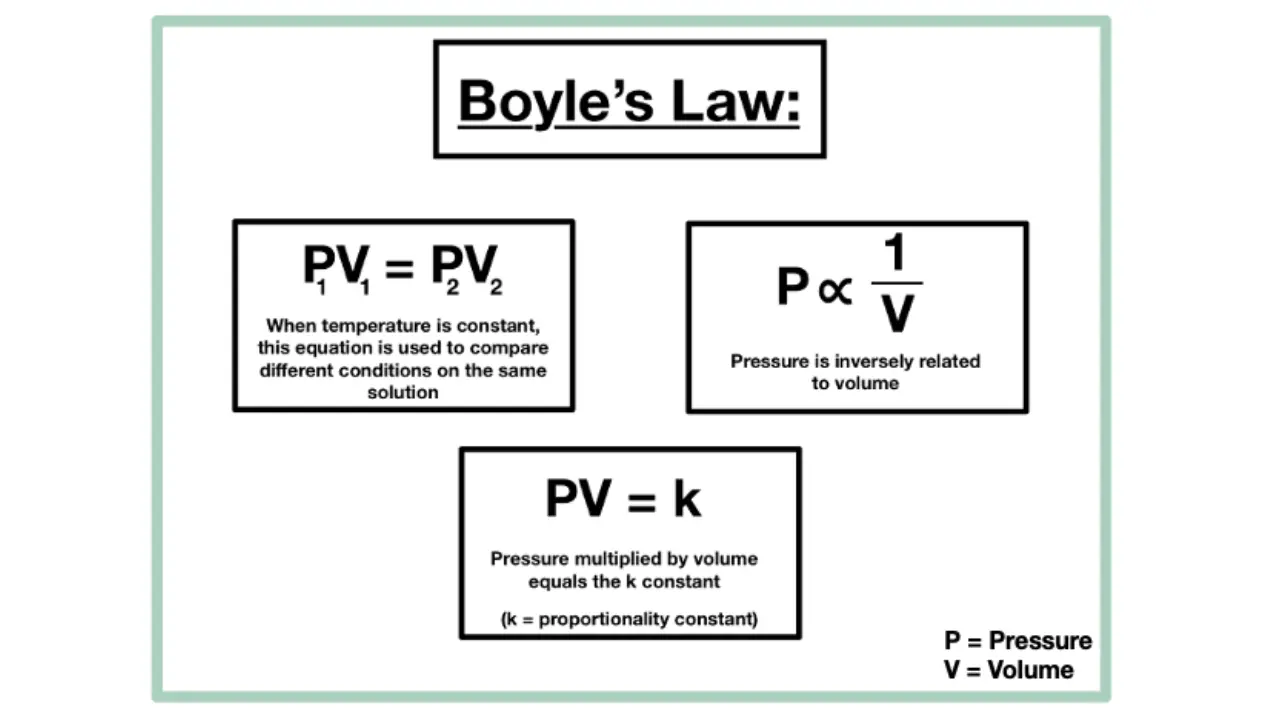
A Boyle’s law calculator helps students find gas pressure or volume when temperature stays constant. It uses a basic gas law that shows how pressure and volume move in opposite directions. When pressure rises, gas volume falls if the temperature and gas amount do not change. The tool makes each calculation faster and reduces simple math errors.
What Is Boyle’s Law Calculator?
Boyle’s Law Calculator explains the relationship between the pressure and volume of a fixed amount of gas. Robert Boyle studied this gas behavior in the seventeenth century. He found that pressure rises when gas gets pushed into a smaller space. In contrast, pressure falls when the gas has more room to expand.
The law works only when temperature and the amount of gas remain constant. Therefore, users should not apply it to gas that becomes hotter, colder, added, or removed. Its main idea is simple because pressure and volume have an inverse relationship. This pattern appears in lungs, syringes, bicycle pumps, and sealed containers.
Boyle’s Law Formula Explained
The standard formula is P₁V₁ = P₂V₂. In this equation, P means pressure, while V means volume. Number one shows the starting condition, and number two shows the final condition. A Boyle’s law calculator rearranges this formula to find the missing value.
For final pressure, the formula becomes P₂ = P₁V₁ ÷ V₂. For final volume, it becomes V₂ = P₁V₁ ÷ P₂. The same equation can also find the initial pressure or initial volume. Therefore, one formula solves four common gas-law questions.
Values Used in the Calculator
A Boyle’s law problem normally includes four values, but one remains unknown. These values are initial pressure, initial volume, final pressure, and final volume. Users enter three values, while the tool finds the fourth. All values must describe the same sealed amount of gas.
| Symbol | Meaning | Common Units |
|---|---|---|
| P₁ | Initial pressure | atm, kPa, Pa, bar, psi |
| V₁ | Initial volume | L, mL, cm³, m³ |
| P₂ | Final pressure | atm, kPa, Pa, bar, psi |
| V₂ | Final volume | L, mL, cm³, m³ |
Pressure values should use matching units before calculation. Volume values should also use the same unit on both sides. Do not mix liters with milliliters unless you convert one value first. Correct units help the Boyle’s law calculator return a useful result.
How to Use the Calculator
First, identify the three known values in the question. Next, select the pressure or volume that you need to find. Enter each number in the correct field and check the units. Then, run the calculation to see the missing value.
Afterward, check whether the answer follows the inverse relationship. A smaller final volume should create a higher final pressure. A larger final volume should create a lower final pressure. This simple review can reveal typing mistakes or wrong unit choices.
Example: Finding Final Pressure
Suppose gas has an initial pressure of 2 atmospheres and a volume of 6 liters. It then moves into a container with a volume of 3 liters. Multiply 2 by 6 and divide the result by 3. The final pressure equals 4 atmospheres.
A Boyle’s law calculator completes these steps automatically. The answer makes sense because the volume became half as large. As a result, the pressure became twice as high. This example clearly shows the inverse link between pressure and volume.
Example: Finding Final Volume
Imagine gas starts at 100 kilopascals with a volume of 8 liters. Its pressure later rises to 200 kilopascals while temperature stays constant. Multiply 100 by 8, then divide by 200. The final volume becomes 4 liters.
The volume falls by half because the pressure doubles. This pattern agrees with Boyle’s law and confirms the result. The online tool can show the answer without several manual steps. However, students should still understand the formula behind the result.
Why Unit Consistency Matters
Pressure may appear in atmospheres, pascals, kilopascals, bars, or pounds per square inch. Volume may appear in liters, milliliters, cubic centimeters, or cubic meters. Users should convert mixed measurements before entering them. Otherwise, the result may be incorrect.
For example, 1 liter equals 1,000 milliliters. Also, 1 atmosphere equals about 101.325 kilopascals. A Boyle’s law calculator may offer unit conversion, but not every tool includes it. Therefore, users should always read the unit labels carefully.
Common Mistakes to Avoid
Many students switch initial and final values by accident. Others mix pressure units or volume units without converting them. Some also apply Boyle’s law while the temperature changes. These mistakes can produce an answer that looks correct but is scientifically wrong.
Write all known values before using a Boyle’s law calculator. Confirm that the gas amount and temperature remain constant. Never enter zero for pressure or volume in a normal Boyle’s law problem. A careful setup usually matters more than a fast answer.
Real-Life Uses of Boyle’s Law
Human breathing gives a common example of Boyle’s Law Calculator. When the chest expands, lung volume rises, and pressure inside the lungs falls. Air moves inward because outside pressure is now higher. During exhalation, lung volume falls, and internal pressure rises.
A bicycle pump follows the same principle. Pushing the handle reduces the space available to trapped air. Therefore, air pressure rises and moves into the tire. Syringes, diving equipment, vacuum systems, and pistons show similar behavior.