Symmetry Financial Group Lawsuit: The Whole Story You Have to Hear
Introduction
When individuals hear the name Symmetry Financial Group, they can’t help but associate it with life insurance agents, financial planning, and financial independence. For years, the company had a good reputation for providing supplemental health and life insurance products through its large network of independent agents. However, not all of its public relations have been favorable. The Symmetry Financial Group lawsuit has questioned transparency, ethical marketing, and the dangers of multi-level marketing within the financial services sector.
For most consumers and would-be agents, such lawsuits raise genuine concerns. Can you trust the firm with your money? Is the complaint valid? And what is there in the case for other businesses to learn?
This article offers an exhaustive overview of the Symmetry Financial Group lawsuit, dissecting its history, major accusations, legal process, possible verdicts, consumer implications, and lessons for individuals and companies alike. Have you checked our detailed guide on isotonix lawsuit.
What is Symmetry Financial Group?
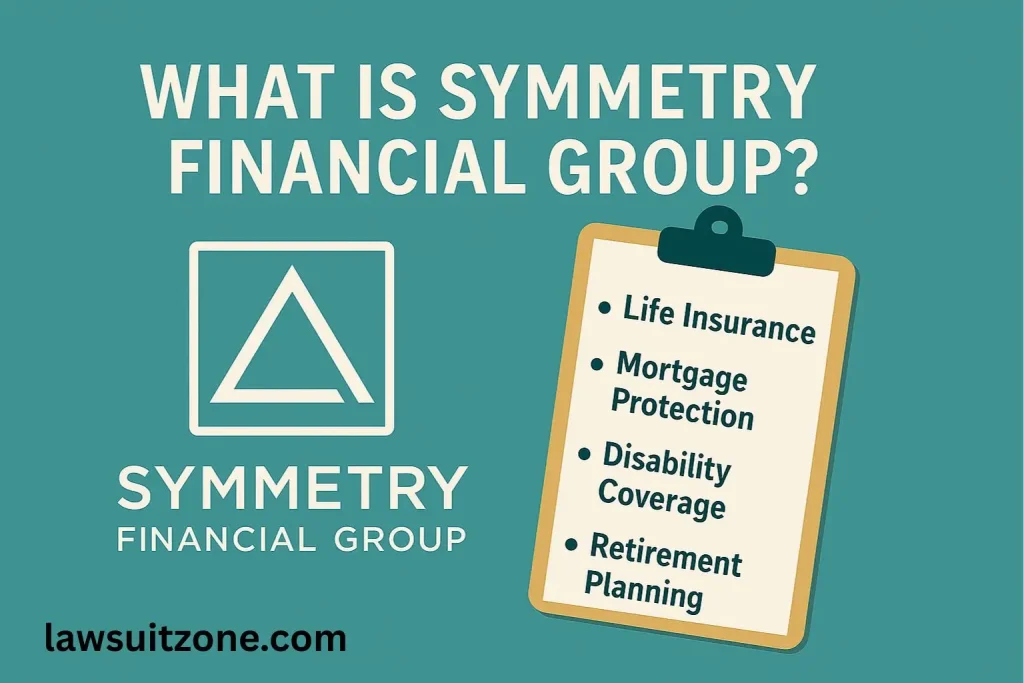
Symmetry Financial Group, otherwise referred to as SFG, was established in 2009 by Casey Watkins, Brian Pope, and Brandon Ellison. Based in North Carolina, SFG positions itself as a market leader in life insurance and financial services.
The firm works with top-tier insurance carriers to provide:
- Life insurance policies
- Mortgage protection insurance
- Critical illness and disability coverage
- Annuities and retirement planning products
The Business Model
Unlike the typical insurance agencies, SFG uses a multi-level marketing (MLM) system. Agents sell insurance products but are also incentivized to recruit agents below them. These recruits, “downlines,” bring in commissions that trickle up, providing leaders with passive income.
The Attraction of SFG
The firm presents itself as a means of financial freedom, emphasizing:
- Flexible agent work schedules
- Endless earning potential through sales and recruiting
- New recruit training and mentorship programs
The model drew in thousands of individuals seeking side money or new careers. It did, however, lay the ground for the Symmetry Financial Group lawsuit since critics accused it of mimicking a pyramid scheme in its emphasis on recruitment.
The Symmetry Financial Group lawsuit: What Happened?
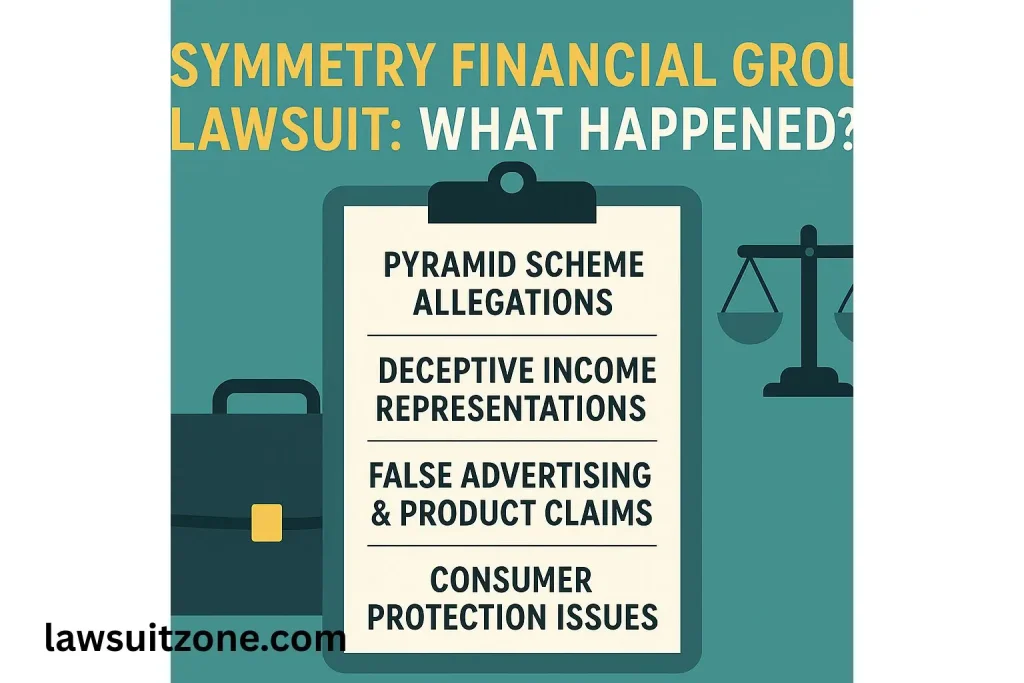
The Symmetry Financial Group lawsuit arose following complaints by former agents and consumer advocacy groups. The lawsuits focused on whether SFG’s business model was ethical, open, and compliant with the law.
Principal Allegations
Pyramid Scheme Allegations
Former agents accused SFG of relying too heavily on recruiting new agents, as opposed to selling genuine insurance products. Under this structure, most profit was reportedly generated by those further up the recruitment hierarchy.
Deceptive Income Representations
Advertising frequently emphasized reports of agents earning six or seven figures. Plaintiffs claimed those representations created unrealistic expectations, because most new agents reported that they earned very little after they paid for leads, training, and fees.
False Advertising and Product Representations
The suit also referenced SFG’s supplement line, Isotonix, as being promoted with “superior absorption” based on its isotonic delivery system. The critics asked whether such a claim was supported by legitimate, peer-reviewed scientific research.
Consumer Protection Matters
Complaints implied that SFG’s practices breached consumer protection laws by placing undue and exaggerated claims and by creating a setup that made it difficult for new agents to be financially successful.
Symmetry Financial Group’s Response
Symmetry Financial Group has refuted claims that it is running a pyramid scheme or that it deceived agents and clients. As per the company:
- Isotonix products are formulated with credible manufacturers and adhere to regulatory requirements.
- The business model is not a pyramid scheme but a valid independent sales organization (popularly referred to as an IMO).
- The firm offers training, guidance, and genuine opportunities for ambitious agents to succeed.
SFG also stresses its strong ties with respected insurance carriers and highlights the success stories of agents who have built sustainable businesses.
Legal Proceedings and Court Decisions

The Symmetry Financial Group lawsuit has involved multiple cases in different states, with varied results. Some focused on false advertising, while others targeted the MLM structure.
Court Rulings
- In some cases, judges concluded there was not enough evidence to prove that SFG operated as a pyramid scheme.
- In other instances, courts allowed allegations to move forward, particularly those related to marketing practices and possible Federal Trade Commission (FTC) violations.
Settlements
Some lawsuits resulted in settlements, with Market America — the parent company behind Isotonix and SFG — agreeing to pay damages or adjust its marketing and training approaches. Typically, these settlements were reached without the company admitting fault.
Influence of the Symmetry Financial Group Lawsuit
Influence on Consumers
For consumers, the Symmetry Financial Group lawsuit raised red flags about whether products like insurance policies and supplements were being marketed ethically. Many became more cautious about bold claims such as “superior absorption” and questioned whether agents were recommending products out of genuine care or simply to hit recruitment quotas.
Impact on Insurance Agents
The MLM recruitment model was heavily criticized. Numerous former agents reported losing significant sums after purchasing leads or paying for training. The lawsuit brought attention to the financial risks of joining MLM-style organizations, especially when income is tied more to recruiting than selling.
Impact on the Industry
The lawsuit attracted increased scrutiny toward MLM practices in the financial and wellness industries. Regulators such as the Federal Trade Commission (FTC) reinforced that claims about income potential and product effectiveness must be based on real evidence. Other MLM-based companies, including Herbalife and Advocare, have faced similar legal challenges.
Key Takeaways from the Lawsuit
For Businesses
- Be Open and Honest: Transparent advertising avoids future legal and reputational problems.
- Compliance is Mandatory: Align with FTC and state regulations to ensure your company is operating ethically.
- Proper Training is Essential: Agents need accurate knowledge to guide consumers responsibly.
- Reputation Matters: Long-term trust outweighs short-term financial gains from aggressive marketing.
For Consumers
- Do Your Homework: Look for independent studies, not just marketing claims.
- Verify Licensing: Make sure your agent is properly licensed with your state insurance department.
- Question Recruitment Models: If success depends mostly on signing others up, be cautious.
- Demand Documentation: Always ask for written proof of product claims and commission structures.
Consumer Perspective: The Human Side of the Case
Every lawsuit comes with real stories. The Symmetry Financial Group lawsuit included accounts from agents who invested thousands into the business but ended up in debt. Many shared that they were drawn in by promises of high income and mentorship, only to discover that the reality was far tougher.
Consumers also voiced frustration after realizing that some product claims, especially about Isotonix supplements, were contested. For many families who trusted the brand for their health, the revelations created a sense of betrayal.
These personal accounts highlight why the lawsuit matters. It isn’t only a corporate legal issue — it is a reminder that behind every case are individuals whose lives can be significantly affected.
The Future of Symmetry Financial Group
Despite the controversy, Symmetry Financial Group continues to operate. Market America has made changes to training materials and adjusted how it presents marketing claims. Still, the Symmetry Financial Group lawsuit leaves a lingering question: how will the company rebuild long-term trust?
Potential Future Developments
- Regulatory Changes: More oversight from the FTC and state regulators may be introduced to address MLM models in financial services.
- Industry Transformation: Supplement and insurance companies may face pressure to prioritize transparency and back up every claim with research.
- Reputation Repair: SFG’s future depends on whether it can consistently demonstrate ethical practices and deliver real value to both clients and agents.
Frequently Asked Questions (FAQs)
Conclusion
The Symmetry Financial Group lawsuit shows how legal battles can reshape not only a company’s future but also influence an entire industry. For consumers, it reinforces the importance of questioning claims, researching products, and being cautious about MLM opportunities. For businesses, it’s a wake-up call: marketing strategies must be rooted in truth, compliance is not optional, and long-term trust should never be sacrificed for short-term growth.
Ultimately, the Symmetry Financial Group case illustrates that trust is a company’s most valuable currency. Once it is damaged, rebuilding it can take years. Both consumers and businesses can use this lawsuit as a reminder of the importance of transparency, evidence, and accountability in financial services.