Where Slip-and-Fall Accidents Happen, and Why the Location Matters
A slip-and-fall in a grocery store, a fall on a broken apartment stairwell, and a tumble on a cracked public sidewalk can all cause the same broken wrist or concussion. But legally, they are not the same at all. Where an accident happens shapes who might be responsible, what rules apply, and even how quickly a person needs to act. That is something most people never consider until they are trying to make sense of an injury and wondering whether anyone can be held accountable.
The core questions mirror those in any negligence situation: did the provider owe the patient a duty of care, did they fail to meet the accepted standard, did that failure cause the harm, and what were the consequences. A bad outcome alone is never enough, since medicine is uncertain and even excellent care can fail. The issue is always whether the care itself was unreasonable. Because answering this demands medical insight, people who suspect a hospital fell short often consult a queens medical malpractice lawyer or other experienced counsel for legal guidance in evaluating whether the care met the applicable standard and whether a valid claim may exist.
This article walks through the most common settings for falls and why the location changes the picture, as general information rather than legal advice.
Why Location Changes Everything
The reason setting matters so much comes down to the fact that responsibility for safety attaches to whoever controls a given property, and different controllers operate under different expectations. The general principle, that those who control property must keep it reasonably safe, applies broadly, but the specifics shift considerably from one context to another.
A business open to the public is generally expected to actively monitor for and address hazards during operating hours, because it invites customers in and profits from their presence. A residential landlord has obligations focused heavily on maintaining shared and common areas. A government entity that controls public spaces operates under its own special set of rules, often with far shorter deadlines and additional procedural hurdles. An employer where an on-the-job fall occurs may fall under an entirely separate injury system altogether.
These differences are not academic. They determine who a claim would even be against, what that party was obligated to do, what evidence matters, and how much time a person has to act. Recognizing that the same physical accident can lead down very different paths depending on where it happened is the first step toward understanding any particular situation clearly.
Falls in Stores, Restaurants, and Other Businesses
Some of the most common falls happen in retail and dining environments, places with constant foot traffic, frequent spills, and a steady stream of customers who have every reason to expect a reasonably safe space. Because these businesses invite the public in, they are generally expected to take active steps to find and fix hazards.
When a fall happens in such a setting, a lawyer for slip and fall accident cases will typically look at how the business managed the risk: whether it had reasonable inspection and cleanup routines, whether employees knew or should have known about the hazard, and whether warnings were posted. A spill in a busy aisle that sat unattended, a freshly mopped floor with no sign, a dropped product left in a walkway, an entrance slick with tracked-in rain and no mat or caution, all raise questions about whether the business did what a careful operator reasonably should have.
These cases often hinge on the business’s systems and records. Many retailers have inspection logs, cleanup procedures, and surveillance footage, evidence that can reveal whether the company was actually monitoring for danger or merely claiming to. That evidence, however, is frequently controlled by the business and may not survive long without prompt action. The commercial setting tends to offer rich potential evidence, but only for those who move quickly enough to preserve it.
Falls in Apartments and Rental Properties
Falls in residential rental settings raise a different set of considerations, centered on the relationship between landlords and the people who live in or visit their properties. Landlords generally bear responsibility for maintaining areas under their control, particularly shared spaces.
Common trouble spots include poorly maintained stairwells, broken or missing handrails, inadequate lighting in hallways and parking areas, uneven walkways, and hazards in lobbies or laundry rooms. The analysis often focuses on whether the landlord knew or should have known about the dangerous condition and failed to address it within a reasonable time. A handrail that a tenant repeatedly reported as loose, or a stairwell light that had been out for weeks, speaks to the kind of neglected, known hazard that can establish responsibility.
These situations can be complicated by questions of who controlled the specific area where the fall occurred and what the landlord’s obligations were in that space. The distinction between a common area and a private unit, for instance, can matter. As with other settings, evidence is central, documentation of the hazard, records of any prior complaints, and witness accounts all help establish what the landlord knew and when. The residential context has its own contours, and understanding them is part of evaluating any such fall.
Falls on Public or Government Property
Falls on public property, cracked sidewalks, hazards in parks, dangerous conditions at transit stops or government buildings, are a category that catches many people off guard, because the rules are meaningfully different and far less forgiving of delay.
Claims involving government entities typically come with special procedures and notably compressed deadlines that can expire long before the ordinary window for other injury claims. Miss one of these early steps, and an otherwise legitimate claim can be lost on procedure alone, regardless of how clear the underlying negligence was. This is one of the situations where talking promptly to a san fernando valley personal injury lawyer can be especially important, simply because the timeline is so much tighter and the procedural requirements so much less intuitive than people expect.
The substance of these claims also differs, as government entities often have particular protections and standards that do not apply to private parties. None of this means such claims are impossible, but it does mean they demand fast, informed action and leave very little room for the wait-and-see approach people often take after a private-property fall. Anyone hurt on public property should treat the clock as a genuine and immediate concern rather than assuming they have the same breathing room a different setting might allow.
Falls at Work: A Different System Entirely
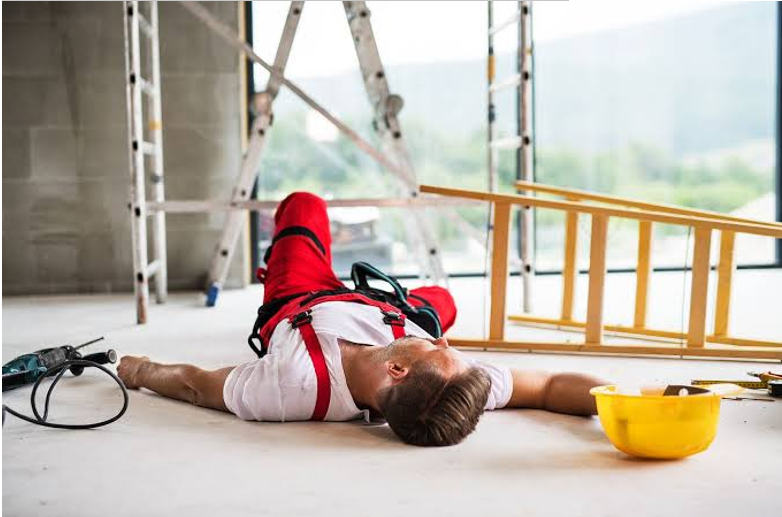
A fall that happens on the job often enters a completely separate framework from the premises-liability rules that govern other falls. Workplace injuries are frequently handled through a dedicated system designed specifically for on-the-job harm, with its own rules, processes, and trade-offs.
This system generally operates differently from a typical injury claim against a careless property owner, and the distinctions can be significant in terms of what is available and how a person proceeds. There are also situations where a workplace fall might involve a party other than the employer, which can add further complexity. Because the frameworks are so different, a fall that seems similar to one in a store can actually follow an entirely separate path once it happens in a work context.
The practical takeaway is that anyone injured in a fall at work should be aware they may be dealing with a different system than they would expect, with its own requirements and timelines. Assuming a workplace fall works like any other can lead to missteps, which is why understanding that the context changes the rules is so important. The details here are genuinely specialized, and general articles can only flag the distinction rather than resolve it.
What this means in practice is that a person who falls on the job should be careful not to assume their situation mirrors a fall in a store or on a public sidewalk. The procedures, the timelines, and the available paths can all differ in ways that are not obvious from the outside, and acting on the wrong assumptions can create avoidable problems. Recognizing early that a workplace context may change everything is the safeguard that keeps a person from taking missteps that later prove difficult to undo.
What Stays the Same Everywhere
For all these differences, certain principles hold no matter where a fall occurs, and they are worth keeping in mind precisely because the rest varies so much. Wherever a person falls, the fundamentals of protecting their health and their options remain consistent.
In every setting, getting prompt health care matters, both for recovery and for documentation. In every setting, capturing evidence of the hazard before it changes is valuable, since conditions get fixed and footage gets overwritten regardless of who owns the property. In every setting, witness information is hard to recover later and easy to gather at the time. And in every setting, acting promptly protects against the twin dangers of fading evidence and running deadlines, even though those deadlines vary widely by context.
What changes is the framework; what stays constant is the wisdom of acting carefully and quickly. Because the location determines so much about which rules apply and how much time exists, the safest course in any fall is to treat the situation seriously from the start and to get clarity about which path one is actually on before assumptions harden into missed opportunities.
It also helps to remember that uncertainty about which rules apply is itself a reason to seek clarity quickly rather than to wait. When the framework is unclear, the safest assumption is the one that preserves the most options, which usually means treating deadlines as short and evidence as perishable until proven otherwise. A person who errs on the side of promptness rarely regrets it, while one who waits to figure everything out before acting often discovers that the delay itself foreclosed a path that was open at the start.
The Takeaway
A slip-and-fall is never just about the fall; it is also about where it happened. Stores, rental properties, public spaces, and workplaces each carry different responsibilities, different rules, and sometimes dramatically different deadlines. Understanding that the setting reshapes the entire picture helps a person grasp why two similar accidents can lead to very different outcomes and very different timelines.
This article is general information and not legal advice. Because the rules and deadlines depend so heavily on where and how a fall occurred, anyone who has been injured should consult a qualified attorney promptly to understand which framework applies and what steps their specific situation requires.