What Really Happens to Your Settlement Money If You Have an Outstanding Warrant in Texas
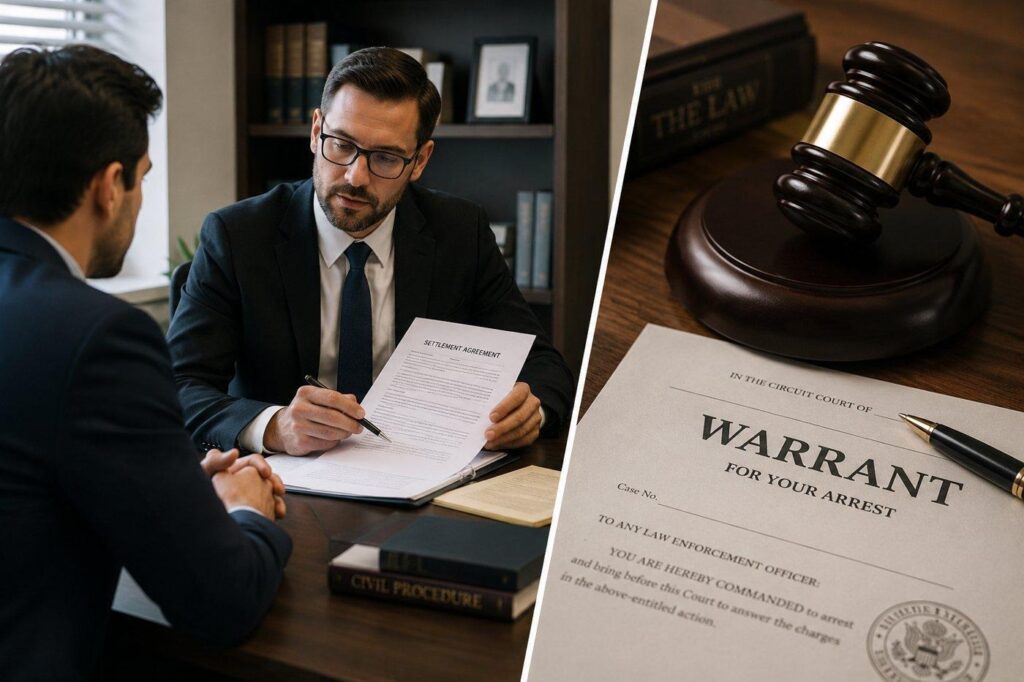
If you have an outstanding warrant in Texas and you are expecting a settlement payout, your money may be at far greater risk than you realize. Many people assume a civil lawsuit and a criminal warrant exist in completely separate worlds. They do not. The two can collide in ways that cost you everything you worked for in that settlement.
Quick Answer: An outstanding warrant in Texas does not automatically seize your settlement money. However, it creates serious legal exposure that can intercept your funds, trigger your arrest at the worst possible moment, and ultimately cost you far more than the warrant itself.
Understanding how warrants interact with civil settlements is critical before you sign anything or accept a single dollar. The attorneys at McCarty-Larson, PLLC have worked with clients facing exactly this situation, and the outcome almost always depends on how quickly the warrant gets addressed.
Does an Outstanding Warrant in Texas Automatically Take Your Settlement Money?
No. A criminal warrant is not a garnishment order. It does not automatically freeze your bank account or intercept a settlement check the moment it is issued. However, that does not mean your money is safe.
Here is where the risk becomes real. When you receive a settlement, that money often moves through a process that involves courts, attorneys, and financial institutions. If you have an active warrant in Texas, any step in that process that puts you in contact with law enforcement or a courthouse can result in your arrest. An arrest stops everything. Court dates get postponed. Negotiations stall. Your ability to manage your own legal affairs disappears the moment you are in custody.
Defense attorneys and insurance adjusters run background checks. If they find an active warrant, that information does not stay private. It becomes a tool at the negotiating table, and suddenly you are in a weaker position on a case you should be winning.
How Texas Courts Actually Treat Warrants During a Civil Case
This is the question most people do not think to ask until it is almost too late. The short answer is that courts cannot directly seize settlement funds solely because a criminal warrant exists. However, there are scenarios where your money can absolutely be at risk.
If you owe court-ordered fines, restitution, or child support connected to a prior criminal case, those obligations can result in a judgment that leads to wage garnishment or account levies. Texas law does protect certain funds from garnishment, but those protections have limits. Settlement proceeds deposited into a bank account can become vulnerable once they are mixed with other funds and time passes.
There is one scenario that carries more risk than the others. If your warrant ties back to fraud, theft, or any kind of financial crime, prosecutors can argue that your settlement proceeds are connected to that case. It does not happen often with a missed court date or an old traffic warrant. But with financial crimes, money is always relevant and prosecutors know how to make that argument.
The Courthouse Risk Nobody Warns You About
This is the scenario that catches people off guard most often. You have a civil case moving forward. A deposition is scheduled, or you need to appear before a judge to finalize a settlement. You show up to the courthouse. And that is exactly where law enforcement can and does run warrant checks on individuals entering court facilities.
A bench warrant, capias warrant, or arrest warrant does not go dormant just because time has passed. Texas warrants do not expire. They remain active until they are resolved, and a courthouse appearance can become the moment that warrant is served.
Getting arrested on the day of a critical civil proceeding is not just personally devastating. It can derail your case, cause you to miss court dates that result in default judgments against you, and force your civil attorney to work around a criminal situation they were never prepared to handle.
What Should You Do First: The Warrant or the Settlement?
Address the warrant first. Every time. This is the consistent advice from criminal defense attorneys who have seen clients lose significant settlement value because they tried to finalize a civil case while an active warrant was hanging over them.
Resolving a warrant before your settlement closes accomplishes several things. It removes the risk of arrest during the settlement process. It protects your ability to manage your own legal matters. It eliminates leverage the other side may use against you. And it allows you to receive and protect your settlement funds without the threat of a future arrest complicating your finances.
The good news is that many warrants in Texas can be resolved without jail time, especially with experienced legal representation involved early. An attorney can often negotiate a surrender, arrange a court appearance on favorable terms, or in some cases pursue a dismissal depending on the circumstances of the original case.
The team at McCarty-Larson’s Texas criminal defense attorneys regularly help clients navigate exactly this kind of situation, where a past legal matter threatens to derail something important happening right now. Acting quickly is almost always the deciding factor in how these cases resolve.
The Hidden Costs of Waiting
Yes, and most people do not see it coming until the bill arrives.
A warrant that sits ignored does not sit still. Fines accumulate. Court surcharges pile on. What started as a few hundred dollars in unpaid obligations can quietly become a much larger number by the time a settlement puts money in your hands.
The civil side gets more expensive too. Attorneys who discover an active warrant mid-case either step back or step up their retainer. Emergency legal work during a settlement negotiation costs far more than a planned warrant resolution would have. The warrant you put off addressing ends up costing you on both fronts.
Which Warrant Types Put Your Settlement at the Most Risk
Not all warrants carry the same level of risk. However, any active warrant creates exposure. Here is a general breakdown of what to watch for.
Bench warrants are the most common type connected to missed court dates or failure to appear. They can result in immediate arrest during any law enforcement contact, including courthouse entry. Felony arrest warrants carry the most severe consequences and the greatest risk of funds being connected to criminal proceedings. Capias warrants, which are issued after a conviction for failure to pay fines or complete conditions of a sentence, can directly tie into financial obligations that affect your settlement funds.
Blue warrants, issued by the Texas Board of Pardons and Paroles for parole violations, carry no bail option and represent some of the highest-risk situations for anyone expecting a civil payout.
Do Not Wait Until Settlement Day to Deal With This
The biggest mistake people make is assuming the warrant will not surface until it does. By then, the damage is already happening. A civil settlement that took months to negotiate can collapse in a single afternoon when an arrest occurs at the wrong moment.
If you are in the middle of a civil case, personal injury claim, or any situation where a financial settlement is on the table, and you know or suspect you have an outstanding warrant in Texas, get legal help now. The earlier you address the warrant, the more options you have and the less it will cost you in the long run.
McCarty-Larson, PLLC has more than 50 years of combined legal experience helping Texans in Ellis County, Johnson County, Tarrant County, and Dallas County resolve criminal matters before they become something larger. The firm was built by former prosecutors and law enforcement professionals who understand how the system works from both sides.
Do not let an old warrant cost you a fresh start. Contact McCarty-Larson, PLLC today at mccartylarson.com to schedule a free consultation and find out exactly where you stand before your settlement closes.