
The Hidden Engineering Marvels Sustaining The Roman Aqueducts
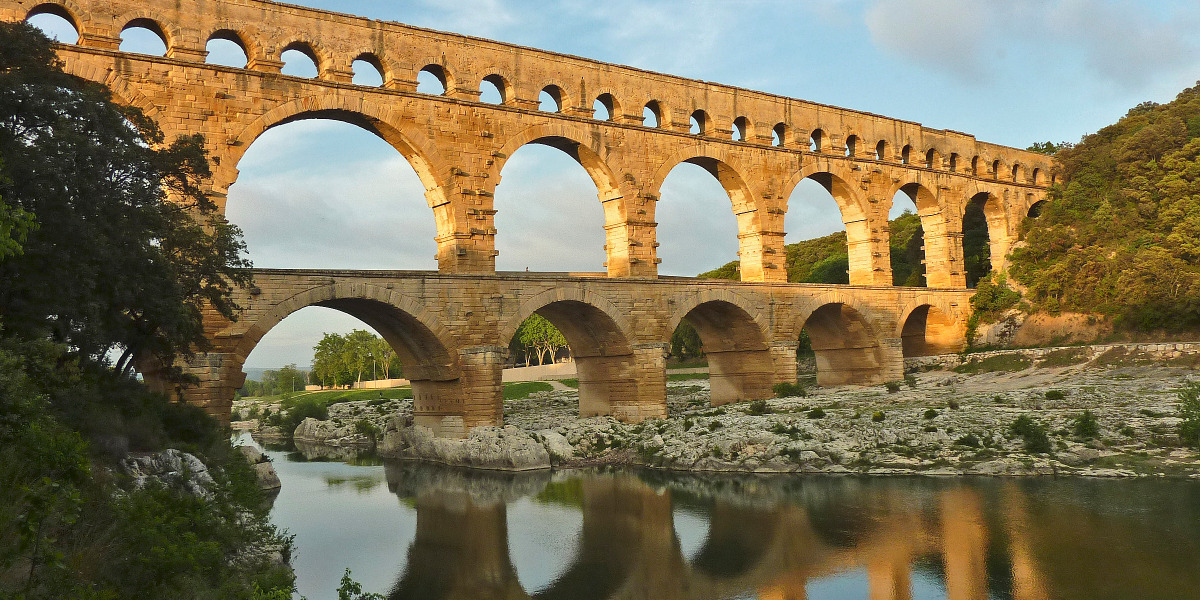
Picture water traveling 31 miles and dropping less than 60 feet the whole way. That isn’t a rounding error. It’s the actual design of the aqueduct that fed the Roman city of Nîmes, in what is now southern France. Across one famous stretch, the channel falls barely an inch over a span longer than a football field. The Romans pulled this off without engines, lasers, or electricity, and the methods they relied on are stranger and far smarter than most people ever realize.
A Drop You Could Hardly Measure
The whole system ran on one humble force: gravity. To keep water sliding forward without rushing or stalling, Roman surveyors had to carve a slope so gentle it borders on flat. The Nîmes aqueduct averaged a fall of about one part in 3,000, meaning the water eased downhill roughly a foot and a half for every mile it traveled.
Getting that right over rough hills and river valleys took astonishing patience. Surveyors used simple tools, a water level called a chorobates and a sighting frame called a groma, then checked and rechecked the grade by hand. A single bad measurement could leave water pooling in a low spot or spilling over the edge miles down the line.
Across the entire fifty-kilometer route, the channel dropped about as much as a five-story building is tall, spread over a distance you would need most of a day to walk.
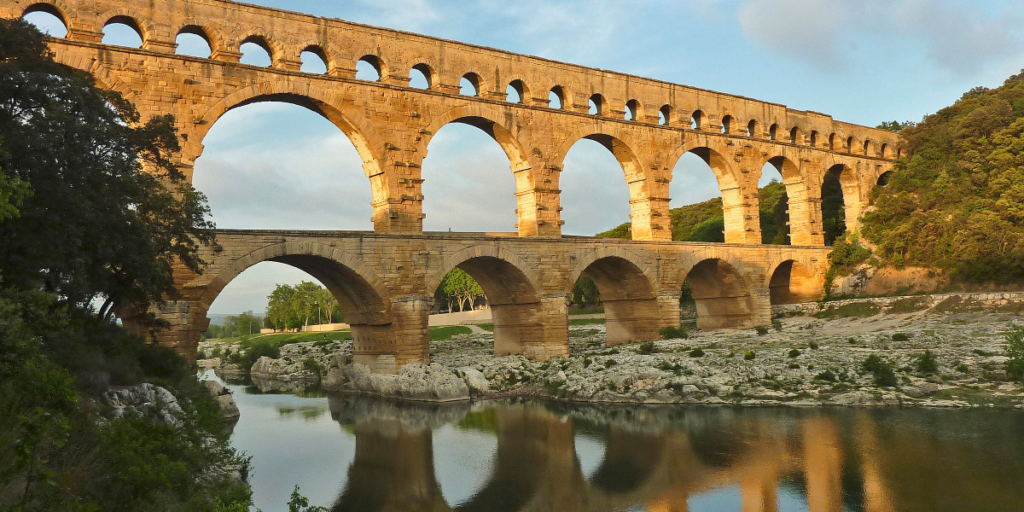
That is the marvel hiding in plain sight. The Pont du Gard, the towering bridge that carries this aqueduct, gets the postcards, but the real genius was the invisible, near-perfect slope running for miles in every direction.
When a Valley Stood in the Way
Of course, the land rarely cooperates. When a deep valley interrupted the route, Roman engineers couldn’t just dip the channel down and back up, because open channels need a steady downhill grade. Their answer was to keep the water level by building it a bridge across the sky.
They built a different fix for each kind of obstacle:
- Arched bridges to carry the channel level across a valley. The Pont du Gard rises nearly 160 feet on three stacked tiers, its six-ton stones cut so precisely they hold with no mortar at all.
- Inverted siphons, sealed pipes that pushed pressurized water down one slope and back up the other, for valleys too deep even for arches.
- Tunnels bored straight through hillsides, handling everything the bridges and siphons couldn’t.
The Same Romans Loved a Good Wager
The civilization that fussed over perfect water channels was every bit as devoted to games of chance. Romans rolled dice deep into the night, played a knucklebone game called tali, and bet small fortunes on chariot races thundering around the Circus Maximus. The pull of a risky bet, it turns out, is nothing new.
Today that same thrill has moved online, a long way from a clay die clattering across a tavern table. Anyone chasing that rush can head to verde casino.com to browse a full lineup of slots, jackpots, and live dealer tables, alongside a welcome bonus and rotating promotions for new and returning members. With secure payments and a Romanian-language interface, the betting floor folds neatly into a phone or laptop, a reminder that the human appetite for a good gamble has outlasted the empire that helped make it a pastime in the first place.
The Marvel Was Never Finished
Here’s the part the grand stone arches tend to overshadow: building an aqueduct was only half the job. Keeping it alive was the harder, never-ending work.
Keeping the water moving meant constant, deliberate effort:
- Scraping the channels clean. Hard water left a crusty layer of calcium carbonate that built up over the decades and slowly choked the flow, so crews cleared it out by hand again and again.
- Settling tanks called piscina limaria, where the water paused long enough for grit and sediment to sink before moving on.
- Built-in repair access, like the stones left jutting from the Pont du Gard’s face so workers could lash scaffolding to them for future fixes.
That constant care is exactly why these systems lasted as long as they did. When the empire weakened and the maintenance crews vanished, many aqueducts didn’t dramatically collapse. They quietly clogged shut, strangled by the very mineral buildup that diligent hands had once kept at bay.
Water That Never Stopped
Most Roman aqueducts are silent ruins now, but not all of them. The Aqua Virgo, completed in 19 BC under Augustus’s right-hand man Agrippa, still runs largely underground beneath modern Rome, and it still does its job.
Follow its course, and you arrive at the Trevi Fountain. The water spilling over that baroque masterpiece, where millions of visitors toss in coins each year, is delivered by an aqueduct more than two thousand years old. So the next time you see those famous cascades, look past the marble. You’re really watching ancient engineering, still patiently doing the one thing it was built to do.