Tennessee Window Tint Law Guide to Legal Tint Limits Rules
Understanding the Tennessee window tint law helps vehicle owners avoid fines and keep their cars within state rules. Window tint provides privacy, reduces heat, and protects passengers from harmful sunlight, but Tennessee has clear limits on how dark window film can be.
Many drivers choose tint for comfort and appearance, but they must follow legal requirements. The state uses Visible Light Transmission (VLT) measurements to decide how much light must pass through vehicle windows.
What Is the Tennessee Window Tint Law and Why Does It Matter?
The Tennessee window tint law explains how much darkness is allowed on different windows of a vehicle. These rules apply to passenger cars, trucks, and SUVs traveling on Tennessee roads.
VLT means the percentage of visible light that can pass through the window and tint combination. A higher VLT percentage means the window allows more light inside, while a lower percentage means the tint looks darker.
Following tint regulations keeps drivers safe because law enforcement officers need to see inside vehicles during traffic stops. Legal tint also prevents unnecessary penalties and helps maintain proper road safety standards.
Tennessee Window Tint Law for Front Side Windows
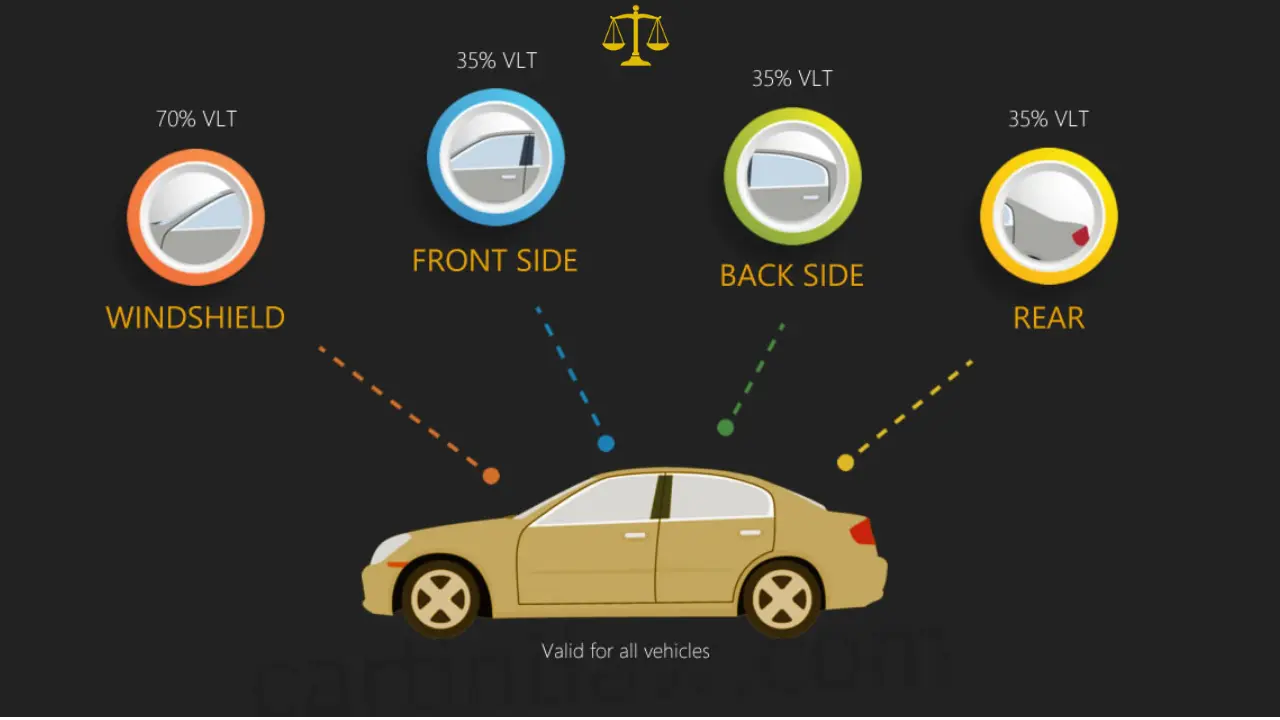
Tennessee requires front side windows to allow enough light to pass through for visibility. The driver and front passenger windows must allow more than 35% of visible light transmission.
This rule allows drivers to enjoy sun protection while maintaining clear visibility. Darker tint on front windows can reduce visibility at night and may lead to a traffic violation.
| Vehicle Window | Legal Tint Limit in Tennessee |
|---|---|
| Front Side Windows | 35% VLT or lighter |
| Driver Window | 35% VLT or lighter |
| Passenger Front Window | 35% VLT or lighter |
Drivers should check their tint percentage before installation because some aftermarket films appear lighter but become darker when combined with factory glass.
Tennessee Window Tint Law for Rear Windows
The rear windows of vehicles also follow specific tint requirements under Tennessee regulations. Most passenger vehicles must allow more than 35% VLT on rear side windows and rear windows.
Some vehicles may have different rules depending on their classification. Large vehicles, such as SUVs and vans, may have different allowances compared with standard passenger cars.
A professional tint installer can measure your vehicle’s existing glass and recommend a film that meets legal standards.
Windshield Tint Rules in Tennessee
The windshield has stricter limits under the Tennessee window tint law because clear visibility is important for safe driving. Tennessee allows only a small non-reflective tint strip at the top of the windshield.
This strip usually follows the manufacturer’s AS-1 line. Drivers cannot apply dark tint across the entire windshield because it blocks visibility and creates safety concerns.
| Windshield Area | Tennessee Requirement |
|---|---|
| Full Windshield | No dark tint allowed |
| Top Strip | Non-reflective tint allowed above AS-1 line |
| Reflective Film | Not allowed |
Reflective Tint and Other Restrictions
Tennessee Window Tint Law does not allow highly reflective window tint because it can create dangerous glare for other drivers. Reflective films may reduce visibility and increase risks on busy roads.
The state also restricts certain mirror-like tint products. Vehicle owners should choose standard non-reflective films designed for legal use.
Before purchasing window tint, drivers should ask installers about Tennessee compliance. A quality installer understands local rules and uses approved materials.
Medical Exemptions
Some Tennessee drivers may qualify for a medical exemption that allows darker window tint. These exemptions usually apply to people with medical conditions affected by sunlight exposure.
Drivers with approved exemptions must carry proper documentation while operating the vehicle. The exemption does not automatically allow any level of darkness, so specific limits still apply.
| Exemption Type | Requirement |
|---|---|
| Medical Condition | Doctor-approved documentation may be required |
| Vehicle Use | Must follow state approval rules |
| Proof | Keep exemption paperwork available |
Penalties for Breaking Tennessee Tint Rules
Ignoring the Tennessee window tint law can result in traffic citations and additional costs. Law enforcement officers may use tint meters to check whether windows meet the required VLT percentage.
A driver may receive a fine if the tint measures below the legal limit. Repeated violations can create more problems and require removing illegal film.
The cost of removing illegal tint is often higher than installing legal tint from the beginning. Choosing compliant film saves money and avoids unnecessary trouble.
Benefits of Choosing Legal Window Tint
Legal window tint offers several advantages beyond improving vehicle appearance. Proper tint reduces interior heat, protects upholstery, and creates a more comfortable driving environment.
A legal tint installation also improves privacy without blocking too much outside light. Drivers can enjoy better comfort while staying within Tennessee requirements.
Many professional tint shops use tools to measure VLT levels before completing installation. This step helps customers avoid problems caused by illegal darkness levels.
How to Choose the Right Tint for Your Vehicle
Selecting the correct tint depends on your vehicle type, personal preference, and Tennessee regulations. Drivers should always choose films that meet the required VLT percentage.
A reliable installer should explain available options and provide information about legal limits. Quality window film can last longer and maintain its appearance when installed correctly.
| Tint Percentage | Appearance | Tennessee Legality |
|---|---|---|
| 50% Tint | Light shade | Usually legal |
| 35% Tint | Medium shade | Common legal choice |
| 20% Tint | Dark shade | Usually not legal |
| 5% Tint | Very dark limo style | Not legal for most vehicles |
Final Thoughts
The Tennessee window tint law helps balance vehicle comfort, privacy, and road safety. Drivers can enjoy the benefits of window tint by choosing films that meet state requirements.
Understanding legal VLT limits, windshield rules, and reflective tint restrictions prevents costly mistakes. Always check your vehicle’s tint level and work with a professional installer to stay compliant.
By following the Tennessee window tint law, vehicle owners can maintain a stylish appearance while driving safely and legally throughout Tennessee.