OGX Lawsuit Explained: Complete 2025 Guide for Consumers
Introduction
The ogx lawsuit has become a major cause for concern among consumers who have trusted the OGX haircare line for years. Known for its colorful bottles and tropical fragrances, OGX was a household favorite—until reports surfaced linking certain products to hair loss, scalp irritation, and long-term hair thinning. What was once a beloved brand suddenly became the center of a growing legal battle.
Below is a complete guide to everything you need to know in 2025, from what the lawsuit claims and why the ingredients are questionable to who may qualify to file a case, and what compensation injured consumers could be entitled to. Whether you’ve used OGX shampoos for months or even years, or you simply want to understand the controversy, this article breaks down the facts in a simple, human-friendly way. Have you checked our detailed guide on johnson and johnson lawsuit update.
What is the OGX Lawsuit?
The OGX lawsuit describes class-action and individual claims filed against Johnson & Johnson, the former parent company of the brand, over the allegations that OGX shampoos and conditioners contain ingredients that can potentially cause hair damage, scalp burning, and increased shedding.
Consumers say:
- OGX products have been marketed as nourishing and safe.
- Some formulas used formaldehyde-releasing preservatives.
- The company did not give proper warnings.
- Many people are experiencing unexpected hair loss and scalp problems.
While Johnson & Johnson has denied these allegations, thousands of consumers have reported similar patterns of harm, triggering nationwide legal action.
Why the OGX Lawsuit Became a Major Issue
Several factors contributed to the lawsuit multiplying:
1. Surprising ingredient discoveries
Most users didn’t realize that a product labeled “for healthy hair” could include preservatives that would cause irritation.
2. Widespread product use
OGX products are sold in:
- Walmart
- Target
- Walgreens
- Supermarkets
- Online shops
They are used in millions of households.
3. Personal stories shared online
TikTok, YouTube, and Facebook played a huge role as people started sharing before-and-after photos of unusual hair loss.
4. Growing consumer fear
People who never had hair problems suddenly found themselves with thinning patches or scalp inflammation.
5. Pressure on the beauty industry
The lawsuit fostered conversations about clean beauty, transparency, and corporate ethics.
What Ingredients Are at the Center of the OGX Lawsuit?
DMDM Hydantoin
The most criticized ingredient in the ogx lawsuit is DMDM hydantoin, a preservative that slowly releases formaldehyde to prevent mold growth.
Why this matters:
- Formaldehyde is a recognized skin irritant.
- It may cause allergic reactions.
- It may weaken hair at the roots in sensitive people.
- Continuous exposure increases the risk for sensitive individuals.
Synthetic Fragrances
OGX products boast strong, exotic fragrances. As such, many consumers reported:
- Reddening
- Itching
- Burning sensations
- Scalp inflammation
Fragrances can contain dozens of chemical components not individually listed on the label.
Harsh Surfactants
Not the leading cause, but some OGX shampoos contain strong cleaning agents that may strip off moisture.
Do OGX products actually cause hair loss?
There is no universal scientific proof, but evidence from thousands of users shows similar patterns. Many reported:
- Sudden clumps of hair falling out
- A widening part
- Circular shedding patches
- Burning or stinging sensations
- Increased breakage
- Scalp sensitivity
Formaldehyde can cause an inflammatory reaction in the hair follicles of susceptible individuals, say dermatologists, which leads to hair shedding or breakage.
While not all users suffered issues, according to the lawsuit, the company should have:
- Chosen safer preservatives
- Disclosed risks more openly
- Updated formulas sooner
Chronology of the OGX Lawsuit
2015–2018: First complaints appear online
Consumers quietly started reporting hair loss with the use of OGX.
2019–2020: Complaints spike dramatically
Influencers and everyday users alike share experiences and photos via social media.
2021: First significant class-action lawsuit filed
A class-action complaint was filed against Johnson & Johnson for using unsafe, outdated preservatives.
2022: Formula changes begin
Various OGX products are reformulated to use less DMDM hydantoin.
2023–2024: Additional plaintiffs join
More people come forward, strengthening the case.
2025: Lawsuit continues
The courts are reviewing evidence and considering possible settlements.
Main Allegations in the OGX Lawsuit
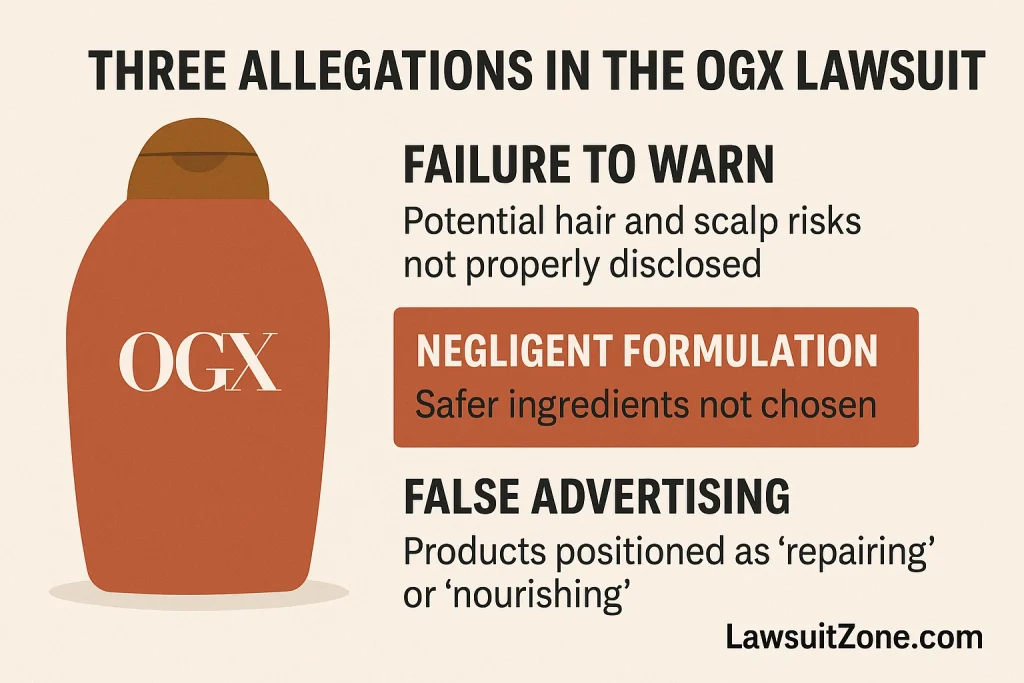
1. Failure to warn
Consumers said OGX failed to adequately warn of potential hair and scalp dangers.
2. Negligent formulation
The lawsuit argues that safer alternatives were available but not used.
3. False advertising
OGX positioned their products as:
- “Restoring”
- “Strengthening”
- “Repairing”
When users actually say they experienced the opposite.
4. Corporate negligence
Critics say the company should have removed DMDM hydantoin much earlier, especially after it removed the chemical from its baby shampoo in 2015.
5. Financial damage
Many users spent hundreds on treatments, dermatology visits, or new products.
Who Can File an OGX Lawsuit Claim?
You may be eligible if you:
- Used OGX shampoo or conditioner regularly
- Experienced unusual hair loss or scalp problems
- Noted damage shortly after switching to OGX
- Have photos or documentation of the changes
- Have purchases within the eligible time frame
- Consulted a doctor or dermatologist — helpful but not required
Even if you don’t have receipts anymore, bank statements, Amazon orders, or photos of the old bottles support your case.
Types of Damages You May Recover
Compensation ranges according to the harm inflicted. You may be entitled to:
- Cost of buying OGX products
- Dermatology bills
- Medical tests or biopsies
- Prescription treatments
- Wigs or hair-thickening programs
- Damages for emotional distress
- Severe hair loss compensation
- Punitive damages, if negligence is proven
How to Strengthen Your OGX Claim
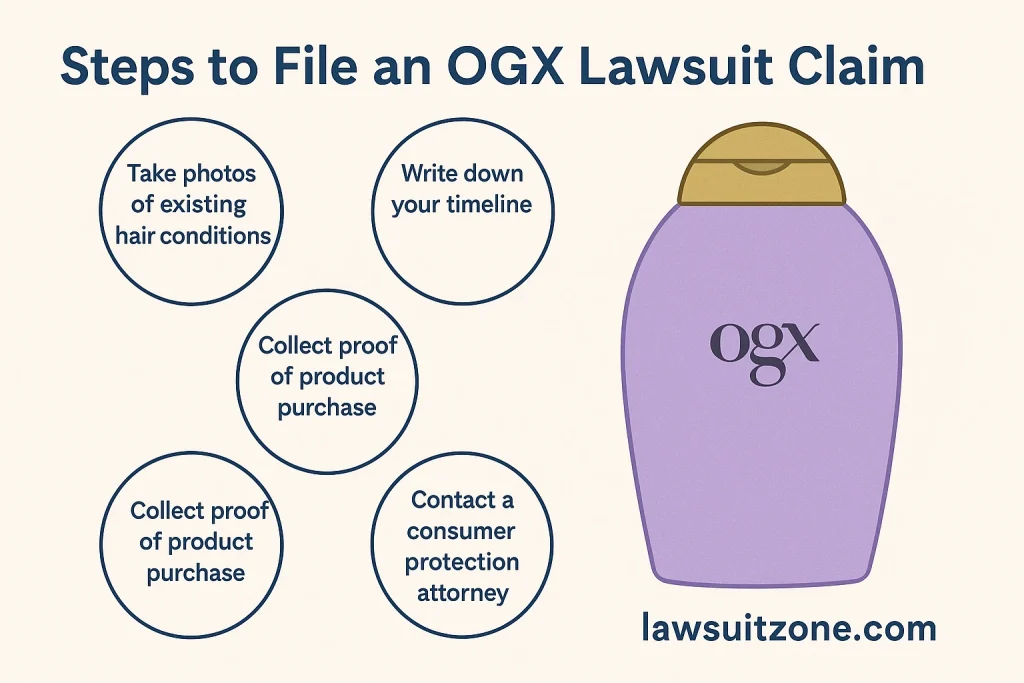
1. Take photos of existing hair conditions
Include different angles and lighting.
2. Collect proof of product purchase
Examples include:
- Amazon Order History
- Store receipts
- Credit card statements
- Photos of empty bottles
3. Write down your timeline
Include when you started using OGX, and when symptoms appeared.
4. Consult a dermatologist
They can rule out medical conditions unrelated to the product.
5. Contact a consumer protection attorney
Most have free consultations and charge no fees unless you win.
What This Lawsuit Means for the Beauty Industry
The OGX lawsuit is changing the beauty landscape:
1. Clean beauty is becoming the norm
Nowadays consumers read labels more carefully.
2. Companies are reformulating products
Brands fear backlash from outdated preservatives.
3. Pressure for clearer regulations
Lawmakers are considering stricter rules for:
- Preservatives
- Fragrance labeling
- Safety disclosures
4. Consumer awareness is growing
People are more informed than ever about what goes into their haircare.
5. Social media speeds up transparency
One viral video can trigger industry-wide reform.
Consumers looking for impartial, scientific information on cosmetic ingredients and safety will find helpful resources from the U.S. Food and Drug Administration, which periodically releases updates on cosmetic safety, research on ingredients, and regulatory recommendations that help safeguard users.
Frequently Asked Questions (FAQs)
Conclusion
The OGX lawsuit marks a critical moment in the history of consumer safety and accountability within the beauty industry. As this case continues to unravel, it demonstrates just how vital ingredient transparency and responsible marketing are. To consumers who had faith in OGX products and subsequently dealt with hair or scalp problems, the lawsuit provides a way toward some answers—and perhaps compensation.
Whether you are investigating your legal options or simply trying to understand what happened, being informed is the best step you can take. As 2025 continues, new developments may shape how companies formulate products and how consumers evaluate what they put on their bodies.