Nexium Lawsuit: Complete Guide to Claims, Evidence & Steps
If you’re looking up a nexium lawsuit, you’re likely trying to figure out whether a health problem especially after long-term Nexium use could be connected, and what people typically do next. Maybe you took Nexium for GERD for months or years, then later faced kidney issues, fractures, nutrient deficiencies, or infections and started asking, “Was I warned enough?” This guide breaks down the most common lawsuit allegations, what tends to make a claim stronger, how deadlines work, and how the legal process usually unfolds without complicated legal language. Have you checked our detailed guide on chemo port lawsuit.
What is Nexium and why is it so common?
Nexium (esomeprazole) belongs to a group of medications called proton pump inhibitors (PPIs). These drugs reduce stomach acid and are widely used for acid reflux, GERD, esophagitis, and other acid-related conditions.
For many people, Nexium is genuinely helpful. The lawsuit conversation usually isn’t about short-term use for a clear medical reason. It’s more often about:
- Long-term daily use
- Higher dosages
- Repeat refills over years
- Limited monitoring, especially when symptoms improved but the medication continued
Why People File a Nexium Lawsuit
A nexium lawsuit typically argues that a person suffered a serious injury after using Nexium and that the manufacturer did not do enough to warn the public about certain risks, especially with prolonged use.
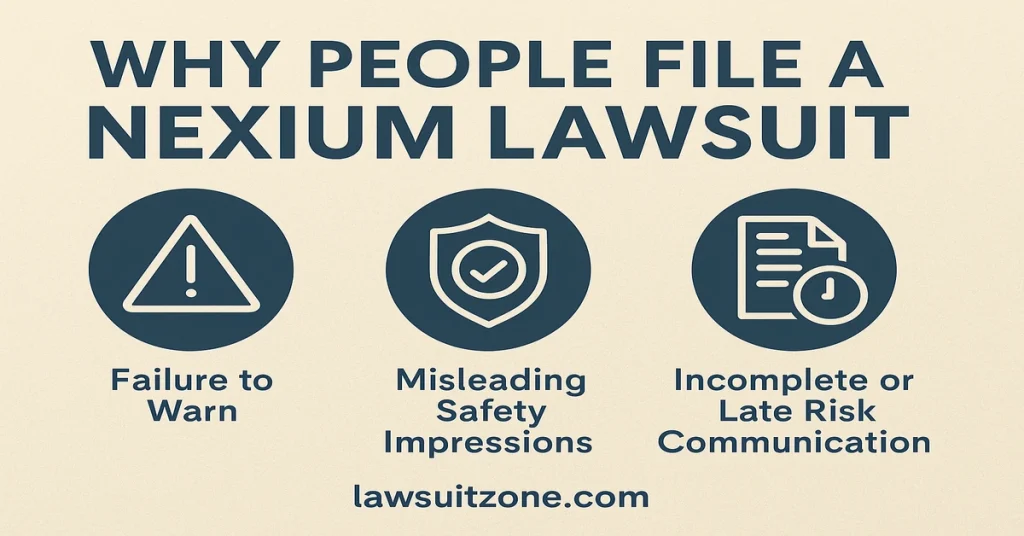
Most claims fit with a few legal “themes”:
Failure to Warn
The argument is that patients and/or doctors were not properly informed about risks connected to long-term use, so people couldn’t make a fully informed choice.
Misleading Safety Impressions
Some cases claim that messaging made extended use seem routine or low-risk, even though certain adverse outcomes were possible.
Incomplete or Late Risk Communication
Some lawsuits argue that emerging safety concerns should have been communicated earlier or more clearly.
Important reality check: being harmed after using a medication doesn’t automatically mean the company is legally responsible. Lawsuits usually require proof, timeline, and damages.
Nexium Lawsuit Injuries Most Commonly Alleged
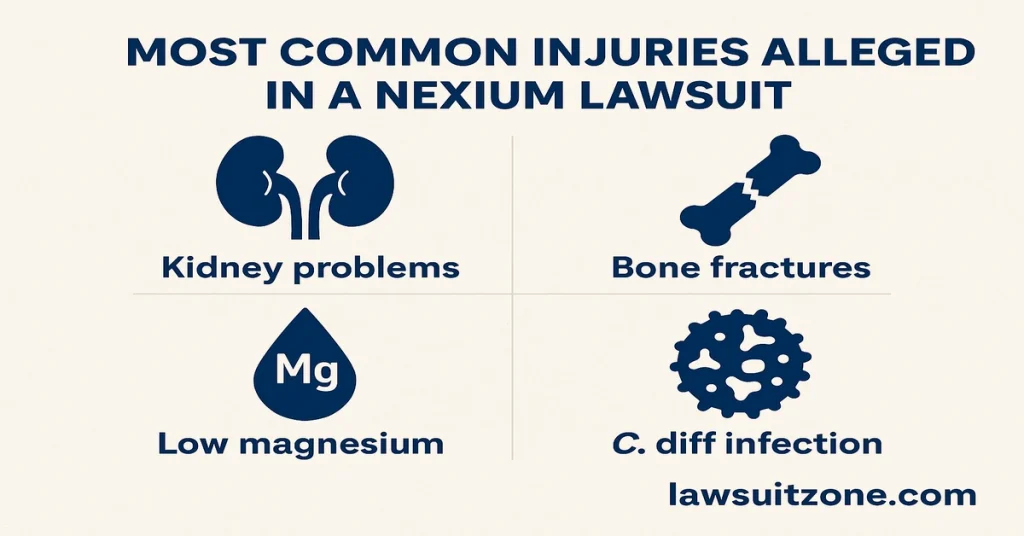
Different cases highlight different injuries. Below are the most frequently discussed issues, written in plain language.
1) Kidney Problems (AKI, CKD, Interstitial Nephritis)
Kidney allegations are common because kidney decline can be severe, expensive, and sometimes permanent.
How it shows up for many people is:
- Routine labs acutely deteriorate (creatinine/eGFR changes)
- Tiredness, swelling, blood pressure problems
- Nephrology referrals and long-term follow-up
- Where the condition is worse, it may warrant hospitalization.
Why these claims show up repeatedly:
Kidney harm can be documented through lab history and medical notes, which makes it easier to build a timeline.
2) Breakage and thinning of bones
Some claims involve fractures or osteoporosis-type concerns, especially in long-term users.
Examples people report:
- Hip fractures after a fall that “shouldn’t have been that bad”
- Compression fractures of the spine
- Wrist fractures
- Bone density scans indicating decline
Such injuries can considerably affect mobility, independence, and income.
3) Low Magnesium (Hypomagnesemia)
Low magnesium can be mild or serious. Serious low level of magnesium is dangerous.
Possible symptoms:
- Muscle cramps, tremors, weakness
- Heart rhythm symptoms
- Dizziness or confusion
Often, this shows up in labs during ER visits, hospital stays, or routine testing.
4) Vitamin B12 deficiency
Long-term acid reduction can affect nutrient absorption in some people.
Possible signs:
- Tingling or numbness
- Fatigue and mental fogginess
- Anemia findings on bloodwork
- Mood changes
B12 deficiency has multiple causes; therefore, medical workup matters.
5) Serious Infections (Commonly Cited: C. diff)
Stomach acid helps block certain pathogens. Some allegations focus on increased vulnerability to certain infections.
What is serious about these cases:
- Hospitalisation for severe diarrhea/dehydration
- Recurring infection episodes
- Complications either delaying work or requiring medical attention
6) Dementia / Cognitive Decline Claims – More Contested
This topic has been debated and is often harder to prove in court because cognitive decline can come from many causes and develops over time. Some people still pursue claims, but it tends to be more contested than kidney or fracture-related allegations.
Who Might Be Entitled to a Nexium Lawsuit?
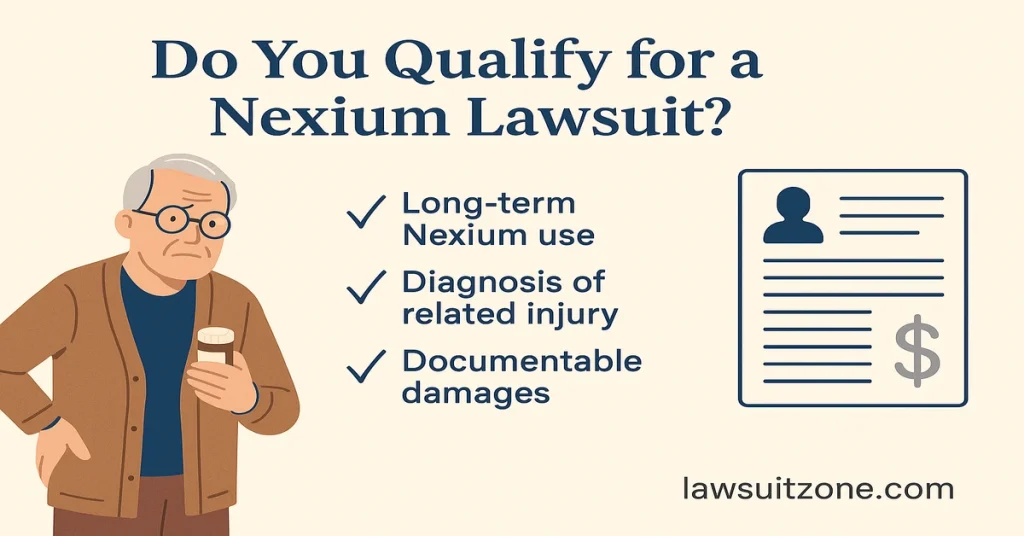
The law firms would generally seek evidence and a concurrent effect, for instance:
1) Proof of Nexium Use – How Long?
Useful documentation includes:
- Pharmacy refill history
- Doctor prescription records
- Insurance medication statements
- Medical chart medication lists over time
2) A Diagnosed Condition That Matches Common Allegations
Examples:
- Renal diagnosis based on laboratory trends and specialists’ notes
- Fracture records, surgical notes, rehabilitation records
- Lab-confirmed magnesium or B12 deficiency with symptoms
- Hospital records regarding severe infection
3) Documentable Damages
Common damages include:
- Medical expenses – past and future
- Time off work or reduced ability to work
- Pain, suffering, and daily limitations
- Long-term monitoring and medication costs
Evidence That Strengthens a Nexium Lawsuit
A nexium lawsuit is often won or lost on documentation. Here’s what typically matters most.
Core Proof: Medical Records
- Assessment notes including renal failure, fractures, infection, deficiencies
- Lab history, especially trends over months/years
- Imaging reports – fractures, scans, bone density tests
- Hospital admissions and discharge summaries
- Specialist visits: nephrology, endocrinology, gastroenterology
Medication Records (Proves Exposure)
- Pharmacy printout of start date and refill timeline
- Dose changes
- Notes long-term continuation
Personal Records (Supports Damages)
- Symptom timeline (Simple, dated)
- Work leave documents
- Receipts and out-of-pocket expenses
- Notes regarding lifestyle impact: dietary restrictions, resultant fatigue, loss of mobility
Tip: Courts and insurers love timelines. A one-page timeline can be more useful than five pages of storytelling.
Deadlines: Statute of Limitations – Why People Miss Their Chance
Every state/country has deadlines for filing. Depending on where you live, the “clock” might start:
- when the injury occurred or
- when you learned, or ought to have learned, of a relationship
If you suspect a link, gathering records early protects your options even if you never file.
For a high-authority, consumer-friendly overview of medication risks and safety updates, you can read:
U.S. FDA — Drug Safety Communications.
What the Legal Process Usually Looks Like (Real-World Version)
Here’s what usually takes place when someone calls a lawyer about a Nexium lawsuit:
Step 1: Review Intake
You’ll probably be asked:
- When did you start the Nexium?
- How long did you use it, and at what dose?
- When were you diagnosed?
- What doctor/hospital treated you?
- What records do you have?
Step 2: Data Collection and Case Screening
The legal team verifies:
- whether the timeline “makes sense”
- whether the injury has been documented
- whether there are competing causes (other meds, conditions, age factors)
Step 3: Filing the Claim
Depending on strategy and the case landscape, it can be submitted:
- as an individual case, or
- in coordinated litigation vary depending on time and jurisdiction
Step 4: Expert Review
Most medication cases require expert support to identify:
- Medical causation: plausible link
- Warning adequacy
- Alternative explanations
Step 5: Resolution
Possible results:
- settlement negotiations
- Dismissal if evidence is weak
- trial in certain cases
What Compensation May Include
After a successful claim, compensation may cover:
Economic Damages
- hospital bills and specialist care
- Continuous Testing & Monitoring
- rehabilitation or physical therapy subsequent to fractures
- medications and follow-up treatment
- lost wages and reduced future earnings
Non-economic Damages
- pain and suffering
- emotional distress
- reduced quality of life
Other Damages (Case-Dependent)
- punitive damages may apply in rare, fact-specific situations
What to Do If You’re Concerned Right Now
If you’re worried about side effects, focus on health first.
Practical Steps
- DO NOT suddenly stop taking prescription Nexium without first talking with your doctor.
- Ask your doctor about:
- Kidney labs (creatinine/eGFR)
- Magnesium and B12 testing, if symptoms fit
- Bone density screening (if risk is high)
- Request your pharmacy refill history.
- Clearly outline the timeline: start of Nexium, onset of symptoms, diagnosis.
- If you’re considering a claim, speak with a qualified attorney.
Common Myths People Believe
“Everyone who used Nexium can sue.”
Not true. Claims typically involve a significant documented injury with associated damages.
“If it was prescribed, there’s no case.”
Not necessarily. Many claims focus on warnings and risk communication.
“If my condition has other causes, then I’m disqualified.”
Not always. The question becomes whether Nexium was a meaningful contributing factor and whether warnings were adequate.
FAQs About a Nexium Lawsuit
Final Thoughts
A nexium lawsuit is usually considered when someone believes long-term Nexium use contributed to a serious condition—often kidney problems, fractures, severe deficiencies, or infections—along with real financial and life impact. The strongest cases typically combine documented long-term use, clear diagnosis proof, and measurable damages. If you’re unsure, start with records and medical guidance, then explore legal options if you choose.
Disclaimer: This article is informational and is not medical or legal advice.