Navigating Legal Challenges: Expert Representation in Civil and Injury Cases
Understanding Your Options for Legal Representation
When facing a legal issue, understanding the different avenues for securing assistance is the first critical step. The landscape of legal representation is diverse, ranging from private attorneys offering specialized services to non-profit organizations dedicated to helping those in need. Each option comes with its own structure, benefits, and eligibility criteria.
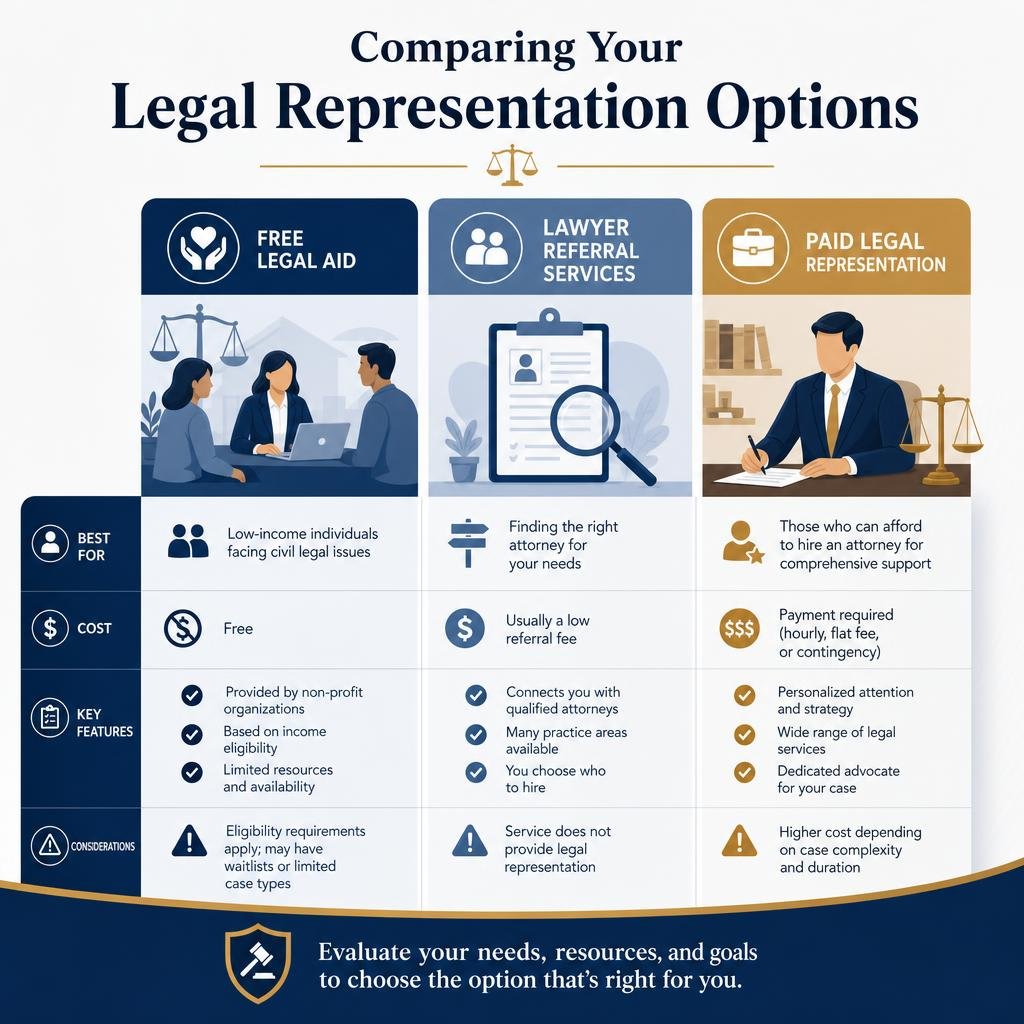
To help clarify these distinctions, we’ve outlined the primary types of legal representation available, allowing you to better assess which path aligns with your specific situation and needs.
The Role of Private Legal Representation
Private legal representation involves hiring an attorney or law firm directly. This is often the path chosen when individuals or businesses have the financial means to retain counsel for a wide array of legal matters, from complex litigation to transactional work. Private attorneys typically offer personalized legal services, dedicating their expertise and resources to your specific case. They can provide comprehensive support, including legal advice, document preparation, negotiation, and representation in court.
The cost structure for private representation can vary. Many attorneys charge hourly fees, which can accumulate quickly depending on the complexity and duration of the case. However, for certain types of cases, particularly personal injury claims, attorneys often work on a contingency fee basis. This means their payment is a percentage of the final settlement or award, and if you don’t win, you don’t pay attorney fees. This model makes legal representation accessible for individuals who might not otherwise afford it, especially in situations requiring Aggressive legal representation to secure fair compensation. For instance, if you’ve been seriously injured due to someone else’s negligence, a dedicated legal team can tirelessly advocate on your behalf to maximize your recovery.
Non-Profit Civil Legal Aid Organizations
For individuals and families with limited financial resources, non-profit civil legal aid organizations are a vital lifeline. These organizations are dedicated to ensuring equal justice under the law, providing free or low-cost legal services for civil matters. Many of these crucial services are supported by entities like the Legal Services Corporation (LSC), an independent non-profit established by Congress in 1974. LSC funds 130 independent non-profit legal aid organizations across every state, the District of Columbia, and U.S. Territories.
These organizations focus on civil rights and basic necessities, addressing issues that profoundly impact people’s lives, such as housing, family law, consumer rights, and public benefits. Their mission is to bridge the “justice gap” by providing representation to those who cannot afford private attorneys, upholding the principle that justice should be a right, not a privilege.
Lawyer Referral Services and Bar Associations
When you need legal assistance but aren’t sure where to start, lawyer referral services and bar associations can be invaluable resources. State and local bar associations often operate referral services designed to connect individuals with qualified attorneys. These services typically maintain extensive networks of lawyers who practice in various legal fields.
The process usually involves a brief intake where you describe your legal issue. Based on this information, the service will provide you with contact information for attorneys who handle cases like yours. These attorneys are often vetted for their experience and good standing with the bar association. While these services don’t provide free legal aid directly, they can help you find an attorney who offers a free initial consultation or charges reduced fees. They act as a trusted intermediary, streamlining the search for appropriate legal counsel and helping you navigate local directories of legal professionals.
Navigating the Civil Legal Aid System
The civil legal aid system is designed to provide essential legal services to those who cannot afford them. However, accessing these services involves understanding specific eligibility criteria, the types of cases covered, and the application process. We’ll guide you through these aspects to help you navigate this vital system effectively.
Eligibility Requirements for Free and Low-Cost Services
Eligibility for free or low-cost legal services from civil legal aid organizations is primarily determined by income and asset limits. These organizations typically serve individuals and families whose income falls below a certain percentage of the federal poverty guidelines, often 125% or 200%. For instance, in regions like North Carolina, where approximately 25% of the population struggles to make ends meet, the demand for these services is consistently high. Asset limits may also apply, meaning that even if your income is low, significant assets (like property or savings) could impact your eligibility.
Beyond financial criteria, there are often geographic service areas, meaning you must reside within the organization’s designated region to receive help. Some organizations also prioritize certain types of cases or populations. We encourage prospective clients to inquire about all eligibility requirements upfront to avoid delays.
Civil Issues Covered by Legal Aid
Civil legal aid organizations focus on issues that affect people’s basic needs and safety. While the specific types of cases covered can vary by organization and region, common areas include:
- Housing: Eviction defense, landlord-tenant disputes, unsafe living conditions, public housing issues.
- Family Law: Domestic violence protection orders, child custody, divorce (in limited circumstances), and support for survivors of abuse.
- Consumer Rights: Debt collection defense, predatory lending, and consumer fraud.
- Public Benefits: Appeals related to Social Security, Medicaid, SNAP (food assistance), and unemployment benefits.
- Employment: Wage disputes, workplace discrimination, and ensuring fair treatment for workers.
For example, Colorado Legal Services, a non-profit providing free civil legal services across every county in Colorado, closed 8,418 cases in 2025, impacting 16,464 people. Their work covers a broad spectrum of civil matters, demonstrating the critical role legal aid plays in protecting vulnerable populations.
What to Expect During the Intake and Application Process
Applying for legal aid typically begins with an intake process, which can be conducted online, over the phone, or in person. During this phase, you’ll be asked a series of screening questions to determine initial eligibility and assess the nature of your legal problem. This usually involves:
- Financial Disclosure: Providing detailed information about your income, assets, and household size.
- Case Description: Explaining your legal issue, including relevant dates, parties involved, and any actions already taken.
- Merit Assessment: The organization will evaluate the legal merit of your case and whether it falls within their scope of services.
It’s important to be prepared for potential wait times, as demand for legal aid often exceeds available resources. Be patient and provide accurate, complete information to facilitate the process. Many organizations also host legal clinics, offering brief advice or assistance with specific tasks, which can be a quicker way to get initial guidance.
Specialized Legal Resources for Vulnerable Populations
Certain populations face unique legal challenges and often require specialized support tailored to their specific circumstances. Fortunately, a range of resources exists to provide targeted assistance, ensuring that vulnerable groups receive the advocacy they need.
These resources often involve tailored strategies and dedicated advocates who understand the nuances of their clients’ situations.
Support for Seniors and Veterans
Seniors and veterans are two groups that frequently benefit from specialized legal assistance. For seniors, legal aid often focuses on issues such as elder abuse prevention, healthcare access (Medicaid/Medicare appeals), estate planning (wills, powers of attorney), and protection against financial scams. Many organizations offer age-based eligibility criteria or specific pro bono programs dedicated to providing free legal advice and representation to individuals aged 60 and over.
Veterans, having served our country, are entitled to specific benefits and protections. Legal resources for veterans often address VA benefits appeals, discharge upgrades, housing issues, and consumer rights. Organizations specializing in veterans’ law provide crucial support in navigating the complex bureaucratic processes involved in securing the benefits they have earned.
Resources for Domestic Violence Survivors and Immigrants
Survivors of domestic violence often require immediate and sensitive legal intervention. Legal aid for this population typically includes obtaining civil protection orders, assistance with child custody and support issues, and help with housing stability. These services are often trauma-informed, recognizing the unique needs and vulnerabilities of survivors. The impact is significant; for example, nearly 40% of Colorado Legal Services clients in 2025 were survivors of domestic violence, underscoring the critical role legal aid plays in ensuring safety and stability.
Immigrants also face distinct legal hurdles, including navigating complex visa processes, asylum claims, deportation defense, and issues related to family-based immigration. Specialized legal services for immigrants provide assistance with various visa types, including victim-based visas (such as U and T visas), and help with naturalization applications. These organizations often offer bilingual representation and have a deep understanding of immigration law to advocate effectively for their clients.
Alternatives to Full Legal Representation
While full legal representation offers comprehensive support, it’s not always feasible or necessary for every legal issue. Fortunately, several alternatives can provide valuable assistance, offering more flexible and often more affordable options for individuals navigating the legal system. These include limited-scope assistance, unbundled legal services, and various self-help resources.
Limited-Scope Representation and Unbundled Legal Services
Limited-scope representation, also known as unbundled legal services, allows you to hire an attorney for specific, discrete tasks rather than for your entire case. This can be a cost-saving strategy, as you only pay for the services you need. Examples of unbundled services include:
- Document Drafting: An attorney can prepare or review legal documents, such as pleadings, motions, or agreements.
- Legal Advice: You might hire an attorney for advice on specific legal questions or to strategize for a particular phase of your case.
- Courtroom Appearances: An attorney might represent you for a single hearing or a specific part of a trial, while you handle other aspects of the case yourself.
This model empowers individuals to manage parts of their legal matter while still benefiting from professional legal expertise where it’s most crucial. It’s an excellent option for those who need professional guidance but have limited budgets.
Self-Help Resources and Public Law Libraries
For individuals who choose to represent themselves (pro se litigants), a wealth of self-help resources is available. Public law libraries are invaluable, offering access to legal texts, statutes, case law, and sometimes even computers with legal research databases. Librarians can guide you to resources, though they cannot provide legal advice.
Online platforms also offer extensive support. Websites like LawHelp.org provide information about various legal questions, free legal forms, and directories of legal aid organizations. These resources can help you understand legal procedures, draft basic documents, and prepare for court appearances. While self-representation requires significant time and effort to learn procedural rules and evidentiary standards, these tools make the process more accessible.
Preparing for Your Consultation and Maximizing Case Outcomes
A well-prepared initial consultation can significantly impact the trajectory of your legal matter. It allows your attorney to quickly grasp the specifics of your case, assess its strengths and weaknesses, and develop an effective strategy. Maximizing case outcomes often hinges on thorough preparation and leveraging the strategic advantages that experienced legal representation brings.
How to Prepare for Your First Meeting with an Attorney
To make the most of your first consultation, gather and organize all relevant information and documents. This proactive approach not only saves time but also provides your attorney with a comprehensive understanding of your situation. Key items to prepare include:
- Timeline of Events: A chronological summary of what happened, including dates, locations, and key individuals involved.
- Witness Lists: Names and contact information for anyone who has relevant information about your case.
- Financial Documents: Any financial records pertinent to your case, such as income statements, bills, contracts, or bank statements.
- Correspondence: Copies of emails, letters, or other communications related to the legal issue.
- Questions: Prepare a list of questions you have for the attorney regarding their experience, fees, the legal process, and potential outcomes.
Clearly communicate your goals and expectations, and be open about all facts, even those that might seem unfavorable. This transparency allows your attorney to provide the most accurate advice and formulate a robust strategy.
Strategic Advantages of Experienced Legal Representation
Hiring an experienced attorney offers significant strategic advantages that can profoundly influence the outcome of your case. These professionals bring not only legal knowledge but also a deep understanding of courtroom procedures, negotiation tactics, and the nuances of the legal system.
- Courtroom Experience: An attorney with extensive courtroom experience understands how to present a case effectively, cross-examine witnesses, and navigate complex evidentiary rules. This trial-tested advocacy is invaluable, especially in high-stakes litigation.
- Settlement Maximization: Skilled attorneys are adept at negotiation, often securing better settlements than individuals could achieve on their own. They understand the true value of your claim and can push for fair compensation. For instance, in personal injury cases, a Former prosecutor Lyft accident settlement demonstrates how specialized legal insight, particularly from someone familiar with both sides of the courtroom, can lead to favorable resolutions for clients. Their unique perspective can be crucial in anticipating opposing arguments and building a stronger case.
- Legal Expertise: Attorneys specialize in different areas of law, ensuring that your case is handled by someone with specific expertise in your type of legal issue. This specialized knowledge is critical for navigating complex statutes and precedents.
Frequently Asked Questions about Legal Representation
Navigating the legal system often comes with many questions. Here, we address some of the most common inquiries about legal representation to provide clarity and guidance.
What is the difference between civil and criminal legal representation?
The fundamental difference lies in the nature of the case and the parties involved.
- Criminal Legal Representation: This involves cases where an individual is accused of breaking a law and faces potential penalties such as fines, imprisonment, or probation. The government (state or federal) is always the prosecutor. In criminal cases, defendants have a constitutional right to counsel, and if they cannot afford an attorney, a public defender will be appointed.
- Civil Legal Representation: This involves disputes between individuals, organizations, or both, where no criminal law has been broken. These cases typically seek to resolve disagreements, enforce rights, or recover financial liabilities (damages). Examples include personal injury claims, contract disputes, divorce, and property disputes. There is generally no constitutional right to a free attorney in civil cases, which is why organizations like LSC-funded legal aid are so crucial for low-income individuals.
How can I find a reputable legal aid organization or private attorney in my state?
Finding the right legal professional involves utilizing several reliable resources:
- LSC Search Tools: For civil legal aid, the Legal Services Corporation website offers a search tool where you can enter an address or city to find an LSC-funded legal aid organization near you.
- State Bar Directories: Most state bar associations maintain online directories of licensed attorneys, often allowing you to search by practice area and location. These directories are a good starting point for finding private counsel.
- Local Legal Clinics: Many law schools and community centers host legal clinics that offer free or low-cost advice, often staffed by law students under attorney supervision.
- Lawyer Referral Services: As mentioned earlier, state and local bar associations often operate referral services that can connect you with appropriate attorneys.
- Online Legal Platforms: Websites like LawHelp.org not only provide information but also list legal aid resources across the country.
When selecting an attorney, consider their experience in your specific legal area, their communication style, and their fee structure.
Can I represent myself in a civil or personal injury lawsuit?
Yes, you have the right to represent yourself in most civil and personal injury lawsuits. This is known as proceeding “pro se.” However, it is generally not recommended due to the complexities of the legal system. As statistics show, approximately 3 out of 4 civil cases have one side not represented by an attorney, often putting self-represented individuals at a significant disadvantage.
The legal process involves intricate procedural rules, strict deadlines, and specific evidentiary standards that can be challenging for non-lawyers to navigate. An attorney brings expertise in these areas, ensuring that your rights are protected and your case is presented effectively. While self-representation can save on legal fees, the potential for unfavorable outcomes due to lack of legal knowledge often outweighs the cost savings. For critical matters, securing legal representation is a wise investment.
Conclusion
Navigating the complexities of the legal system can be a formidable task, but you don’t have to face it alone. Understanding the diverse options for legal representation—from dedicated non-profit civil legal aid organizations to specialized private attorneys—is the first step toward securing justice. Whether you require free assistance for basic civil needs, seek a referral for a specific legal issue, or need comprehensive private counsel for a significant injury claim, resources are available.
By preparing thoroughly for consultations, understanding eligibility requirements, and leveraging available alternatives like limited-scope services or self-help resources, individuals can empower themselves to make informed decisions. Our collective commitment to access to justice ensures that everyone, regardless of their financial situation, has the opportunity for legal empowerment and a fair hearing. With the right legal representation, you can confidently navigate your legal challenges and work towards the best possible outcome.