Massage Envy Lawsuit: Legal Accountability and Victim Rights
Introduction
The massage envy lawsuit has appeared as a significant legal matter following reports from several clients who experienced sexual assault, lack of boundaries, and incidents of sexual harassment that occurred during massage sessions at Massage Envy franchises in the United States. It is particularly disturbing that several of these alleged victims have reported that their incidents were ignored, downplayed, or settled within the establishment, before involving law enforcement.
For the survivors, the massage envy lawsuit is more than seeking compensation. It is a call to accountability from a very influential wellness brand that customers felt safe with when they were at their most vulnerable physically. This article provides a simple, easy-to-understand explanation of what a lawsuit is, who might be liable, and what a plaintiff might do. Have you checked our detailed guide on human trafficking lawsuit.
How Massage Envy Lawsuits Differ from Other Assault Claims
Rape claims involving massage therapy businesses are a distinct category. The clients are naked, alone, and vulnerable in a position of trust with trained practitioners. The litigation contends a stronger duty of care is exhibited because of this inherent vulnerability.
In massage envy lawsuit claims, the plaintiff typically asserts that they complied with all the processes, trusted the brand, but were nevertheless harmed because, as a result of the environment being advertised as a safe, professional, and therapeutic space, that is exactly what they received.
Background: Operation of Massage Envy
Massage Envy runs on a franchise system that spans the entire country. The franchises are separately owned but still operate with the same brand identity, membership, and operating standards offered by the parent company.
In most of the massage envy lawsuit filings, it is alleged that:
- Corporate policies affect recruitment and handling of complaints
- Safety procedures are uniform across franchises
- Customers depend on the brand rather than individual proprietors
This has become a fundamental element in identifying responsibility.
Claims in Lawsuits Filed Against Massage Envy
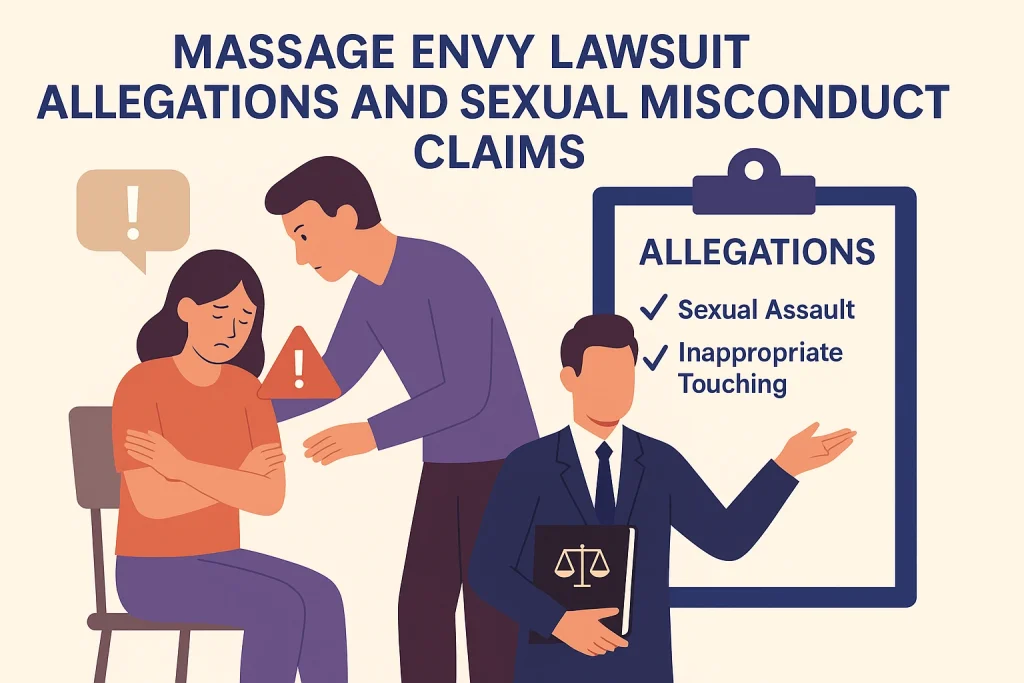
Even though every situation is distinct, some common patterns exist that appear in a number of claims brought against Massage Envy:
- Rape during massage therapy sessions
- Inappropriate sexual touching
- Therapists disregarding verbal or nonverbal cues
- Ignored previous grievances against therapists
- Inability to meaningfully probe complaints
- Failure to notify law enforcement
- Allowing accused therapists to quietly leave or transfer
Victims reported that incidents of impropriety were described as “misunderstandings” rather than being taken seriously.
Patterns Reported by Survivors
A notable thing about the massage envy lawsuit trend is that similar incidents keep cropping up in different parts of the country, involving different states.
Massage Envy victims describe:
- Being discouraged from contacting the police
- Being told the incident was isolated
- Being offered free services instead of accountability
- Later learning that other grievances already existed
Such incidents have led to accusations of systemic neglect rather than isolated mistakes.
Legal Bases for Lawsuits Against Massage Envy
Negligence
Argues that Massage Envy failed to exercise reasonable care in safeguarding clients from potential dangers.
Negligent Hiring and Supervision
Claims that therapists were inadequately screened, supervised, or disciplined.
Failure to Act on Complaints
Lawsuits argue that prior warnings should have prompted immediate action.
Premises Liability
Massage Envy franchises are accused of failing to provide a safe environment.
Emotional Distress
Claims seek compensation for psychological trauma, anxiety, and emotional suffering.
Can a Franchise Brand Be Held Responsible?
In all cases involving massage envy, the question of whether the parent franchise is liable for incidents that occur at franchise sites is a major legal issue.
Courts assess:
- Corporate control over training and policy
- Complaint reporting requirements
- Brand-building that fosters consumer trust
- Centralized membership systems
If a financially benefiting entity exerts sufficient control, lawsuits may proceed against both the franchise owner and the parent brand.
Who May Qualify to File a Lawsuit Against Massage Envy?
You may be eligible for a massage envy lawsuit if:
- You were sexually assaulted or subjected to inappropriate touching
- The incident occurred during a Massage Envy treatment
- You suffered emotional, mental, or physical harm
- The therapist was employed at a Massage Envy location
Eligibility does not depend on whether criminal charges were filed.
Emotional Effects on Victims
Massage-related sexual assault can cause lasting harm. Victims may experience:
- Panic attacks and anxiety
- Post-traumatic stress disorder (PTSD)
- Difficulty with physical touch
- Loss of trust in healthcare providers
- Depression and sleep disorders
Civil lawsuits allow survivors to seek justice without reliving trauma through criminal trials.
Compensation in Lawsuits Against Massage Envy
Compensation in a massage envy lawsuit may include:
- Therapy and counseling fees
- Healthcare costs
- Pain and suffering
- Emotional distress damages
- Lost income
- Punitive damages in cases of severe negligence
Cases involving ignored complaints or repeat offenders often result in higher settlements.
Individual Claims vs Class Action Lawsuits
Individual Lawsuits
- Focus on a single survivor’s experience
- Greater control over the case
- Higher compensation potential
Group or Coordinated Claims
- Multiple victims with similar claims
- Shared evidence
- Efficient handling of systemic problems
Most massage envy lawsuits are filed individually due to the personal nature of harm.
Time Limits to File a Massage Envy Lawsuit
Each state has different statutes of limitations for sexual assault and personal injury cases. Some states allow:
- Extended filing periods
- Delayed discovery rules
- Special protections for sexual assault survivors
Because deadlines vary, consulting an attorney promptly is essential.
What Victims Should Do Next
If you believe you have a massage envy lawsuit:
- Seek medical and emotional support
- Write down details while memories are fresh
- Preserve appointment records and communications
- Do not sign settlements without legal advice
- Contact an attorney experienced in sexual assault cases
Physical evidence is not required to pursue a civil lawsuit.
Support Resources for Survivors
Legal action is only part of healing. Survivors may seek confidential help from RAINN (Rape, Abuse & Incest National Network), which provides resources, education, and support.
RAINN is widely cited in sexual assault advocacy and litigation.
Why Massage Envy Lawsuits Matter to the Public
Massage envy lawsuits serve to:
- Expose unsafe practices
- Encourage stronger safety controls
- Empower survivors to come forward
- Prevent future abuse
- Reinforce corporate accountability
These cases aim to change systems, not just resolve individual claims.
Frequently Asked Questions
Conclusion
The massage envy lawsuit represents a powerful effort by survivors to reclaim their voices and hold a trusted brand accountable. These lawsuits highlight the duty businesses have to protect clients during vulnerable moments. If you or a loved one experienced misconduct at a Massage Envy location, legal options may still exist. Understanding your rights is the first step toward justice.