Complete Guide to the Justin Baldoni Lawsuit in 2025
Introduction
The highly publicized Justin Baldoni lawsuit has raised multiple conversations in and out of Hollywood. With his charisma, empathetic nature, and progressive storytelling, Justin Baldoni has managed to be both a leading man and a creative visionary. News that he was embroiled in a lawsuit covering allegations of workplace misconduct and defamation claims sent shockwaves to his fans and industry onlookers alike.
The following is an in-depth guide that breaks down everything about the case: how it originated, the legal complexities behind it, what it means to actors, producers, and entertainment companies alike, and how it reflects the shifting tides of the balance between creativity, accountability, and reputation in today’s media. Have ou checked our detailed guide on candace owens lawsuit.
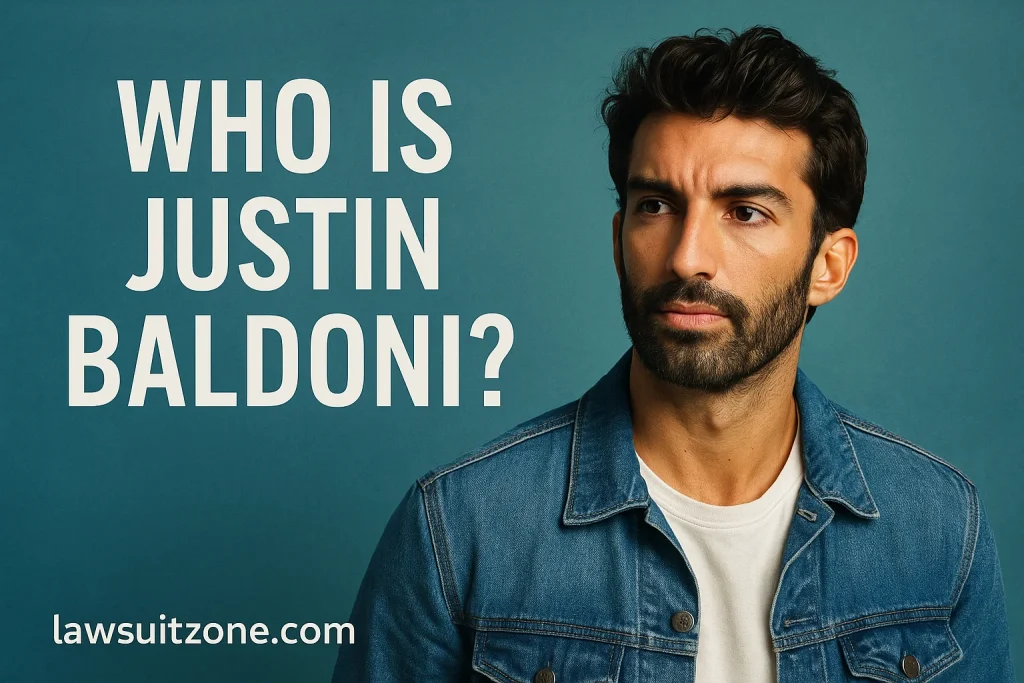
Who Is Justin Baldoni?
First, it is necessary to know who Justin Baldoni is and how he became central to the controversy before diving into details about the lawsuit.
Justin Baldoni rose to fame through his role as Rafael Solano in the hit series Jane the Virgin. Beyond acting, he transitioned into directing and producing, creating films that emphasize vulnerability, personal growth, and social awareness — such as Five Feet Apart and Clouds.
He’s also known for a TED Talk in which he speaks on redefining masculinity and for creating the digital series Man Enough, a platform encouraging emotional honesty and gender equality. In a nutshell, Baldoni was appreciated as a Hollywood figure trying to change narratives — until his name came up in a legal dispute that called into question that very image.
The Origins of the Justin Baldoni Lawsuit
The Justin Baldoni lawsuit did not happen overnight; it was the result of growing tension, conflicting statements, and court filings that showed deeper fissures within a major film production.
According to the court documents, as well as statements from both sides, the issue started when a series of internal complaints arose during the shooting of one of Baldoni’s projects. The claims included workplace friction, power imbalances, and disagreements on professional conduct.
In response, Baldoni’s legal team filed a lawsuit alleging defamation, emotional distress, and intentional interference with business relationships. The countersuits, however, alleged harassment, mismanagement, and misconduct.
Thus began a legal game of chess that blurred lines among truth, perception, and public narrative an increasingly common dynamic in the age of social media and celebrity culture.
Why This Lawsuit Captured Public Attention
The reason the Justin Baldoni lawsuit gained traction wasn’t only because of who was involved, but because of what it represented.
Over the past few years, Hollywood has been undergoing a cultural shift in the wake of movements like #MeToo and #TimesUp. There is more scrutiny of power structures, gender politics, and accountability than ever.
Baldoni, an actor who had built his career on emotional openness and moral leadership, became an unlikely focal point in the conversation about integrity and image in the entertainment world.
His dual identity — as both advocate and accused — made the lawsuit uniquely compelling. It forced audiences to confront how even public figures who champion empathy and equity can find themselves facing serious allegations and public backlash.
Timeline of Events
Let’s chronologically see how the unfolding of the Justin Baldoni lawsuit went:
- Late 2024: Concerns over workplace dynamics and leadership decisions arise during production.
- Early 2025: Legal teams for various parties start to file complaints and counterclaims. Baldoni’s team files a lawsuit for defamation, claiming that there were false and injurious statements about his behavior.
- Mid-2025: The case lands in federal court. Judges consider whether the allegedly defamatory statements were shielded by legal privileges, including the right to file internal complaints.
- Late 2025: The court dismisses several of Baldoni’s claims based on statutory protections but allows others to go forward. Both sides issue public statements, underscoring their commitments to transparency and fairness in these proceedings.
- Ongoing: The case is ongoing through arbitration and settlement discussions, and final results are expected to remain private.
This progression shows how quickly disputes can escalate in industries where reputation is currency and perception can turn on a dime.
Key Legal Issues in the Justin Baldoni Lawsuit
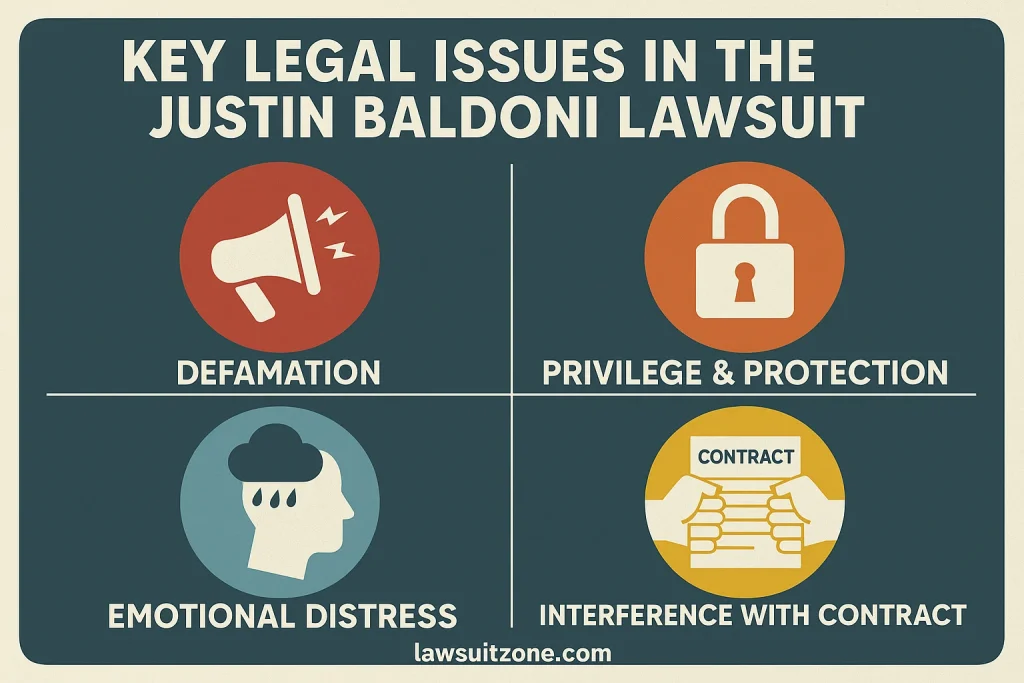
Several major legal questions emerged throughout the case, many of which highlight broader challenges in workplace and media law.
1. Defamation
Central to the Justin Baldoni lawsuit was a claim of defamation: the spreading of false information with the intent to harm Baldoni’s reputation. The onus was on his team, first, to prove that the statements were not only false but were made maliciously to cause measurable damage.
2. Privilege and Protection
The defense maintained that their statements were protected under workplace reporting and whistleblower laws. This protection “qualified privilege” allows people to raise complaints about misconduct without facing retaliation, so long as the statements are made in good faith.
3. Emotional Distress
The representatives of Baldoni said that the accusations brought severe emotional and professional damage, mentioning lost opportunities and psychological consequences. This raised a very serious question about reputation, especially in Hollywood, directly translating into career viability.
4. Interference with Contract and Business
Other filings questioned whether the external communications had deliberately interfered with existing contracts, production schedules, or professional collaborations. In an industry based on trust, such claims can have huge financial implications.
5. Public Narrative vs. Legal Reality
Perhaps the most complex task was to differentiate public perception from legal fact. In the digital age, media coverage can affect jury pools, corporate decisions, and personal relationships long before a judge rules on a case.
The Public’s Reaction
Public reaction to the lawsuit filed by Justin Baldoni was sharply divided.
Supporters argued that Baldoni has long advocated for compassion and equality, and he deserved due process in both court and media. To others, the lawsuit represented exactly how power imbalances persist, regardless of personal branding or good intentions.
Every plot twist echoed on social media, as hashtags and comments framed perceptions faster than any trial could straighten out the facts. Within days, the story trending on most platforms was an encapsulation of how modern-day reputation is tried as much in the court of public opinion as in actual courtrooms.
What the Court Decided (So Far)
The case remains partially unresolved, but a federal judge dismissed several of Baldoni’s defamation claims on the ground that some of the statements in question were legally privileged. In so doing, he emphasized just how hard it is for public figures to win defamation suits when workplace complaints are at issue.
The court did, however, not dismiss all parts of the case. Claims of contractual interference and emotional damages remain under review, thus leaving the door open for future rulings or settlements.
The broader takeaway? Legal systems weigh free speech, worker protection, and reputation differently depending on the context and celebrity cases rarely end with clear winners.
What This Means for Hollywood
Already, the Justin Baldoni lawsuit has become a teaching moment for the entertainment industry on how producers, actors, and studios must:
- Create transparent workplace policies that protect both employees and executives.
- Separate PR from legal strategy to make sure media statements do not weaken official defenses.
- Acknowledge liability yet protect against fraudulent or inflated claims.
- Understand how digital narratives can complicate court cases and shape settlements.
In an age where one viral headline can make or break careers, the world of entertainment is reassessing the way it handles both internal conflicts and external crises.
Lessons for Creators, Leaders, and Businesses
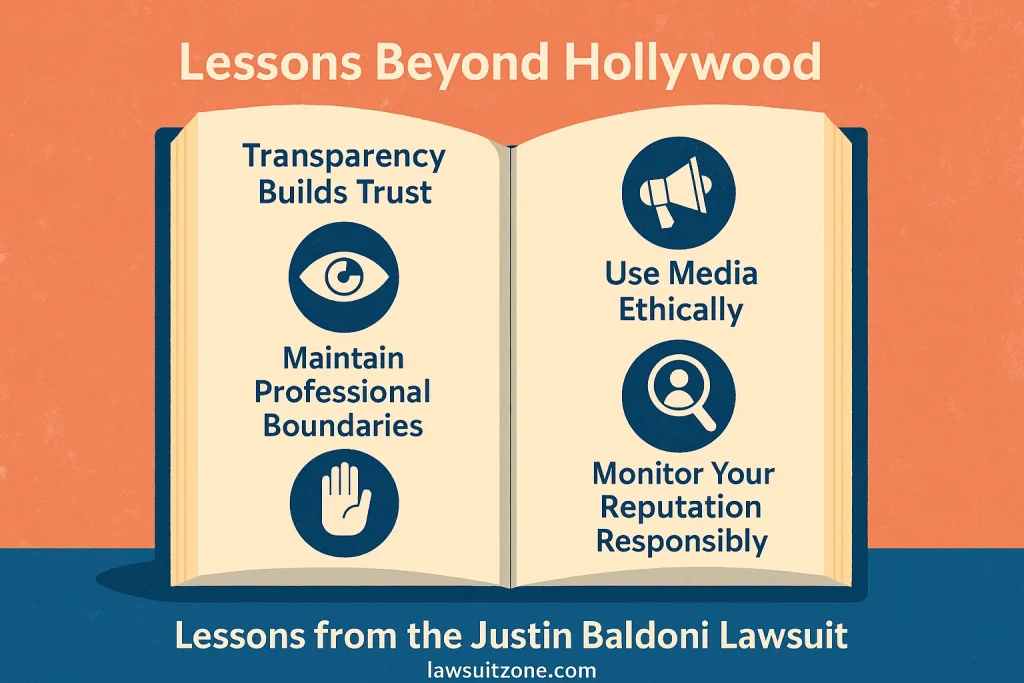
The Justin Baldoni lawsuit carries lessons beyond Hollywood applicable to anyone in leadership or creative roles.
1. Transparency Builds Trust
Open communication is key. Many disputes escalate simply because people feel their concerns are not being heard or that they are misrepresented. Clear documentation and empathy go a long way.
2. Maintain Professional Boundaries
Even in friendly and creative contexts, professional lines need to be set. Blurring personal and professional boundaries can generate confusion and risk.
3. Be Proactive About Compliance
Workplaces that include training, diversity programs, and clear anti-harassment policies are not just checking legal boxes but rather investing in stability and morale.
4. Monitor Your Reputation Responsibly
The public figure should be cognizant that often, reactions to accusations carry more weight than the accusation itself. A calm, factual approach with respect wins credibility.
5. Use Media Ethically
When there is negative press, avoid the urge to retaliate openly. Instead, use media responsibly with an emphasis on transparency and constructive messaging.
The Broader Cultural Context
The Justin Baldoni lawsuit is part of a larger pattern — a cultural reckoning with power, privilege, and public accountability.
For years, Hollywood functioned on informal networks of trust, loyalty, and influence. Now, those systems are being rewritten through legal precedent, union guidelines, and societal demands for equity.
Audiences today expect integrity, not just talent. When a public figure’s actions don’t align with their stated values, the backlash can be swift. But the lesson is not about cancel culture; it is about accountability and authenticity in an age of transparency.
The Role of Mental Health and Empathy
One of the striking things about this case is its emotional dimension. Justin Baldoni has long been an advocate for emotional honesty and vulnerability. Ironically, those very values became part of his defense — portraying him, not as some kind of villain but as a man struggling to negotiate complex dynamics under intense public scrutiny.
But it points out something important: leaders are human. They make mistakes, they miscommunicate, or misjudge but growth and responsibility come from owning those errors and learning from them. This makes the lawsuit, with all of its emotional nuance, not just a legal story but a human one.
What the Future Holds
So, what’s next for the Justin Baldoni lawsuit?
Legal analysts say that, although portions of the case may ultimately settle, its true impact will be cultural, not legal. It already has affected how production companies write policies, how lawyers handle public relations and how audiences view celebrity disputes.
For Baldoni himself, this may be a defining chapter — one that tests whether he can rebuild trust and return to the storytelling that made him a respected figure in the first place.
Ultimately, it will be time and integrity that define precisely how this lawsuit fits into his career narrative.
High-Authority Insight: Legal Awareness for Public Figures
Public figures face unique legal and reputational risks. Anyone in the public eye needs to understand privacy, defamation, and workplace law. The U.S. Department of Labor’s Workplace Rights and Protections page provides an overview of navigating disputes while maintaining ethical and legal compliance.
Reviewing such resources helps creators, managers, and companies avoid conflicts that could escalate into lawsuits like this one.
Frequently Asked Questions (FAQs)
Closing Thoughts
More than a legal battle, the Justin Baldoni lawsuit reflects upon the changing relations between power, morality, and perceptions in contemporary media. It exposes how reputations rise and fall with accelerating ease in the age of digital exposure, and how impossible it is to separate character from controversy.
It was a wake-up call for the entertainment industry that talent and ethics have to go together. And for the audience, every headline has two sides, and integrity is always to be judged with patience, empathy, and context.
As Justin Baldoni continues on his journey, this case may shift from blame to transformation — a story of accountability, humanity, and learning in the public eye.
Disclaimer: This article provides information only and is not intended as legal advice or an attorney-client relationship. For information regarding your specific situation, always seek the expertise of an attorney.