Jones Act Lawsuit: Seamen Rights, Claims, and Legal Process
Meta Description (160 characters)
A guide to filing a Jones Act lawsuit regarding the eligibility of seamen, making injury claims, workplace negligence of the employer, and rights to receive monetary compensation.
Introduction
The Jones Act lawsuit is an important aspect in ensuring that seamen are protected in case they get injured on board or on navigable waters. Maritime work is one of the most hazardous in which individuals could suddenly get injured due to improper machinery, adverse weather conditions, or lack of attention from employers. However, in case of injury, seamen are entitled to file a lawsuit against their employers, which is not possible in most other occupations.
This is a detailed guide that clarifies what a Jones Act lawsuit is all about, including who qualifies, what kind of injuries are eligible, how negligence is established, what forms of compensation are payable, and what the next course of action is for a claimant who is a maritime industry employee. Have you checked our detailed guide on elmiron lawsuit.
Understanding the Jones Act
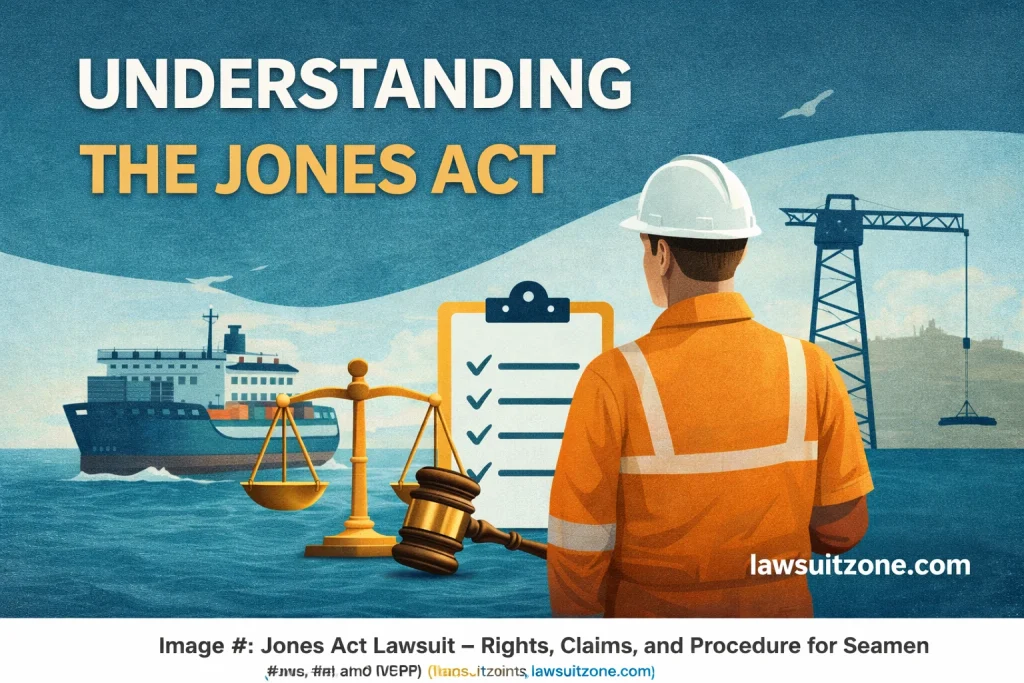
The Jones Act is a part of the Merchant Marine Act of 1920. The main aim of the Act is to protect the employees of the maritime industry by giving them the right to sue their employers when they experience negligence leading to work-related injury.
A lawsuit based on the Jones Act is different from the traditional workers’ compensation lawsuit because:
- Needs proof of employer negligence
- Permits claims for full personal injury damages
- Jury trials are available
- Applies to damages for pain and suffering
The law is in place because “seamen face risks which demand even stronger protection than do all other workers in our industrial society.”
Who Is Considered a Seaman?
“Eligibility is one of the most relevant matters associated with a lawsuit involving the Jones Act. Not just any worker in the area of the water is eligible.”
To qualify as a seaman, you normally must:
- Devote at least 30% of your time at work on a vessel
- Work on a vessel in navigation
- Perform tasks that help to the vessel’s operation or mission
In addition, the following workers are eligible:
- Crew members
- Deckhands
- Engineers
- Captains and officers
- Tugboat and barge workers
- Offshore drilling personnel
The determination of whether seaman status has been established may often be a key consideration in a Jones Act case.
Why Jones Act Lawsuits Are Filed
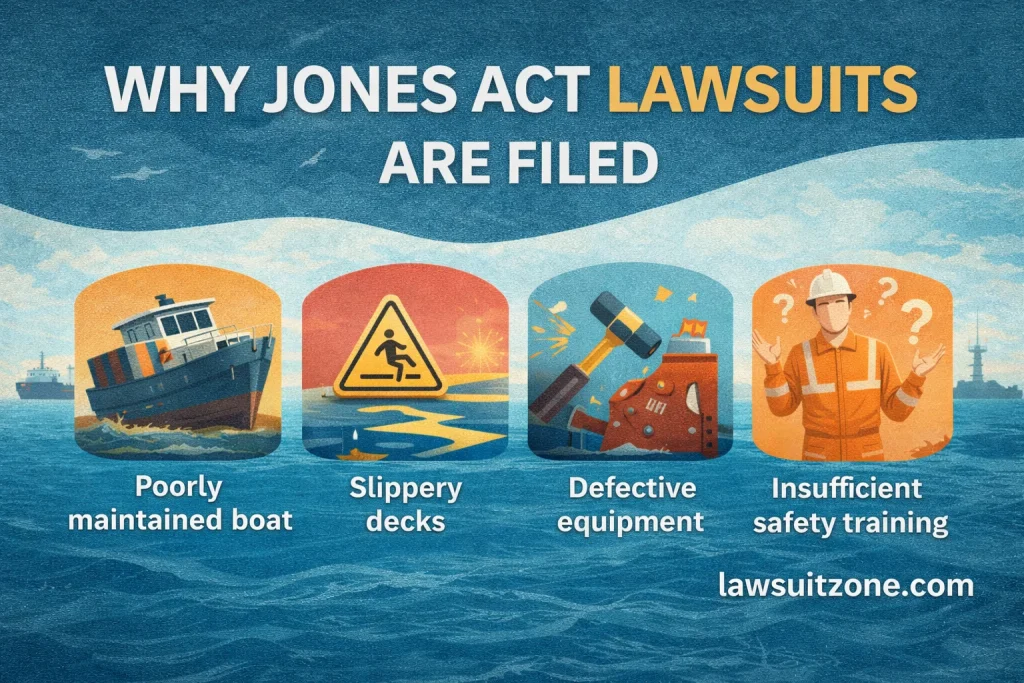
Generally, “Jones Act lawsuits are typically filed when the injury happened as a result of an employer’s failure to provide a safe working environment. Additionally, as per maritime laws, mere slight negligence is sufficient grounds for liability.”
There are several reasons why lawsuits are brought:
- Inadequately maintained boats
- Slippery decks
- Defective tools or machinery
- Insufficient safety training
- Understaffed crews
- Fatigue due to extended working hours
It is the obligation of the employer to avoid these dangers.
Typical Injuries that Qualify Under the Jones Act
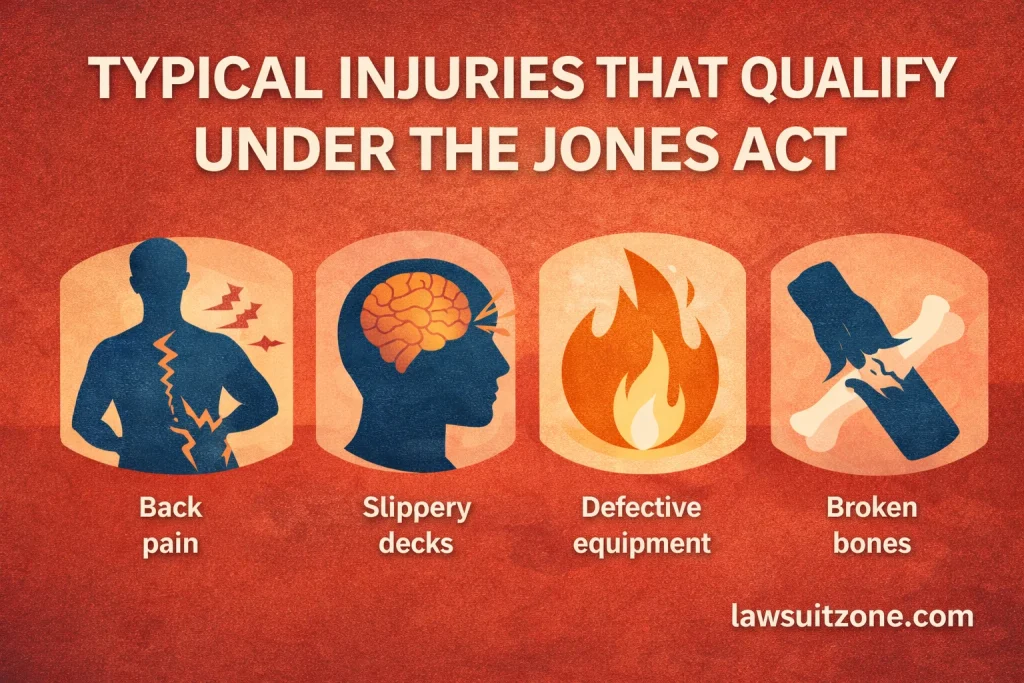
Marine injuries tend to be serious; thus, the impact caused may last throughout the career life of the worker.
Common injuries associated with Jones Act cases include:
- Back and spine injuries
- Traumatic brain injuries
- Broken bones
- Burns due to fires or explosions
- Amputations
- Repetitive stress injuries
Due to the limitations of medical facilities at sea, even a minor injury can escalate.
Finding of Negligence in a Jones Act Lawsuit
The case of negligence required to be proven within the Jones Act is simpler compared to cases of personal injury. An employer will be liable if their actions are remotely associated with the injury.
Some examples of negligence are:
- Failing to fix known hazards
- Ignoring safety complaints
- Offering inadequate equipment
- Employing unqualified staff
- Failure to comply with sea safety norms
This burden of proof considerably favors injured seamen.
Jones Act Lawsuit Comparison to Maintenance and Cure
Injured sailors may find a Jones Act lawsuit confusing when they also learn of their right to “maintenance and cure” benefits, though these are two distinct legal entitlements.
Maintenance and Cure
- Covered regardless of fault
- Covers daily living expenses (maintenance)
- Includes medical treatment (cure)
Jones Act Lawsuit
- Requires negligence
- Provides broader compensation
- Includes pain and suffering
Both can be pursued together by the seamen.
Compensation Under Jones Act Claims
A successful Jones Act lawsuit may provide recovery of the following:
- Medical expenses
- Lost wages
- Loss of future earning capacity
- Pain and suffering
- Psychological distress
- Permanent disability
As there is no limit to the amount of damages that can be recovered, these causes of action are particularly valuable.
Claims for Wrongful Death Under the Jones Act
In cases where a sailor passes away as a result of negligence on the part of his or her employers, their families may pursue a wrongful death action under the Jones Act.
These claims may include:
- Loss of income and benefits
- Funeral and burial expenses
- Loss of companionship
- Emotional suffering
Cases involving wrongful deaths demand complex financial and attendant cost analyses.
Employer Measures to Avoid Liability
The defendants, or the employers, commonly attempt to deny or minimize the responsibility they have towards the plaintiff or employee by claiming:
- The employee was not a seaman
- The injury occurred off duty
- The laborer precipitated the accident
- The risk was unavoidable
This makes early documentation extremely important.
Time to File a Lawsuit Under the Jones Act
In most cases involving a Jones Act claim, you must file your lawsuit within three years after you suffer your injuries. Failure to do so could result in your claim being barred.
Waiting too long may result in:
- Erasure of evidence
- Witnesses becoming difficult to locate
- Weakened medical documentation
Early legal advice should be sought.
Federal Maritime Law and Worker Safety
Maritime law acknowledges the fact that seamen are prone to injuries in comparison to most work environments. According to the U.S. Department of Labor, “maritime industries have consistently been among the most hazardous of all vocations.”
This reemphasizes the need for legal safeguards such as the Jones Act.
Maritime Injury Claims: What to Do Next
If you think you have a Jones Act case:
- Report the injury immediately
- Obtain medical attention
- Document unsafe conditions
- Record pre-trial statements
- Consult with a maritime lawyer
“Small errors early on could jeopardize your case.”
Picking the Best Jones Act Attorney
An experienced Jones Act attorney can:
- Verify seaman status
- Take expert testimony
- Prove negligence
- Maximize compensation
Generally, Jones Act lawyers represent their clients without any advance payment of fees because they work on contingency.
Frequently Asked Questions
Conclusion
A Jones Act lawsuit is an effective litigation measure aimed at ensuring the safety of marine employees against unsafe working conditions and lack of concern on the part of the employer. Due to the long-lasting nature of maritime worker injuries, it is important to know the rights within the Jones Act. If you were injured during your work at sea, acting quickly might help you claim compensation and secure your future.