Chemo Port Lawsuit: Full Guide to Claims, Risks & Steps in 2025
Introduction (Keyword in First Paragraph)
If you’re searching for a chemo port lawsuit, it usually means you’re not just looking for general information—you’re trying to make sense of a difficult medical experience. Maybe the port became infected, stopped working, caused severe pain, led to clotting, or triggered extra procedures when you were already dealing with cancer treatment.
This complete guide explains why chemo port lawsuits happen, what injuries are commonly involved, how eligibility is determined, what evidence matters most, what compensation may include, and what steps people typically take next written in a human, easy-to-read way. Have you checked our detailed guide on Mirena IUD Lawsuit.
Disclaimer: This article is for informational purposes only and is not medical or legal advice.
What Is a Chemo Port (and Why It’s Used)
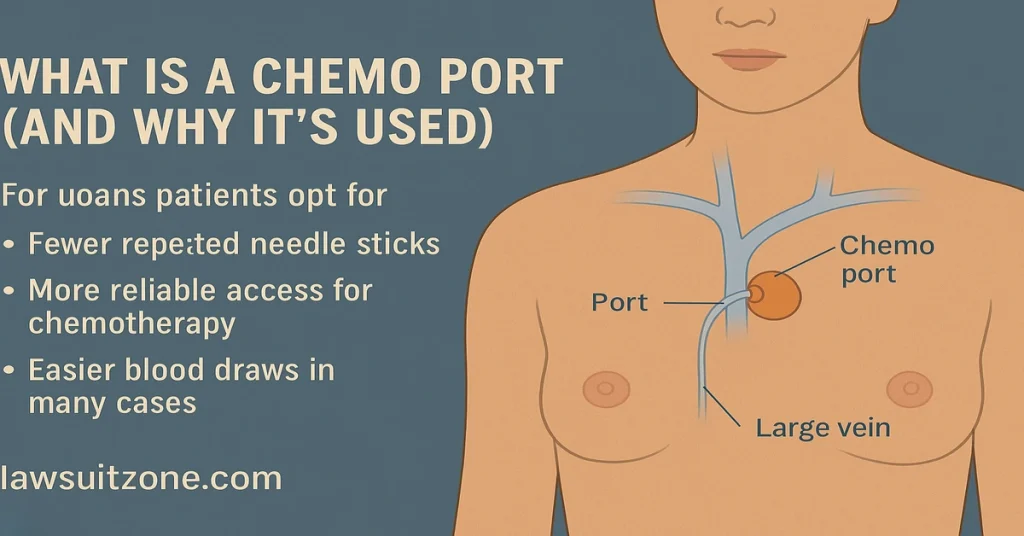
A chemo port is a small implanted device placed under the skin (often upper chest). It connects to a catheter that goes into a large vein. The goal is to make chemotherapy and other IV treatments safer and more manageable—especially when veins become hard to access over time.
Why many patients opt for a port.
- Fewer repeated needle sticks
- More reliable access for chemotherapy
- Easier blood draws in many cases
- Smaller vein damage is reduced.
Ports can be incredibly helpful—but because they interact directly with the bloodstream, even “small” issues can become serious quickly.
Why Chemo Port Lawsuits Occur
A chemo port lawsuit usually begins when a patient believes the port-related harm could have been prevented. That prevention might involve:
- Less dangerous device design
- Higher quality of manufacturing
- Clearer warnings/instructions for safe use
- Proper medical placement and maintenance
- Faster identification and management of complications
Generally speaking, these cases fall into two broad buckets:
1) Product-related claims (device issues)
These focus on whether the chemo port device had a defect or inadequate warnings.
2) Care-related claims (medical negligence)
These focus on whether errors occurred during insertion, access, cleaning/sterile technique, monitoring, or response to symptoms.
Sometimes a claim involves both-because real life can overlap.
Most Common Injuries Linked to Chemo Port Lawsuit Claims
Not every complication leads to a lawsuit. But certain outcomes show up repeatedly in legal discussions because they often cause major harm and major costs.
1) Port Infection (Local Infection or Sepsis)
Infection is one of the most reported and most serious risks. It can start around the port site or become a bloodstream infection.
Symptoms reported include:
- Fever and chills
- Redness, swelling, warmth, or drainage
- Increased tenderness at the port site
- Sudden severe weakness or confusion
Why this becomes legally significant: - Admission to a hospital or ICU
- Emergency port removal
- Weeks of IV antibiotics
- Delayed chemotherapy and disruption to treatment
2) Thrombosis, Blood Clots, and Related Complications
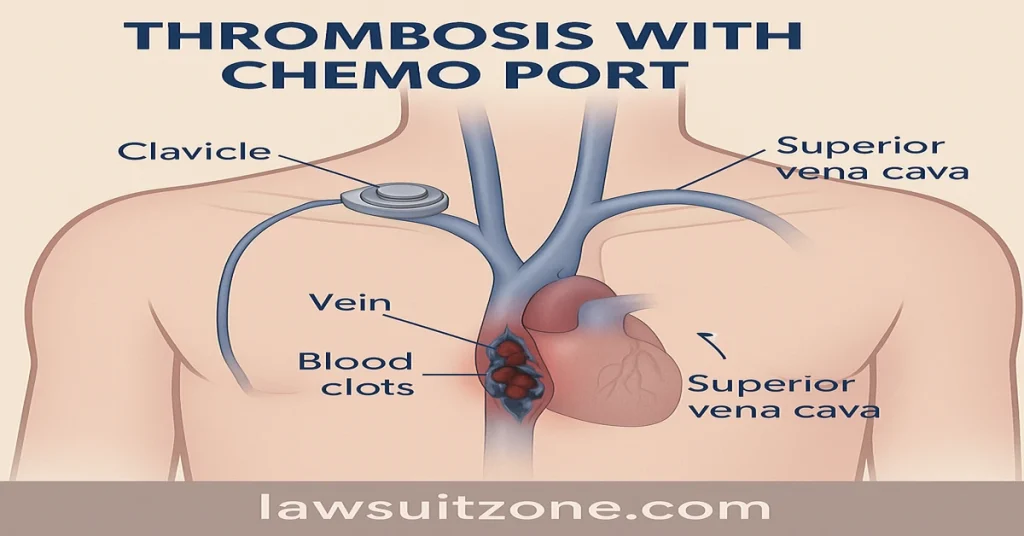
Cancer already increases clot risk. A port catheter can add another factor.
Possible symptoms:
- Swelling of arm-neck-face, often one-sided
- Pain or heaviness
- Change in skin color
- Shortness of breath (emergency)
Possible outcomes: - Blood thinners (anticoagulants)
- Emergency care if clot travels to lungs
- Port removal or replacement
3) Catheter Fracture, Detachment, or Migration
If part of the catheter breaks or detaches, it can move inside the body and may require urgent retrieval.
What the patients may experience is:
- Sudden port malfunction
- Chest discomfort
- Unexpected imaging findings
- Emergency procedure for fragment removal
4) Malfunction, Occlusion, or Failure to Flush/Draw
Sometimes the port stops “behaving” like it should: it won’t flush, won’t draw blood, or causes unusual pain during access.
Why it matters:
- Multiple traumatic access attempts
- Treatment delays
- Extra procedures to restore function
- Replacement Surgery
5) Extravasation (Chemo Leakage Into Tissue)
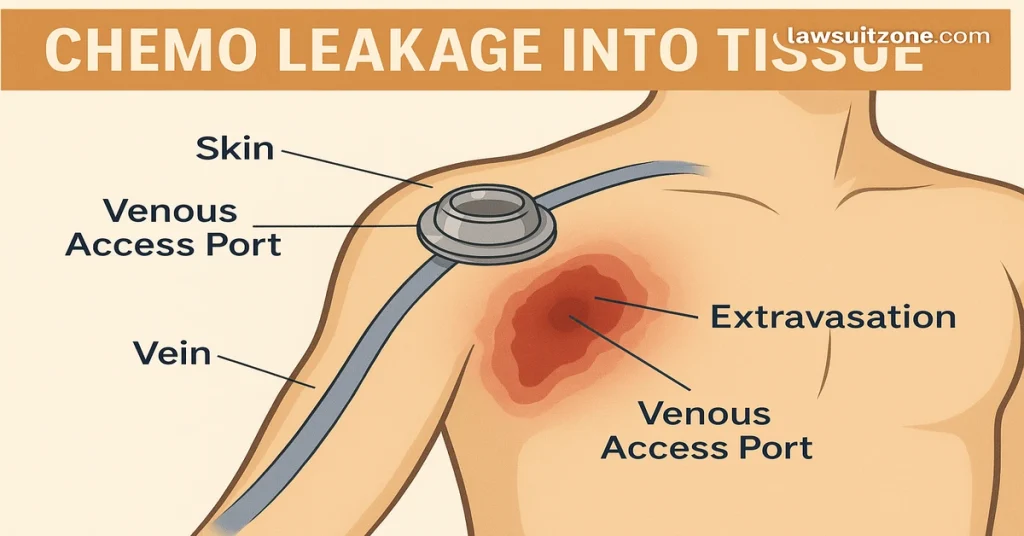
If chemotherapy leaks outside the vein/tissue pathway, it can cause severe injury—especially with certain medications.
Possible results:
- Painful burning during infusion
- Blisters or skin breakdown
- Tissue damage that may require wound care or surgery
- Scarring and reduced mobility-mainly in severe cases
6) Malposition, Reversed Port, or Surgical Trauma
Ports can be improperly positioned, flip under the skin, or cause complications linked to insertion.
Possible outcome:
- Severe pain and limitation of movement
- Inability to enter port in safety
- Revision surgery
Legal Theories Utilized in a Chemo Port Lawsuit
In general, a chemo port lawsuit will rely on one or more of the following:
Product Liability (Device-Focused)
- Design defect: The design is said to be unreasonably unsafe.
- Manufacturing defect: A unit is defective because it was produced badly.
- Failure to warn: Warnings or instructions did not properly communicate risks.
Medical Negligence Care-Focused
- Poor sterile technique in access
- Faulty insertion technique
- Failure to diagnose infection/clot early
- Delaying necessary removal
- Poor monitoring or follow-up
Mixed Claims
Some cases involve a combination of the device and medical decisions.
Who May Qualify (General Eligibility Checklist)
People usually investigate a chemo port lawsuit in the following instances:
1) Proof of Port Implant and Use
- Record of implant procedure
- Oncology/infusion notes
- Documentation of the placement of a device in the hospital
- Device ID sticker or implant card – if available
2. Documented Injury or Complication
Examples:
- Positive blood cultures
- Imaging to confirm clot or catheter position problems
- Operative report for removal/replacement
- Wound care reports
- Admission notes to the hospital
3) Damages (Actual Damage)
- Medical expenses and future care
- Lost income due to inability to work
- Pain and suffering
- disability, scarring or long recuperation
- Chemo delays documented by oncology team
Evidence to Collect, What is a Strong Case
If you’re serious about exploring a chemo port lawsuit, paperwork matters a lot.
Medical Records to Request
- Operative report: port implantation
- Post-op notes and follow-ups
- Infusion nurse notes access attempts, pain, and problems
- Blood culture results and diagnosis of infection
- Imaging studies (ultrasound/CT/X-ray)
- Port removal/replacement operative report
- Summary of discharge and medication history
Personal Records to Keep
- An outdated symptom diary
- Out-of-pocket receipts
- Photos of swelling/ redness if you have them
- Work absence documentation
- A one-page simple timeline:
Tip: Dates are everything. “It happened around March” is less useful than “March 12—fever started; March 13—ER visit; March 14—positive culture; March 15—port removed.”
Deadlines: Statute of Limitations – Why You Shouldn’t Delay
Every country/State has its legal filing deadlines. The countdown may start:
- On the date the injury occurred, or
- When you found out that the injury could be related to the port/device/care
Because rules differ widely, people often consult an attorney early even if they haven’t decided to file.
What Compensation May Include
Damages recovered for a successful chemo port lawsuit may include:
Economic Damages
- Hospital and physician costs
- Surgical procedures and replacement of ports
- Medications (antibiotics, anticoagulants, pain meds)
- Home nursing and wound care
- Lost wages and reduced future earning capacity
Non-economic Damages
- Pain and suffering
- Emotional harm
- Poor quality of life
- Disfigurement/scarring (when applicable)
Case-Specific Damages
- In rare circumstances, punitive damages may apply depending upon the law and facts.
What the Legal Process Usually Looks Like (in Simple Terms)
Here is what, usually, happens when a person contacts a lawyer.
Step 1:Intake and Case Review
- Date and facility of port implantation
- Symptom and complication timeline
- What treatment was required
- What records exist
Step 2: Records + Medical Review
Lawyers commonly will want to know:
- What was the harm caused by
- Whether it was preventable
- if the device/care were failed standards.
Step 3: Filing the Claim
Depending on the facts:
- Product Claim Manufactruer
- Malpractice claim, provider/hospital
- Or both
Step 4: Professional Consultation
Expert medical and technical testimony may be used to show:
- Causation- did the port lead to the injury?
- Standard of care: Was the medical care appropriate?
- Defect or warning issues, if device-focused
Step 5: Resolution
- The discussions of the settlement
- Acquittal in case of weak evidence
- Trial in certain cases
What To Do If You Think You May Have A Port Complication Now
Cancer care is already exhausting-don’t carry this alone.
Practical Steps You Can Take Today
- Seek urgent care for fever, chills, swelling, breathing issues, or severe pain
- Imaging can be requested if clot/malposition is suspected.
- Request your medical records immediately
- Create timeline of symptoms and treatment
- Talk to an experienced attorney for an evaluation.
Important Myths (So You Don’t Get Misled)
- “Any complication = automatic lawsuit.” Not true. Cases need proof of preventable harm and damages.
- “Consent forms block lawsuits.” Not always. Negligence or defective products can still be actionable.
- “Only infections matter.” No—clots, extravasation, fractures, and malfunctions can be just as serious.
For a general understanding of how medical malpractice claims work (useful background for care-related port claims), you can read the overview from a high-authority source here: MedlinePlus: Medical Malpractice.
FAQs About Chemo Port Lawsuits
Final Thoughts
A chemo port lawsuit is usually about accountability after a port complication causes serious harm like infection, sepsis, clotting, extravasation injury, catheter fracture, or multiple invasive procedures. If you suspect you were harmed, focus first on medical safety, then collect records and build a clear timeline. With that in hand, a legal professional can tell you whether your case looks viable under local laws.
Disclaimer: This article is for informational purposes only and is not medical or legal advice.