Complete Guide to the Simply Orange Lawsuit in 2025
Introduction
The Simply Orange lawsuit has rocked one of America’s most respected juice brands. Simply Orange has been touted for years as a “natural,” “pure,” and “healthy” orange juice a breakfast mainstay for millions of consumers. But recent reports and legal action imply that the product can include residues of chemicals that are at odds with those wholesome claims.
In this guide, you’ll learn everything about the Simply Orange lawsuit what triggered it, how PFAS contamination became a global concern, who is eligible to participate, and what it means for consumers who value transparency in the food and beverage industry. Have you checked our detailed guide on Google Class Action Lawsuit.
What Is the Simply Orange Lawsuit?
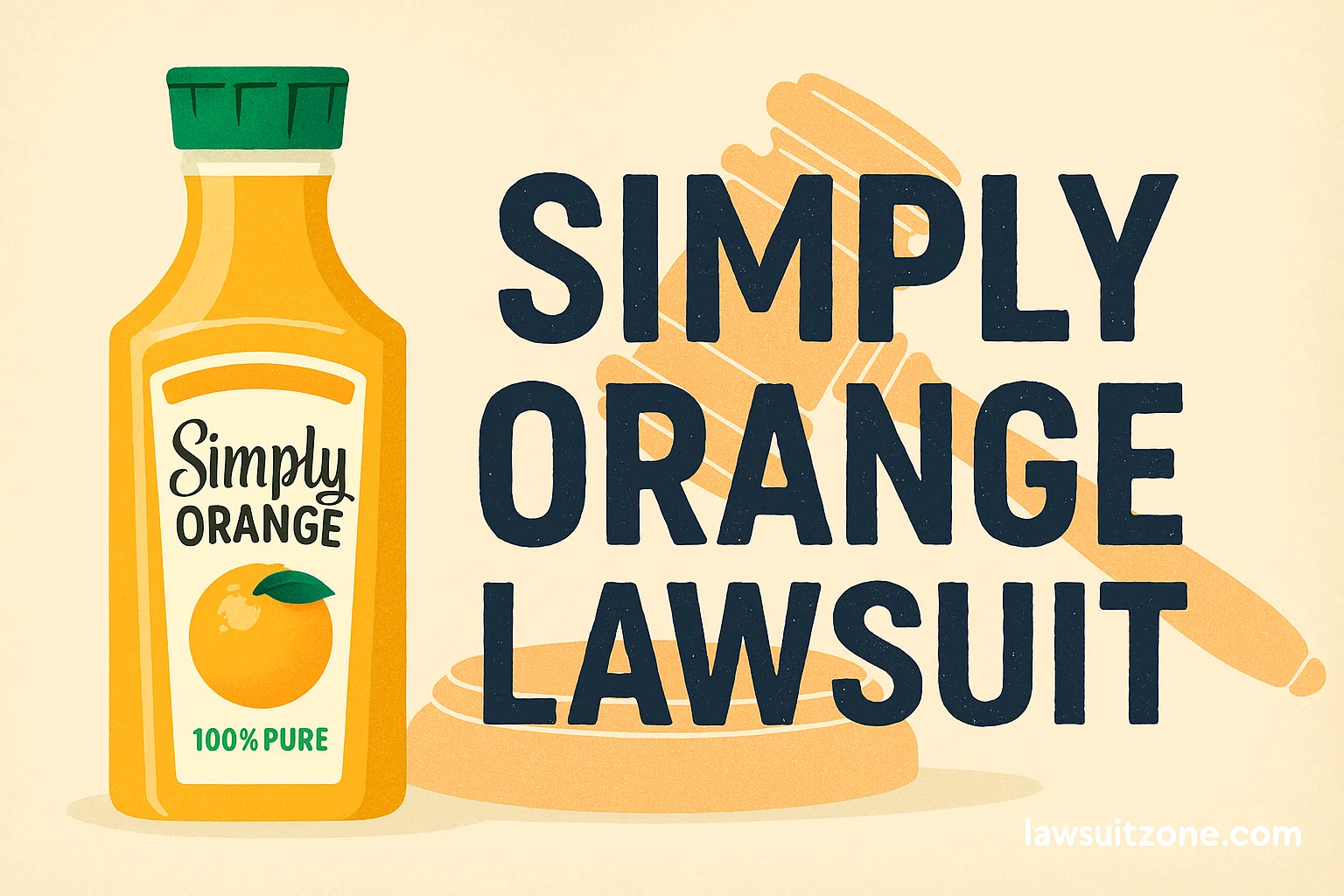
Simply Orange lawsuit is a class-action suit against The Coca-Cola Company, the Simply Beverages’ owner. Plaintiffs state that Simply Orange juice, which is described as “100% pure and natural,” has PFAS (per- and polyfluoroalkyl substances), commonly referred to as “forever chemicals.”
PFAS are synthetic chemicals that have been used extensively for decades across many industries, from packaging to cookware. They are referred to as “forever chemicals” since they break down very slowly. Exposure to PFAS has been linked by some studies to hormonal disruption, reproductive problems, and several types of cancer.
The lawsuit contends that the company’s “all-natural” labeling is deceptive because consumers would never anticipate a product containing synthetic impurities to be labeled “pure.”
The Background Story
Simply Orange came into the market as a premium juice — cold-pressed, fresh, and minimally processed. The company established itself as transparent, uncomplicated, and health-driven.
But that image was severely damaged when independent testing reportedly found PFAS in Simply Orange juice samples. Consumers started wondering if the brand’s “natural” reputation was simply smoke and mirrors.
The suit does not allege Simply Orange knowingly added the chemicals. It is an issue of whether the company took due care to avoid contamination and to alert consumers to potential chemical presence.
This case is a part of a greater public debate on truth in labeling and what food and beverage companies mean by “natural.”
Why the Lawsuit Occurred
There are a number of layers to the existence of this case, and all of them reflect an increasing international concern with corporate integrity and environmental accountability.
1. Deceptive Labeling and Marketing
The core problem is the heavy use by the brand of “all-natural” and “nothing to hide” labeling. The plaintiffs say that these descriptors caused consumers to think that they were getting a chemical-free product.
2. PFAS Discovery
Scientific testing — cited in the complaint — reportedly discovered levels of PFAS detectable in Simply Orange juice. While not sufficient to directly harm, the results conflict with its natural assertions.
3. Trust and Pricing
Simply Orange is more expensive than the average grocery-store juice. Customers contend they paid a premium for quality not represented.
4. Growing Concern Over PFAS
Public concern about PFAS chemicals has increased dramatically over the past few years. This lawsuit is one aspect of a larger movement towards corporate responsibility for sneaky toxins in common products.
How the Case Developed
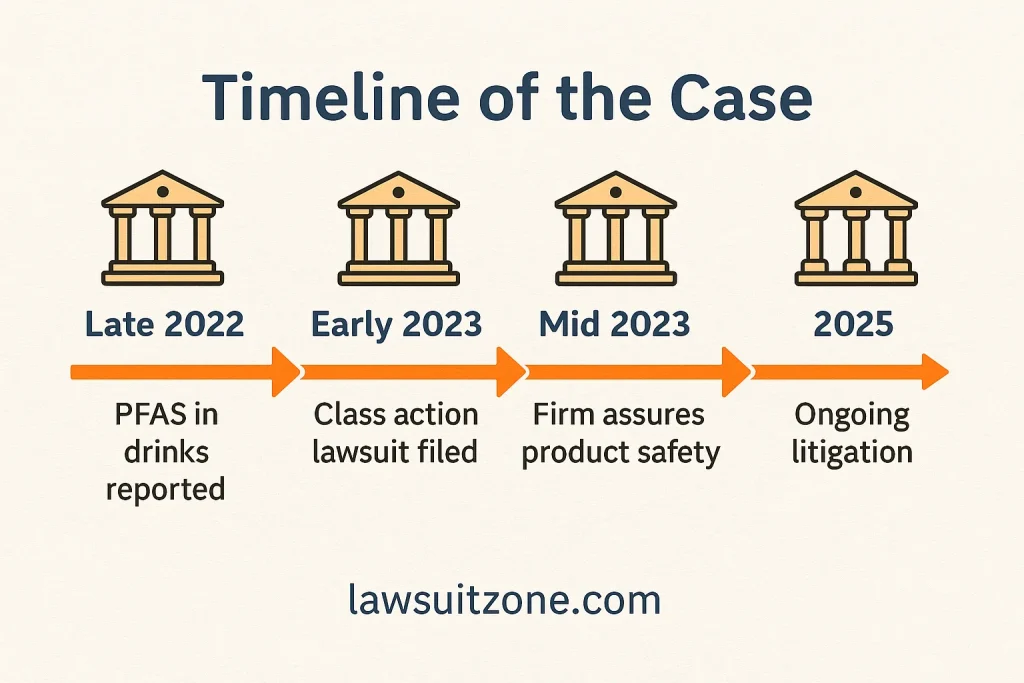
Below is a timeline describing how the Simply Orange lawsuit has developed to date:
- Late 2022: Third-party consumer complaint reports identify the possible inclusion of PFAS in various popular drinks.
- Early 2023: A class of consumers sues Coca-Cola in a class-action lawsuit for false advertising and consumer fraud.
- Mid-2023: The firm releases statements assuring product safety and FDA conformity.
- 2024: More law firms become part of the class action, making it more well-known across the country.
- 2025: The litigation remains ongoing in federal court while settlement negotiations and test reviews proceed.
The case remains active and could set a precedent for how “natural” labeling is defined across the entire food and beverage industry.
Understanding PFAS — The Core of the Case
To understand the Simply Orange lawsuit, we must first understand PFAS. These synthetic compounds were developed for their water- and oil-resistant properties and have been used in cookware, packaging, and manufacturing for over 70 years.
The issue? PFAS are very hardy. They don’t degrade quickly, and once ingested, they can stay in the body for years. A few studies cite possible links to:
- Liver and kidney disease
- Hormone disruption
- Immune system suppression
- Increased cholesterol levels
- Increased risk of cancer
While trace exposure is widespread, the lawsuit asks whether a company that sells its drinks as “pure” should have anything to do with these chemicals.
Who Can Join the Lawsuit?
If you bought Simply Orange recently, you may be eligible to join the Simply Orange lawsuit class action. Usually, being eligible means that:
- You purchased Simply Orange juice with a label that says “natural” or “pure.”
- You did the purchase during the period covered under the case.
- You were based on the advertising claims of the product when purchasing it.
- You file a valid claim prior to the last deadline.
It’s interesting to point out that claimants need not establish personal injury or sickness. Economic harm is the focus — in other words, consumers were charged for something they didn’t think they were paying for.
What Compensation May Be
Class action lawsuits of this type usually provide compensation in one or more of the following ways:
Refunds or Cash Payments
Customers can receive direct refunds in amounts commensurate with their overall purchase levels. Where the case settles into a fund, claimants who provide proper documentation will be repaid in like manner.
Product Credits or Vouchers
Certain settlements give vouchers or product credits toward future purchases of the company (although this option tends to be contentious).
Changes to Policy and Labeling
In most product-labeling lawsuits, corporations settle to change language on product labels to avoid confusion. Coca-Cola could be forced in the future to rethink how it labels “natural” products.
Corporate Reforms
Aside from financial payouts, such lawsuits tend to trigger internal reforms — improved testing, purer sourcing, and stricter supplier requirements.
Coca-Cola’s Response
Coca-Cola, the parent company of Simply Orange, has denied all wrongdoing. In official statements, the company insists that Simply Orange products are safe, comply with all FDA regulations, and are regularly tested to meet quality standards.
Coca-Cola blames the presence of PFAS on environmental, not intended, causes. That is to say, the firm implies that the substances could originate from water sources, packaging materials, or agricultural run-off — over which it has no direct control.
The company still, however, remains under fire for the use of words such as “natural” and “pure” without definite definitions or certifications to support them.
Legal Basis of the Case
The suit charges the company with violating numerous consumer-protection and advertising regulations. These are the key pillars of law:
- False Advertising and Misrepresentation
- Breach of Implied Warranty
- Unjust Enrichment (Gaining Unfairly)
- Violation of State Consumer-Protection Acts
In short, the plaintiffs contend that Coca-Cola profited with deceptive representations — not that it knowingly hurt consumers, but that it did not truthfully convey.
Consumer Reactions and Industry Impact
The Simply Orange lawsuit has riled people all over social media. Consumers were disappointed and felt betrayed by a company they trusted.
Consumer Point of View
Individuals now read labels more intently and no longer blindly accept “all-natural.” This increased sensitivity could alter the way businesses promote products in the future.
Industry Influence
This case is a wake-up call to the whole beverage industry. Companies are rethinking marketing practices and spending more on more transparent sourcing and testing.
Market Reputation
Already, before even reaching a verdict, public opinion has been impacted. The lawsuit has made Simply Orange a symbol of purity turn into a case study in ethics marketing.
Lessons for Consumers and Businesses
The Simply Orange lawsuit is a hard-won reminder that words have meaning. Whether it is on the label of a juice bottle or in an ad for technology, what companies say determines what people think.
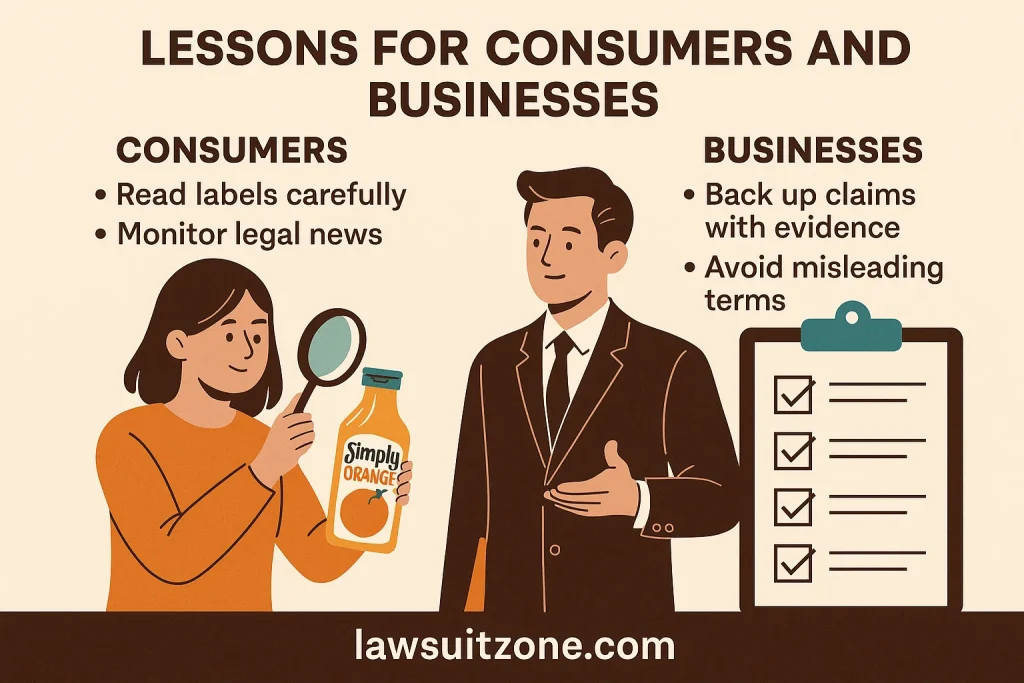
Lessons for Consumers
- Always check “natural” or “organic” statements.
- Examine how brands define their product labels.
- Track lawsuit news to be aware of consumer rights.
Lessons for Businesses
- Be honest and support marketing statements with quantifiable evidence.
- Routine third-party testing for safety and conformity.
- Steer clear of exaggerations that can be legally construed as deception.
Expert Insight: Data Transparency and Food Safety
The food and beverage industry today has greater expectations than ever. Transparency is no longer voluntary — it’s mandatory.
Agencies such as the U.S. Food and Drug Administration (FDA) set stringent norms for food labeling and testing for contamination.
Brands that uphold these values have the opportunity to gain long-term trust, and those that are deceptive can risk financial and reputational loss.
Frequently Asked Questions (FAQs)
Final Thoughts
The Simply Orange case is more than a courtroom drama it’s a watershed moment for the food and beverage industry. It tests what companies intend when they label something “natural” and requires corporations that control consumer markets to be honest.
For shoppers, the takeaway is straightforward: Don’t accept at face value.
For businesses, the message is even clearer: Honesty is more marketable than spin.
In either case, whether the result is a settlement or a jury verdict, the Simply Orange lawsuit will determine how products are labeled, tested, and sold for years to come.
Disclaimer:
This article is intended for informational use only and should not be regarded as legal advice. Always seek the advice of a qualified attorney or consumer-rights consultant in regard to legal matters or class-action participation.