Life360 Lawsuit: Total 2025 Guide to Privacy & Safety
The Life360 lawsuit is one of the most widely discussed legal cases in the world of digital privacy. Families who previously trusted the widely used safety app are now wondering if their personal details were being exploited. In this guide, we’re going to demystify everything you need to know from the history of the app through to the allegations, the legal process, and what it all means for regular users like you. Heve you checked our detailed guide on Tax Rise Lawsuit.
What is Life360 and Why Families Use It
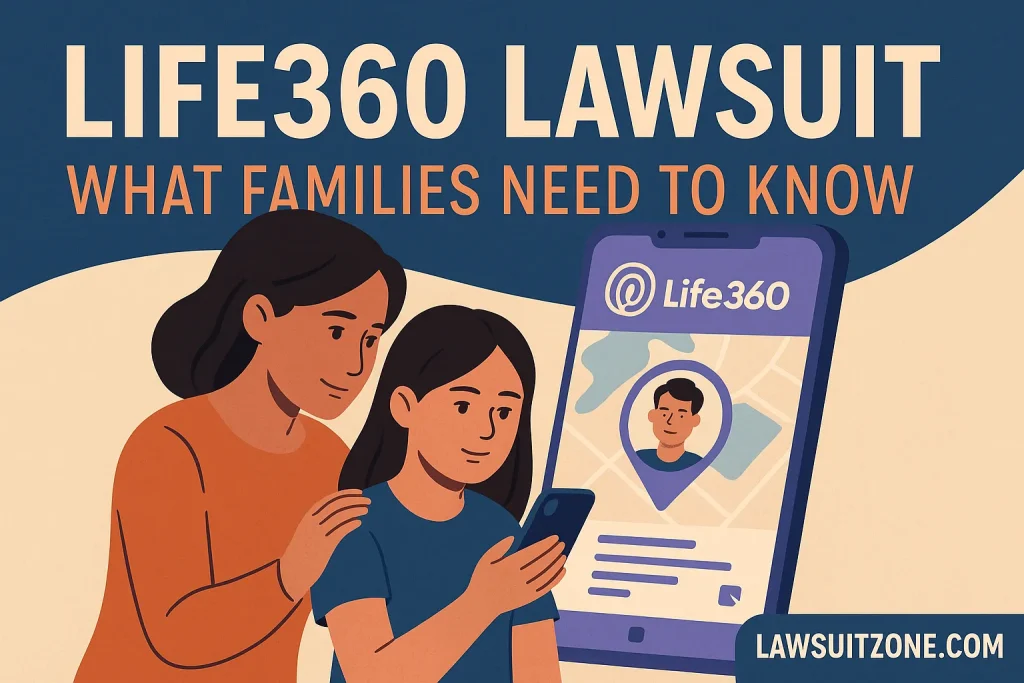
Life360 is a location-sharing app that lets families share each other’s locations in real-time, receive driving safety reports, and send emergency SOS alerts. For parents of teenagers, it has sometimes seemed like a lifeline.
Key features are:
- Location circles to locate family members.
- Crash detection for drivers.
- SOS alerts during emergencies.
- Monitoring of driving behavior such as speed and phone usage.
Its guarantee of peace of mind led to it becoming one of the most downloaded safety apps globally. That peace of mind is now in legal jeopardy, however.
Why the Life360 Lawsuit Was Filed
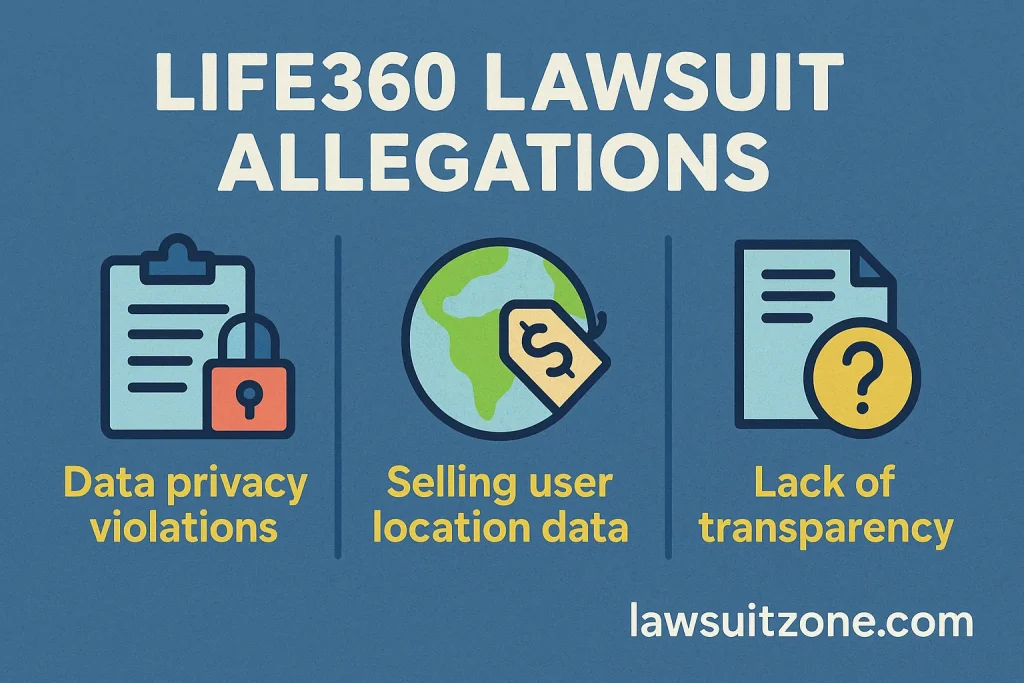
The suit claims that Life360 deceived users regarding how their personal information was treated. In accordance with the complaint, the company distributed or sold exact location information to third-party brokers while depicting itself as a privacy-emphasizing safety app.
Primary accusations are:
- Misleading privacy assurances during marketing.
- Sale of precise location information without explicit user permission.
- Lack of protection for children’s sensitive information.
- Gaps in the privacy policy.
For parents who thought they were only sharing information with their “circle,” these assertions were a breach of trust.
Timeline of the Life360 Lawsuit
- 2018–2019: Life360 becomes incredibly popular.
- 2020: News emerges questioning its privacy practices.
- 2021: Exposés show that Life360 could be among the biggest sources of location data for U.S. brokers.
- 2022: Consumer advocates and digital rights organizations sound the alarm.
- 2023: Class-action suits are filed.
- 2024: Hearings begin in court, attracting national media attention.
- 2025: The case continues, with the possibility of industry-wide implications.
Why This Lawsuit is Unique
What makes the Life360 lawsuit unique is that its primary users are children and families. Unlike other tech law suits, this one involves an app promoted as a children’s safety tool.
That opens up larger moral questions:
- Should kid apps have more privacy regulations?
- Can parents really rely on “safety” apps that may sell data?
- Does anonymization actually safeguard sensitive data?
The Legal Questions at Issue
The court will have to decide:
- Did Life360 practice deceptive advertising?
- Was selling or sharing information without clear permission against the law?
- Can location data “anonymized” still be traced back to individuals?
- Do minors’ digital data need special protection?
The responses could inform future digital privacy legislation.
How Families Are Responding
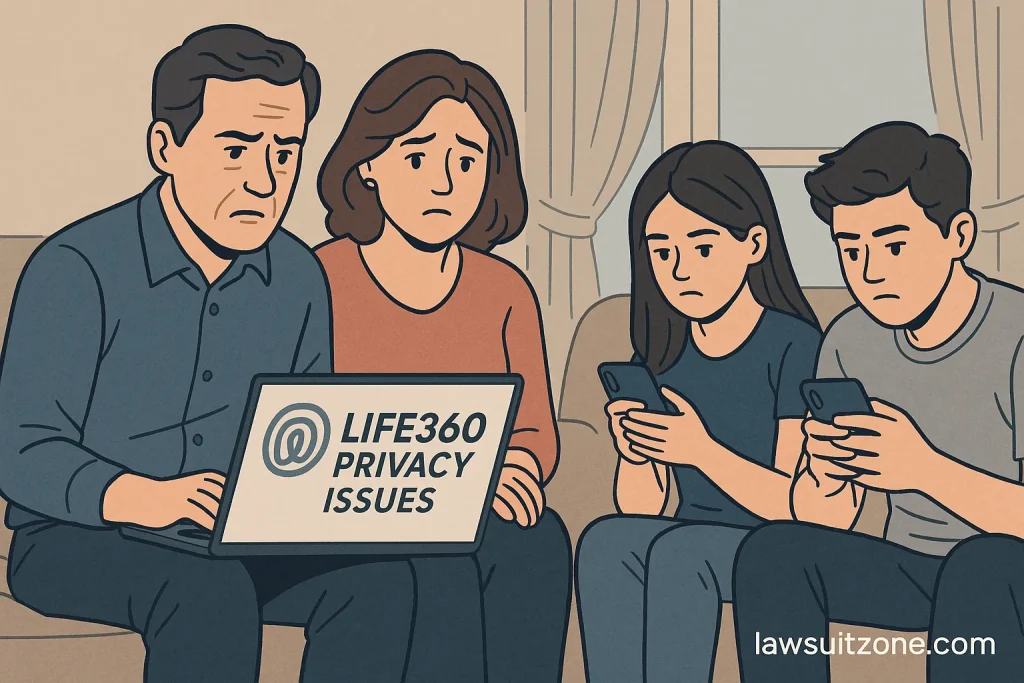
For some parents, the lawsuit is personal. They relied on Life360 not only to monitor location, but to protect their children. Responses vary:
- Removing the app completely.
- Using alternatives such as Apple’s Find My or Google Family Link.
- Initiating class-action lawsuits to demand accountability.
- Discussion with teenagers regarding data safety and digital trails.
Life360’s Response
Life360 has refuted the accusations, maintaining that:
- Shared data was anonymized and not associated with specific users.
- Their privacy policy revealed data practices.
- Selling locations enabled the app to remain affordable for families.
Opponents maintain that anonymized data can usually be re-identified by gathering additional datasets.
Why the Life360 Lawsuit Matters
This isn’t about one app — it’s about the future of digital trust. Families installed Life360 for safety, not to have their movements potentially commodified.
If the courts find against Life360, it could set a precedent demanding more transparency for all apps processing sensitive family data.
Broader Implications for Digital Privacy
The lawsuit is one of a growing global push for tighter digital privacy. The European countries already have GDPR in place, and the U.S. is also facing mounting pressure to get tougher on it.
To put this in perspective, the Electronic Frontier Foundation (EFF), a top digital rights group, has consistently made the case that exact location tracking qualifies as extremely sensitive information. Having EFF at the table is a reflection of the size of this debate as it pertains to consumer protection.
Lessons for Casual Users
- Read the small print — privacy policies can expose secret practices.
- Restrict permissions — do not give apps access to more than they require.
- Watch out for “free” apps — they usually make money from selling your data.
- Educate children digital awareness — safety involves understanding where your information goes.
- Stay current — cases like this could result in payouts for users.
Other Such Lawsuits in Tech
The Life360 lawsuit follows other high-profile cases:
- Facebook & Cambridge Analytica: Data collected to serve political ends.
- Google Location Tracking Lawsuit: Users tracked even when “Location Off.”
- TikTok Investigations: Questions about how children’s data is treated.
These cases indicate that privacy lawsuits are the new normal as consumers resist.
Potential Outcomes
- Settlement: Life360 pays damages and strengthens policies.
- Court Victory for Plaintiffs: Would set new standards for privacy.
- Dismissal: If evidence is weak, case might fall apart.
- Industry Reform: Pressure can bring change even without a conviction.
Expert Opinions
- Privacy Lawyers: Contend anonymization is not sufficient protection.
- Parents’ Groups: Declare trust is broken and demand tighter laws.
- Industry Analysts: Predict the case has the potential to transform the app economy.
FAQs
Final Thoughts
The Life360 lawsuit is a turning point in digital trust. Families who installed the app for security now must answer tough questions regarding whether safety was procured at the expense of privacy.
Whatever the decision, the case has already begun an even larger conversation: What can we reasonably demand of the apps purporting to guard us?
Ultimately, families are owed both honesty and safety.