How to Join GM Transmission Class Action Lawsuit – The Ultimate Guide in 2025
Introduction: When Your Car Becomes a Burden
Picture this: you’re driving home from a long day. You come to a stop at a red light, the light turns green, you hit the gas — and your car lurches forward as if it’s developed a mind of its own. Or perhaps you’re entering a highway and merge when your transmission catches, putting you at the mercy of speeding cars.
For thousands of General Motors (GM) owners, this isn’t fantasy. It’s a reality they live with every day. Thousands of people have complained of serious problems with GM’s 8-speed transmissions over the last decade. These aren’t ‘inconveniences’ — they impact safety, the wallet, and your peace of mind.
And that’s why so many drivers are raising the same urgent question:
how to join GM transmission class action lawsuit
This guide is your roadmap. Whether you’ve spent money on repairs, felt unsafe behind the wheel, or simply want answers, we’ll break down exactly what’s happening, who qualifies, and what steps to take. Have you checked our detailed guide on how long does a lawsuit take.
What Exactly Is a Class Action Lawsuit?
Before diving into the details, let’s simplify the idea.
A class action suit is similar to a carpool: rather than each person drive alone, a group of individuals sharing a common destination (in this case, justice) travel together. It’s more effective, more robust, and frequently less expensive.
For GM transmission owners, coming together means:
- Speaking with one voice against a multinational auto giant.
- Sharing legal expenses instead of going it alone.
- Enhancing the possibility of meaningful compensation.
Background: GM’s Transmission Problems
The Heart of the Issue
The lawsuits target GM’s 8L90 and 8L45 automatic transmissions (otherwise referred to as 8-speed). They were used in best-selling models such as:
- Chevrolet Silverado & Corvette
- GMC Sierra & Yukon
- Cadillac Escalade
- Certain GM SUVs and sedans (2015 and later)
Common Problems
Drivers complained of:
- Shuddering when driving on the highway
- Rough or delayed shifting
- Sudden jerks forward
- Grinding noises
- Safety scares when accelerating
For some, these weren’t isolated incidents — they were recurring, expensive, and hazardous.
Why the GM Transmission Class Action Was Filed
Behind the lawsuits is a straightforward charge: GM knew of the flaws but continued to sell autos anyhow.
Dealership “repairs” commonly consisted of software patches or fluid flushes that failed to fix the issues. Owners were left frustrated, penniless, or stranded on the side of the road.
By bringing a class action lawsuit against GM, motorists demanded:
- Holding someone accountable for selling flawed automobiles.
- Refund for repair expenses.
- Safer options for future vehicles.
Who Can Join? – Eligibility Explained
If you’re asking how to sign up for GM transmission class action lawsuit, begin by ensuring you qualify.
You might qualify if:
- You lease or own a GM car with the defective 8-speed transmission.
- You had issues (jerking, hesitation, shuddering).
- You paid out-of-pocket for repairs.
- You traded or sold the car at a loss due to flaws.
💡 Pro Tip: Locate your VIN (Vehicle Identification Number). Settlement websites and law firms usually allow you to check eligibility immediately with this number.
Step-by-Step Guide: How to Participate in GM Transmission Class Action Lawsuit
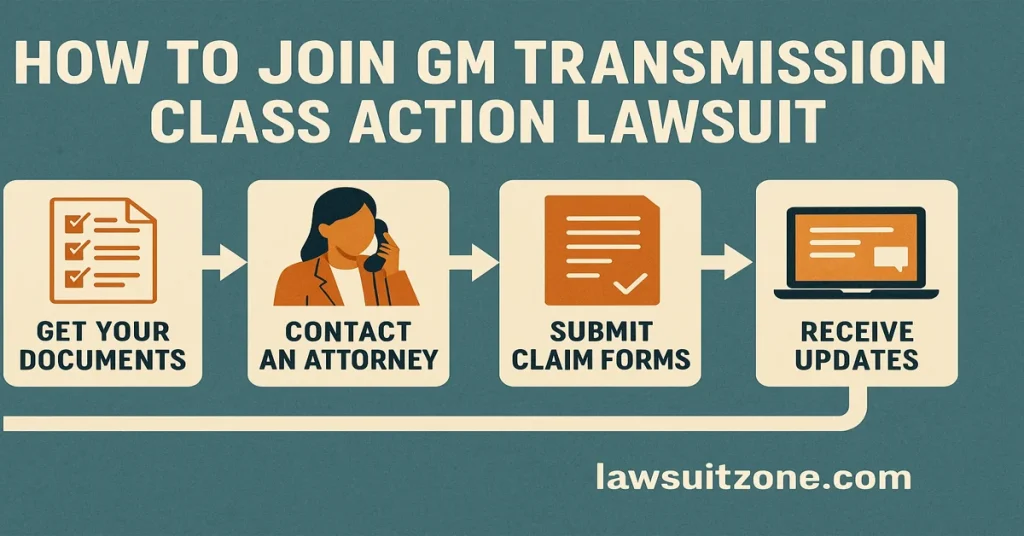
Consider the process a road trip. Here’s your GPS:
1. Get Your Documents (Fuel for the Journey)
- Purchase or lease agreement
- Service history & repair records
- Warranty documents
- Proof of costs (receipts, towing charges, rentals)
2. Call an Attorney Representing the Case (Pick Your Driver)
There are several law firms that are heading the GM transmission cases. The majority provide free consultations.
3. Fill Out Claim or Intake Forms (Your Ticket In)
They request information regarding your car, repairs, and circumstances.
4. Supply Supporting Documentation (Show Your Map)
Include copies of records and receipts. The better your records, the better.
5. Get Updates (Read the Road Signs)
Class actions take time — years at times. Subscribe to law firm newsletters to be informed.
What Type of Compensation Would You Get?
The ultimate purpose of any class action is to get compensation. Should the lawsuit prevail or GM settle, you may receive:
- Reimbursement for the cost of repairing the transmission.
- Compensation for lost value.
- Extended warranties or free repairs.
- Cash settlements depending on individual damages.
💡 Settlements in comparable auto defect cases have varied between hundreds and thousands of dollars per individual.
How Long Does It Take?
It’s not a speedy solution to join a class action. The timing usually goes as follows:
- Filing & certification – court grants permission for the class.
- Discovery – both parties share evidence.
- Settlement negotiations – lots of cases get settled here.
- Trial (if it goes that far) – more time, more risk, but still an option.
- Payout – qualified claims are paid out.
Average wait: 1–3 years, though some run longer.
Should You Join or File Alone?
It’s natural to consider filing alone, but here’s why most opt to join the class:
- Shared legal costs
- Greater negotiating power
- Less personal stress
- More consistent results
Filing individually might be best if your damages are exceptionally high. For most, joining the class action is the wiser path.
Risks and Limitations
No lawsuit is flawless. Some things that may go wrong are:
- Delays – patience is necessary.
- Proof required – poor documentation could limit payments.
- Settlement amounts – don’t anticipate life-altering funds.
Still, for others, it’s not just about money. It’s about justice and responsibility.
True Accounts from GM Owners
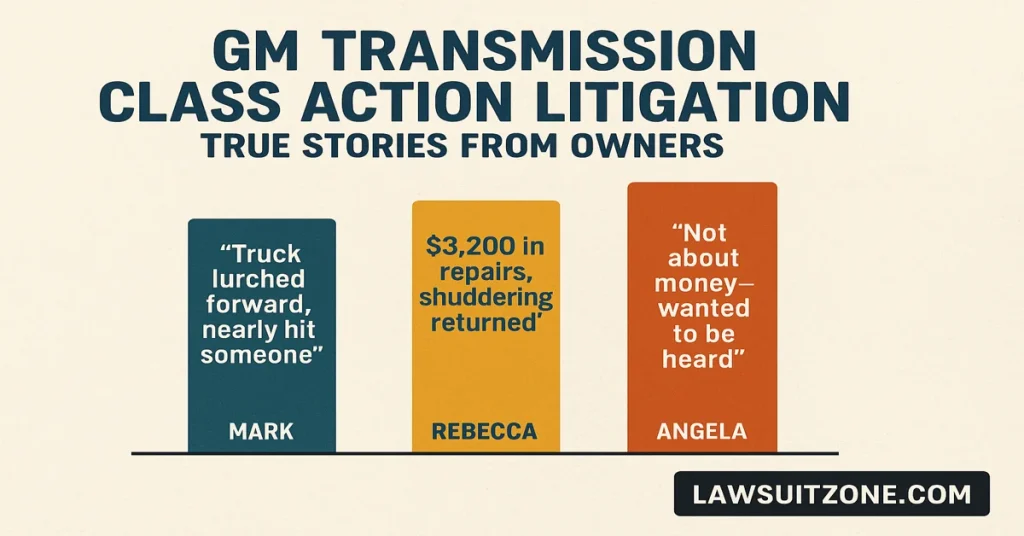
- Mark, Chevy Silverado owner: “I almost rear-ended someone when my truck lurched forward at a light. Scared me — and I knew it wasn’t safe.”
- Angela, Cadillac driver: “I paid $3,200 for transmission repairs. The dealer told me it was repaired, but the shuddering returned.”
For them, becoming part of the lawsuit wasn’t necessarily about money — it was about being heard.
Expert Opinions
Consumer protection activists claim class actions are essential. Without them, large companies will tend to turn a deaf ear to “smaller” issues until they accumulate.
The Federal Trade Commission (FTC) even suggests that class actions can pressure industries to modify abusive practices.
Learn more on the FTC’s website.
Tips While You Wait for the Case to Be Resolved
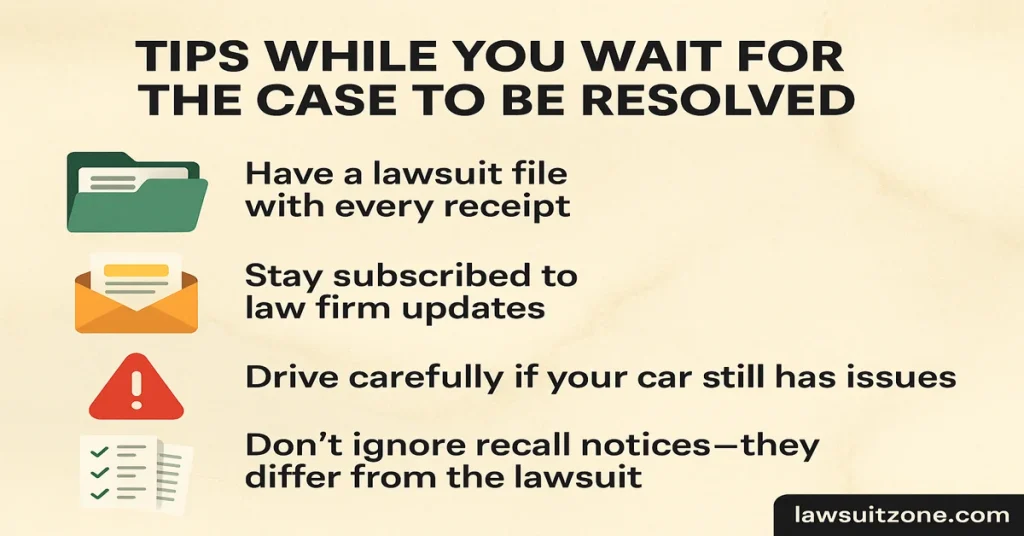
- Have a lawsuit folder with every receipt.
- Remain subscribed to law firm reports.
- Drive carefully if your vehicle still has problems.
- Don’t dismiss recall notices — they are different from the lawsuit.
What If You’re Not Eligible?
If your vehicle is not included in the lawsuit but you are still having problems:
- Sue for repair expenses in small claims.
- Seek an attorney for a single claim.
- Sell or trade in the vehicle (although resale value will be impacted).
Frequently Asked Questions: How to Join GM Transmission Class Action Lawsuit
Conclusion: Taking Back Control
Car ownership is meant to bring you liberty — not persistent worry about safety and repair. For thousands of GM car owners, defective transmissions took that liberty away.
The process of how to participate in GM transmission class action lawsuit isn’t complicated: verify your qualification, prepare your documents, reach out to a law firm, and submit your claim.
It will take a while, but class actions are not just about payments. They’re about justice, accountability, and ensuring that future drivers don’t hit a similar roadblock.
So if your GM car has failed you, here’s the good news: you don’t need to fight alone. Thousands already are on the road to justice — and there’s still a seat for you.