The Electric Vehicle Charging Conflict That Drains Your Home Battery
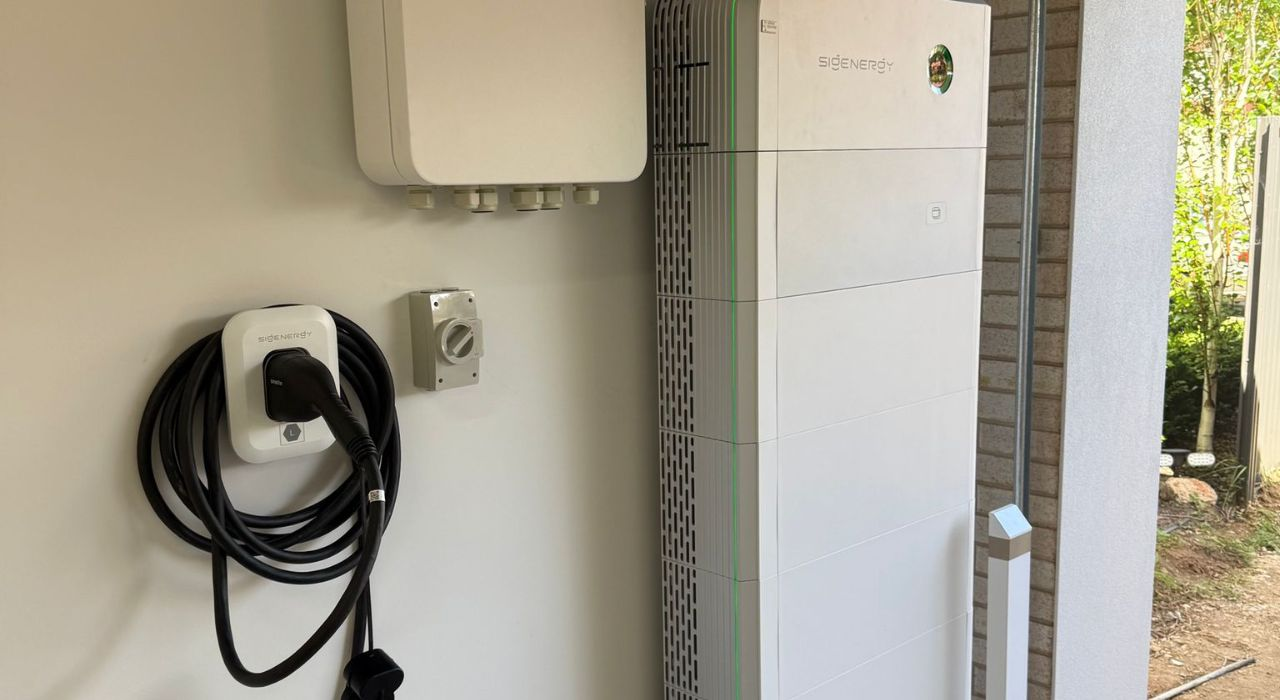
You bought an EV. You bought solar. You bought a home battery. You thought you were done. Then you plugged in your car at 6 p.m. The battery drained to empty by 8 p.m. Your house ran on grid power for the rest of the evening. Your EV charged. Your home battery died. The problem is not your equipment. It is how they talk to each other. Most systems treat EV charging as just another load. It is not. An EV draws five to ten times more power than your refrigerator, your lights, and your TV combined. That draw will empty a home battery in two hours or less. A hybrid solar inverter with EV charging integration solves this. It talks to your car or your EV charger. It knows when the car is plugged in. It can prioritize home battery storage over car charging. Or it can charge the car only from solar excess. Without this communication, your EV and your battery fight each other every evening. Your battery usually loses.
The AC Charging Inefficiency That Wastes Ten Percent
Your car charges on AC power from your inverter. That AC power comes from your solar panels or your home battery. The car’s onboard charger converts that AC to DC for the battery. That conversion wastes about ten percent of the energy. Your solar panels produced that energy. Your battery stored that energy. Now ten percent disappears as heat in your car’s charger. A smarter system uses DC charging directly from solar panels or a DC-coupled home battery. No conversion loss. No wasted heat. The hybrid solar inverter with a DC fast charging output sends power straight from your panels to your car at up to ninety-eight percent efficiency. This feature is rare. It costs more. It also saves ten percent of every kilowatt-hour you put into your EV. Over a year of charging at home, that ten percent adds up to hundreds of kilowatt-hours. Ask your inverter supplier about DC charging support. If they look confused, they do not offer it. Your EV will keep wasting energy every time you plug in.
The Smart Charging Schedule That Ignores Cloudy Days
You programmed your EV to charge from midnight to 6 a.m. when electricity is cheap. Great. Then you added solar and batteries. Now cheap grid power matters less. Free solar power matters more. Your fixed charging schedule ignores solar production. A cloudy day means no excess solar. Your car still charges from the grid at midnight. You paid for power you could have gotten for free if you had charged the next afternoon. A hybrid solar inverter with dynamic EV charging adjusts the schedule based on forecasted solar production and current battery state. Cloudy day? The car charges overnight from cheap grid power. Sunny day? The car waits until 11 a.m. when panels are producing and the battery is full. The charging schedule changes daily. No two days are the same. Ask your inverter vendor if their EV charging feature includes solar forecasting. If it only offers fixed time windows, you will overpay for electricity on cloudy days and underuse free solar on sunny days. Dynamic scheduling is not a luxury. It is the entire point of pairing solar with an EV.
The V2G Promise That Most Inverters Cannot Keep
V2G. Vehicle to grid. Your car battery powers your home during an evening outage. Your thirty-kilowatt-hour car battery is three times larger than most home batteries. The potential is enormous. The reality is frustrating. Very few hybrid inverters support bidirectional V2G charging. Even fewer support it with the specific EV you own. The hybrid solar inverter must communicate with your car using a protocol called CHAdeMO, CCS, or NACS. Each car uses a different protocol. Each inverter supports a different subset. Ask your inverter supplier for their V2G compatibility list. If your car is not on that list, V2G will not work. Do not buy an inverter promising V2G “coming soon.” Coming soon means not now. Not now means maybe never. Your car battery can power your home. But only if your inverter speaks your car’s language. Verify compatibility before you pay. Otherwise, your EV battery sits idle during outages while your smaller home battery struggles to keep your lights on.
The Charging Rate Limit That Turns Fast Charging Into Slow Charging
Your EV can charge at eleven kilowatts. Your solar panels produce seven kilowatts. Your home needs one kilowatt. You have six kilowatts available for the car. Your hybrid solar inverter can send those six kilowatts to the car. But only if it has a high enough AC output rating. Many hybrid inverters are rated at five kilowatts of continuous AC output. That is the limit for your entire home plus your EV charger. Running the microwave and the EV simultaneously may trip the inverter. The inverter reduces EV charging to three kilowatts to stay within its limit. Your car charges slowly. You wake up to a partially charged battery. Ask your inverter supplier about simultaneous AC output capacity. If the inverter is rated at five kilowatts total, you cannot charge your EV at five kilowatts while also powering your home. The math does not work. Choose an inverter with higher AC output or accept that your EV will charge slowly whenever your home is using power. That slow charging may or may not matter for your driving needs. But it is better to know the limit before you buy than to discover it the first time you plug in.
The One Setting That Keeps Your Car From Killing Your Battery
Your inverter has a setting called “EV charging priority.” Three options. Solar only. Battery only. Grid only. Solar only is the correct choice for most homeowners. The car charges only from excess solar production. Your home battery stays full for evening outages. Your grid import stays low. The hybrid solar inverter with solar-only EV charging protects your home battery from being drained by your car. Find this setting in your app. Enable it. Test it. Plug in your car on a cloudy afternoon. The car should not charge at all because there is no excess solar. Unplug it. Wait for a sunny morning. Plug it in again. The car should charge at the full available solar rate. If your inverter lacks this setting, your car will charge whenever it is plugged in, regardless of where the power comes from. Your home battery will suffer. Your grid import will rise. Your solar savings will shrink. Find the setting. Use it. Your home battery will thank you every evening when the grid goes down and your lights stay on because your car did not steal your stored power.
read more : https://lawsuitzone.com/