Cartiva Implant Lawsuits: Injuries to the Patients and Available Legal Relief
History
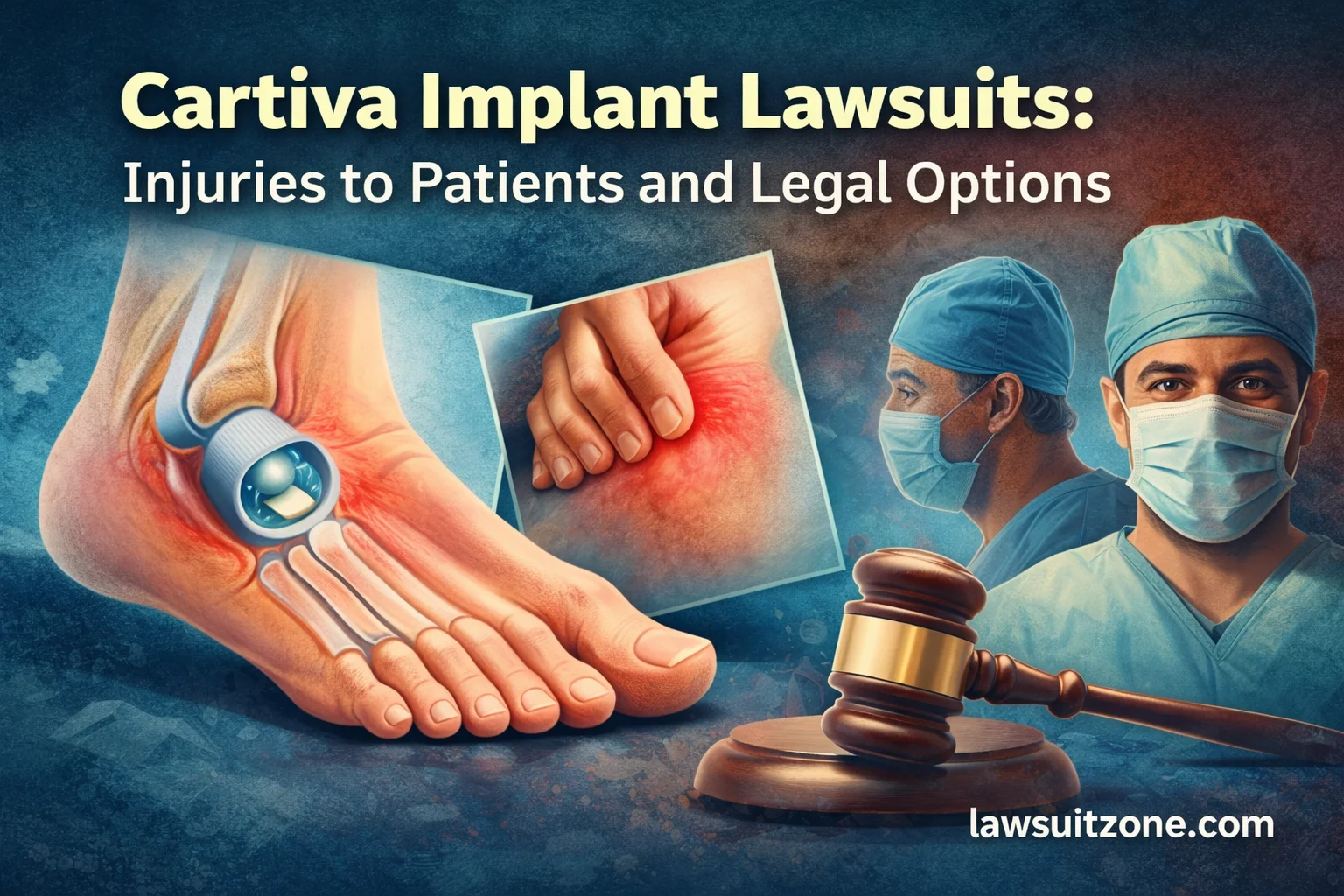
The cartiva implant lawsuit has come into the limelight as a major concern for patients who relied upon the “Cartiva Synthetic Cartilage Implant” to alleviate foot pain but actually saw their conditions worsen. Meant as a “motion-preserving device” rather than a joint fusion procedure for treating the big toe joint’s arthritis, the device was expected to be safe and long-lasting for the patients who would undertake the procedure.
This article presents a thorough, easy-to-understand briefing on what is happening in connection with the cartiva implant lawsuit, including how the device works, why people are making cartiva implant lawsuits, qualifying parties, and what their rights are. Have you checked our detailed guide on Jones Act Lawsuit.
What Is the Cartiva Synthetic Cartilage Implant?

The Cartiva implant is a small cylindrical piece made up of a type of hydrogel called polyvinyl alcohol. This is surgically inserted into the joint of the big toe to effectively treat damaged cartilage in the joint of the big toe caused by hallux rigidus.
The aim of the implant was:
- Move your affected joint normally
- Relieving arthritis pain
- Do not fuse joints permanently
- Facilitates apace
Despite the above goals, outcomes for many patients failed to live up to expectations.
How the Cartiva Implant Was Marketed
Surgeons and patients were encouraged to opt for Cartiva on the basis of claims that it allowed preserved mobility with lesser recovery time compared to traditional fusion procedures. The advertisements highlighted durability and biocompatibility.
However, detractors have precisely complained that the long-term performance information was not available at the point of widespread adoption.
Why Cartiva Implant Lawsuits Are Increasing
Most of the increasing cases of cartiva implant lawsuits are a result of patients experiencing implant failure several months to a number of years after the surgery is conducted and without adequate warnings about possible complications.
Some of the common causes for which lawsuits are being filed are:
- Implant shrinkage after placement
- Instability in the joint
- Severe postoperative pain
- Disruption of bone around the implant
- Requirement for revision/fusion surgery
The patients claim that these risks had been downplayed or not acknowledged.
Complications and Injuries Reported

In most cases, patients who have been involved in a cartiva implant lawsuit tend to suffer from complications associated with everyday activities.
Commonly reported issues include:
- Foot pain – chronic foot pain
- Chronic inflammation
- Implant loosening or migration
- Bone erosion or cyst development
- Less mobile toes
- Difficulty standing or walking
In some instances, there was an exacerbation of the pains.
Failure and Repeating Surgery, Cartiva Implant
Need for Revisions and Surgical Removal of the Implant
One of the most severe issues associated with the use of the Cartiva implant is the revisions required due to various complications and issues with the functioning of the implant. In this regard, patients had to undergo the implant’s removal and fusion surgery.
Fusion surgery:
- Permanently
- Alters the mechanism of walking
- May increase the stress on other joints
This defies the initial promise of motion preservation.
Allegations Against the Manufacturer
In cartiva implant lawsuits, product liability is generally the focus of a case instead of surgical negligence. The lawsuits are often filed against:
- Defective product design
- Failure to warn patients and surgeons
- Misleading safety claims
- Inadequate long-term study
- Failure to conduct adequate surveillance
The issues in these lawsuits are whether the maker adequately communicated known risks.
FDA Clearance Status and Precautions
The Cartiva device was approved for sales using the FDA process titled “510(k) Clearance.” This FDA process does not make the manufacturers carry out long-term tests on the device. This clearance is for a device that is very similar to a pre-approved device on the market.
As stated by the United States Food and Drug Administration, the devices cleared via the 510(k) process may gain market entry before the availability of extensive long-term follow-up data.
Some experts think that this led to unforeseen complications.
Scientific Controversy and Medical Evidence
There were concerns about implant shrinkage and loss of hydration expressed by medical practitioners. There were some patients whose images showed structural issues relating to pain and instability in the implants.
Independent research is being conducted to determine the ability of synthetic cartilage to sustain the stresses of the joint environment.
Who Can Pursue a Lawsuit for a Cartiva Implant?
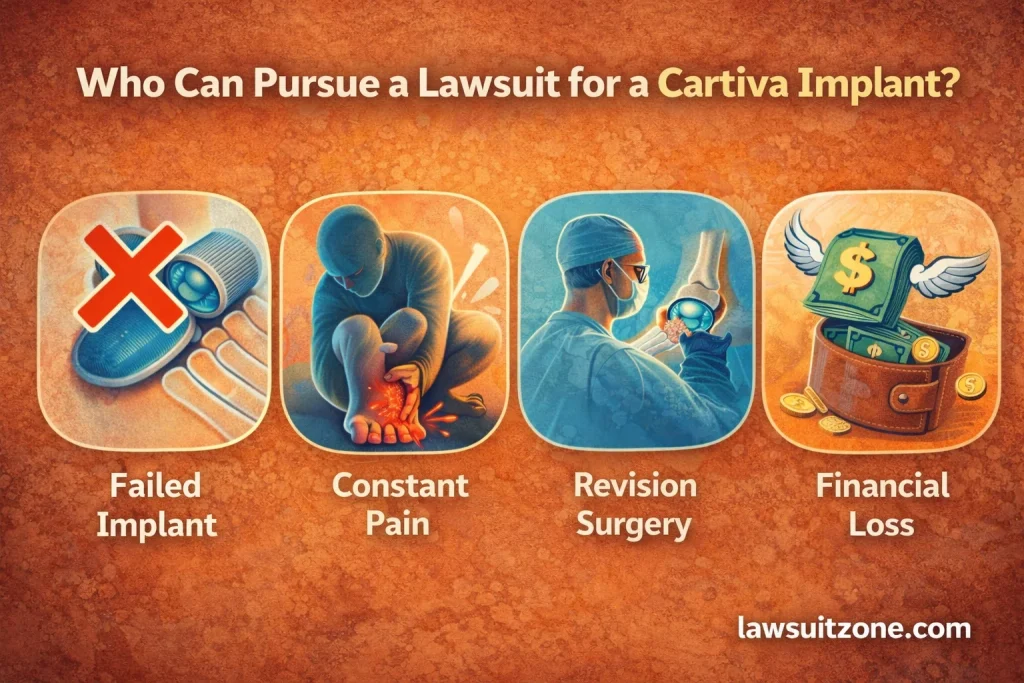
You can pursue claiming rights to bring a cartiva implant lawsuit if:
- You received a Cartiva implant
- You had constant pain or deteriorating symptoms
- The implant has failed or moved
- Revision or fusion surgery was needed
- You incurred financial, physical, or emotional losses
Eligibility may rely upon medical records and timing of symptoms.
Cartiva Implant Lawsuit vs. Medical Malpractice
Not all cases involving the Cartiva implant can be attributed to medical malpractice lawsuits.
Cartiva Implant Lawsuit
- Directly target manufacturers
- Emphasizes product defects or failure to warn
Medical Malpractice
- Directed to the surgeon or healthcare provider
- Involves surgical errors or improper care
Some claims might incorporate both legal theories.
Compensation in a Cartiva Implant Lawsuit
In a successful cartiva implant lawsuit, relief may be obtained in the following areas:
- Medical bills
- Revision surgery and related costs
- Lost wages
- Pain and suffering
- Less mobility
- Emotional distress
The amount of compensation varies depending on the severity of the injury.
Statute of Limitations Issues
Each state has its deadline to file a cartiva implant lawsuit. Sometimes, the statute of limitations will be dated from the time that the patient knew about the injury from the implant.
Putting off taking action can make a permanent problem.
Evidence Providing Support for a Claim
Important evidence may include:
- Surgery and hospital files
- Implant identification information
- Diagnostic imaging
- Proof of lost income
- Evidence on processing corrections
Well-structured documentation can go a long way in facilitating positive outcomes.
Manufacturer Defense Strategies
The cartiva implant lawsuits that may arise between the manufacturer and the patient may involve defenses such as:
- Complications are rare
- Pain is a relative surgical risk
- Anatomy of the patient led to the problem
- The implant complied with the regulations
Plaintiffs offer expert testimony and pattern-of-failure evidence.
What If You Think the Implant Has Failed?
If you feel your implant is failing:
- Seek a second medical opinion
- Request imaging studies
- Record symptoms and limitations
- Maintain medical records
- Contact a products liability lawyer
Both the medical and legal aspects are protected by early intervention.
Selecting a Cartiva Implant Lawyer
A seasoned lawyer is capable of:
- Examine medical literature
- Consult orthopedic specialists
- Eligibility assessment
- Manage negotiation or lawsuit situations
- Seek maximum damages
Most lawyers are retained on a contingency fee basis; that is, they do not charge upfront costs.
Frequently Asked Questions
Final Thoughts
The issue raised in the cartiva implant lawsuit reflects a significant concern regarding products that are introduced to market without adequate long-term testing. For people that suffered with pain or loss of mobility, a lawsuit could mean a solution. If your implant had unforeseen consequences that harmed you, learning your rights could be a first step toward healing and closure.